
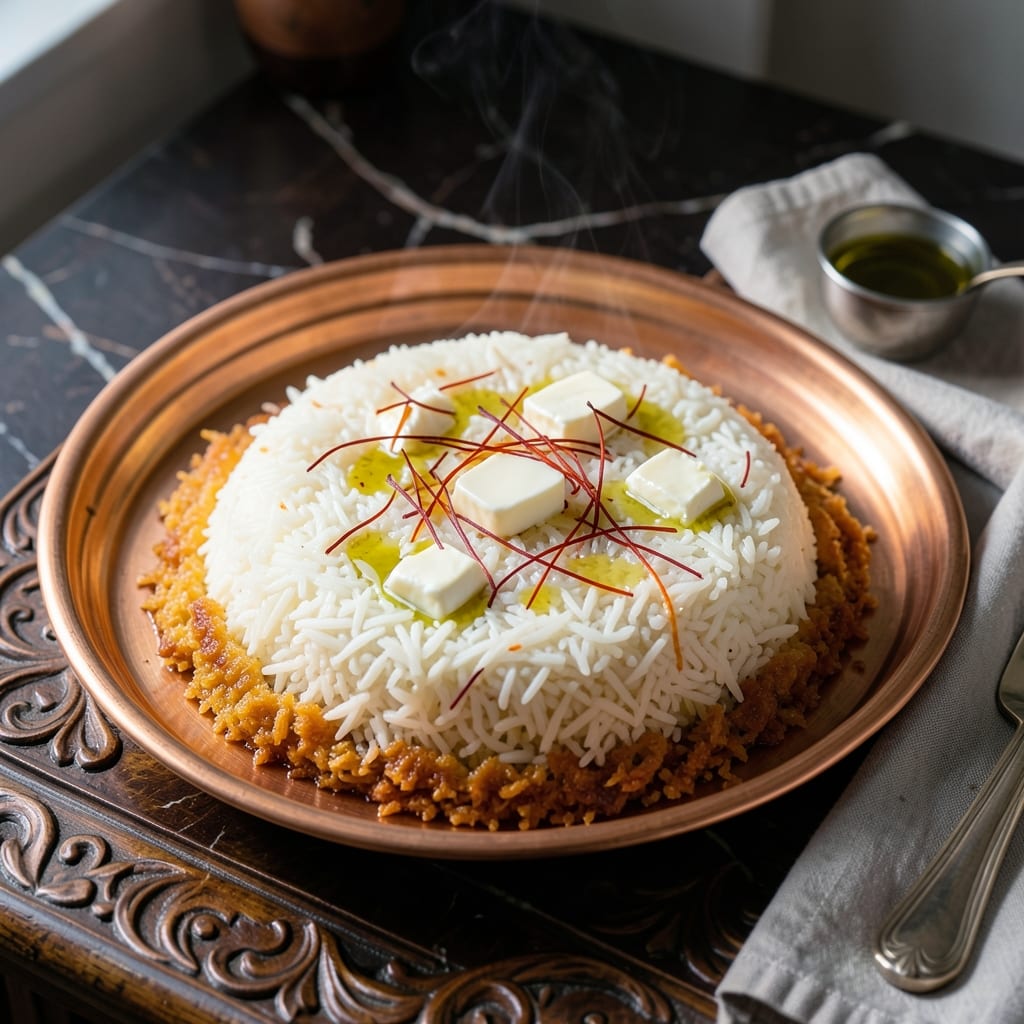
This traditional dish transforms simple basmati into an extraordinary experience with its signature crispy bottom layer. The technique involves parboiling the rice before carefully layering it to achieve that perfect golden crust.
What makes this method special is the balance of fluffy grains above and the coveted tahdig below. With just a few steps and standard kitchen tools, you’ll create a side that’s both impressive and deeply flavorful.
Ingredients for Iranian Rice Pilaf
Fragrant basmati and a few pantry staples create this iconic dish with its signature golden crust.
| Ingredient | Amount | Notes |
|---|---|---|
| Basmati Rice 🍚 | 2 cups | Rinsed until water runs clear |
| Water 💧 | 8 cups | For parboiling and cooking |
| Sea Salt 🧂 | 1 ½ tbsp | Divided for parboiling and seasoning |
| Saffron Threads 🌼 | ¼ tsp | Steeped in hot water |
| Hot Water 💧 | ¼ cup | For steeping saffron |
| Unsalted Butter 🧈 | ½ cup | Melted for tahdig layer |
| Neutral Oil 🛢️ | 2 tbsp | Such as vegetable or canola |
| Plain Yogurt 🥛 | ½ cup | Optional for serving |
| Cardamom Pods 🌿 | 4 whole | Lightly crushed |
| Bay Leaf 🍃 | 1 whole | For infusing parboiling water |
| Garlic Cloves 🧄 | 2 cloves | Minced for optional garnish |
| Fresh Parsley 🌿 | ¼ cup | Chopped for garnish |
The basmati rice is non-negotiable here. Optimal quality requires long-grain basmati—avoid jasmine or other varieties as they lack the necessary structure for tahdig. Indian or Pakistani brands like Daawat or Royal are preferred. Saffron should be purchased from specialty spice shops or Middle Eastern markets to ensure potency. The butter for the tahdig layer must be unsalted to control seasoning precisely.
No saffron? A pinch of turmeric provides color but lacks depth—accept no substitute for authentic flavor. The yogurt can be Greek style for thickness or regular plain. Cardamom pods can be replaced with half a teaspoon of ground cardamom if whole pods are unavailable. The oil can be any neutral variety, but avoid strongly flavored oils like olive. Bay leaf can be omitted in a pinch, but it adds subtle complexity.
Store uncooked basmati in an airtight container in a cool, dark place for up to 6 months. Saffron keeps indefinitely in a sealed container away from light. Leftovers reheat well—cover with a damp paper towel to prevent drying. The tahdig layer stays crisp for 2-3 days if stored properly.
Why You’ll Love This Recipe
- One Pot Wonder: I just rinse, soak, and simmer—no fancy techniques, just basmati rice and saffron doing all the work.
- Golden Luxury: That saffron-infused steam turns plain rice into something fit for a feast. Honestly, the aroma alone is worth it.
- Pairs With Anything: I serve it with stews, grilled meats, or even just yogurt and herbs. Between us, it’s my secret weapon for last-minute dinners.
- Budget Stretch: A pound of basmati and a pinch of saffron feeds my family for days. I’ll be real: it’s cheaper than takeout and twice as satisfying.
Step-by-Step Instructions for Iranian Rice Pilaf With Crispy Tahdig
Master these techniques to achieve perfectly fluffy rice with a golden, crispy tahdig layer.
Step 1: Prepare and Parboil the Basmati Rice
Rinse the 2 cups Basmati Rice in a fine-mesh strainer under cold water until the water runs completely clear. This removes excess starch, preventing a gummy texture. Soak the rice in cold water for 30 minutes, then drain.
In a large pot, bring 8 cups Water to a boil with 1 tbsp Sea Salt, the 4 whole Cardamom Pods, and the 1 whole Bay Leaf. Add the drained rice and parboil for 5-6 minutes until the grains are slightly softened but still firm. Drain immediately and rinse with warm water to stop the cooking process.
Step 2: Steep the Saffron and Prepare the Tahdig Layer
Crush the 0.25 tsp Saffron Threads between your fingers and place them in a small bowl with the 0.25 cup Hot Water. Let it steep for 10 minutes to release its vibrant color and aroma. This infused liquid will add a luxurious golden hue and floral note to the rice.
In a separate bowl, melt the 0.5 cup Unsalted Butter and mix it with the 2 tbsp Neutral Oil. This combination ensures a crisp, non-stick tahdig layer. Pour half of this mixture into the bottom of a nonstick pot, coating it evenly to create the foundation for the crispy crust.
Step 3: Layer and Steam the Rice
Sprinkle a thin layer of the parboiled rice over the butter-oil mixture in the pot, pressing it down gently to form an even base for the tahdig. In a large bowl, gently toss the remaining rice with the saffron water and the remaining 0.5 tbsp Sea Salt to distribute the color and seasoning evenly.
Spoon the saffron-infused rice into the pot, mounding it slightly in the center. Use the handle of a wooden spoon to create small vent holes in the rice, allowing steam to escape and ensuring even cooking. Cover the pot with a clean kitchen towel and secure the lid tightly on top to absorb excess moisture.
Step 4: Cook to Perfection and Crisp the Tahdig
Cook the rice over medium heat for 5 minutes, then reduce to low heat and cook for an additional 40-45 minutes. Resist the urge to peek—this uninterrupted cooking time is critical for developing the tahdig’s crispiness and allowing the rice to steam fully.
When done, the rice should be tender and fluffy, and the tahdig should have a deep golden-brown crust. To serve, run a spatula around the edges of the pot, then invert it onto a serving platter, revealing the crispy tahdig layer on top.
Step 5: Garnish and Serve
Minced 2 cloves Garlic Cloves and chopped 0.25 cup Fresh Parsley can be sprinkled over the top for added freshness. Serve with 0.5 cup Plain Yogurt on the side for a cooling contrast to the rich, fragrant rice. The tahdig should be crisp and buttery, with the rice light and separate, each grain distinct and infused with saffron and cardamom.
Pro Tips For Making Iranian Rice Pilaf
- Soak the Basmati: Give the rice a good 30-minute soak in warm salted water before cooking—I learned this the hard way after ending up with dry, stubborn grains that refused to fluff.
- Bloom the Saffron: Crush the saffron threads and steep them in 2 tablespoons of hot water for at least 10 minutes; it releases way more color and flavor than just tossing it in dry.
- Salt the Water Well: Use about 1 tablespoon of sea salt per cup of water for the parboil stage—my grandmother swore by this, and the rice actually tastes seasoned all the way through.
- Steam with a Towel: After draining, place a clean kitchen towel under the lid when steaming to absorb excess moisture and prevent soggy rice—sounds weird, but it works.
Dietary Considerations for This Recipe
Gluten-Free Friendly
This dish is naturally gluten-free, making it perfect for anyone with celiac disease or gluten sensitivity. The only ingredients are basmati rice, saffron, butter, and spices—none of which contain gluten. Just ensure your spices are labeled gluten-free, as some brands add fillers. 💪
Vegetarian by Default
With no meat in the traditional recipe, this is a wonderful vegetarian option. The rich flavors come from saffron, butter, and aromatic spices like cardamom. For vegans, simply swap the butter for a plant-based alternative like coconut oil.
Lactose Considerations
The recipe includes ½ cup unsalted butter for the tahdig layer. For lactose intolerance, use ghee (clarified butter) or a dairy-free butter substitute. The yogurt garnish can also be replaced with coconut yogurt.
Nut Allergy Safe
This preparation is inherently nut-free. Just double-check your spice blends and oil to ensure no cross-contamination. The cardamom pods and saffron are safe, but always verify packaging if allergies are severe.
Low-Sodium Adaptations
To reduce sodium, cut the sea salt in half or use a low-sodium version. The saffron and butter provide plenty of flavor, so you won’t miss the extra salt. I find the dish still tastes rich and aromatic with less. ✨
Calorie-Conscious Swaps
For fewer calories, reduce the butter by half and replace it with additional neutral oil. This still gives a crisp tahdig but with less saturated fat. The rice itself is low-calorie, so this small tweak makes a big difference.
Nutrition Facts
Frequently Asked Questions
Why is basmati rice essential for this dish?
Basmati’s long grains hold their shape during parboiling and steaming. Other varieties lack the structure needed for the crispy tahdig layer.
Can I make this without saffron?
Yes, though the flavor won’t be as rich. A pinch of turmeric adds color, but the floral notes will be missing. Authentic taste requires saffron.
How do I prevent the tahdig from sticking?
Use a nonstick pot and ensure the butter-oil mixture fully coats the bottom. Let it cook undisturbed for 40-45 minutes on low.
What if my rice turns out mushy?
This usually means it was over-parboiled or steamed too long. Drain immediately after parboiling and keep the heat at low during steaming.

- Mujadara Rice and Lentils Recipe: Earthy Spiced Lentils With Caramelized Onions - November 1, 2026
- Naija Fried Rice Recipe: Street-Style Spice With Veggie Crunch - November 1, 2026
- Mushy Rice Recipe: Fluffy Grains Transformed in Minutes - November 1, 2026