
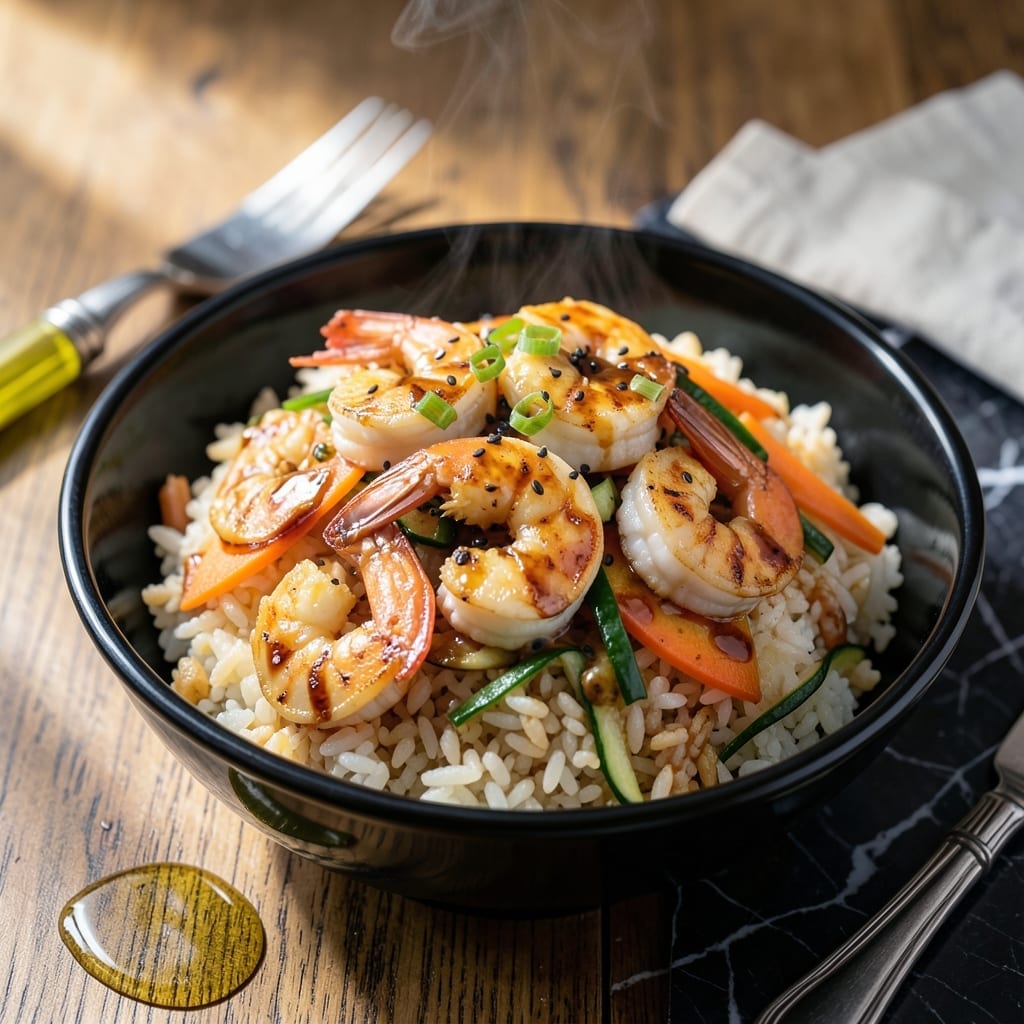
This hibachi-style dish brings the sizzle of a teppanyaki grill to your home kitchen with minimal effort.
The secret lies in high heat and quick cooking—plump shrimp, fluffy rice, and crisp vegetables come together in minutes. A touch of soy sauce and sesame oil delivers that signature umami depth without overpowering the fresh ingredients.
What you get is a restaurant-quality fried rice with perfectly charred edges, tender shrimp, and a balance of flavors that feels indulgent yet light. The technique ensures every grain stays separate and flavorful.
Serve it straight from the wok for an authentic experience. Here’s how to make it.
Ingredients for Japanese Hibachi Shrimp Fried Rice
Fresh shrimp, crisp veggies, and day-old rice create this sizzling wok classic at home.
| Ingredient | Amount | Notes |
|---|---|---|
| Large Shrimp 🍤 | 1 lb | Peeled, deveined, tails off |
| Cooked White Rice 🍚 | 4 cups | Day-old, chilled preferred |
| Soy Sauce 🫙 | 3 tbsp | Low-sodium if preferred |
| Sesame Oil 🫒 | 1 tbsp | Toasted for best flavor |
| Carrots 🥕 | 2 whole | Medium, diced small |
| Zucchini 🥒 | 1 whole | Medium, diced small |
| Onion 🧅 | 1 whole | Small, finely diced |
| Garlic Cloves 🧄 | 3 cloves | Minced for maximum flavor |
| Frozen Peas 🌱 | ¾ cup | Thawed before cooking |
| Large Eggs 🥚 | 2 whole | Lightly beaten for scrambling |
| Vegetable Oil 🫒 | 2 tbsp | High smoke point preferred |
| Green Onions 🌱 | 3 whole | Thinly sliced for garnish |
| Salt 🧂 | ½ tsp | Adjust to taste at end |
| Black Pepper 🌶️ | ¼ tsp | Freshly ground preferred |
| Butter 🧈 | 1 tbsp | For finishing touch |
The shrimp quality matters here. Wild-caught from Whole Foods or Costco gives the best texture and flavor. Look for plump, translucent prawns with no fishy odor. For the rice, jasmine or short-grain works best—day-old and dry is key to getting those perfect charred edges. Most Asian markets carry Kikkoman soy sauce (the gold standard) if you want to splurge.
No shrimp? Scallops or firm white fish like cod work beautifully. Vegetable swap? Bell peppers or mushrooms add great texture. Out of sesame oil? Toasted peanut oil brings a similar nutty depth. The soy sauce can be swapped for tamari (gluten-free) or coconut aminos. For extra umami, add a dash of fish sauce (check for pescatarian-friendly brands).
Leftovers reheat surprisingly well—just add a splash of water and stir-fry again. Keeps in the fridge for 3-4 days or freezes for up to 3 months. Always store rice and shrimp separately until ready to cook for the best texture.
Why You’ll Love This Recipe
- One Pan Wonder: I toss everything in my wok and it’s done in 15 minutes—no extra pots, no fuss.
- Umami Bomb: The soy sauce and sesame oil hit that savory-sweet spot, and the shrimp soak it all up.
- Weeknight Hero: Honestly, it’s my Tuesday dinner MVP—fills us up fast and tastes like a treat.
- Leftover Magic: Tastes even better the next day, and the rice soaks up extra flavor overnight.
Step-by-Step Instructions for Japanese Hibachi Shrimp Fried Rice
Master the technique for restaurant-quality fried rice with perfectly cooked shrimp and vegetables.
Step 1: Prep and Season the Shrimp
Pat the 1 lb Large Shrimp completely dry with paper towels. This ensures they sear rather than steam in the pan. Season lightly with 0.5 tsp Salt and 0.25 tsp Black Pepper, then set aside.
I always prep the shrimp first because it cooks quickly and needs to rest while you prepare the other ingredients. The seasoning should be subtle since the 3 tbsp Soy Sauce will add more flavor later.
Step 2: Sauté Vegetables for Maximum Flavor
Heat 1 tbsp Vegetable Oil in a large skillet or wok over high heat until shimmering. Add the diced 2 whole Carrots, 1 whole Zucchini, and 1 whole Onion, stirring frequently for 4-5 minutes until the vegetables soften and begin to brown.
Add the minced 3 cloves Garlic Cloves and cook for 30 seconds until fragrant. Push the vegetables to one side of the pan, then add the 0.75 cup Frozen Peas to warm through. The vegetables should be tender but still retain some bite.
Step 3: Cook the Shrimp and Scramble the Eggs
Increase the heat and add the remaining 1 tbsp Vegetable Oil to the pan. Add the seasoned 1 lb Large Shrimp in a single layer and cook for 1-2 minutes per side until pink and opaque. Remove the shrimp and set aside.
In the same pan, add the 2 whole Large Eggs and scramble quickly until just set, breaking them into small pieces. The residual heat from the pan will continue cooking the eggs, so remove them while they’re still slightly soft.
Step 4: Combine Rice and Finish with Sauce
Add the 4 cups Cooked White Rice to the pan, breaking up any clumps with a spatula. Stir-fry for 2-3 minutes until the rice is heated through and begins to crisp slightly. The rice should be hot and slightly toasted for the best texture.
Return the shrimp and scrambled eggs to the pan. Drizzle with 3 tbsp Soy Sauce and 1 tbsp Sesame Oil, tossing everything together to coat evenly. Cook for another 1-2 minutes until everything is well combined and heated through.
Step 5: Add Final Touches and Serve
Remove the pan from the heat and stir in the 1 tbsp Butter until melted. This adds a rich, velvety finish to the dish. Taste and adjust the seasoning with additional Salt or Black Pepper if needed.
Garnish with the thinly sliced 3 whole Green Onions and serve immediately while hot. The fried rice should have a slight char and a glossy sheen from the soy sauce, with each bite packed with flavor and texture.
Pro Tips For Making Japanese Hibachi Shrimp Fried Rice
- Chill the Rice: Use day-old, cold rice straight from the fridge—it fries up fluffier and won’t turn mushy. I learned this the hard way after making gluey fried rice with fresh, warm rice.
- Sear Shrimp First: Cook the shrimp separately in a screaming hot pan with a touch of sesame oil, then set aside. This guarantees they stay juicy and don’t overcook when mixed back in with the rice.
- Skip Wet Carrots: Sauté the carrots for 2-3 minutes before adding rice to drive off excess moisture. Sounds weird, but it works: raw, watery carrots will steam your fried rice instead of frying it.
- Sauce on the Side: Toss the rice with just 1 tablespoon of soy sauce at a time, tasting as you go. My grandmother swore by this, and she was right: it’s easier to add than to fix an oversalted batch.
Perfect Pairings for This japanese hibachi shrimp fried rice
Beverage Pairings
For beer lovers, a crisp Asahi Super Dry or Sapporo cuts through the richness of this dish. The clean, refreshing finish complements the umami flavors beautifully. I always keep a few cold ones on hand for hibachi night. 🍺
Side Dish Ideas
A simple cucumber salad with rice vinegar and a pinch of sugar adds a refreshing contrast. I toss 1 sliced cucumber with 1 tbsp vinegar and ½ tsp sugar. The cool crunch balances the hot, savory rice perfectly.
Wine Options
A chilled Pinot Grigio or Sauvignon Blanc works wonders with the shrimp and soy flavors. The citrus notes in these whites enhance the dish’s brightness. Avoid heavy reds that can overpower the delicate shrimp.
Traditional Accompaniments
Serve with miso soup for an authentic Japanese meal experience. A small bowl of edamame with sea salt makes a great starter. These classics complement without competing with your main dish.
Dessert Pairings
End with mochi ice cream or matcha green tea cake for a light, sweet finish. The subtle sweetness won’t overwhelm after the savory meal. I love how these desserts cleanse the palate. ✨
Nutrition Facts
Frequently Asked Questions
Can I use fresh rice instead of day-old?
Fresh rice is too moist and will turn mushy. Always use day-old, chilled rice that’s dried out slightly for that perfect charred texture. Spread freshly cooked rice on a tray to cool quickly if needed.
What’s the best oil for high-heat cooking?
Use oils with a high smoke point like vegetable, canola, or peanut oil. Avoid olive oil, which can burn at high heat. Sesame oil adds flavor but should be used sparingly at the end.
How do I prevent the shrimp from getting rubbery?
Cook shrimp over high heat for just 1-2 minutes per side until pink. Overcooking is the enemy—remove them from the pan immediately once opaque. Resting for 2-3 minutes keeps them tender.

- Mujadara Rice and Lentils Recipe: Earthy Spiced Lentils With Caramelized Onions - November 1, 2026
- Naija Fried Rice Recipe: Street-Style Spice With Veggie Crunch - November 1, 2026
- Mushy Rice Recipe: Fluffy Grains Transformed in Minutes - November 1, 2026