
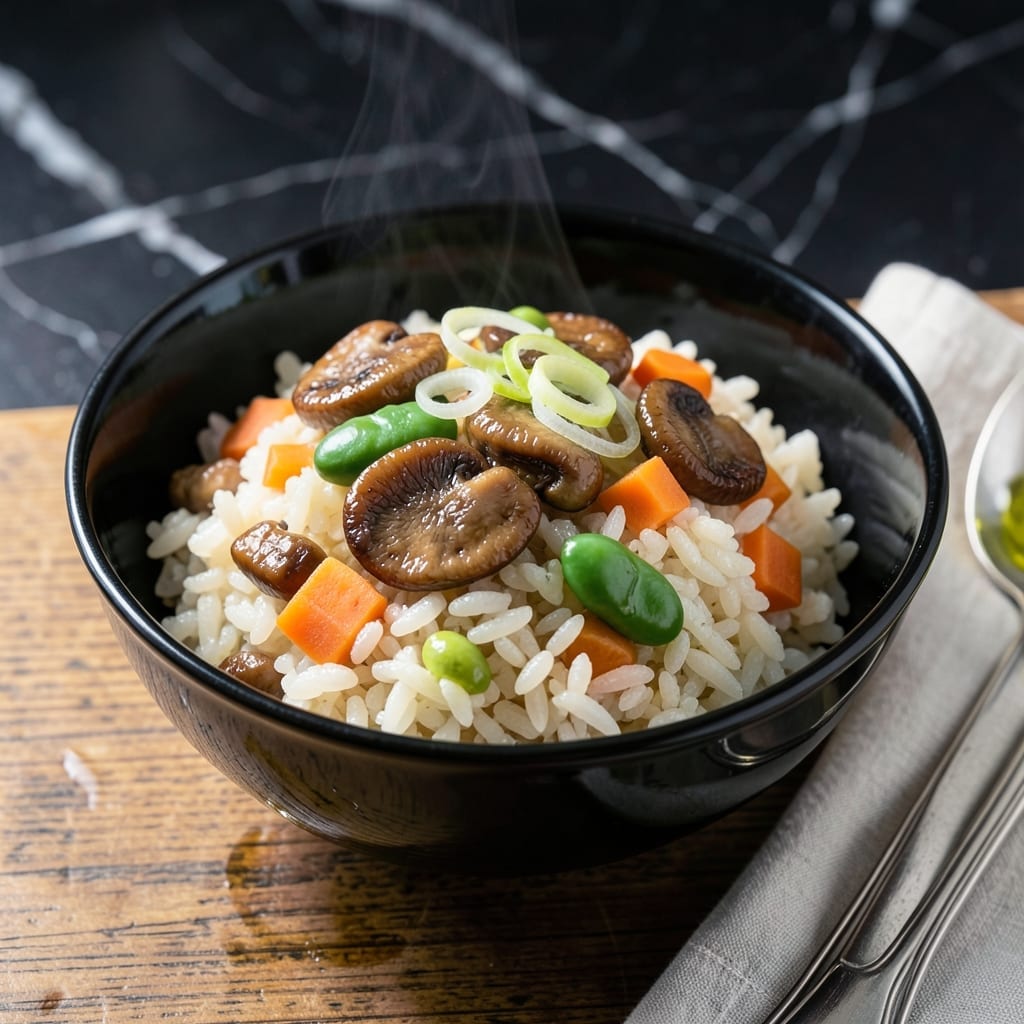
This dish transforms simple rice into a vibrant, flavorful meal with every bite. I’ve refined the technique to balance textures and umami perfectly.
With just a few ingredients and careful layering, you’ll achieve a dish that’s both comforting and restaurant-quality. The key is in the details.
Ingredients for Japanese Mixed Rice
Transform simple rice into a vibrant, umami-packed dish with these carefully selected ingredients.
| Ingredient | Amount | Notes |
|---|---|---|
| Japanese Short-Grain Rice 🍚 | 2 cups | Rinsed until water runs clear |
| Dashi Stock 🍲 | 2 ½ cups | Traditional kombu and bonito preferred |
| Shiitake Mushrooms 🍄 | 4 whole | Fresh, sliced thinly |
| Carrots 🥕 | 1 whole | Julienned for even cooking |
| Scallions 🧅 | 4 whole | Thinly sliced, green parts reserved |
| Frozen Peas 🌱 | ¾ cup | Thawed and drained |
| Soy Sauce 🫒 | 2 tbsp | Low-sodium for balance |
| Mirin 🍶 | 1 ½ tbsp | Sweet rice wine for depth |
| Sake 🍷 | 1 tbsp | Dry variety for cooking |
| Toasted Sesame Seeds 🌰 | 1 tbsp | For garnish and nutty aroma |
| Nori Sheets 🍡 | 1 sheet | Cut into thin strips |
| Vegetable Oil 🫒 | 1 tbsp | Neutral flavor for sautéing |
| Salt 🧂 | ½ tsp | Adjust to taste |
The rice is non-negotiable—Japanese short-grain (like Koshihikari or Nishiki) delivers the sticky, slightly sweet base this dish demands. Dashi stock forms the flavor foundation; seek out brands like Kikkoman or make your own with kombu and bonito flakes. Shiitake mushrooms add meaty depth—fresh is ideal, but rehydrated dried work in a pinch. Look for firm, plump caps at Asian markets.
No dashi? Vegetable or chicken stock with 1 tsp soy sauce added per cup gets you close. Cremini mushrooms can stand in for shiitake, though the flavor will be milder. Out of mirin? 1 tbsp sugar plus 1 tbsp water per tablespoon does the trick. The carrots can be swapped for zucchini or bell peppers if you prefer a different texture.
Cooked rice holds well at room temperature for 2 hours. Store leftovers in an airtight container—they’ll keep for 3-4 days in the fridge. Reheat gently with a splash of water to restore moisture. Nori strips soften over time, so add them fresh just before serving.
Why You’ll Love This Recipe
- One Pot Wonder: I throw everything in the rice cooker and let it do the work—dashi, mushrooms, carrots, all in one go.
- Umami Bomb: The shiitake and dashi soak into the rice, giving every bite that deep, savory flavor I crave.
- Meal Prep Hero: It tastes even better the next day, so I make a big batch for lunches all week.
- Budget Friendly: A handful of affordable ingredients stretches into a filling meal that satisfies my whole family.
Step-by-Step Instructions for Japanese Mixed Rice
Master this technique for perfectly balanced flavors and textures in every grain.
Step 1: Prepare and Cook the Japanese Short-Grain Rice
Rinse the 2 cups Japanese Short-Grain Rice under cold water until the water runs clear. This removes excess starch and prevents a gummy texture. Drain thoroughly in a fine-mesh sieve.
Combine the rinsed rice with the 2.5 cups Dashi Stock and 0.5 tsp Salt in a rice cooker or heavy-bottomed pot. The dashi infuses the grains with subtle umami depth. Cook according to standard rice cooker settings or bring to a boil, then reduce to a simmer, cover, and cook for 15-18 minutes until the liquid is absorbed and the rice is tender.
Step 2: Sauté the Vegetables for Optimal Flavor
While the rice cooks, heat the 1 tbsp Vegetable Oil in a large skillet over medium-high heat. Add the 4 whole Shiitake Mushrooms (thinly sliced) and sauté for 3-4 minutes until they release their moisture and begin to brown at the edges.
Add the 1 whole Carrots (julienned) and cook for another 2-3 minutes until slightly softened but still retaining a gentle crunch. Stir in the 4 whole Scallions (thinly sliced) and 0.75 cup Frozen Peas (thawed and drained). Cook for 1-2 minutes until the scallions are fragrant and the peas are heated through.
Step 3: Combine Rice and Vegetables with Seasonings
Once the rice is cooked, transfer it to a large mixing bowl. Add the sautéed vegetable mixture to the warm rice. The residual heat will help meld the flavors together beautifully.
In a small bowl, whisk together the 2 tbsp Soy Sauce, 1.5 tbsp Mirin, and 1 tbsp Sake. Pour this mixture over the rice and vegetables. Gently fold everything together with a rice paddle or spatula, ensuring the seasonings are evenly distributed without breaking the rice grains.
Step 4: Finish and Garnish for Presentation
Taste and adjust the seasoning if needed, though the combination of soy sauce, mirin, and sake should provide a well-balanced flavor profile. The rice should have a subtle sheen from the glaze, and the vegetables should maintain their vibrant colors.
Transfer the mixed rice to a serving dish. Garnish with the 1 tbsp Toasted Sesame Seeds and 1 sheet Nori Sheets (cut into thin strips). The sesame seeds add a nutty aroma, while the nori provides a delicate oceanic note that perfectly complements this Japanese-inspired dish.
Pro Tips For Making Japanese Mixed Rice
- Soak the Rice: Give the short-grain rice a good 30-minute soak before cooking—it swells up just enough to guarantee that sticky, tender texture mixed rice needs.
- Sauté the Mushrooms: Cook the shiitakes in a dry pan first to concentrate their flavor, then add a splash of dashi to deglaze before mixing into the rice.
- Skip Raw Carrots: I learned this the hard way—par-cook the carrots for 2-3 minutes in the dashi before adding to the rice, or they’ll stay crunchy and underseasoned.
- Rest Before Serving: Let the finished rice sit covered for 10 minutes off the heat—this lets the grains absorb the last bit of liquid and the flavors meld properly.
Storing and Reheating This Recipe
Refrigerator Storage
Let this creation cool for no more than 2 hours before transferring to airtight containers. Store at 40°F or below for up to 3-4 days. The flavors actually deepen as they meld together overnight. ❄️
Freezer Storage
For longer storage, freeze in portion-sized containers for up to 3 months. I recommend glass containers to prevent freezer odors. Leave ½ inch headspace for expansion and label with the date.
Stovetop Reheating
This is my preferred method. Add the rice to a skillet with 2 tbsp water or dashi stock, cover, and heat over medium-low heat for 5-7 minutes. Stir occasionally to prevent sticking.
Microwave Reheating
For quick meals, microwave individual portions covered with a damp paper towel. Heat on 50% power for 2-3 minutes, stir, then continue in 30-second intervals until hot. 🔥
Garnish Freshness
Add toasted sesame seeds and nori strips after reheating to maintain their texture and flavor. The nori will soften if stored with the rice, so keep it separate until serving.
Nutrition Facts
Frequently Asked Questions
Can I use long-grain rice instead?
No, stick with short-grain. Long-grain won’t give you the same sticky texture that holds the mix together. Japanese varieties like Koshihikari work best for authentic results.
What if I don’t have dashi stock?
Substitute with vegetable or chicken stock plus 1 tsp soy sauce per cup. The flavor won’t be as complex, but it’ll still taste great.
Can I make this ahead of time?
Yes! Store in an airtight container in the fridge for up to 3-4 days. Reheat with a splash of water to restore moisture.
Why do I need to rinse the rice?
Rinsing removes excess starch, preventing a gummy texture. Keep rinsing until the water runs clear for the best results.

- Mujadara Rice and Lentils Recipe: Earthy Spiced Lentils With Caramelized Onions - November 1, 2026
- Naija Fried Rice Recipe: Street-Style Spice With Veggie Crunch - November 1, 2026
- Mushy Rice Recipe: Fluffy Grains Transformed in Minutes - November 1, 2026