
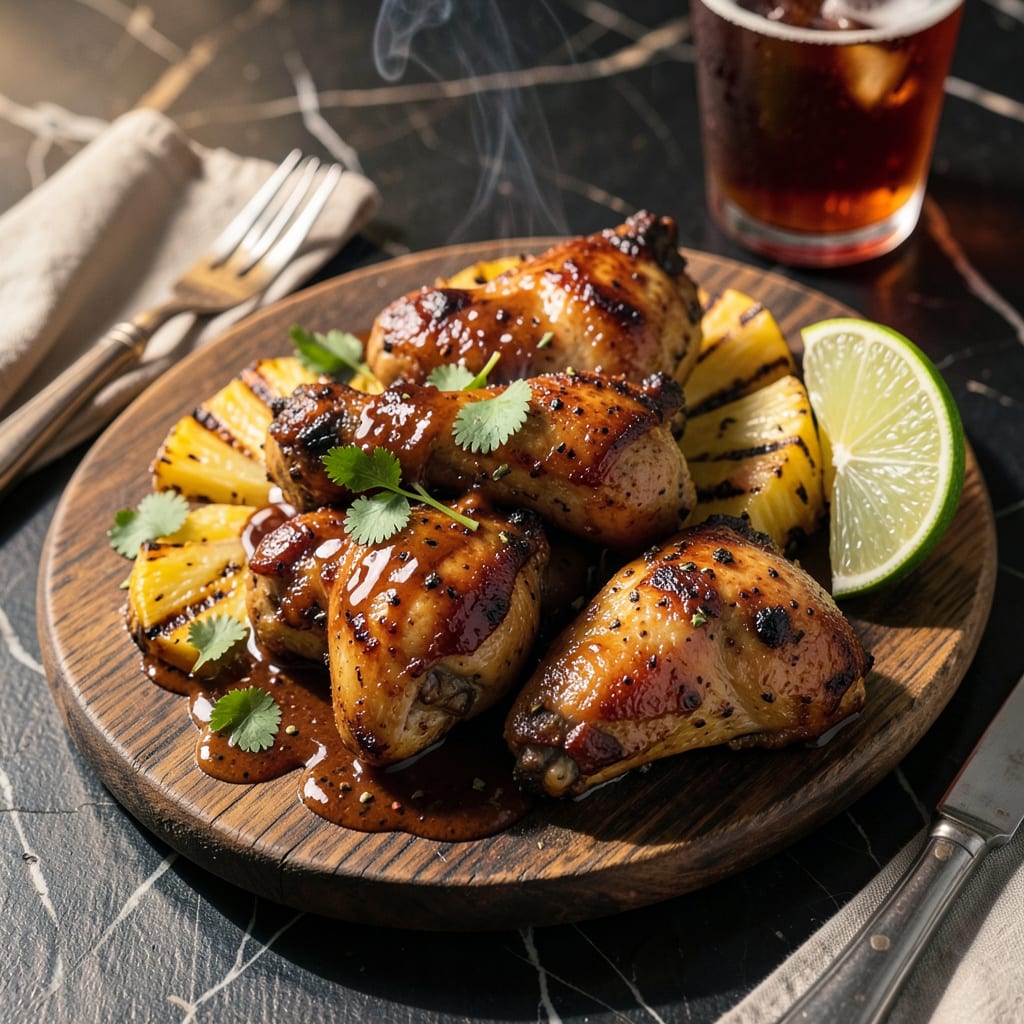
Jerk chicken is traditionally spicy due to Scotch bonnet peppers, but the heat level varies by recipe. Authentic versions pack significant heat, while milder adaptations reduce or omit peppers for broader appeal.
The secret behind jerk chicken’s signature kick lies in its Jamaican roots, where Scotch bonnet peppers—among the world’s hottest—are a non-negotiable ingredient. 🔥 What many don’t realize is that the spice isn’t just about heat; it’s a complex balance where allspice, thyme, and garlic create layers of flavor that complement the fire. I’ve found that street vendors in Jamaica often serve it with cooling sides like festival bread or pineapple to offset the intensity naturally.
For those sensitive to spice, the good news is that jerk seasoning can be customized without sacrificing authenticity. ✨ The marinade’s foundation of soy sauce, brown sugar, and citrus provides that unmistakable jerk profile, while pepper quantities can be adjusted. Even with reduced heat, the smoky char from traditional grilling methods delivers that signature jerk experience.
💡 In This Article
- What Makes Jerk Chicken Spicy: The Key Ingredients
- How to Control Jerk Chicken Spice Levels at Home
What Makes Jerk Chicken Spicy: The Key Ingredients
The fiery reputation of jerk chicken comes primarily from Scotch bonnet peppers, which rank between 100,000-350,000 Scoville units—that’s 12-140 times hotter than jalapeños. These peppers contain capsaicin, a compound that triggers heat receptors in your mouth, creating that signature burn.
What’s fascinating is that jerk seasoning doesn’t rely solely on peppers; the heat gets amplified by allspice berries (pimento) which contain eugenol, a compound that enhances capsaicin’s effects. 🔥
The traditional jerk marinade is a complex blend where heat meets depth. A classic recipe includes 2-4 Scotch bonnets per cup of marinade, combined with 1-2 tablespoons of ground allspice, 3-4 garlic cloves, and 1-inch fresh ginger.
The science here is remarkable: capsaicin is fat-soluble, so the natural oils in allspice and the chicken’s fat help distribute the heat evenly throughout the meat during cooking. This creates a lingering warmth rather than an immediate, sharp burn.
Regional variations play a huge role in spice levels. In Jamaica’s Boston Bay (the birthplace of jerk), vendors use 4-6 Scotch bonnets per batch and grill over pimento wood, which adds smoky depth that balances the heat. Meanwhile, commercial versions often reduce peppers to 1-2 per batch or substitute milder habaneros (100,000-250,000 Scoville).
The difference is noticeable: authentic jerk should make your forehead sweat slightly while still being enjoyable, not painful. ✨
What most people overlook is how the cooking method intensifies the spice. Traditional jerk pits reach 375-450°F, causing the peppers’ capsaicin to bind more aggressively with the meat’s proteins. The smoky char from wood firing also creates pyrazines—compounds that enhance our perception of spiciness.
Even the marinating time matters: 12-24 hours allows capsaicin to penetrate deeper into the meat fibers, creating a more uniform heat distribution.
The heat isn’t just about pain—it’s carefully balanced with sweetness. Authentic recipes include ¼-½ cup brown sugar per batch, which caramelizes during grilling to create a sticky glaze that tempers the initial burn. The sugar also helps mitigate capsaicin’s harshness by engaging different taste receptors.
This sweet-heat contrast is why well-made jerk chicken can be intensely spicy yet still compulsively eatable. 💫
For comparison, here’s how jerk chicken’s heat stacks up:
- Mild restaurant versions: 1 Scotch bonnet (or habanero) per 2 cups marinade
- Authentic Jamaican: 4-6 Scotch bonnets per 1 cup marinade
- Competition-level heat: 8+ Scotch bonnets plus added cayenne (30,000-50,000 Scoville)

- Jollof Rice Sauce Recipe: West African Tomato and Spice Infusion - September 25, 2026
- Japanese Rice Soup Recipe: Umami-Rich Comfort in a Bowl - September 25, 2026
- Homemade Cream Of Rice Recipe: Silk-Smooth Breakfast in Minutes - September 25, 2026