
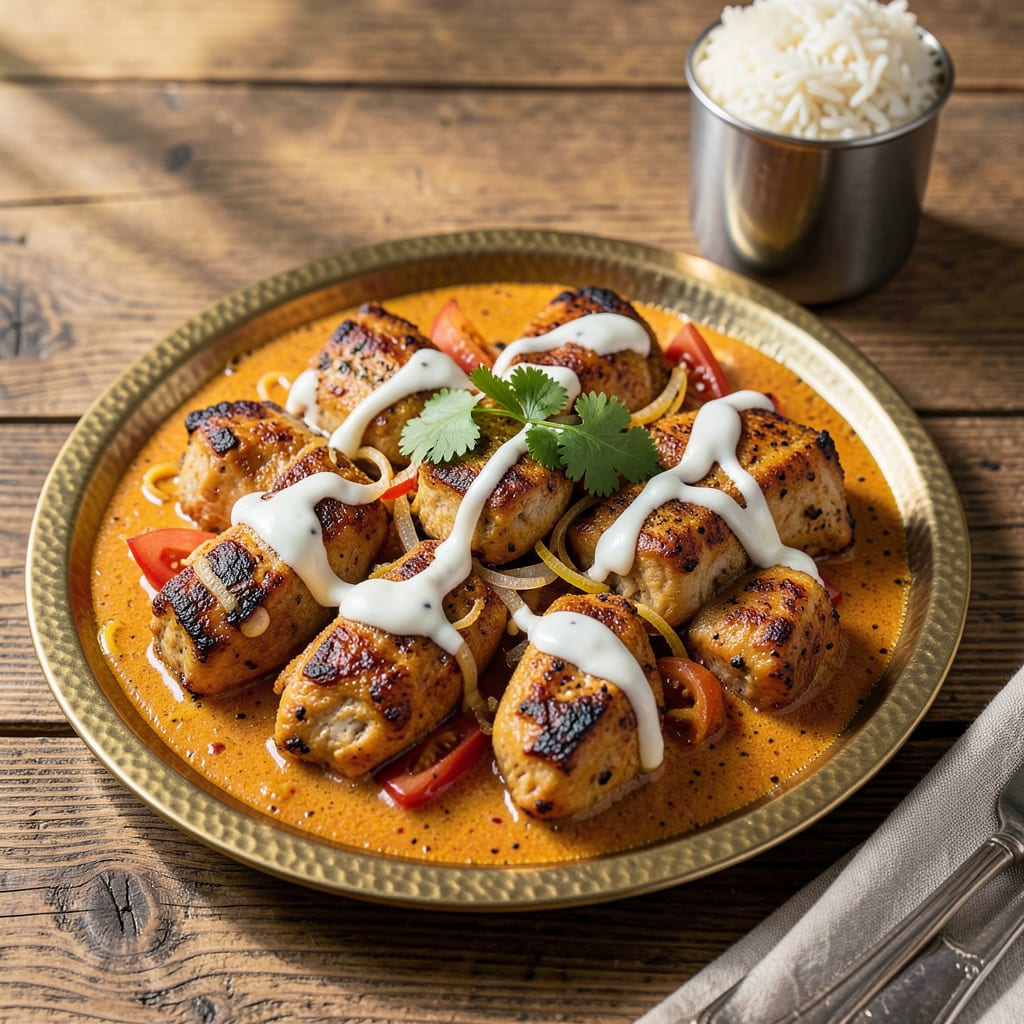
Traditional chicken tikka masala contains dairy through yogurt in the marinade and cream or butter in the sauce. However, dairy-free versions can substitute coconut milk or plant-based yogurt for similar richness.
This classic dish relies on dairy for both texture and flavor balance. The yogurt marinade doesn’t just tenderize the chicken—it creates a protective layer that locks in moisture during high-heat cooking. 🔥 Meanwhile, the cream or butter in the sauce serves as a flavor bridge, mellowing the intensity of spices like garam masala and chili powder while adding that signature velvety mouthfeel. What many don’t realize is that these dairy elements were originally practical solutions: yogurt preserved meat in India’s heat, while cream balanced the bold spices developed during the Mughal era.
💡 In This Article
- Dairy Components in Authentic Chicken Tikka Masala
- Dairy-Free Chicken Tikka Masala Substitutes and Techniques
Dairy Components in Authentic Chicken Tikka Masala
The yogurt marinade isn’t just for flavor—it’s a chemical tenderizer. The lactic acid in yogurt breaks down muscle proteins in chicken through a process called proteolysis, making the meat up to 30% more tender than unmarinated chicken.
Traditional recipes use full-fat dairy yogurt (about 1 cup per 2 lbs chicken) because the fat content creates a protective barrier during high-heat grilling, preventing moisture loss. This is why restaurant versions stay juicy even when cooked at 450°F in tandoor ovens. 🔥
Cream or butter in the sauce serves three critical functions. First, the fat molecules encapsulate capsaicin (the compound that makes chili peppers hot), reducing perceived spiciness by up to 40%. Second, they create emulsion droplets that coat the palate, enhancing the dish’s velvety texture.
Third, dairy fats act as flavor carriers, helping fat-soluble spices like turmeric and cumin disperse evenly. North Indian versions typically use 1/2 cup heavy cream, while South Indian adaptations might use 2 tbsp butter for a lighter finish. ✨
Regional variations show how adaptable dairy use can be. Punjab-style tikka masala might include malai (clotted cream) for extra richness, while Hyderabad versions often use curd (thinner yogurt) in both marinade and sauce.
The dairy choice affects cooking times too—cream-based sauces should simmer at low heat (220°F) to prevent curdling, while butter-based versions can handle medium heat (300°F) for deeper flavor development. This flexibility explains why the dish tastes different from Delhi to Mumbai. 🌟
What most home cooks miss is the temperature shock technique. Professional chefs add cold cream (40°F) to hot sauce (180°F) off-heat to create micro-emulsions that thicken naturally. This prevents the separated, greasy texture that happens when dairy is added too early.
The contrast also preserves the vibrant orange-red color from tomatoes and paprika, which would otherwise dull with prolonged cooking. 💫
The dairy components also contribute to the dish’s signature aroma. When yogurt marinade contacts high heat, the Maillard reaction between amino acids and sugars creates over 200 volatile compounds, including furans and pyrazines that give tikka its smoky, meaty scent.
Butter adds diacetyl (the same compound in movie theater popcorn) that rounds out the spice notes. This is why dairy-free versions often need extra toasted spices to compensate for missing aromatic complexity. ⚡
Even the salt content matters—traditional recipes balance 1 tsp salt per cup of yogurt to control protein denaturation. Too much salt makes the yogurt release whey, creating a watery marinade. Too little prevents proper tenderization.
This precise ratio, developed over centuries, explains why authentic versions have that perfect bite—firm enough to hold shape but tender enough to melt in your mouth. 💛

- Jollof Rice Sauce Recipe: West African Tomato and Spice Infusion - September 25, 2026
- Japanese Rice Soup Recipe: Umami-Rich Comfort in a Bowl - September 25, 2026
- Homemade Cream Of Rice Recipe: Silk-Smooth Breakfast in Minutes - September 25, 2026