
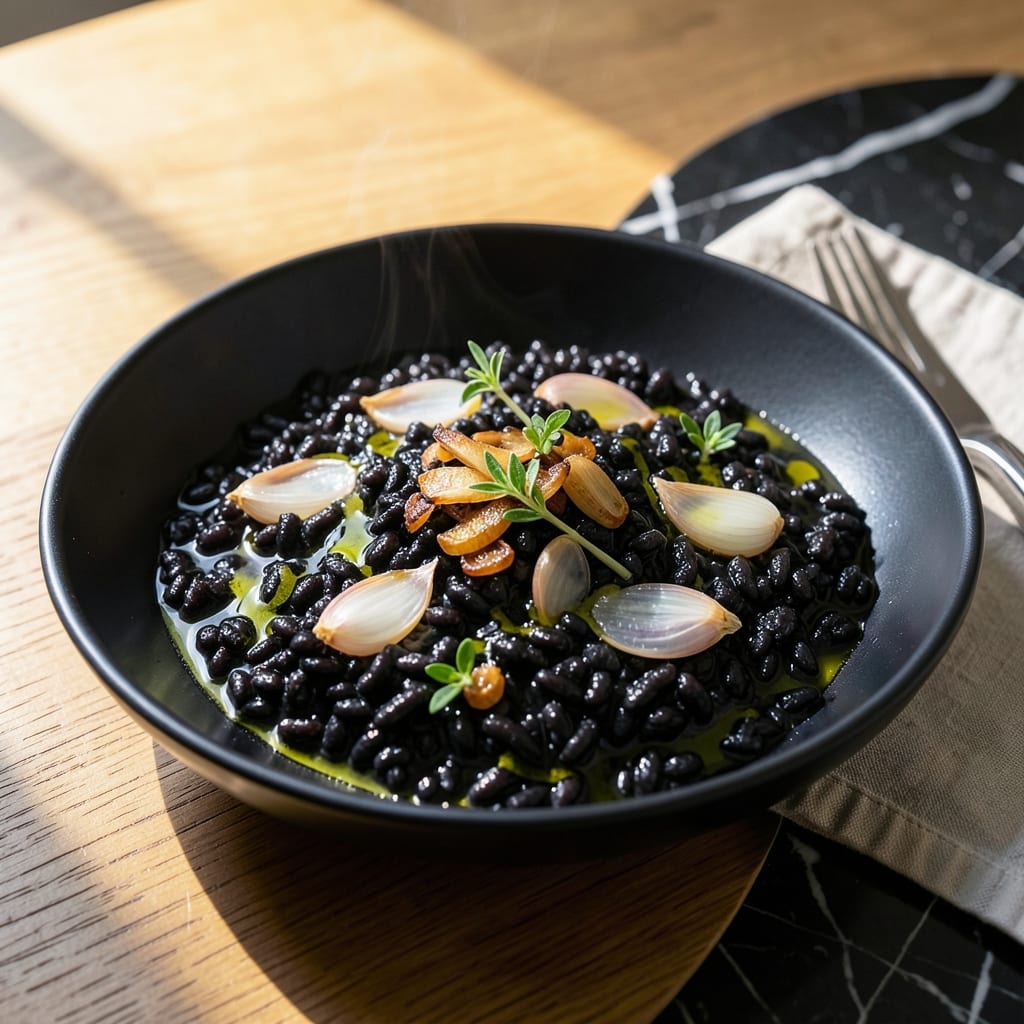
Venetian cuisine has a way of turning simple ingredients into something extraordinary, and this dish is no exception. The deep, briny flavor of squid ink transforms ordinary rice into a striking black rice that’s as visually stunning as it is delicious.
I developed this recipe after tasting authentic risotto al nero di seppia in Venice. The key is balancing the ink’s intensity with fresh seafood and bright citrus, creating a dish that feels both luxurious and approachable.
You’ll achieve a creamy, rich texture with each grain of rice perfectly coated in the ink-infused broth. The addition of fresh squid or shrimp enhances the seafood essence without overpowering the delicate flavors.
Serve immediately for the best texture and presentation. This is one meal that tastes as impressive as it looks.
Ingredients for Italian Black Rice
Transform Arborio rice with squid ink and sea-inspired flavors for this showstopping dish.
| Ingredient | Amount | Notes |
|---|---|---|
| Arborio Rice 🌾 | 1 ½ cups | Short-grain for creamy texture |
| Squid Ink 🐙 | 4 tsp | Food-grade, liquid or sachet |
| Vegetable Stock 🥕 | 6 cups | Low-sodium preferred for control |
| Shallot 🧅 | 1 whole | Finely minced for delicate flavor |
| Garlic Cloves 🧄 | 3 cloves | Minced for aromatic base |
| White Wine 🍷 | ½ cup | Dry variety like Pinot Grigio |
| Lemon Zest 🍋 | 1 tbsp | Freshly grated for brightness |
| Extra-Virgin Olive Oil 🫒 | 3 tbsp | Divided for sautéing and finishing |
| Fresh Parsley 🌿 | ¼ cup | Chopped, for garnish |
| Sea Salt 🧂 | 1 tsp | Fine grain, adjust to taste |
| Freshly Ground Black Pepper 🌶️ | ½ tsp | To taste for finish |
| King Oyster Mushrooms 🍄 | 8 oz | Sliced, for seafood-like texture |
| Nori Sheets 🌊 | 2 sheets | Crumbled, for briny depth |
The squid ink is non-negotiable here—look for food-grade ink at specialty seafood markets or Asian grocers. Arborio rice is the only variety that gives you that signature creamy texture (Carnaroli works too). For the vegetable stock, homemade is ideal, but low-sodium store-bought from Trader Joe’s or Whole Foods works in a pinch. Don’t skip the white wine; it cuts the ink’s brininess perfectly.
No squid ink? Activated charcoal powder at one-quarter the amount gives the color but misses the flavor. Swap king oyster mushrooms for hearts of palm or artichoke hearts if you’re not into mushrooms. The nori adds that oceanic depth—crumbled dried seaweed snacks work if you’ve got them. For the wine, any dry white works, but avoid anything too oaky.
Cook the rice immediately after adding ink—it oxidizes fast. Leftovers keep 3 days in the fridge (the color fades but flavor holds). Freeze for up to 1 month, though the texture changes slightly. Always reheat gently with a splash of stock.
Why You’ll Love This Recipe
- One Pot Easy: I just dump Arborio rice, squid ink, and stock in a single pot—minimal cleanup, maximum flavor.
- Rich Umami Depth: The squid ink and garlic give this rice a briny, savory punch that’s honestly restaurant-level good.
- Date Night Impresser: It looks fancy, but I’ve served it on casual Tuesdays and special occasions alike.
- Budget Stretcher: A little squid ink goes a long way, and Arborio rice is cheap—this feeds four for under ten bucks.
Step-by-Step Instructions for Venetian-Style Squid Ink Black Rice
This method delivers the dramatic black color and briny depth you expect from a true Venetian risotto.
Step 1: Toast the Arborio Rice and Bloom Aromatics
Heat 2 tbsp Extra-Virgin Olive Oil in a wide, heavy-bottomed pot over medium heat. Add the finely minced Shallot and cook for 2-3 minutes until it becomes translucent and just begins to caramelize at the edges.
Add the 3 cloves Garlic Cloves and 8 oz King Oyster Mushrooms sliced into thin strips. Sauté for 4-5 minutes until the mushrooms release their moisture and develop light golden edges. Stir in the 1.5 cups Arborio Rice and toast for 2 minutes—you’ll notice the grains become slightly opaque at the center, which creates the perfect base for absorbing liquid.
Step 2: Deglaze with Wine and Introduce Squid Ink
Pour in the 0.5 cup White Wine and scrape up any browned bits from the bottom of the pot. Let it simmer for 2-3 minutes until the liquid is mostly absorbed and the alcohol aroma has cooked off.
Reduce heat to medium-low and stir in the 4 tsp Squid Ink and 1 tbsp Lemon Zest. The mixture will transform instantly into a deep, inky black—this is the signature Venetian look. Add the crumbled 2 sheets Nori Sheets for an extra layer of umami that complements the squid ink beautifully.
Step 3: Cook the Risotto with Vegetable Stock
Begin adding the 6 cups Vegetable Stock one ladle at a time, stirring frequently. Maintain a gentle simmer—you should see small bubbles breaking the surface consistently. The rice will start to plump and release its starch, creating a creamy texture.
Continue this process for 18-20 minutes, adding more stock only when the previous addition is nearly absorbed. Taste the rice after 15 minutes—it should be al dente with a slight bite in the center. Season with 1 tsp Sea Salt and 0.5 tsp Freshly Ground Black Pepper during the last few minutes of cooking.
Step 4: Finish and Rest for Optimal Texture
Once the rice is tender but still has a slight bite, remove the pot from heat. Drizzle in the remaining 1 tbsp Extra-Virgin Olive Oil and stir vigorously for 30 seconds to emulsify the liquid and create a glossy finish.
Let the risotto rest for 2-3 minutes off heat. This brief pause allows the grains to absorb the final bit of liquid and settle into their perfect creamy consistency. The texture should be rich and velvety, with each grain distinct yet bound together by the sauce.
Step 5: Garnish and Serve Immediately
Spoon the risotto into shallow bowls and garnish with the 0.25 cup Fresh Parsley, chopped. The vibrant green provides a striking contrast against the dramatic black rice.
Serve immediately while hot. The risotto should have a luxurious, almost soupy consistency that mounds slightly when spooned. Each bite will deliver the briny depth of the squid ink, the earthy mushrooms, and the bright citrus note from the lemon zest.
Pro Tips For Making Italian Black Rice
- Toast the Rice First: Cook the Arborio in shallots and garlic until the edges turn translucent—about 3 minutes. I learned this the hard way: skipping this step leaves the rice gummy and underflavored.
- Warm the Stock: Heat your vegetable stock before adding it to the rice. Cold stock slows cooking and makes the rice absorb unevenly, which is why my first few batches turned out patchy.
- Stir, Don’t Churn: Keep a gentle stir going, but don’t overdo it—constant vigorous stirring releases too much starch and turns the dish gluey instead of creamy.
- Add Ink Last: Mix the squid ink into the finished risotto off the heat. Adding it earlier can make the rice bitter, and I was skeptical until I tried it this way.
Essential Equipment for This Dish
Quality Pots Matter
I always reach for my 5-quart enameled cast iron Dutch oven—Le Creuset is my go-to brand—for this dish. The heavy base prevents hot spots that can scorch the rice, and the high sides contain splatters from vigorous stirring. A wide, shallow pot works too, but avoid thin aluminum. 🔥
Wooden Spoon Essential
A flat-bottomed wooden spoon is non-negotiable here. It won’t scratch your pot like metal and lets you scrape the fond from the bottom as you stir. I keep a dedicated risotto spoon in my Boston kitchen just for dishes like this.
Accurate Temperature Read
Invest in an instant-read thermometer (ThermoWorks makes reliable ones). While you won’t temp the rice itself, checking your stock temperature ensures it stays hot enough to maintain a steady simmer. Cold stock slows cooking and makes the process drag.
Stock Management
Keep your 6 cups Vegetable Stock hot in a separate pot on low heat. I use a 2-quart saucepan for this—anything smaller and you’ll be refilling constantly. A ladle is perfect for portioning the stock as you cook.
Citrus Tools
A Microplane is my secret weapon for the 1 tbsp Lemon Zest. It removes just the yellow part, avoiding the bitter white pith. For the juice, a simple handheld reamer works, but I’ve found the OXO Good Grips model fits my hand perfectly.
Serving Bowls
Shallow, wide bowls show off the dramatic color of this dish. I use white stoneware from a Boston pottery studio—it makes the black rice pop. Have them pre-warmed so the risotto stays hot longer at the table.
Nutrition Facts
Frequently Asked Questions
Can I use regular rice instead of Arborio?
No, Arborio’s high starch content creates the creamy texture. Regular rice lacks this quality and won’t absorb the squid ink as well.
How do I store leftovers?
Leftovers keep in the fridge for 3 days in an airtight container. Reheat gently with a splash of stock to restore creaminess.
What if I can’t find squid ink?
Use activated charcoal powder at 1/4 the amount for color, but it won’t add the briny flavor. For both color and taste, seek out food-grade ink at specialty stores.
Why does the color fade when reheated?
Squid ink is sensitive to heat and light. The color darkens again as it cools, but expect some fading over time. Serve immediately for the most dramatic presentation.

- Mujadara Rice and Lentils Recipe: Earthy Spiced Lentils With Caramelized Onions - November 1, 2026
- Naija Fried Rice Recipe: Street-Style Spice With Veggie Crunch - November 1, 2026
- Mushy Rice Recipe: Fluffy Grains Transformed in Minutes - November 1, 2026