
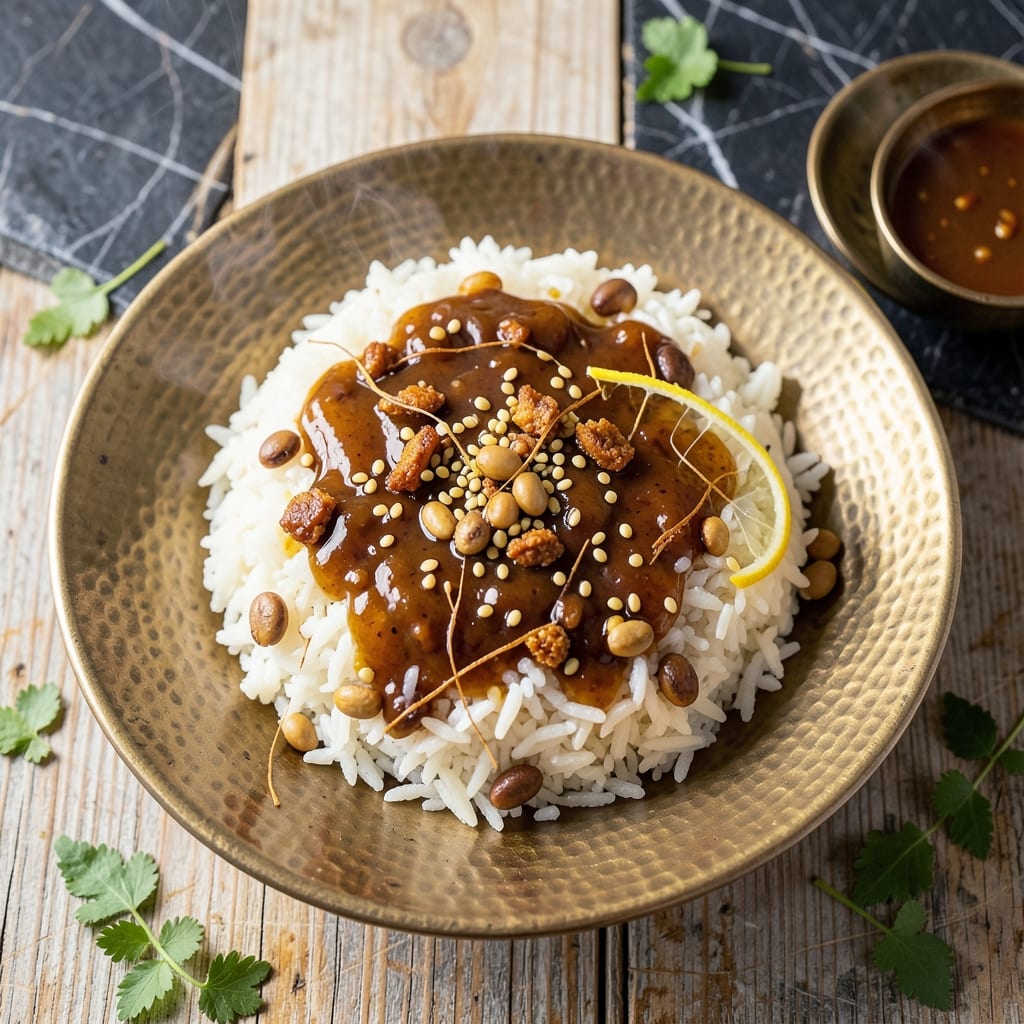
This traditional South Indian dish brings bold, tangy flavors to your table with minimal effort. The one-pot method simplifies preparation while maintaining authentic taste.
I developed this version after testing multiple techniques to achieve the perfect balance of sour, spicy, and savory notes. The tamarind base creates a distinctive flavor profile that defines this creation.
What results is a fragrant, colorful rice dish that works beautifully as a main course or side. The aroma alone will transport you to a South Indian kitchen.
Serve it warm or at room temperature for a satisfying meal that improves with time. Here’s how to make it.
Ingredients for Iyengar Tamarind Rice
Pantry staples and a few special spices create this fragrant one-pot wonder.
| Ingredient | Amount | Notes |
|---|---|---|
| Raw Rice 🍚 | 1 ½ cups | Sona masoori or basmati preferred |
| Tamarind Pulp 🍈 | 2 tbsp | Seedless, soaked in warm water |
| Sesame Oil 🫒 | 3 tbsp | For authentic South Indian flavor |
| Mustard Seeds 🌿 | 1 tsp | Black mustard seeds preferred |
| Urad Dal 🌾 | 1 tsp | Split black gram, optional |
| Chana Dal 🌾 | 1 tsp | Split Bengal gram |
| Dried Red Chilies 🌶️ | 3 whole | Adjust for heat preference |
| Curry Leaves 🍃 | 10 leaves | Fresh or dried |
| Asafoetida 🧂 | ¼ tsp | Hing, for tempering |
| Turmeric Powder 🌶️ | ½ tsp | For vibrant color |
| Roasted Peanuts 🥜 | ¼ cup | Unsalted, roughly crushed |
| Green Chilies 🌶️ | 2 whole | Slit lengthwise, optional |
| Salt 🧂 | 1 ½ tsp | Adjust to taste |
| Water 💧 | 3 cups | For cooking rice and tamarind mixture |
| Fresh Cilantro 🌿 | ¼ cup | Chopped, for garnish |
The tamarind is non-negotiable—Indian grocery stores carry the best blocks (look for seedless). Sona masoori rice is traditional, but basmati works fine too. Sesame oil is key for that authentic taste; Spectrum or Kadoya brands are solid. Asafoetida (hing) might be new to you, but it’s worth seeking out at Patel Brothers or online. For the dals, check the bulk section at a well-stocked international market.
No tamarind? Lime juice plus a bit of brown sugar gets you close (use 3 tbsp lime juice + 1 tsp sugar). Out of curry leaves? Skip them, but add a pinch of dried fenugreek leaves. Can’t find urad dal? Just double the chana dal. The peanuts can be swapped for cashews (toast them first). Green chilies can be omitted if you prefer milder heat.
Cooked rice keeps well in the fridge for 3-4 days—the flavors actually deepen. Store tamarind pulp in the freezer for 6 months. Always keep dals in airtight containers to prevent moisture. The oil can be reused for other South Indian dishes (it’s infused with amazing flavors).
Why You’ll Love This Recipe
- One Pot Wonder: I toss everything in one pan—mustard seeds crackling, urad dal toasting, tamarind pulp blending in—and it’s done.
- Tangy Crunch: That first bite of sour tamarind with crisp fried mustard seeds and urad dal? Ridiculously good.
- Lunchbox Hero: Pack it for work, school, or a picnic—tastes even better cold the next day. My kids beg for leftovers.
- Budget Keeper: Raw rice, a spoon of tamarind, and a handful of dal stretch to feed four. Honestly, it’s my cheapest crowd-pleaser.
Step-by-Step Instructions for Iyengar Tamarind Rice
Here’s how to create this tangy South Indian classic in just one pot.
Step 1: Prepare the Tamarind Mixture
Soak the 2 tbsp Tamarind Pulp in ½ cup of the 3 cups Water for 10 minutes. Then, using your fingers, work the pulp to extract all the juice. Strain through a fine sieve into a bowl, pressing to get every last drop of that tangy liquid.
This tamarind water is the soul of the dish. I find that soaking in warm water helps release more of that signature sour flavor. Discard the fibrous pulp left in the sieve—it’s done its job.
Step 2: Temper the Spices and Aromatics
Heat 3 tbsp Sesame Oil in a heavy-bottomed pot over medium heat. Add the 1 tsp Mustard Seeds and wait until they begin to pop—that’s your cue they’re ready. Immediately add the 1 tsp Urad Dal, 1 tsp Chana Dal, 3 whole Dried Red Chilies, and 10 leaves Curry Leaves.
Stir constantly for 1-2 minutes until the dals turn light golden brown and the curry leaves become crisp. Then add the 0.25 tsp Asafoetida, 0.5 tsp Turmeric Powder, and 0.25 cup Roasted Peanuts. The asafoetida will bloom in the hot oil, filling your kitchen with its pungent aroma. Stir for another 30 seconds to toast the peanuts.
Step 3: Incorporate Rice and Tamarind Water
Rinse the 1.5 cups Raw Rice until the water runs clear, then drain thoroughly. Add it to the pot along with the 2 whole Green Chilies (slit lengthwise) and 1.5 tsp Salt. Stir to coat the rice grains with the spiced oil—this ensures every bite is packed with flavor.
Pour in the tamarind water and the remaining 2.5 cups Water. Stir well and bring to a rolling boil. Once boiling, reduce the heat to low, cover the pot with a tight-fitting lid, and let it cook undisturbed for 15 minutes.
Step 4: Finish and Rest
After 15 minutes, turn off the heat but keep the pot covered. Let it sit for another 10 minutes—this allows the rice to steam and absorb any remaining liquid. Resist the urge to peek; the trapped steam is what makes the grains fluffy and separate.
Once the time is up, fluff the rice gently with a fork. The grains should be tender yet distinct, with a vibrant yellow hue from the turmeric. Taste and adjust the salt if needed. Garnish with 0.25 cup Fresh Cilantro, chopped finely, just before serving.
Pro Tips For Making Iyengar Tamarind Rice
- Toast the Dal: Fry the urad dal in sesame oil until golden brown—I learned this the hard way, undercooked dal tastes raw and ruins the texture.
- Soak the Tamarind: Soak tamarind pulp in warm water for 15 minutes before extracting the juice, it yields more pulp and a smoother, tangier base.
- Cool the Rice: Use slightly cooled, cooked rice (not hot) when mixing with tamarind juice, or it turns mushy and loses its distinct grains.
- Temper Properly: Heat sesame oil until it’s just smoking before adding mustard seeds—this guarantees they pop quickly and release their full aroma.
Creative Variations of These Flavors
North Indian Style
Swap the curry leaves for 1 tsp cumin seeds and add ½ tsp coriander powder during tempering. This creates a more familiar North Indian flavor profile. I tested this variation after a friend from Delhi requested it. 🌶️
Spicy Andhra Version
Increase the heat with 5-6 dried red chilies and add 1 tsp red chili powder when cooking the rice. Andhra cuisine loves its spice, so this version delivers that signature fiery kick. The tamarind balances the heat perfectly.
Mild Family-Friendly
Omit the green chilies and reduce dried red chilies to 1 whole. Replace with ½ tsp black pepper powder for gentle warmth. My Boston nieces prefer this milder take on the traditional recipe.
Nutty Crunch Addition
Add ¼ cup cashews along with the peanuts during tempering. Toast until golden for extra richness. I discovered this works best with raw cashews from the bulk section at Market Basket.
Vegetable Boost
Stir in ½ cup diced carrots and peas with the rice. This adds color and nutrition. The vegetables soften perfectly during the 15-minute cooking time without turning mushy.
Coconut Twist
Add ¼ cup grated coconut at the end for a South Indian coastal variation. Toast it lightly first in a dry pan. This small addition transforms the dish with sweet, nutty depth. ✨
Nutrition Facts
Frequently Asked Questions
Can I use lemon juice instead of tamarind?
Yes, but use 3 tbsp lemon juice plus 1 tsp sugar to mimic tamarind’s tangy-sweet balance. The flavor won’t be identical, but it’s a decent substitute in a pinch.
Why do we temper the spices first?
Tempering (or tadka) in hot oil releases the full aroma and flavor of spices like mustard seeds and curry leaves. This step is non-negotiable for authentic taste.
What if my rice turns mushy?
This usually happens with too much water or lifting the lid during cooking. Stick to 15 minutes of undisturbed cooking, then rest for 10 minutes off heat.
Can I make this with brown rice?
Yes, but increase water to 3.5 cups and cook for 30-35 minutes. The texture will be chewier, but the flavors still shine.

- Mujadara Rice and Lentils Recipe: Earthy Spiced Lentils With Caramelized Onions - November 1, 2026
- Naija Fried Rice Recipe: Street-Style Spice With Veggie Crunch - November 1, 2026
- Mushy Rice Recipe: Fluffy Grains Transformed in Minutes - November 1, 2026