
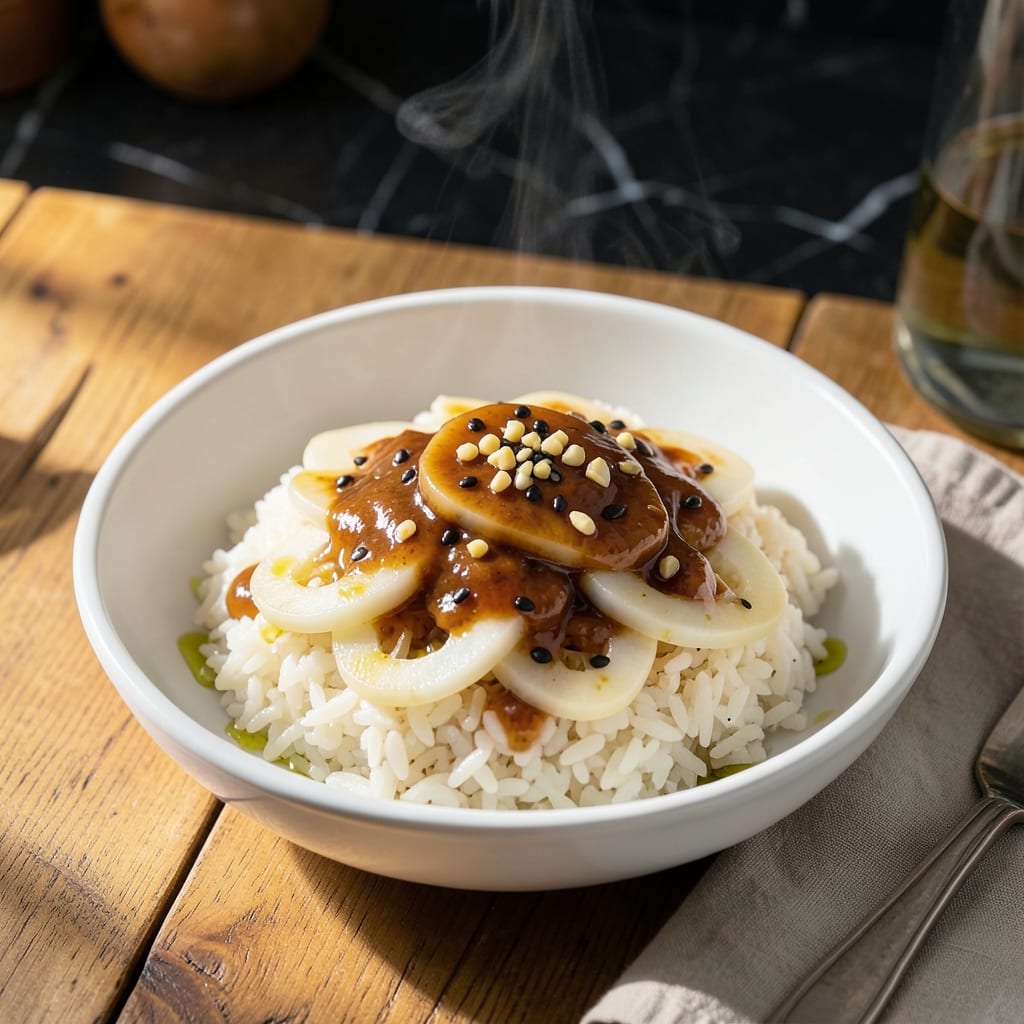
This Korean thistle rice dish brings a unique texture and flavor profile to your table that’s hard to find elsewhere.
I’ve refined this traditional recipe to highlight the nutty, earthy qualities of thistle while keeping the preparation simple and accessible. The key is properly preparing the thistle to remove any bitterness before combining it with rice.
What emerges is a satisfying side dish with a delightful crunch and deep umami notes that complement any Korean meal. The thistle’s texture contrasts beautifully with the soft, fluffy rice.
The process takes about 45 minutes from start to finish, with most of that time being hands-off. It’s a dish that rewards patience with its complex, comforting flavors.
Ingredients for Korean Thistle Rice
Earthy thistle and fluffy rice combine with Korean flavors for this unique dish.
| Ingredient | Amount | Notes |
|---|---|---|
| Thistle Root 🌿 | 1 lb | Fresh, peeled and sliced thin |
| Short-Grain White Rice 🍚 | 1 ½ cups | Rinsed until water runs clear |
| Vegetable Stock 🥣 | 2 cups | Low-sodium preferred for control |
| Soy Sauce 🫒 | 3 tbsp | Use tamari for gluten-free option |
| Sesame Oil 🫒 | 1 tbsp | Toasted for nutty aroma |
| Garlic Cloves 🧄 | 4 cloves | Minced finely for even flavor |
| Fresh Ginger 🌿 | 1 tbsp | Grated for maximum infusion |
| Green Onions 🧅 | 4 whole | Thinly sliced, white and green parts |
| Toasted Sesame Seeds 🌰 | 2 tbsp | For garnish and crunch |
| Gochugaru 🌶️ | 1 tsp | Korean red pepper flakes optional |
| Salt 🧂 | ½ tsp | Adjust to taste after cooking |
| Black Pepper 🌶️ | ¼ tsp | Freshly ground preferred |
| Nutritional Yeast 🧀 | 2 tbsp | For umami depth in vegan cooking |
The thistle root is non-negotiable here. Korean markets or well-stocked Asian grocers are your best bet—look for firm, unblemished roots with vibrant color. If unavailable, dried thistle can work (rehydrate first), but fresh delivers the authentic texture and nutty depth. Avoid any with soft spots or excessive bitterness, which indicates poor quality or age.
No gochugaru? Substitute with cayenne at half the amount for heat, though you’ll miss the smoky complexity. For the stock, homemade vegetable stock elevates this dish, but Better Than Bouillon works in a pinch. Nutritional yeast can be swapped with white miso paste (1:1 ratio) for a different umami profile. The sesame oil must be toasted—regular lacks the depth.
Store fresh thistle wrapped in damp paper towels for up to 3 days. Cooked rice keeps 4 days refrigerated or 3 months frozen. Toast sesame seeds just before using—they go stale quickly. Always rinse rice until water runs clear to remove excess starch.
Why You’ll Love This Recipe
- One Pot Wonder: Honestly, it’s just rice, thistle root, and a few pantry staples simmered together—no fancy techniques, no extra pots.
- Umami Bomb: That sesame oil and soy sauce combo with the earthy thistle? I’ll be real: it’s the kind of flavor that lingers long after the last bite.
- Meal Prep MVP: Makes a solid batch that keeps well for days, and it’s just as good cold for lunch the next day.
- Budget Stretcher: Thistle root is cheap and filling. Between us, this feeds my family for two meals without breaking the bank.
Step-by-Step Instructions for Korean Thistle Rice
This method balances earthy thistle with nutty rice and umami depth for authentic results.
Step 1: Prepare the Thistle Root and Aromatics
Peel the 1 lb Thistle Root thoroughly, as its fibrous exterior can be tough. Slice it into thin, even pieces—about ⅛-inch thick—to ensure it cooks through without becoming mushy. Thin slices also allow the flavors to penetrate more effectively during the cooking process.
Mince the 4 cloves Garlic Cloves finely and grate the 1 tbsp Fresh Ginger to maximize their aromatic infusion into the dish. Thinly slice the 4 whole Green Onions, keeping white and green parts separate for layered flavor and visual appeal. Set all prepared ingredients aside in small bowls for easy access during cooking.
Step 2: Cook the Short-Grain White Rice
Rinse the 1.5 cups Short-Grain White Rice under cold water until the water runs completely clear—this removes excess starch and prevents a gummy texture. Drain well, then combine the rice with the 2 cups Vegetable Stock in a medium saucepan.
Bring to a boil over high heat, then immediately reduce to low heat, cover, and simmer for 15 minutes. Remove from heat and let it rest, covered, for another 10 minutes to allow the grains to steam and absorb any remaining liquid. This ensures perfectly tender, sticky rice that clumps beautifully when mixed.
Step 3: Sauté the Thistle and Build Flavor
Heat the 1 tbsp Sesame Oil in a large skillet over medium heat. Add the sliced thistle root and stir-fry for 5-6 minutes until it begins to soften but retains a slight bite. The thistle should turn a deeper green and develop a mild, earthy aroma.
Add the minced garlic, grated ginger, 0.5 tsp Salt, and 0.25 tsp Black Pepper to the skillet. Sauté for 1 minute until the garlic is fragrant but not browned. Stir in the white parts of the green onions and cook for an additional 30 seconds to meld the flavors. Pour in the 3 tbsp Soy Sauce and 1 tsp Gochugaru, stirring to coat the thistle evenly.
Step 4: Combine and Finish with Umami Depth
Add the cooked rice to the skillet with the thistle mixture. Gently fold everything together over low heat for 2-3 minutes, allowing the rice to absorb the flavors and the thistle to distribute evenly. Avoid pressing down too hard to keep the grains intact and fluffy.
Sprinkle the 2 tbsp Nutritional Yeast over the mixture and fold in gently—this adds a subtle cheesy, umami depth that complements the earthy thistle. Taste and adjust seasoning if needed, though the soy sauce and nutritional yeast should provide ample saltiness. The dish should have a cohesive, savory profile with a hint of nutty richness.
Step 5: Garnish and Serve
Transfer the thistle rice to a serving bowl and garnish with the reserved green onion tops and 2 tbsp Toasted Sesame Seeds. The sesame seeds add a delightful crunch and visual contrast, while the green onions provide a fresh, mild bite to balance the dish.
Serve immediately while warm. The texture should be a harmonious mix of tender thistle, sticky rice, and a slight crispness from the sesame seeds, with every bite delivering layers of earthy, nutty, and umami flavors.
Pro Tips For Making Korean Thistle Rice
- Soak the Thistle: I learned this the hard way—soak the thistle root in cold water for at least 30 minutes to remove any lingering bitterness before cooking.
- Rinse the Rice: Give the short-grain rice a thorough rinse until the water runs clear to avoid gummy, starchy clumps in your final dish.
- Low and Slow Stock: Use low heat when simmering the vegetable stock with the thistle to prevent the roots from turning mushy before they absorb the flavor.
- Toast the Sesame: Drizzle the sesame oil at the very end, then give it a quick toss over medium heat to deepen its nutty aroma before serving.
Perfect Pairings for This Dish
Korean Main Dishes
This dish pairs beautifully with bulgogi beef or spicy pork—the earthy thistle cuts through the richness. I love serving it alongside Korean fried chicken for a textural contrast that’s hard to beat. The nutty rice soaks up sauces perfectly. 🍗
Vegetable Sides
Balance the meal with kimchi for a tangy kick—about ½ cup per serving adds vibrant flavor. Spinach banchan with sesame dressing complements the earthy notes. For crunch, try quick-pickled radish slices.
Soup Pairings
Doenjang jjigae (soybean paste stew) creates a hearty combo, with the rice adding texture. A light miso soup works too, especially with tofu. I prefer anchovy-based broth for depth without overpowering the thistle. ❄️
Drink Options
Soju is the classic choice—its clean, crisp profile cleanses the palate. For non-alcoholic, try barley tea (boricha) served chilled. Green tea with a slice of lemon enhances the dish’s earthy notes beautifully.
Finishing Touches
Add extra gochugaru at the table for heat lovers—about ¼ tsp per serving. A drizzle of toasted sesame oil before serving amplifies the nutty aroma. Fresh perilla leaves make a fragrant garnish. 💡
Nutrition Facts
Frequently Asked Questions
Where can I find thistle root for this dish?
Look for fresh thistle at Korean markets or well-stocked Asian grocers. Choose firm, unblemished roots with vibrant color. Dried thistle works in a pinch (rehydrate first), but fresh delivers the best texture and flavor.
Can I make this ahead of time?
Yes! Store cooked rice in an airtight container for up to 4 days refrigerated. Reheat gently with a splash of water to restore moisture. For best results, add fresh garnishes like sesame seeds just before serving.
What can I substitute for nutritional yeast?
Use 1 tbsp white miso paste for similar umami depth. Alternatively, a sprinkle of grated Parmesan works if you’re not keeping it vegan. Adjust salt levels accordingly, as miso and cheese add their own saltiness.
Why did my thistle turn out bitter?
Undercooking or using old thistle can cause bitterness. Ensure slices are ⅛-inch thick and sauté for 5-6 minutes until tender. Always use fresh, high-quality thistle for the best flavor.

- Mujadara Rice and Lentils Recipe: Earthy Spiced Lentils With Caramelized Onions - November 1, 2026
- Naija Fried Rice Recipe: Street-Style Spice With Veggie Crunch - November 1, 2026
- Mushy Rice Recipe: Fluffy Grains Transformed in Minutes - November 1, 2026