
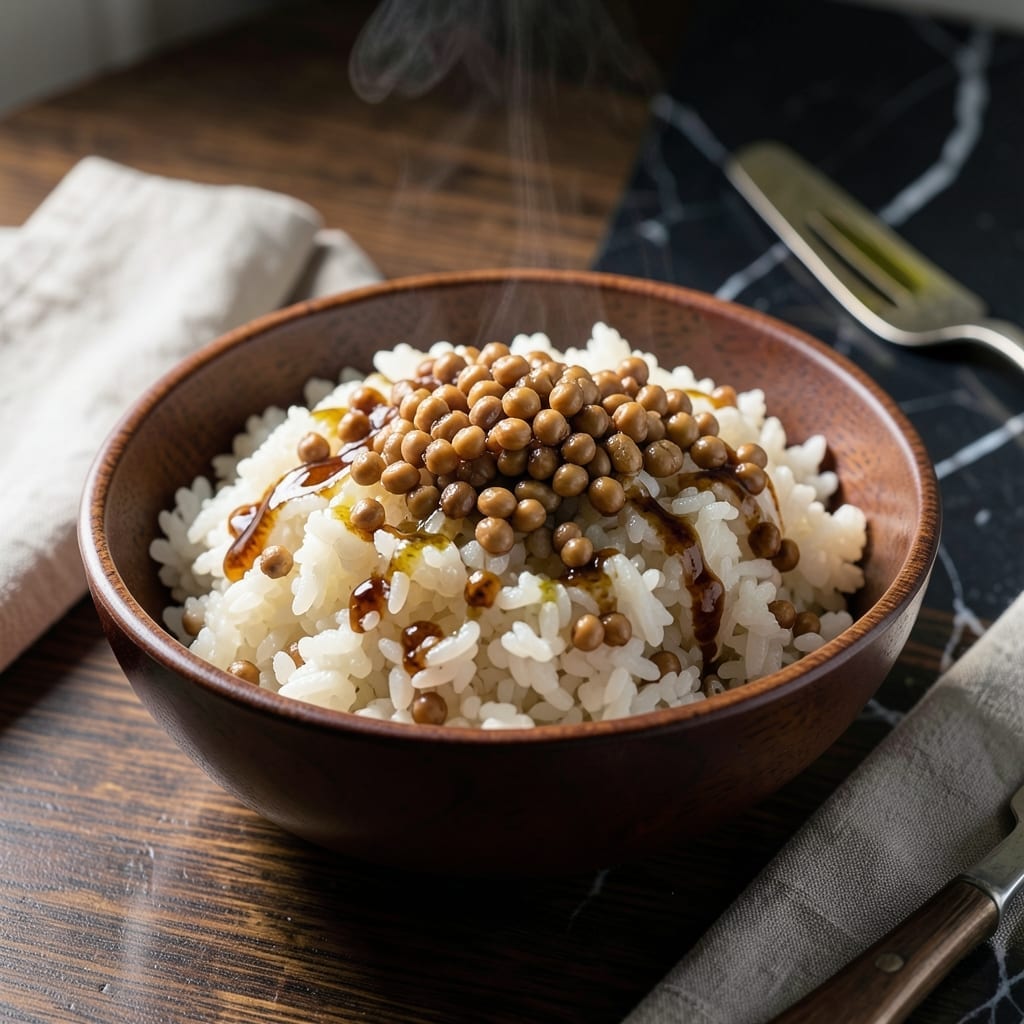
This Japanese barley rice delivers a satisfyingly nutty texture that elevates any meal. The combination of short-grain rice and pearl barley creates a perfect balance of softness and chew.
I’ve refined this method to ensure the grains cook evenly, with the barley maintaining its distinct bite. The result is a dish that’s both comforting and full of depth.
Simple ingredients and precise timing are all it takes. The barley absorbs the cooking liquid, infusing every bite with its earthy flavor.
Serve it as a side or base for your favorite proteins. This version stays fluffy and flavorful every time.
Ingredients for Japanese Barley Rice
Simple, wholesome ingredients create this satisfying nutty rice dish with depth in every bite.
| Ingredient | Amount | Notes |
|---|---|---|
| Short-Grain White Rice 🍚 | 2 cups | Sushi rice works perfectly |
| Pearl Barley 🌾 | ½ cup | Rinsed thoroughly before cooking |
| Water 💧 | 3 cups | Filtered or spring water preferred |
| Rice Vinegar 🍶 | 1 tbsp | Seasoned or unseasoned |
| Soy Sauce 🥢 | 1 tbsp | Low-sodium if preferred |
| Toasted Sesame Oil 🫒 | 1 tsp | For finishing touch |
| Sea Salt 🧂 | ½ tsp | Fine grain preferred |
| Sugar 🍚 | 1 tsp | Optional, balances flavors |
| Dashi Stock 🍲 | 1 cup | Vegan dashi or kombu-based |
| Green Onions 🧅 | 3 whole | Thinly sliced for garnish |
| Sesame Seeds 🌿 | 1 tbsp | Toasted, for topping |
The rice and barley quality matters here. Short-grain sushi rice from Japanese markets or Whole Foods gives the best texture. Pearl barley should be uniform in size (check Bob’s Red Mill for consistency). Rinse both thoroughly to remove excess starch—this prevents a gummy final product. The dashi stock adds authentic depth; look for kombu-based vegan dashi at Asian grocers.
No dashi? Vegetable broth with a piece of kombu simmered for 10 minutes works. Short on barley? Substitute with brown rice (adjust water to 1.25 cups per 0.5 cup rice). The soy sauce can be tamari for gluten-free. Skip the sugar if you prefer savory over balanced. Toasted sesame oil is non-negotiable—it adds that signature aroma.
Cooked rice keeps 4-5 days refrigerated in an airtight container. Freeze for up to 3 months in portions. Reheat with a splash of water to restore moisture. The barley continues to absorb liquid, so it’s best served fresh but still delicious the next day.
Why You’ll Love This Recipe
- Minimal Effort: I just dump the rice, barley, and water in the pot and let it simmer—no stirring, no fuss.
- Umami Bomb: The soy sauce and rice vinegar give it that deep, savory-sweet flavor I crave with every bite.
- Meal Prep Hero: It keeps beautifully for days, so I make a big batch and pair it with anything from grilled fish to stir-fried veggies.
- Budget Stretcher: Pearl barley is cheap, and mixing it with rice makes the bag go further without sacrificing taste.
Step-by-Step Instructions for Japanese Barley Rice
Master this technique for perfectly fluffy grains with a delightful chewy texture in every bite.
Step 1: Rinse and Prepare the Grains
Place the 2 cups Short-Grain White Rice and 0.5 cup Pearl Barley in a fine-mesh strainer and rinse under cold running water. I agitate the grains with my hand for 1-2 minutes until the water runs clear, which removes excess starch that could make the rice gummy.
Drain thoroughly in the strainer for 5 minutes, shaking occasionally to remove all excess water. This step ensures each grain cooks evenly and maintains its distinct texture. The pearl barley requires this extra attention as its starch content differs from the rice.
Step 2: Cook with Dashi and Water
In a heavy-bottomed pot with a tight-fitting lid, combine the 3 cups Water, 1 cup Dashi Stock, 0.5 tsp Sea Salt, 1 tsp Sugar, 1 tbsp Soy Sauce, and the drained rice and barley mixture. Stir gently to distribute the grains evenly.
Bring to a boil over medium-high heat, then immediately reduce to low heat. Cover and simmer undisturbed for 25 minutes. You’ll see steam escaping from the lid and hear a gentle simmer—this indicates proper heat levels for even cooking.
Step 3: Steam and Season
After 25 minutes, remove from heat but keep the lid on. Let it steam for an additional 10 minutes. This resting period allows the grains to absorb any remaining liquid and achieve their final texture—fluffy rice with chewy barley throughout.
Gently fluff the mixture with a rice paddle or fork. Drizzle the 1 tbsp Rice Vinegar evenly over the top and fold in carefully. The vinegar adds a subtle brightness that complements the nutty barley and umami-rich dashi.
Step 4: Finish and Garnish
Transfer to a serving bowl. Drizzle with the 1 tsp Toasted Sesame Oil and sprinkle with the 1 tbsp Sesame Seeds. The sesame oil adds a fragrant finish that enhances the dish’s aromatic profile.
Top with the thinly sliced 3 whole Green Onions just before serving. The green onions provide a fresh, crisp contrast to the warm, hearty grains. Serve immediately while the rice is at its peak texture and temperature.
Pro Tips For Making Japanese Barley Rice
- Soak the Barley: Pearl barley needs at least 30 minutes in cold water before cooking—it softens enough to cook evenly with the rice. I learned this the hard way after pulling out crunchy grains from my first few batches.
- Rinse the Rice: Wash the short-grain rice under cold water until the water runs clear to remove excess starch. Skipping this leaves you with gummy, sticky rice instead of those perfect separate grains.
- Use the Right Ratio: For every cup of rice and barley combined, use 1 3/4 cups water. After burning a pot by guessing, I now measure religiously—it’s the only way to guarantee consistent texture.
- Add Vinegar Late: Stir in the rice vinegar and soy sauce after cooking, not before. Adding them early can make the grains tough—I was skeptical until I tried it, but the difference in tenderness is undeniable.
Regional Styles of These Flavors
Tokyo Style
In the capital, this dish often includes a splash of mirin alongside soy sauce for subtle sweetness. I use 1 tbsp mirin with the dashi for authentic Tokyo flavor. The barley-to-rice ratio remains 1:4 for consistency. 🌟
Osaka Variation
Osaka chefs prefer a stronger umami profile, so they add 1 tsp miso paste to the cooking liquid. The barley is often toasted lightly in the pot before liquid is added. This creates a deeper, more complex flavor base.
Hokkaido Approach
In Hokkaido, they use local brown rice instead of white rice, increasing the water to 3.5 cups. The colder climate there makes the barley slightly chewier. I love how this version highlights Hokkaido’s agricultural bounty.
Kyoto Tradition
Kyoto’s version emphasizes presentation, often shaping the finished rice into small mounds. They use white sesame seeds exclusively for garnish and add 1 tsp sake to the cooking liquid for extra depth.
Okinawa Twist
Okinawa incorporates local purple sweet potato pieces into the mix. The potato is diced into ½-inch cubes and added with the grains. This adds natural sweetness and a vibrant color contrast. 💜
Nagano Style
In Nagano, they use mountain-grown barley that’s slightly smaller. The cooking time reduces to 20 minutes with an extra 5 minutes of steaming. The high-altitude barley has a unique, earthier flavor profile.
Nutrition Facts
Frequently Asked Questions
Can I use brown rice instead of white?
Swap white for brown rice but increase water to 3.5 cups and extend cooking time to 40 minutes. The texture will be heartier and nuttier.
Why do I need to rinse the grains so thoroughly?
Rinsing removes excess starch that could make the final dish gummy. It also prevents clumping, ensuring each grain cooks evenly and maintains its distinct texture.
Can I make this in a rice cooker?
Yes! Use the same liquid ratio and cook on the standard setting. Let it steam for 10 minutes after cooking completes for best results.
How do I store leftovers?
Keep in an airtight container in the fridge for 4-5 days. Reheat with a splash of water to restore moisture and fluffiness.

- Mujadara Rice and Lentils Recipe: Earthy Spiced Lentils With Caramelized Onions - November 1, 2026
- Naija Fried Rice Recipe: Street-Style Spice With Veggie Crunch - November 1, 2026
- Mushy Rice Recipe: Fluffy Grains Transformed in Minutes - November 1, 2026