
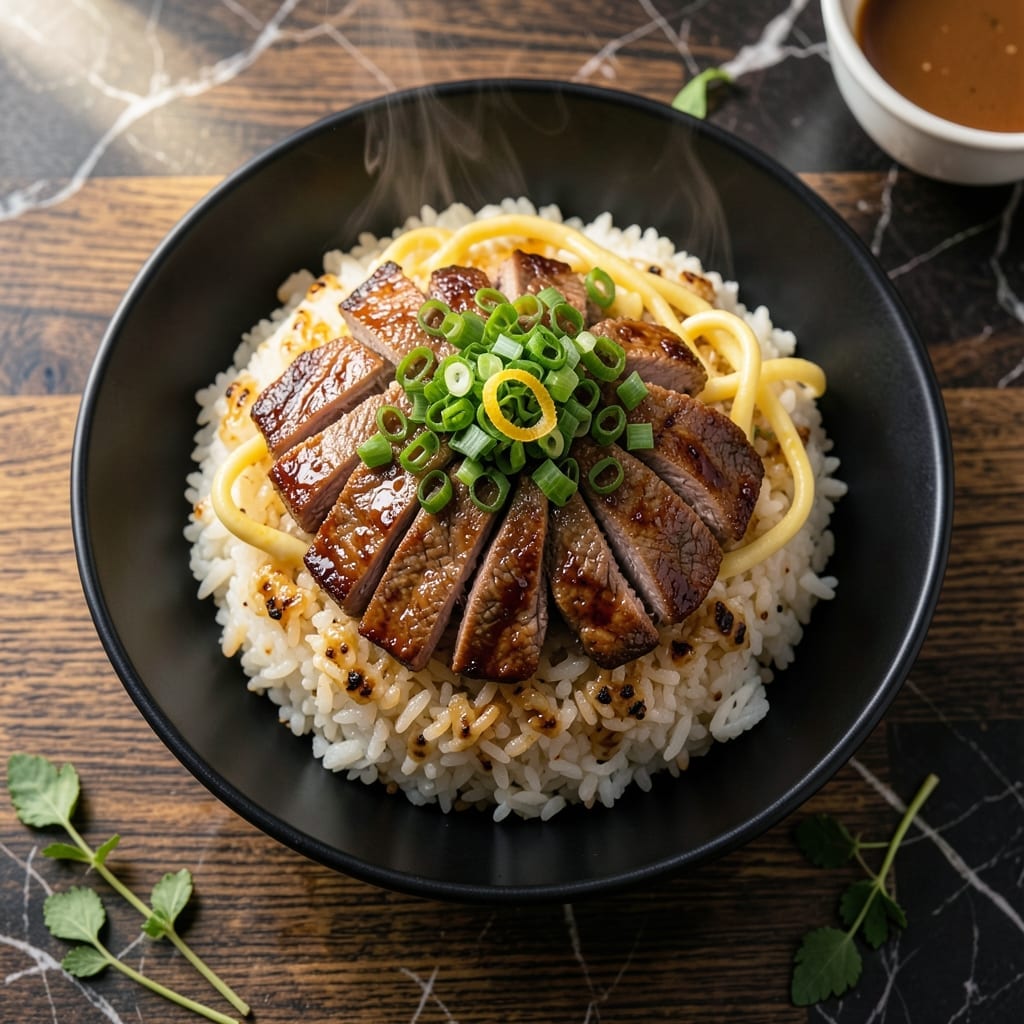
This Japanese beef fried rice delivers bold umami flavor with every bite through a simple wok-searing technique. The combination of tender beef, fluffy rice, and fresh scallions creates a dish that’s both hearty and balanced.
I developed this method after testing various approaches to achieve that signature restaurant-style texture. The key is using day-old rice and cooking over high heat to create those coveted crispy bits while keeping the beef juicy.
What emerges from the wok is a colorful, aromatic dish where each grain of rice carries flavor. The scallions add a bright finish that cuts through the richness, making this perfect as a main or side.
Ready in under 30 minutes, this recipe proves that authentic Japanese flavors can be achieved in any home kitchen.
Ingredients for Japanese Beef Fried Rice
High-heat wok work transforms day-old rice and tender beef into restaurant-style umami perfection.
| Ingredient | Amount | Notes |
|---|---|---|
| Day-Old Cooked White Rice 🍚 | 4 cups | Chilled, grains separated |
| Ribeye Steak 🥩 | 1 lb | Thinly sliced against grain |
| Scallions 🧅 | 6 whole | Thinly sliced, whites and greens separated |
| Large Eggs 🥚 | 3 whole | Lightly beaten |
| Soy Sauce 🫒 | 3 tbsp | Low-sodium preferred |
| Oyster Sauce 🫒 | 1 tbsp | Or vegetarian oyster sauce |
| Sesame Oil 🫒 | 1 tsp | Toasted variety for depth |
| Neutral Cooking Oil 🫒 | 3 tbsp | High smoke point for wok frying |
| Garlic Cloves 🧄 | 4 cloves | Minced for aromatic base |
| Fresh Ginger 🌿 | 1 tbsp | Finely grated or minced |
| Frozen Peas 🌱 | ¾ cup | Thawed, patted dry |
| Carrot 🥕 | 1 whole | Small dice, uniform pieces |
| Kosher Salt 🧂 | ½ tsp | Adjust to taste at end |
| Ground White Pepper 🌶️ | ¼ tsp | Traditional for subtle heat |
The ribeye is non-negotiable for texture—look for well-marbled cuts at Whole Foods or local butchers. Day-old rice is essential (fresh gets gummy), and jasmine or short-grain varieties yield the best results. For the soy sauce, Kikkoman or Yamasa are reliable brands. Oyster sauce adds depth, but vegetarian versions work equally well for plant-based diets. Always separate scallion whites and greens—they cook at different stages.
No ribeye? Flank steak or sirloin work in a pinch, but slice thinly and marinate for 15 minutes in soy sauce first. Swap oyster sauce for hoisin or fish sauce if unavailable. Frozen peas can be fresh, but blanch them first. The ginger and garlic are fundamental—pre-minced from a jar saves time but lacks the punch of fresh. Don’t skip the sesame oil; its nutty aroma defines the dish.
Cooked rice keeps 3-4 days in the fridge, but use it within 24 hours for best texture. The steak can be prepped a day ahead; store it vacuum-sealed. Leftovers reheat well in a skillet with a splash of water to revive the rice. Freezes for 1 month—though the scallions may soften slightly upon thawing.
Why You’ll Love This Recipe
- One Pan Meal: I toss everything into a single skillet—steak, rice, eggs—and it’s done in 15 minutes flat.
- Umami Bomb: The ribeye soaks up soy sauce like a sponge, and those scallions add just the right fresh bite.
- Weeknight Hero: Honestly, it’s my go-to for busy evenings when I need something hearty and fast.
- Leftovers Upgrade: Day-old rice actually works better, and this tastes even better reheated for lunch the next day.
Step-by-Step Instructions for Japanese Beef Fried Rice
Master the wok technique and timing for restaurant-quality fried rice with rich umami depth.
Step 1: Prepare and Marinate the Beef
Slice the ribeye steak thinly against the grain into ¼-inch thick strips. This cross-grain cut ensures tenderness in the final dish. Place the strips in a bowl and add 1 tbsp soy sauce, 1 tbsp oyster sauce, and 1 tsp sesame oil. Toss to coat evenly.
Let the beef marinate for 10-15 minutes while you prepare the remaining ingredients. This brief marinade infuses the meat with savory depth without overpowering its natural richness. The ribeye’s marbling will render slightly during cooking, adding luxurious texture.
Step 2: Stir-Fry Aromatics and Vegetables
Heat 2 tbsp neutral cooking oil in a wok or large skillet over high heat until shimmering. Add the minced garlic cloves and finely grated fresh ginger, stirring constantly for 30 seconds until fragrant but not browned.
Immediately add the small-diced carrot and cook for 2 minutes until slightly softened. Add the thawed and patted dry frozen peas and the white portions of the scallions, stir-frying for another 1-2 minutes until the vegetables are vibrant and crisp-tender. The wok should be hot enough that ingredients sizzle audibly upon contact.
Step 3: Cook the Beef and Eggs
Increase heat to maximum and add the remaining 1 tbsp neutral cooking oil. Add the marinated ribeye in a single layer, spreading it evenly across the wok surface. Allow it to sear undisturbed for 30 seconds before stirring.
Cook for 2-3 minutes total until the beef is just cooked through but still tender. Push the beef to one side of the wok and pour the lightly beaten large eggs into the cleared space. Scramble the eggs quickly with a spatula until just set, then combine with the beef. The eggs should form soft, distinct curds rather than blending completely into the mixture.
Step 4: Incorporate Rice and Finish
Add the chilled day-old cooked white rice, breaking up any clumps with your spatula. The rice should be cold and dry to prevent steaming in the wok. Drizzle the remaining 2 tbsp soy sauce over the rice and stir-fry for 3-4 minutes until all ingredients are evenly distributed.
Season with 0.5 tsp kosher salt and 0.25 tsp ground white pepper, adjusting to taste. The rice grains should be separate and slightly crisp at the edges, with a glossy sheen from the sauces. Stir in the green portions of the scallions just before removing from heat to preserve their fresh, oniony bite.
Serve immediately while hot, with each grain of rice coated in the umami-rich sauce and studded with tender beef and vibrant vegetables.
Pro Tips For Making Japanese Beef Fried Rice
- Chill the Rice: Use day-old refrigerated rice—it’s drier and fries up fluffier. I learned this the hard way after my first batch turned mushy.
- Slice Thin Against Grain: Cut the ribeye into thin strips against the grain for tender bites. Sounds tedious, but it actually changes the outcome.
- Skip the Fresh Rice: Resist the urge to use freshly cooked rice. The moisture will steam the dish instead of frying it.
- Push Rice to the Side: When adding eggs to the pan, push the rice aside to scramble them first. This keeps the texture distinct and avoids a soggy mess.
Perfect Pairings for This Dish
Beverage Pairings
I love serving this dish with a cold Asahi Super Dry beer—its crisp, clean finish cuts through the richness. For non-alcoholic options, green tea (hot or iced) enhances the umami flavors beautifully. The slight bitterness balances the dish’s savory notes. 🍺
Side Dish Ideas
A simple sunomono salad with cucumber and rice vinegar adds refreshing crunch. I also enjoy miso soup on the side for warmth. Both pairings complement without overpowering the fried rice’s bold flavors.
Condiment Additions
Set out sriracha or chili oil for heat lovers—I keep Fly By Jing on hand. A drizzle of extra sesame oil right before serving adds aromatic depth. These let everyone customize their bowl to taste.
Garnish Suggestions
Fresh cilantro leaves add a bright, citrusy note that contrasts the umami. I also sprinkle toasted sesame seeds for texture. Both garnishes elevate the dish visually and flavor-wise.
Dessert Pairings
End with matcha ice cream or mochi for a light, sweet finish. The earthy matcha cleanses your palate after the rich fried rice. These desserts keep the meal’s Japanese theme consistent. 💚
Nutrition Facts
Frequently Asked Questions
Can I use fresh rice instead of day-old?
No, fresh rice contains too much moisture and will turn mushy. Day-old rice is drier and fries up fluffier. Spread just-cooked rice on a tray and refrigerate for 1-2 hours if you’re in a pinch.
What’s the best cut of beef to use?
Ribeye is ideal for its marbling and tenderness. Flank steak or sirloin work too, but slice thinly against the grain and marinate for 15 minutes first for best results.
Can I make this without a wok?
A large skillet works fine, but use high heat and work in batches to avoid steaming. Cast iron retains heat well for this purpose.
How do I prevent my fried rice from being soggy?
Use cold rice, cook over high heat, and don’t overcrowd the pan. Stir-fry in small batches if needed to maintain the right temperature.

- Indian Jasmine Rice Recipe: Fragrant Basmati-Free Elegance - October 19, 2026
- KFC Rizo Rice Recipe: Copycat Side Dish With Savory Spice Blend - October 19, 2026
- Jeerakasala Rice Recipe: Fragrant Cumin-Infused Kerala Delight - October 19, 2026