
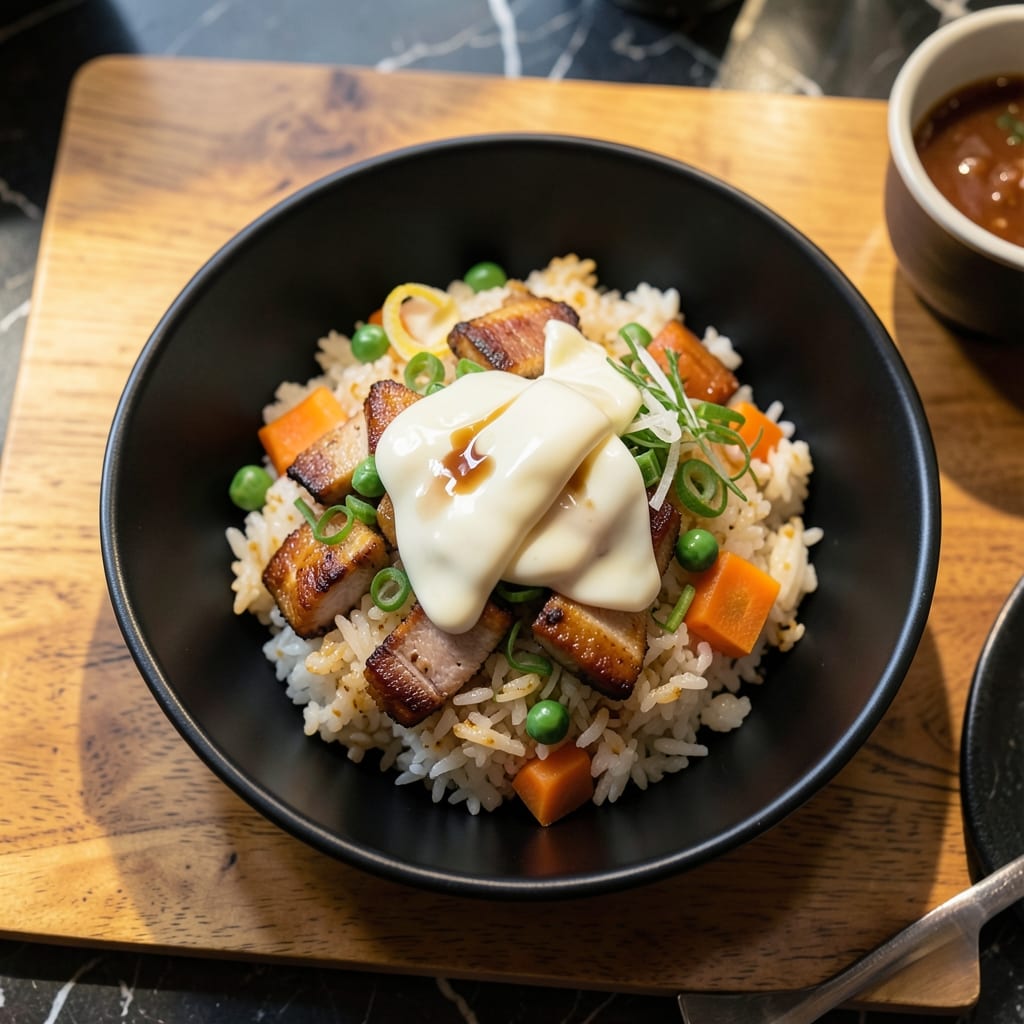
The first time I tried authentic Japanese fried rice, I knew my home cooking would never be the same. This version captures that same umami-rich depth with tender pork and fluffy scrambled egg.
High heat and quick cooking are essential for achieving that signature wok-seared texture. The secret lies in using day-old rice and building layers of flavor through soy sauce, sake, and a touch of sesame oil.
You’ll end up with a dish that’s both hearty and balanced—each bite delivers savory pork, soft egg, and vegetables with that characteristic slightly crisp texture.
Ready in 20 minutes, this becomes a weeknight staple that outshines takeout every time.
Ingredients for Japanese Pork Fried Rice
Day-old rice, pork, and a handful of pantry staples create this umami-packed wok classic.
| Ingredient | Amount | Notes |
|---|---|---|
| Day-Old Cooked White Rice 🍚 | 4 cups | Cooled completely, preferably overnight |
| Pork Shoulder 🥩 | ¾ lb | Thinly sliced into bite-sized pieces |
| Large Eggs 🥚 | 3 whole | Beaten and scrambled softly |
| Green Onions 🧅 | 4 whole | Thinly sliced, whites and greens separated |
| Carrots 🥕 | 1 whole | Small diced, about 1/2 cup |
| Frozen Peas 🌱 | ¾ cup | Thawed under running water |
| Soy Sauce 🫙 | 3 tbsp | Low-sodium or regular |
| Sake 🍶 | 2 tbsp | Dry cooking sake preferred |
| Sesame Oil 🫒 | 1 ½ tsp | Toasted variety for depth |
| Vegetable Oil 🫒 | 3 tbsp | High smoke point, divided |
| Garlic Cloves 🧄 | 2 cloves | Minced finely |
| Fresh Ginger 🌿 | 1 tbsp | Grated or minced |
| Salt 🧂 | ½ tsp | Adjust to taste |
| Black Pepper 🌶️ | ¼ tsp | Freshly ground |
The rice truly matters here—day-old from a Japanese or Chinese restaurant (or your own leftover jasmine) gives that authentic texture. For the pork, pork shoulder has the right fat-to-meat ratio for tenderness. Most Asian markets will slice it thin for stir-fry if you ask. Sake might seem niche, but Kikkoman or any dry cooking sake works. If you’re in a pinch, dry sherry is your closest sub.
No sake? Dry white wine at half the amount plus a pinch of sugar mimics the flavor. Out of sesame oil? Toasted sesame seeds stirred in at the end add that nutty note. Vegetable oil can be peanut or avocado oil for higher smoke points. Frozen peas are a freezer staple, but edamame (shelled) adds a fun twist. The eggs should be softly scrambled—think custardy, not dry.
Leftovers keep 3-4 days in the fridge and reheat beautifully in a skillet. Freeze without the egg for up to 3 months—just scramble fresh when reheating. Rice dries out in the freezer, so pack portions tightly (worth the extra minute).
Why You’ll Love This Recipe
- One Pan Meal: I toss everything in a single wok—rice, pork, eggs, and veggies—and it’s done in a flash.
- Umami Bomb: The pork shoulder and soy sauce combo gives it that deep, savory richness I crave.
- Weeknight Hero: It’s my go-to for busy evenings when I need something hearty and fast.
- Leftovers Reinvented: Day-old rice works best, so I clean out the fridge and turn scraps into something delicious.
Step-by-Step Instructions for Japanese Pork Fried Rice
Here’s the method I swear by for perfect texture and layered flavor every time.
Step 1: Prep and Marinate the Pork
Thinly slice the 0.75 lb Pork Shoulder into bite-sized pieces, trimming any excess fat. I like to cut against the grain for maximum tenderness. In a bowl, combine the pork with 1 tbsp Soy Sauce, 1 tbsp Sake, 1 tsp Vegetable Oil, 0.5 tsp Salt, and 0.25 tsp Black Pepper.
Mix well to coat every piece evenly. Let it marinate while you prep the rest of the ingredients—this short marinade enhances flavor without making the pork mushy. The pork should glisten slightly when ready to cook, indicating the marinade has been absorbed.
Step 2: Scramble the Eggs and Cook the Aromatics
Beat the 3 whole Large Eggs lightly with a pinch of salt until just combined—over-beating makes them tough. Heat 1 tbsp Vegetable Oil in a wok or large skillet over medium-high heat until shimmering. Pour in the eggs and let them set slightly before gently stirring with a spatula.
Cook until the eggs are softly scrambled but still slightly runny. Remove them to a plate and set aside. In the same pan, add another 1 tbsp Vegetable Oil, then sauté the minced Garlic Cloves and Fresh Ginger for 30 seconds until fragrant—don’t let them brown or they’ll turn bitter.
Step 3: Cook the Pork and Vegetables
Add the remaining 1 tbsp Vegetable Oil to the pan and increase heat to high. Add the marinated pork and spread it in a single layer. Let it sear undisturbed for 1-2 minutes until the edges brown. Stir and cook for another 2-3 minutes until the pork is cooked through and no longer pink.
Push the pork to one side and add the Carrots and Frozen Peas to the empty space. Stir-fry for 2 minutes until the carrots begin to soften and the peas are heated through. You want the carrots to retain a slight bite for texture contrast.
Step 4: Combine Everything and Season
Add the 4 cups Day-Old Cooked White Rice to the pan, breaking up any clumps with your spatula. The rice should be cold and dry—this prevents mushiness. Drizzle the remaining 2 tbsp Soy Sauce and 1 tbsp Sake over the rice. Stir-fry for 3-4 minutes until the rice is heated through and begins to crisp slightly.
Return the scrambled eggs to the pan along with the Green Onions (whites and greens separated). Stir to combine, then drizzle the 1.5 tsp Sesame Oil over everything. Cook for another 1-2 minutes until the greens wilt slightly. Taste and adjust seasoning with additional salt if needed.
Step 5: Finish and Serve
Remove from heat and give everything one final toss. The rice should have a slight sheen from the oils and sauces, with bits of golden pork and vibrant green vegetables distributed throughout. The whites of the green onions should be tender, while the greens add a fresh, oniony bite.
Serve immediately while hot, garnished with any remaining green onion greens. Each bite should deliver a balance of umami from the pork and soy, sweetness from the peas and carrots, and a subtle nuttiness from the sesame oil. The rice should be separate and slightly crisp, not clumped together.
Pro Tips For Making Japanese Pork Fried Rice
- Chill the Rice: Use day-old rice straight from the fridge—it’s drier and fries up fluffier. I learned this the hard way after making mushy fried rice with fresh rice more times than I’d like to admit.
- Pre-Cook the Pork: Par-cook the pork shoulder in small batches first, then set aside. This keeps it tender and prevents it from overcooking when you add it back to the wok with the eggs and veggies.
- Skip the Overcrowding: Work in stages—pork first, then eggs, then veggies. If you dump everything in at once, the temperature drops and you’ll end up with steamed rice instead of that crispy, golden texture.
- Grate the Carrots: Sounds weird, but it works: finely grated carrots cook faster and distribute evenly, so every bite has that sweet crunch without big chunks slowing things down.
Troubleshooting This Recipe
Mushy Rice Fix
If your rice turns mushy, you likely used fresh rice. Use day-old cold rice and spread it on a tray for 10 minutes before cooking to dry it out. High heat is key—crank your wok to maximum temperature to create that signature crisp texture. 🔥
Soggy Eggs Solution
Soft scrambled eggs are essential, but they can turn rubbery. Cook them just until set, then remove immediately. Add them back at the very end to warm through. I use medium-high heat and keep them moving constantly in the pan.
Bland Flavor Rescue
If your dish tastes flat, finish with an extra drizzle of sesame oil and 1 tsp soy sauce. Fresh green onions add brightness. A pinch of white pepper (if you have it) enhances the umami depth without overpowering.
Pork Too Tough
Slice pork against the grain into ¼-inch thick pieces for tenderness. Marinate for at least 10 minutes with soy and sake. Cook in small batches to avoid steaming—this ensures proper browning and juicy texture. 💡
Sticky Rice Problems
Break up rice clumps with your hands before adding to the wok. Use a metal spatula to press and flip the rice against the hot surface. If needed, add 1 tbsp water to create steam that separates grains without making them soggy.
Burnt Garlic Alert
Garlic burns in seconds at high heat. Add it after the pork is nearly cooked, not at the start. Keep it moving constantly and pull the pan off heat if it starts browning too quickly. Burnt garlic adds bitterness that ruins the dish.
Nutrition Facts
Frequently Asked Questions
Can I use fresh rice instead of day-old?
No, fresh rice contains too much moisture. Use day-old rice or spread freshly cooked rice on a tray for 10 minutes to dry it out before cooking.
What’s the best cut of pork for this dish?
Use pork shoulder for its ideal fat-to-meat ratio and tenderness. Ask your butcher to slice it thinly against the grain for stir-fry.
Can I substitute another alcohol for sake?
Yes! Use dry white wine at half the amount plus a pinch of sugar. Dry sherry also works in a 1:1 ratio.
How do I prevent my eggs from getting tough?
Cook them just until softly set, then remove immediately. Add back at the end to warm through, keeping them custardy, not rubbery.

- Jollof Rice Sauce Recipe: West African Tomato and Spice Infusion - September 25, 2026
- Japanese Rice Soup Recipe: Umami-Rich Comfort in a Bowl - September 25, 2026
- Homemade Cream Of Rice Recipe: Silk-Smooth Breakfast in Minutes - September 25, 2026