
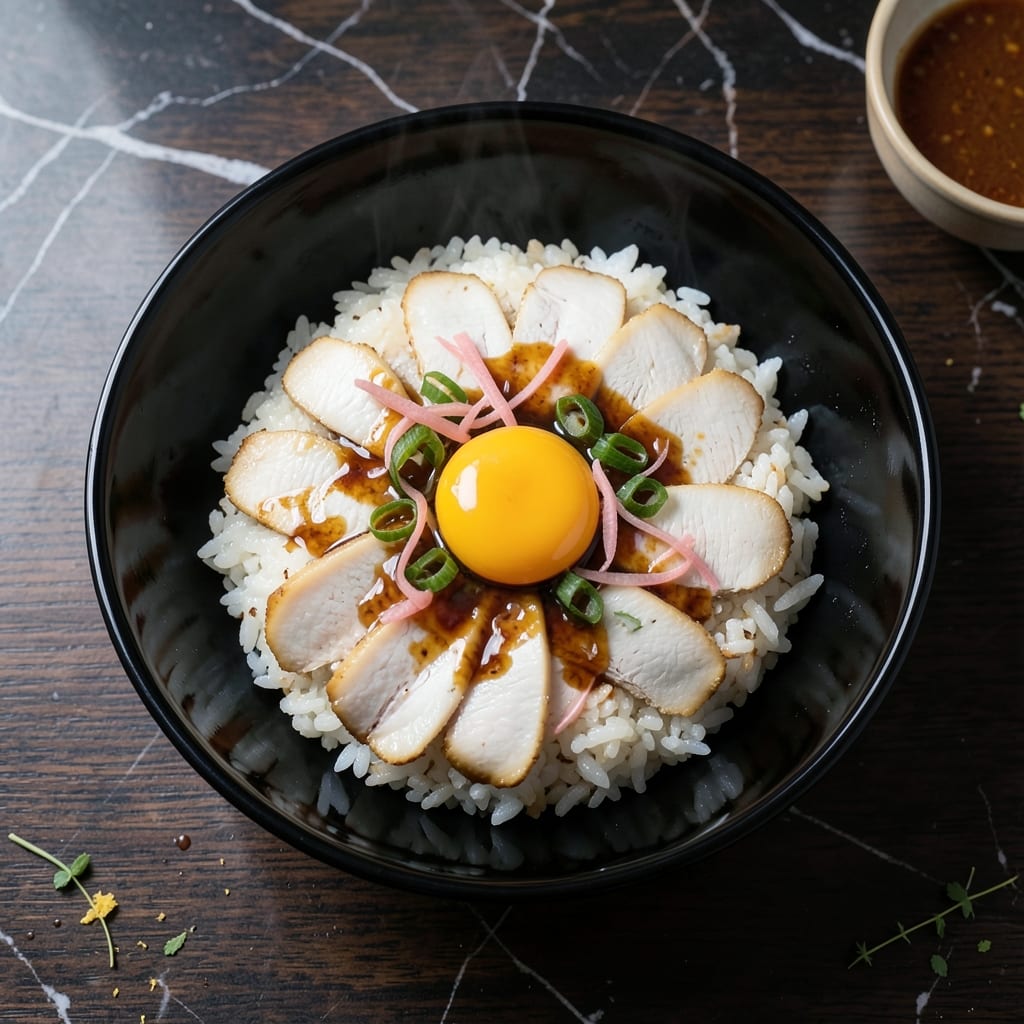
This dish transforms simple ingredients into a comforting one-bowl meal with authentic Japanese flavors. The poached chicken remains silky tender, while the egg adds richness to fragrant ginger-infused rice.
I developed this recipe after studying traditional Japanese home cooking techniques. The key is gentle poaching and precise timing to maintain the chicken’s delicate texture.
The rice absorbs the ginger and soy flavors, creating a base that complements the protein perfectly. Each bite delivers balanced, umami-packed satisfaction without overwhelming the palate.
Serve piping hot in individual bowls for a meal that feels both nourishing and special. The technique is straightforward but yields restaurant-worthy results.
Ingredients for Japanese Chicken Egg Rice
Transform humble ingredients into this comforting, authentic Japanese one-bowl meal with ease.
| Ingredient | Amount | Notes |
|---|---|---|
| Chicken Breast 🍗 | 1 ½ lb | Boneless, skinless, pounded even |
| Jasmine Rice 🍚 | 2 cups | Rinsed until water runs clear |
| Large Eggs 🥚 | 4 whole | Room temperature preferred |
| Fresh Ginger Root 🌿 | 2 tbsp | Peeled and finely grated |
| Soy Sauce 🫒 | ½ cup | Low-sodium for control |
| Mirin 🍶 | ¼ cup | Sweet rice cooking wine |
| Dashi Stock 🍲 | 4 cups | Or substitute chicken broth |
| Green Onions 🧅 | 4 whole | Thinly sliced on diagonal |
| Sesame Oil 🫒 | 1 tbsp | Toasted variety preferred |
| Granulated Sugar 🧂 | 1 tbsp | Balances soy flavor |
| Neutral Oil 🫒 | 1 tbsp | For poaching chicken |
| Sesame Seeds 🌾 | 1 tbsp | Toasted for garnish |
| Nori Sheets 🍱 | 2 sheets | Cut into thin strips |
The chicken quality is paramount. Boneless, skinless breasts from Whole Foods or your local butcher ensure the silky texture this dish demands. For rice, Jasmine or short-grain varieties absorb the ginger-soy infusion best. I source my dashi from Asian markets—look for brands like Kikkoman or Yamaki for authentic flavor without additives.
No mirin? Dry sherry plus ½ tsp sugar per tbsp mimics the sweetness. Dashi can be chicken or vegetable broth in a pinch, though the umami depth will differ. For a gluten-free version, tamari replaces soy sauce seamlessly. The ginger must be fresh—powdered lacks the bright, aromatic punch. Sesame oil is non-negotiable for authenticity, but vegetable oil works if absolutely necessary.
Poached chicken keeps 3-4 days refrigerated in its broth. Cooked rice is best used within 2 days—it dries out quickly. The dish reheats beautifully with a splash of water or broth. For meal prep, store components separately and assemble when ready to eat. Freezes for up to 3 months (without the egg).
Why You’ll Love This Recipe
- One Pot Meal: I love how everything cooks together—chicken, rice, and eggs—with minimal cleanup.
- Umami Bomb: The soy sauce and fresh ginger give it that deep, savory flavor I crave.
- Weeknight Hero: Honestly, it’s my go-to for busy evenings when I need something fast and filling.
- Budget Friendly: Chicken breast and rice stretch far, so it feeds my family without breaking the bank.
Step-by-Step Instructions for Japanese Chicken Egg Rice
Master the technique behind this comforting one-bowl meal with precise timing and temperature control.
Step 1: Prepare the Rice and Poach the Chicken
Rinse the 2 cups jasmine rice until the water runs clear, then cook according to package instructions using the 4 cups dashi stock instead of water. This infuses the grains with umami depth from the start.
While the rice cooks, pound the 1.5 lb chicken breast to an even thickness. Heat the 1 tbsp neutral oil in a saucepan over medium-low heat. Add the chicken and enough dashi stock to cover by 1 inch. Poach for 12-15 minutes until the internal temperature reaches 165°F and the meat is no longer pink.
Step 2: Create the Ginger-Soy Infusion
In a small bowl, combine the 0.5 cup soy sauce, 0.25 cup mirin, 2 tbsp fresh ginger root, and 1 tbsp granulated sugar. Whisk until the sugar dissolves completely. This blend should be aromatic with the sharp brightness of ginger cutting through the richness.
Strain the poaching liquid from the chicken into a clean saucepan. Add the soy-ginger mixture and simmer over medium heat for 5 minutes until slightly reduced. The sauce should coat the back of a spoon with a glossy sheen.
Step 3: Prepare the Egg Topping
Separate the 4 whole large eggs, reserving the yolks. In a small bowl, whisk the yolks with 1 tsp of the reduced soy-ginger sauce until smooth. The mixture should be pale and slightly thickened.
Thinly slice the 4 whole green onions on the diagonal. Toast the 1 tbsp sesame seeds in a dry skillet over low heat for 1-2 minutes until golden brown and fragrant. Cut the 2 sheets nori sheets into thin strips.
Step 4: Assemble the Final Dish
Slice the poached chicken breast against the grain into ½-inch thick pieces. Arrange the warm cooked rice in serving bowls. Top with the chicken slices, then drizzle generously with the remaining soy-ginger sauce.
Create a well in the center of each serving. Pour the egg yolk mixture into the well. The residual heat from the rice and chicken will gently cook the egg to a silky consistency. Garnish with the green onions, toasted sesame seeds, nori strips, and a final drizzle of 1 tbsp sesame oil for depth.
Pro Tips For Making Japanese Chicken Egg Rice
- Velvet the Chicken: Toss the chicken breast with a cornstarch slurry (1 tbsp starch + 1 tbsp water) before cooking—it keeps the meat impossibly tender, even if you accidentally overcook it by a minute or two.
- Use Day-Old Rice: Fresh jasmine rice turns to mush when stir-fried. Cook it a day ahead and refrigerate, or spread hot rice on a tray to cool and dry out for 30 minutes if you’re in a pinch.
- Grater for Ginger: Skip the mincing and grate the fresh ginger root directly into the pan—it melts into the dish evenly and saves you from chewing on fibrous bits.
- Eggs Last: Push everything to the side of the pan, add a little oil, then scramble the eggs before mixing with the rice—this prevents them from turning rubbery or disappearing into the dish.
Health Benefits of This japanese chicken egg rice
High-Quality Protein
This dish delivers 35 grams of protein per serving from the chicken breast, supporting muscle repair and growth. The egg adds 6 grams more, making it ideal for active lifestyles. I prioritize protein-rich meals at my BBQ joint too. 💪
Low-Fat Comfort
Using boneless, skinless chicken breast keeps saturated fat low while maintaining the dish’s satisfying richness. The 1 tbsp sesame oil adds healthy fats without excess calories.
Digestive Benefits
Fresh ginger aids digestion and reduces nausea, a trick I learned during my Charleston apprenticeship. The 2 tbsp in this recipe provides both flavor and wellness benefits.
Umami-Rich Nutrition
The dashi stock and soy sauce provide essential amino acids while being naturally low in calories. This umami base enhances satisfaction without heavy ingredients.
Vitamin Boost
Eggs contribute vitamin B12 and choline for brain health, while green onions add vitamin K. The 4 eggs provide a significant portion of daily nutritional needs.
Balanced Carbohydrates
The 2 cups jasmine rice offers sustained energy from complex carbs. Paired with protein, it creates a balanced meal that keeps you full for hours. 🥗
Nutrition Facts
Frequently Asked Questions
Can I use brown rice instead of jasmine?
Yes, but adjust the cooking time to 40-45 minutes and use extra liquid. Brown rice has a nuttier flavor and firmer texture that still pairs well with the ginger-soy infusion.
Why poach the chicken instead of grilling?
Poaching at medium-low heat ensures the chicken stays silky tender and absorbs the dashi flavors. Grilling could dry it out and overpower the delicate balance of this dish.
How do I prevent the egg from overcooking?
Create a well in the hot rice, then add the egg mixture just before serving. The residual heat will gently cook it to a creamy consistency in 2-3 minutes.
Can I make this ahead of time?
Prepare components separately: rice and chicken keep 3-4 days refrigerated. Assemble and add egg topping only when ready to serve for the best texture.

- Jollof Rice Sauce Recipe: West African Tomato and Spice Infusion - September 25, 2026
- Japanese Rice Soup Recipe: Umami-Rich Comfort in a Bowl - September 25, 2026
- Homemade Cream Of Rice Recipe: Silk-Smooth Breakfast in Minutes - September 25, 2026