
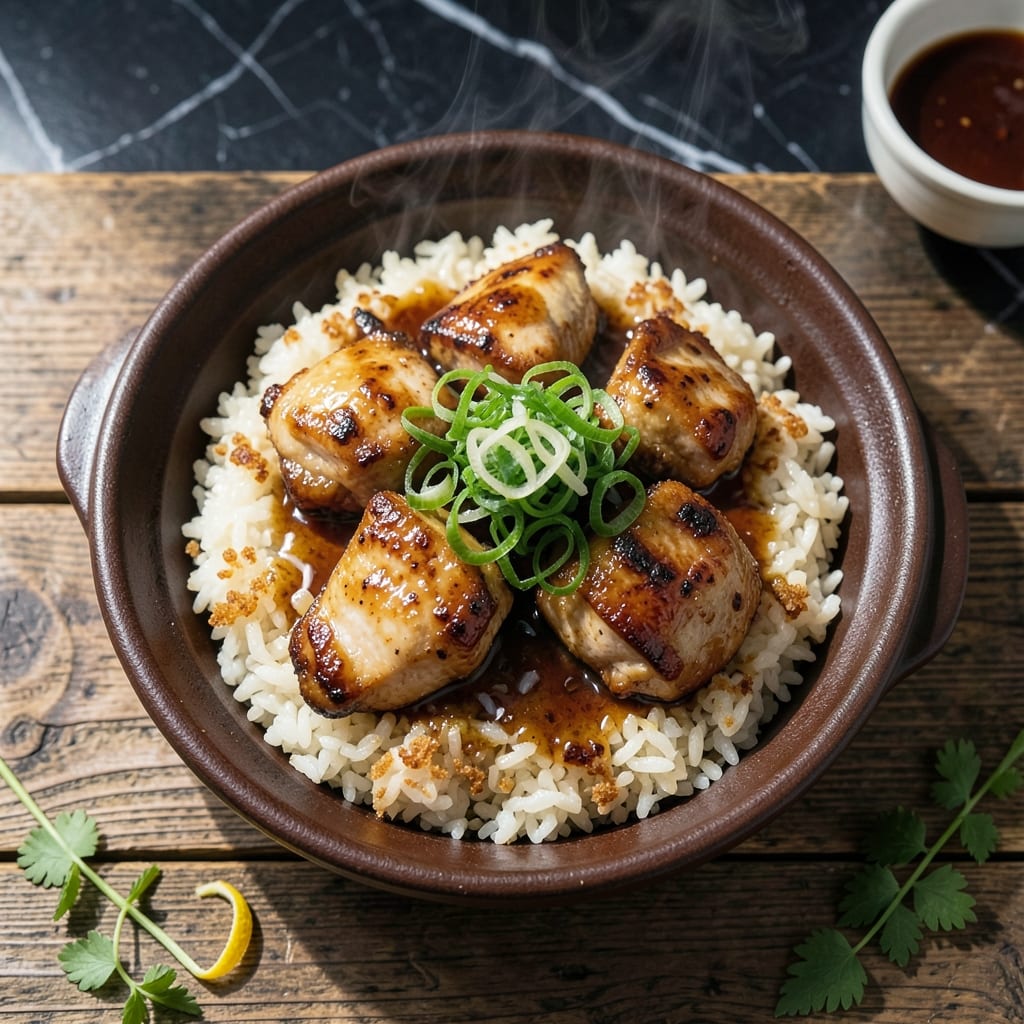
There’s an art to achieving that crispy golden crust beneath perfectly cooked rice, and this Japanese claypot method makes it accessible at home. No special equipment is needed—just a stovetop, a heavy pot, and patience.
The key lies in layering flavors: marinated proteins, umami-rich rice, and a final high-heat sear to create that signature texture. Each step builds depth without complexity, ensuring every bite delivers both comfort and satisfaction.
What emerges is a dish with distinct layers—tender ingredients atop steamed grains, all crowned by a shatteringly crispy bottom that’s the hallmark of authentic claypot rice.
Serve directly from the pot for a communal experience that feels both rustic and refined.
Ingredients for Japanese Claypot Rice
A handful of pantry staples and fresh aromatics transform into this comforting one-pot wonder.
| Ingredient | Amount | Notes |
|---|---|---|
| Jasmine Rice 🍚 | 2 cups | Rinsed until water runs clear |
| Chicken Thighs 🍗 | 1 ½ lb | Boneless, skin-on, cut into bite-sized pieces |
| Soy Sauce 🫒 | ⅓ cup | Use low-sodium for better control |
| Oyster Sauce 🍶 | 2 tbsp | Essential for umami depth |
| Dark Soy Sauce 🫒 | 1 tbsp | For color and richness |
| Shaoxing Wine 🍷 | 1 tbsp | Chinese cooking wine, or dry sherry |
| Garlic Cloves 🧄 | 4 cloves | Minced for marinade |
| Fresh Ginger 🌿 | 1 tbsp | Grated, for brightness |
| Green Onions 🧅 | 4 whole | Thinly sliced, for garnish |
| Vegetable Oil 🫒 | 2 tbsp | High smoke point for searing |
| Sesame Oil 🫒 | 1 tsp | Toasted, for finishing |
| White Pepper 🌶️ | ½ tsp | Ground, for subtle heat |
| Chicken Stock 🥣 | 1 ½ cups | Low-sodium preferred for seasoning control |
| Dried Shiitake Mushrooms 🍄 | 4 pieces | Rehydrated and sliced, adds umami |
The rice is the foundation, so jasmine rice is non-negotiable for authentic texture and fragrance. Thai jasmine from Trader Joe’s or Lundberg brands yields the best results. For the chicken, skin-on thighs render fat that crisped beautifully—avoid breasts as they dry out. Shaoxing wine is ideal but dry sherry works in a pinch (just avoid cooking wine from the grocery store).
No chicken? Pork belly or shrimp work beautifully—marinate the same way. For a vegetarian version, firm tofu or king oyster mushrooms hold up well. Oyster sauce can be swapped with vegetarian stir-fry sauce at a 1:1 ratio. The dark soy sauce is for color, so if you only have regular, add 1 tsp brown sugar for similar depth.
Leftovers keep 3-4 days in the fridge, though the crispy bottom softens. Reheat in a skillet to revive the crust. For best results, cook and serve immediately—this dish doesn’t wait well. Freezing isn’t recommended as the rice texture suffers.
Why You’ll Love This Recipe
- One Pot Magic: I just dump jasmine rice, chicken thighs, and the sauces in my claypot and let it work its magic—minimal effort, maximum payoff.
- Umami Bomb: That mix of soy, oyster, and dark soy sauce? It soaks into every grain of rice, giving it this deep, savory flavor that’s ridiculously good.
- Weeknight Hero: Between us, I make this on busy Tuesdays and lazy Sundays—it’s just as satisfying both times.
- Budget Stretcher: Chicken thighs are cheap, rice is a staple, and one batch feeds my family for two meals. Honestly, it’s my wallet’s favorite dish.
Step-by-Step Instructions for Japanese Claypot Rice
Master the technique for achieving that coveted crispy bottom and deeply flavorful grains.
Step 1: Prepare and Marinate the Chicken
Begin by cutting the 1.5 lb Chicken Thighs into bite-sized pieces. In a bowl, combine these with the 0.33 cup Soy Sauce, 2 tbsp Oyster Sauce, 1 tbsp Dark Soy Sauce, 1 tbsp Shaoxing Wine, minced 4 cloves Garlic Cloves, and grated 1 tbsp Fresh Ginger.
Mix thoroughly to ensure every piece is evenly coated. I prefer to let this marinate for at least 30 minutes at room temperature, though overnight in the refrigerator develops even more depth of flavor. The Dark Soy Sauce is particularly important here—it adds the rich color and caramelized notes characteristic of this dish.
Step 2: Rehydrate and Sauté the Mushrooms
While the chicken marinates, rehydrate the 4 pieces Dried Shiitake Mushrooms in warm water for 20-30 minutes until pliable. Thinly slice them, reserving the soaking liquid. Heat 1 tbsp Vegetable Oil in a wok or large skillet over medium-high heat.
Add the sliced mushrooms and stir-fry for 3-4 minutes until their edges begin to crisp and their natural sweetness intensifies. Remove them from the pan and set aside. These mushrooms will infuse the rice with an earthy umami that complements the chicken perfectly.
Step 3: Cook Chicken and Build the Base
In the same pan, add the remaining 1 tbsp Vegetable Oil and increase heat to high. Add the marinated chicken in a single layer and sear undisturbed for 2-3 minutes until the bottoms develop a deep, golden crust. Flip and cook for another 2 minutes until just cooked through.
Pour in the 1.5 cups Chicken Stock and reserved mushroom soaking liquid. Bring to a simmer and cook for 2 minutes, allowing the liquids to reduce slightly and concentrate the flavors. The stock should take on a rich, mahogany hue from the soy sauces.
Step 4: Layer and Cook the Rice
Drain the 2 cups Jasmine Rice thoroughly after rinsing. In a heavy pot or clay pot, combine the rice, chicken and its cooking liquid, and sliced 4 whole Green Onions. Add enough water to bring the total liquid to 3 cups (accounting for the stock already in the pot).
Stir in the 0.5 tsp White Pepper and bring to a boil over high heat. Once boiling, reduce to low heat, cover, and simmer undisturbed for 15 minutes. This hands-off approach allows the rice to steam evenly and develop its signature texture.
Step 5: Crisp the Bottom and Finish
After 15 minutes, remove the lid and increase heat to medium-high. Drizzle the 1 tsp Sesame Oil over the top. Cook uncovered for an additional 5-7 minutes, listening for a crackling sound that indicates the bottom is developing that prized crispy crust.
You’ll know it’s ready when the edges pull away from the pot and the bottom layer turns a deep, toasted brown. Turn off the heat, cover, and let it rest for 5 minutes to allow the flavors to meld. Serve directly from the pot, scooping to include both the crispy bottom and tender grains in each portion.
Pro Tips For Making Japanese Claypot Rice
- Crisp the Bottom: After adding the rice and liquid, let it cook undisturbed on medium-high heat for the first 8-10 minutes—this builds that coveted crispy crust at the bottom.
- Marinate the Chicken: Toss the chicken thighs with soy sauce, oyster sauce, and a splash of dark soy sauce for at least 30 minutes before cooking; it soaks up way more flavor than if you just dump it in raw.
- Use Day-Old Rice: I learned this the hard way—fresh rice turns mushy in claypot dishes, but leftover jasmine rice holds its shape and crisps up perfectly when reheated with the sauces.
- Reduce the Sauce First: Simmer the soy, oyster, and dark soy sauces together for 2-3 minutes before adding to the rice—it deepens the flavor and prevents a watery finish.
Pro Cooking Tips for This Dish
Pot Selection Matters
Use a heavy-bottomed pot like enameled cast iron or a Dutch oven for even heat distribution. I prefer Le Creuset for its heat retention. A 12-inch pot works perfectly for this recipe’s volume and ensures the rice cooks uniformly. 🔥
Marinade Timing
Don’t rush the chicken marinade—30 minutes minimum lets the soy sauces and aromatics penetrate deeply. For maximum flavor, marinate overnight in the fridge. The Shaoxing wine tenderizes and adds complexity you’ll taste in every bite.
Rice Rinsing Technique
Rinse the jasmine rice until the water runs completely clear—this removes excess starch for fluffier grains. I use a fine-mesh strainer and swirl the rice with my hand under cold running water. It takes about 4-5 rinses to achieve the right clarity.
Crust Formation Secret
For the signature crispy bottom, resist stirring after adding the rice. The undisturbed layer creates the perfect environment for the crust to form. When you hear that crackling sound during the final 5-7 minutes, you’re on the right track.
Liquid Ratio Precision
Measure your total liquid carefully—3 cups including the chicken stock and mushroom soaking liquid. Too much liquid results in mushy rice, while too little prevents proper steaming. I use a glass measuring cup for accuracy.
Resting is Key
After cooking, let the dish rest covered for 5 minutes. This allows the steam to finish cooking the rice and lets the flavors meld. Serve directly from the pot to preserve that coveted crispy layer. 💡
Nutrition Facts
Frequently Asked Questions
Do I need a clay pot for this dish?
A heavy-bottomed pot like cast iron or Dutch oven works perfectly. The key is even heat distribution for that crispy bottom.
Can I use other types of rice?
Jasmine rice is ideal for authentic texture. Long-grain white rice works in a pinch but may lack fragrance. Avoid short-grain varieties as they become too sticky.
How do I fix mushy rice?
Prevent it by measuring liquids precisely and avoiding stirring once cooking begins. If it happens, cook uncovered for 2-3 minutes to evaporate excess moisture.
Can I make this vegetarian?
Swap chicken for firm tofu or king oyster mushrooms. Use vegetarian stir-fry sauce instead of oyster sauce, and vegetable stock replaces chicken stock.

- Jimmy Dean Sausage and Rice Recipe: Hearty One-Pot Savory Delight - October 19, 2026
- Indian Jasmine Rice Recipe: Fragrant Basmati-Free Elegance - October 19, 2026
- KFC Rizo Rice Recipe: Copycat Side Dish With Savory Spice Blend - October 19, 2026