
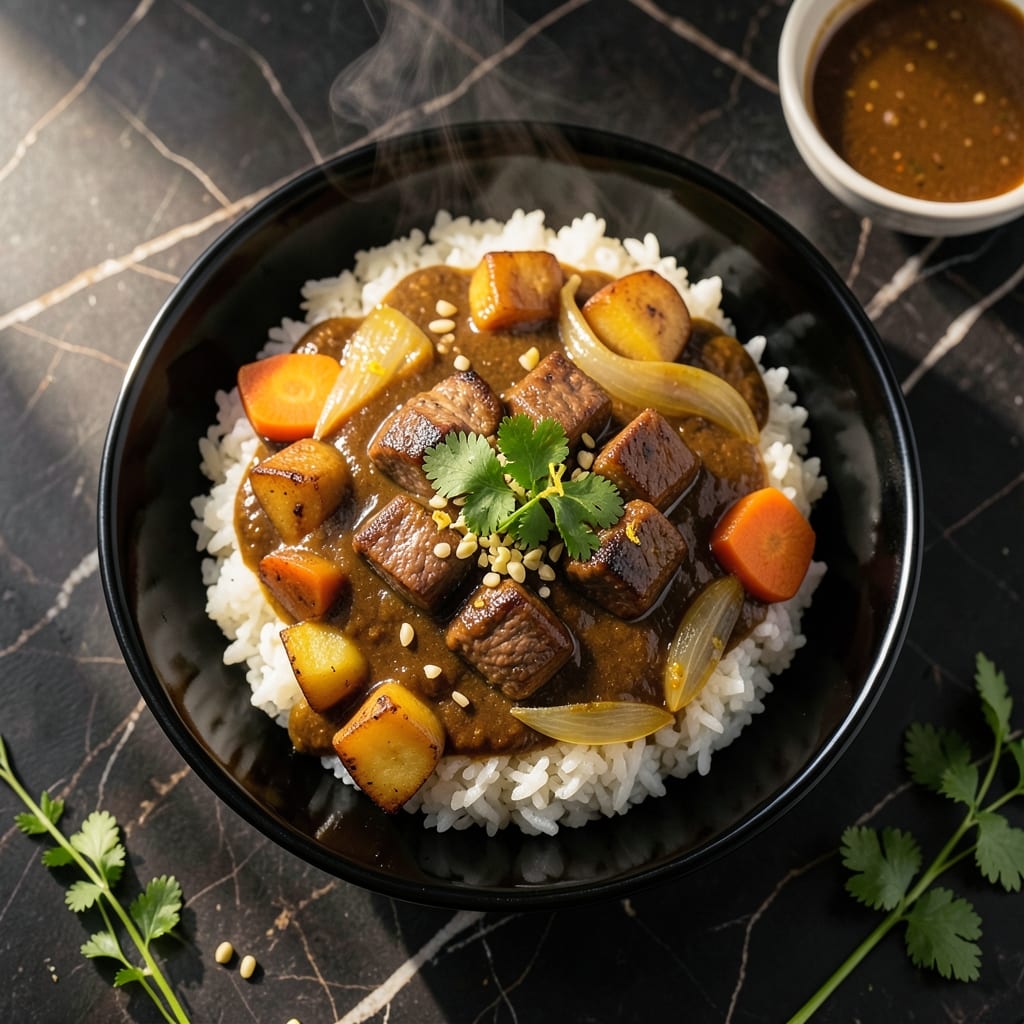
This Japanese curry delivers a rich, velvety stew that transforms simple ingredients into a deeply satisfying meal. The key lies in the slow simmering process that allows the flavors to meld perfectly.
I’ve refined this method to ensure the sauce achieves that signature thick, smooth consistency while maintaining balanced sweetness and savory depth. The curry roux forms the foundation, creating a dish that’s hearty yet comforting.
Served over steamed rice, this creation offers a perfect texture contrast between the tender meat and vegetables and the silky sauce. Every bite carries the warmth and complexity that define authentic Japanese home cooking.
The aroma alone will draw everyone to the table. This is a dish that rewards patience with unforgettable results.
Ingredients for Japanese Curry Rice
Transform humble ingredients into a rich, velvety Japanese curry with these staples.
| Ingredient | Amount | Notes |
|---|---|---|
| Beef Chuck Roast 🥩 | 1 ½ lb | Cut into 1-inch cubes, well-marbled |
| Yellow Onions 🧅 | 2 whole | Large, thinly sliced |
| Carrots 🥕 | 3 whole | Peeled and cut into chunks |
| Russet Potatoes 🥔 | 2 whole | Peeled and cubed |
| Garlic Cloves 🧄 | 4 cloves | Minced for depth of flavor |
| Fresh Ginger 🌿 | 1 tbsp | Grated, for aromatic warmth |
| Japanese Curry Roux 🟤 | 7 oz | Gold or regular variety preferred |
| Beef Stock 🍲 | 4 cups | Low-sodium for controlled seasoning |
| Soy Sauce 🫒 | 2 tbsp | Low-sodium for balance |
| Honey 🍯 | 1 tbsp | Balances savory and sweet |
| Apple 🍎 | 1 whole | Grated, adds natural sweetness |
| Bay Leaves 🍃 | 2 whole | For aromatic infusion |
| Jasmine Rice 🍚 | 2 cups | Uncooked, for serving |
| Vegetable Oil 🫒 | 2 tbsp | For searing beef |
| Kosher Salt 🧂 | 1 tsp | Adjust to taste |
The beef chuck roast is non-negotiable for authentic texture—look for well-marbled cuts at Whole Foods or Costco. The Japanese curry roux is the soul of the dish; S&B Golden Curry or House Foods Vermont Curry are widely available and deliver consistent results. Fresh ginger and garlic should be firm and aromatic—avoid any with soft spots or sprouting.
No beef? Chicken thighs or pork shoulder work beautifully (adjust cooking time accordingly). For a vegetarian version, mushrooms and chickpeas provide heartiness. The roux can be found in the international aisle at most supermarkets. Apple can be replaced with pears or sweet potatoes for a different sweetness profile. Soy sauce substitutions include tamari for gluten-free needs.
Store beef chuck in the freezer for up to 6 months or use within 3-4 days in the fridge. The curry roux keeps indefinitely in a cool, dry place. Leftovers taste even better the next day and will keep in the fridge for 4-5 days or freeze for 3 months.
Why You’ll Love This Recipe
- One Pot Wonder: I just dump the beef, onions, carrots, and potatoes in one pot—no fancy prep, just layer and simmer.
- Rich, Deep Flavor: The beef chuck and garlic melt into this thick, slightly sweet curry sauce that coats every bite.
- Feeds a Crowd: I’ll make a big batch for Sunday dinner and pack leftovers for lunch all week.
- Budget Stretch: A cheap cut like chuck roast turns into something extraordinary, and the veggies bulk it up for pennies.
Step-by-Step Instructions for Japanese Curry Rice
Master the technique and timing for a rich, velvety curry that clings perfectly to steamed jasmine rice.
Step 1: Sear the Beef and Build the Flavor Base
Heat 2 tablespoons vegetable oil in a large Dutch oven over medium-high heat until shimmering. Add the 1.5 lb beef chuck roast (cut into 1-inch cubes) in a single layer. I sear in batches to avoid crowding—this ensures each piece develops a deep, caramelized crust.
Cook undisturbed for 3-4 minutes per side until deeply browned. Remove the beef and set aside. In the same pot, add the 2 whole thinly sliced yellow onions, 3 whole peeled and chunked carrots, and 2 whole peeled and cubed russet potatoes. Sauté for 5 minutes until the onions begin to soften and turn translucent.
Step 2: Bloom Aromatics and Deglaze
Reduce heat to medium and add the 4 cloves minced garlic cloves, 1 tablespoon grated fresh ginger, and 1 whole grated apple. Stir constantly for 1-2 minutes until fragrant—this prevents the aromatics from burning while allowing their flavors to intensify.
Pour in 2 tablespoons soy sauce and 1 tablespoon honey, scraping the browned bits from the bottom of the pot. This deglazing step incorporates all the fond into the sauce, adding depth and complexity. Add the beef back to the pot along with the 2 whole bay leaves.
Step 3: Simmer Until Beef is Tender
Pour in the 4 cups beef stock and bring to a boil. Once boiling, reduce heat to low, cover, and simmer for 1 hour to 1 hour 15 minutes. You’ll know it’s ready when the beef is fork-tender and the potatoes can be easily pierced with a knife.
I check occasionally and stir gently to prevent sticking. If the liquid reduces too much before the beef is tender, add ½ cup water to maintain the proper consistency. This slow simmer allows the flavors to meld and the beef to become melt-in-your-mouth tender.
Step 4: Thicken with Curry Roux and Finish
Break the 7 oz Japanese curry roux into small pieces and add them to the pot, stirring constantly. The roux will dissolve and thicken the sauce to a rich, velvety consistency. Continue cooking for an additional 10-15 minutes on low heat.
Taste and adjust seasoning with 1 teaspoon kosher salt if needed. The sauce should coat the back of a spoon and have a glossy sheen. Remove the bay leaves before serving.
Step 5: Serve Over Steamed Jasmine Rice
Cook the 2 cups jasmine rice according to package instructions until tender and fluffy. Spoon the hot curry over the rice, ensuring each serving gets an equal amount of beef, vegetables, and sauce.
The curry should be thick enough to cling to the rice but still pourable. Garnish with additional grated apple or a sprinkle of fresh herbs if desired. Serve immediately for the best texture and flavor.
Pro Tips For Making Japanese Curry Rice
- Brown the Beef Well: Sear the beef chuck in batches over medium-high heat until deeply browned—this builds the rich flavor base that Japanese curry needs. I learned this the hard way after making bland curry by crowding the pan.
- Cut Potatoes Evenly: Dice the russet potatoes into 1-inch cubes so they cook through at the same rate as the carrots. Sounds obvious, but uneven pieces turn some to mush while others stay undercooked.
- Simmer Low and Slow: Once the curry sauce is in, keep it at a gentle simmer—hard boiling can break the potatoes and make the sauce split. After scorching one batch, I now hover at medium-low.
- Add Carrots Early: Toss the carrots in with the onions at the start; their natural sweetness caramelizes and balances the curry’s depth. I was skeptical until I tried it, but it actually changes the outcome.
Serving Suggestions for This japanese curry rice
Plating Techniques
Spoon a generous mound of jasmine rice into shallow bowls, creating a slight well in the center. This helps contain the rich curry sauce. I use white or black ceramic bowls to make the golden-brown sauce pop visually.
Garnish Ideas
Sprinkle with 1 teaspoon toasted sesame seeds or thinly sliced green onions for color contrast. A few slices of Fukujinzuke (Japanese pickled vegetables) on the side adds a refreshing crunch and tangy bite. 💛
Side Dish Pairings
A simple miso soup with tofu and wakame complements the meal beautifully. I also love serving a crisp green salad with a light ginger dressing to cut through the richness.
Beverage Recommendations
Cold green tea or genmaicha (brown rice tea) are traditional choices. For beer lovers, a crisp Japanese lager like Asahi Super Dry or Sapporo balances the hearty flavors perfectly. 🍺
Family-Style Service
For gatherings, serve the curry in a large, heavy pot with a ladle. Let everyone spoon it over their own rice portions. This keeps the curry warm and allows for easy second helpings.
Kids’ Presentation
For younger eaters, arrange the beef, carrots, and potatoes in a fun pattern on top of the rice. I’ve found that cookie cutters can shape the rice into fun shapes, making the dish more appealing to children.
Nutrition Facts
Frequently Asked Questions
Can I use chicken instead of beef?
Yes, boneless chicken thighs work beautifully. They cook faster, so reduce simmering time to 25-30 minutes until internal temperature reaches 165°F.
Why is my curry too thin?
This usually means not enough roux or insufficient simmering time. Add another 1-2 oz curry roux and cook for an additional 10 minutes on low heat while stirring.
How long can I store leftovers?
Keep in an airtight container in the fridge for 4-5 days, or freeze for up to 3 months. The flavors deepen overnight, making leftovers taste even better!
What if I can’t find Japanese curry roux?
Order online from Asian markets or try making a DIY version with flour, butter, and curry powder. Authentic roux is worth seeking out for the best flavor.

- Mujadara Rice and Lentils Recipe: Earthy Spiced Lentils With Caramelized Onions - November 1, 2026
- Naija Fried Rice Recipe: Street-Style Spice With Veggie Crunch - November 1, 2026
- Mushy Rice Recipe: Fluffy Grains Transformed in Minutes - November 1, 2026