
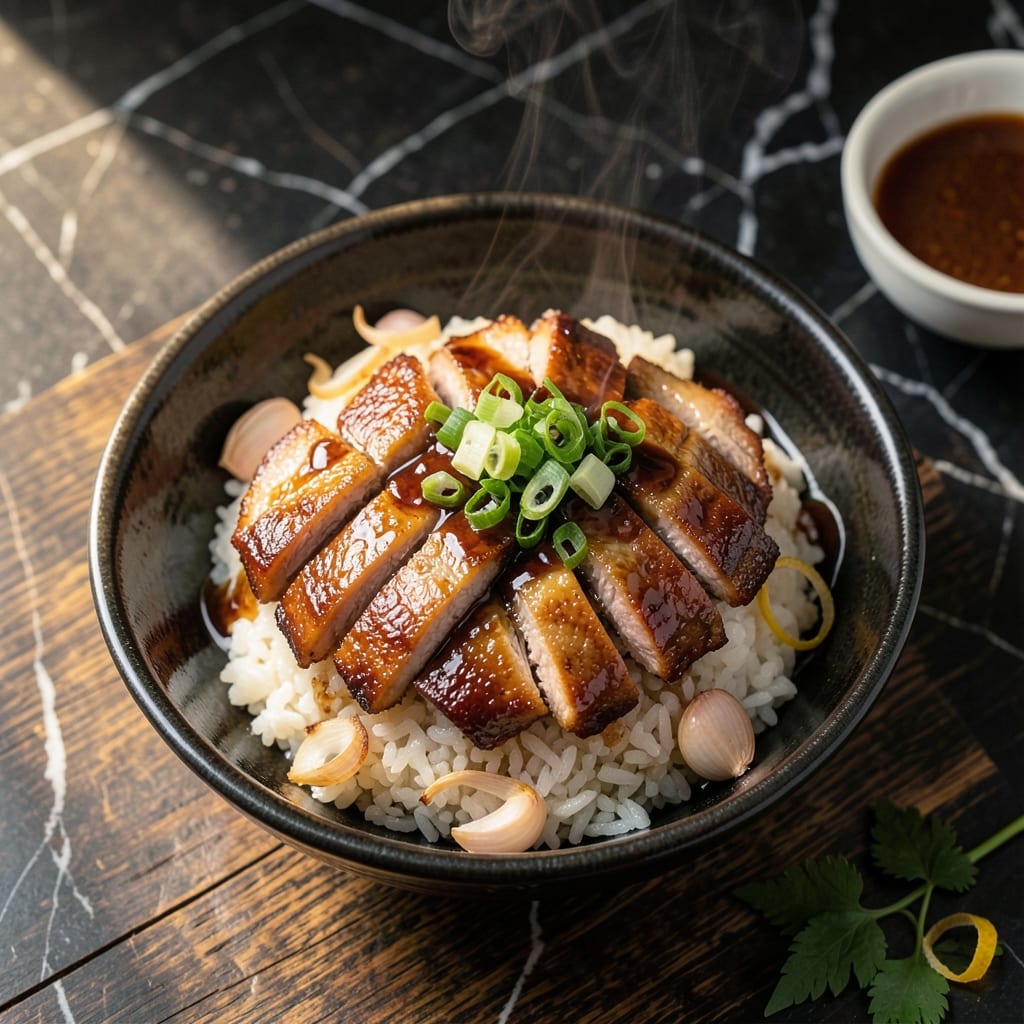
I discovered this dish on a chilly Tokyo evening, and it changed how I think about comfort food. The pork belly cooks until it’s melt-in-your-mouth tender, with layers of fat and meat that practically dissolve on your tongue.
This isn’t just another rice bowl—it’s a balanced bite of savory, sweet, and umami in every forkful. The pork is braised until caramelized, then sliced and arranged over steamed rice with a drizzle of its sticky, flavorful sauce.
What makes it special is the simplicity. No fancy techniques, just time and attention to detail. The result is a bowl that feels indulgent but still light enough to enjoy any day of the week.
Serve it with pickled vegetables or a soft-boiled egg for extra texture. Ready to get started?
Ingredients for Japanese Pork Belly Rice Bowl
Rich, tender pork belly meets sweet and savory sauce over steamed rice. Simple yet indulgent.
| Ingredient | Amount | Notes |
|---|---|---|
| Pork Belly 🥩 | 1 ½ lb | Skin-on, cut into 1-inch pieces |
| Soy Sauce 🫙 | ½ cup | Low-sodium preferred |
| Sake 🍶 | ½ cup | Dry variety for cooking |
| Mirin 🍶 | ¼ cup | Sweet rice wine |
| Brown Sugar 🍚 | ¼ cup | Packed, for caramelization |
| Garlic Cloves 🧄 | 6 cloves | Smashed, peeled |
| Fresh Ginger 🌿 | 1 whole | 2-inch piece, sliced |
| Green Onions 🧅 | 4 whole | White and green parts separated |
| Short-Grain White Rice 🍚 | 2 cups | Uncooked, for steaming |
| Water 💧 | 2 ½ cups | For cooking rice |
| Sesame Oil 🫒 | 1 tbsp | Toasted, for finishing |
| Salt 🧂 | 1 tsp | Kosher or sea salt |
| Black Pepper 🌶️ | ½ tsp | Freshly ground |
| Soft-Boiled Eggs 🥚 | 4 whole | Optional, for serving |
| Pickled Vegetables 🥒 | 1 cup | Optional, for garnish |
The pork belly is the star here. Look for skin-on cuts at an Asian supermarket—H Mart or 99 Ranch usually have great quality. The fat should be well-marbled (that’s what gives it that melt-in-your-mouth texture). If you can’t find skin-on, skinless works too, but the texture won’t be quite the same. I always buy a little extra since it shrinks during cooking.
No sake? Dry white wine works in a pinch. Out of mirin? Mix 1 tbsp sugar with 3 tbsp water for a quick substitute. The brown sugar can be swapped for honey or maple syrup, but it’ll change the flavor slightly. For a vegetarian version, try mushroom caps instead of pork—they soak up the sauce beautifully (trust me on this).
The pork keeps well—store cooked pieces in their sauce for up to 4 days in the fridge. The rice is best fresh, but leftovers reheat fine with a splash of water. Freeze the pork for up to 3 months if you’re meal prepping. Always bring it to room temp before reheating.
Why You’ll Love This Recipe
- Set It and Forget It: Most of the time is hands-off while the pork belly braises in the soy, sake, and mirin mix.
- Sweet-Savory Magic: Brown sugar caramelizes with the soy for that sticky, umami-packed glaze on every bite.
- Feeds My Crew Twice: I make a double batch—dinner tonight, then lunch tomorrow over fresh rice.
- Budget Luxe: Pork belly feels fancy but costs less than steak, and a little goes a long way.
Step-by-Step Instructions for Japanese Pork Belly Rice Bowl
Here’s how I create layers of flavor that will make this dish unforgettable.
Step 1: Braise the Pork Belly to Tender Perfection
In a large pot, combine the 1.5 lb pork belly, 0.5 cup soy sauce, 0.5 cup sake, 0.25 cup mirin, 0.25 cup brown sugar, 6 cloves garlic cloves, and sliced fresh ginger. Add enough water to just cover the pork belly.
Bring to a boil over medium-high heat, then reduce to low heat and simmer for 1.5 to 2 hours. You’ll know it’s ready when the pork belly is fork-tender and the liquid has reduced to a glossy, caramelized glaze. Keep an eye on it toward the end to prevent burning.
Step 2: Cook the Short-Grain White Rice
While the pork belly braises, rinse the 2 cups short-grain white rice under cold water until the water runs clear. This removes excess starch and ensures fluffy, separate grains. Drain well in a fine-mesh sieve.
In a rice cooker or pot, combine the rinsed rice with the 2.5 cups water and 1 tsp salt. Cook according to your rice cooker’s instructions or bring to a boil, then reduce to low heat, cover, and simmer for 15 minutes. Remove from heat and let it steam, covered, for another 10 minutes.
Step 3: Sear and Glaze the Pork Belly
Once the pork belly is tender, remove it from the braising liquid with a slotted spoon and place it on a plate. Skim any excess fat from the surface of the liquid, then return it to the pot and bring to a simmer over medium heat for 5-7 minutes until it thickens into a syrup-like glaze.
Heat a skillet over medium-high heat and sear the pork belly for 1-2 minutes per side until the edges are crispy and caramelized. Pour the reduced glaze over the pork belly and toss to coat evenly. The glaze should cling to the pork belly, creating a sticky, shiny finish.
Step 4: Assemble the Rice Bowl
Divide the cooked short-grain white rice among four bowls. Slice the glazed pork belly into bite-sized pieces and arrange it over the rice. Drizzle any remaining glaze from the skillet over the pork belly for extra flavor.
Separate the white and green parts of the 4 whole green onions and slice them thinly. Sprinkle the green onions over the pork belly, then drizzle with the 1 tbsp sesame oil and a pinch of 0.5 tsp black pepper. Top each bowl with a soft-boiled egg and a portion of the 1 cup pickled vegetables if using.
Pro Tips For Making Japanese Pork Belly Rice Bowl
- Sear First, Braise Later: I learned this the hard way—sear the pork belly on high heat until deeply browned before adding the soy sauce, sake, and mirin. Otherwise, the meat just boils in the liquid instead of getting that sticky, caramelized crust.
- Score the Fat: Sounds tedious, but cutting shallow slits into the pork belly fat cap every inch or so lets the marinade penetrate and the fat render out evenly. Skip this and you’ll get chewy, uneven bites.
- Reduce the Sauce: After braising, pull the pork out and reduce the remaining liquid by half on medium-high heat. This thickens the sauce to a glossy glaze that clings to the meat instead of pooling at the bottom of the bowl.
- Use Full-Fat Pork: Resist the urge to trim the fat—it’s what makes this dish rich and flavorful. Lean cuts dry out and won’t give you that melt-in-your-mouth texture the recipe depends on.
Common Mistakes When Making Perfect Results
Skipping the Sear
I see many home cooks braise the pork belly perfectly, then skip the final sear. This is a mistake—those 1-2 minutes per side in a hot skillet create the caramelized crust that makes each bite unforgettable. Use medium-high heat and don’t rush it.
Over-Reducing the Glaze
When reducing the braising liquid, it’s easy to walk away and come back to a burnt mess. Stay nearby and reduce it to a syrup-like consistency over medium heat for 5-7 minutes. It should coat the back of a spoon but still be pourable.
Cutting Pork Too Small
The 1.5 lb pork belly should be cut into 1-inch pieces before braising. Smaller pieces can dry out or overcook during the 1.5-2 hour simmer. Larger pieces ensure that melt-in-your-mouth texture we’re all after.
Rinsing Rice Improperly
Skipping the rinsing step or not rinsing enough leaves your 2 cups short-grain white rice gummy. Rinse until the water runs completely clear—this removes excess starch. I use a fine-mesh sieve and cold water for best results. 💡
Ignoring the Rest
After cooking, let your rice steam covered for 10 minutes. This final step allows the grains to absorb any remaining moisture and achieve that perfect fluffy texture. Don’t peek—just let it do its thing.
Using Wrong Substitutes
If you’re out of mirin, don’t use regular sugar—it lacks the depth. Mix 1 tbsp sugar with 3 tbsp water for a proper substitute. The same goes for sake; dry white wine works, but sweet wines will throw off the balance.
Nutrition Facts
Frequently Asked Questions
Can I use regular rice instead of short-grain?
Short-grain has the sticky texture this dish needs. Long-grain stays separate and won’t hold the sauce as well. For best results, stick with short-grain white rice or sushi rice.
How do I know when the pork is done?
It’s ready after 1.5-2 hours of simmering when it’s fork-tender. The meat should pull apart easily but still hold its shape when sliced.
Can I make this ahead of time?
Yes! Cook the pork and store it in its sauce for up to 4 days in the fridge. Reheat gently and sear just before serving to maintain the crispy edges.
What if I don’t have mirin?
Mix 1 tbsp sugar with 3 tbsp water as a substitute. Avoid regular sugar alone—it won’t give the same depth of flavor.

- Jollof Rice Sauce Recipe: West African Tomato and Spice Infusion - September 25, 2026
- Japanese Rice Soup Recipe: Umami-Rich Comfort in a Bowl - September 25, 2026
- Homemade Cream Of Rice Recipe: Silk-Smooth Breakfast in Minutes - September 25, 2026