
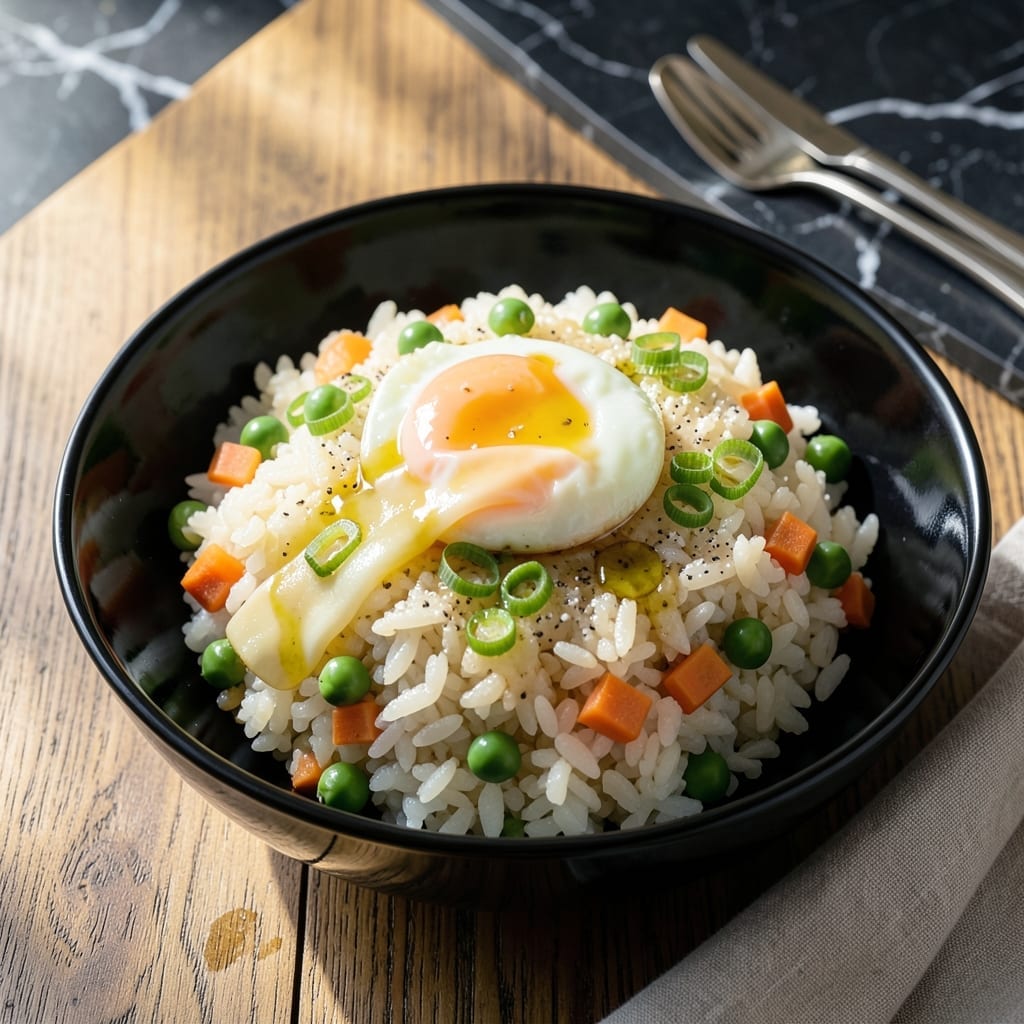
This Japanese fried rice delivers restaurant-quality flavor with a simple home kitchen approach. The secret lies in day-old rice and high heat, creating that signature wok-seared texture and deep umami taste.
Silk-thread eggs add elegant richness while maintaining the dish’s authentic character. With precise timing and traditional techniques, this recipe transforms basic ingredients into something extraordinary.
Ingredients for Japanese Egg Fried Rice
Transform day-old rice and simple pantry staples into wok-seared perfection with elegant silk-thread eggs.
| Ingredient | Amount | Notes |
|---|---|---|
| Day-Old Cooked White Rice 🍚 | 4 cups | Cold, preferably refrigerated overnight |
| Large Eggs 🥚 | 4 whole | For silk-thread ribbons |
| Neutral Oil 🫒 | 3 tbsp | High smoke point, divided |
| Green Onions 🧅 | 4 whole | Thinly sliced, whites and greens separated |
| Carrot 🥕 | 1 whole | Medium, finely diced |
| Frozen Peas 🟢 | ½ cup | Thawed under running water |
| Garlic Cloves 🧄 | 3 cloves | Minced to fine paste |
| Fresh Ginger 🌿 | 1 tbsp | Peeled and grated |
| Low-Sodium Soy Sauce 🥢 | 2 tbsp | Japanese variety preferred |
| Sake 🍶 | 1 tbsp | Dry cooking sake |
| Mirin 🍯 | 1 tbsp | Sweet rice wine |
| Sesame Oil 🫒 | 1 tsp | Toasted, for finishing |
| White Pepper 🌶️ | ¼ tsp | Ground, for authentic flavor |
| Nori Sheets 🍣 | 1 sheet | Cut into thin strips |
| Toasted Sesame Seeds 🌾 | 1 tsp | For garnish |
The rice is non-negotiable—day-old, cold, and dry is what gives you that distinct separated texture. Japonica varieties like Koshihikari are traditional, but any long-grain white rice works. For the soy sauce, Kikkoman low-sodium is widely available and reliable. Sake and mirin are essential for authentic depth; find them in the Asian aisle at Whole Foods or any well-stocked supermarket.
No sake? Dry sherry at a 1:1 ratio works in a pinch. Mirin can be replaced with 1 tsp sugar plus 2 tsp rice vinegar. For the nori, sheets from a sushi kit are perfect—no need for specialty stores. The eggs are the showstopper; use the freshest you can find for the best silk-thread consistency. Frozen peas can be swapped for diced bell peppers if you prefer crunch.
Cooked rice keeps in the fridge for 3-4 days, making this ideal for leftovers. The finished dish reheats well but is best eaten immediately for texture. Store any extras in an airtight container for up to 2 days—reheat in a skillet to revive the wok-seared quality.
Why You’ll Love This Recipe
- One Pan Wonder: I can toss everything into a single wok—day-old rice, eggs, and veggies—and have it ready faster than takeout arrives.
- That Umami Crunch: The green onions and carrots add just the right bite, while the eggs bring that creamy richness I crave every time.
- Weeknight Rescue: Honestly, it’s my go-to when I need dinner on the table in 15 minutes flat.
- Leftovers Reinvented: Day-old rice actually works better here, so I’m using up leftovers and saving money without sacrificing flavor.
Step-by-Step Instructions for Japanese Egg Fried Rice
Master the wok technique and timing for restaurant-quality results at home.
Step 1: Prepare and Scramble the Silk-Thread Eggs
Beat the 4 whole Large Eggs lightly with a pinch of the white pepper until just combined, leaving some streaks for texture. Heat 1 tablespoon of the 3 tbsp Neutral Oil in a wok or large skillet over medium-high heat until shimmering but not smoking.
Pour in the eggs and let them set for 10-15 seconds before gently stirring with chopsticks or a spatula. Continue cooking for 30-45 seconds until the eggs form soft, silky ribbons but are still slightly runny. Remove from the wok immediately and set aside—overcooking will make them rubbery.
Step 2: Stir-Fry Aromatics and Vegetables
Add the remaining 2 tablespoons Neutral Oil to the wok and increase heat to high. Add the whites of the 4 whole Green Onions, the finely diced Carrot, and the 0.5 cup Frozen Peas. Stir-fry for 2-3 minutes until the vegetables soften slightly and the carrots begin to turn translucent at the edges.
Push the vegetables to one side of the wok, then add the 3 cloves Garlic Cloves and 1 tbsp Fresh Ginger to the cleared space. Cook for 20-30 seconds until fragrant, then mix everything together. The garlic should be pale golden, not browned, to prevent bitterness.
Step 3: Incorporate Rice and Seasonings
Add the 4 cups Day-Old Cooked White Rice to the wok, breaking up any clumps with your spatula. Stir-fry for 2-3 minutes until the rice is heated through and the grains begin to sizzle. The rice should be dry and separate, not clumping together.
Drizzle the 2 tbsp Low-Sodium Soy Sauce, 1 tbsp Sake, and 1 tbsp Mirin evenly over the rice. Toss everything together for another 1-2 minutes until the rice is uniformly coated and the liquid has mostly evaporated. The rice should take on a faint sheen without becoming soggy.
Step 4: Finish with Eggs and Garnishes
Return the silk-thread eggs to the wok and fold them gently into the rice, allowing the residual heat to finish cooking them. Remove from heat and stir in the 1 tsp Sesame Oil and the remaining green onion tops. Taste and adjust seasoning if needed.
Transfer to a serving platter and garnish with the 1 sheet Nori Sheets cut into thin strips and the 1 tsp Toasted Sesame Seeds. The nori should be added last to preserve its crisp texture. Serve immediately while the rice is hot and the eggs are still tender.
Pro Tips For Making Japanese Egg Fried Rice
- Use Cold Rice: Day-old rice from the fridge works best—it’s drier and fries up fluffier instead of turning mushy. I learned this the hard way after ruining a batch with fresh rice.
- Beat Eggs Well: Whisk the eggs until no streaks remain and add a pinch of salt. This makes a real difference in getting soft, evenly distributed egg threads throughout the rice.
- High Heat Only: Crank the heat to high and keep the wok or pan screaming hot. After burning three batches at lower temps, I finally figured out that’s how you get that signature slightly charred flavor.
- Dice Carrots Small: Cut the carrots into tiny cubes, about ¼-inch, so they cook through quickly without turning the rice soggy. Sounds tedious, but it actually changes the outcome.
Make-Ahead Tips for Leftovers
Prep Rice Ahead
Cook your 4 cups white rice at least 1 day before making this dish. Spread it on a baking sheet to cool completely, then refrigerate uncovered for 1 hour to dry it out. Cold, dry rice fries up fluffy and separate. 💡
Pre-Cook Vegetables
Dice the carrot and slice the green onions the night before. Store them in separate airtight containers in the fridge. Thaw the ½ cup peas under running water just before cooking to keep them crisp.
Pre-Mix Sauces
Combine the 2 tbsp soy sauce, 1 tbsp sake, and 1 tbsp mirin in a small bowl. This ensures even distribution when added to the wok. I keep this mix covered at room temperature until ready to use.
Egg Prep Tip
Beat the 4 eggs lightly with a pinch of white pepper the morning of cooking. Store covered in the fridge. Whisk again just before cooking for the best silk-thread texture.
Storage Before Cooking
Keep all prepped ingredients in the fridge until you start cooking. Take them out only as needed to maintain freshness. This method works perfectly for up to 24 hours ahead. ⏰
Day-Of Cooking
Take the rice out of the fridge 30 minutes before cooking to slightly soften. This prevents it from absorbing too much oil. All other ingredients can stay chilled until the last moment.
Nutrition Facts
Frequently Asked Questions
Why use day-old rice for this dish?
Day-old rice is drier, which prevents the dish from becoming mushy. Fresh rice contains too much moisture and will clump together in the wok.
Can I substitute regular eggs for silk-thread eggs?
Yes, but the texture will differ. For best results, cook eggs slowly over medium-high heat until just set, creating soft, delicate ribbons.
What’s the best way to store leftovers?
Store in an airtight container in the fridge for up to 2 days. Reheat in a skillet over medium heat to restore the texture.
Can I use a different type of rice?
Long-grain white rice works best, but jasmine or basmati can be used. Avoid sticky varieties like sushi rice, as they’ll clump.

- Mujadara Rice and Lentils Recipe: Earthy Spiced Lentils With Caramelized Onions - November 1, 2026
- Naija Fried Rice Recipe: Street-Style Spice With Veggie Crunch - November 1, 2026
- Mushy Rice Recipe: Fluffy Grains Transformed in Minutes - November 1, 2026