
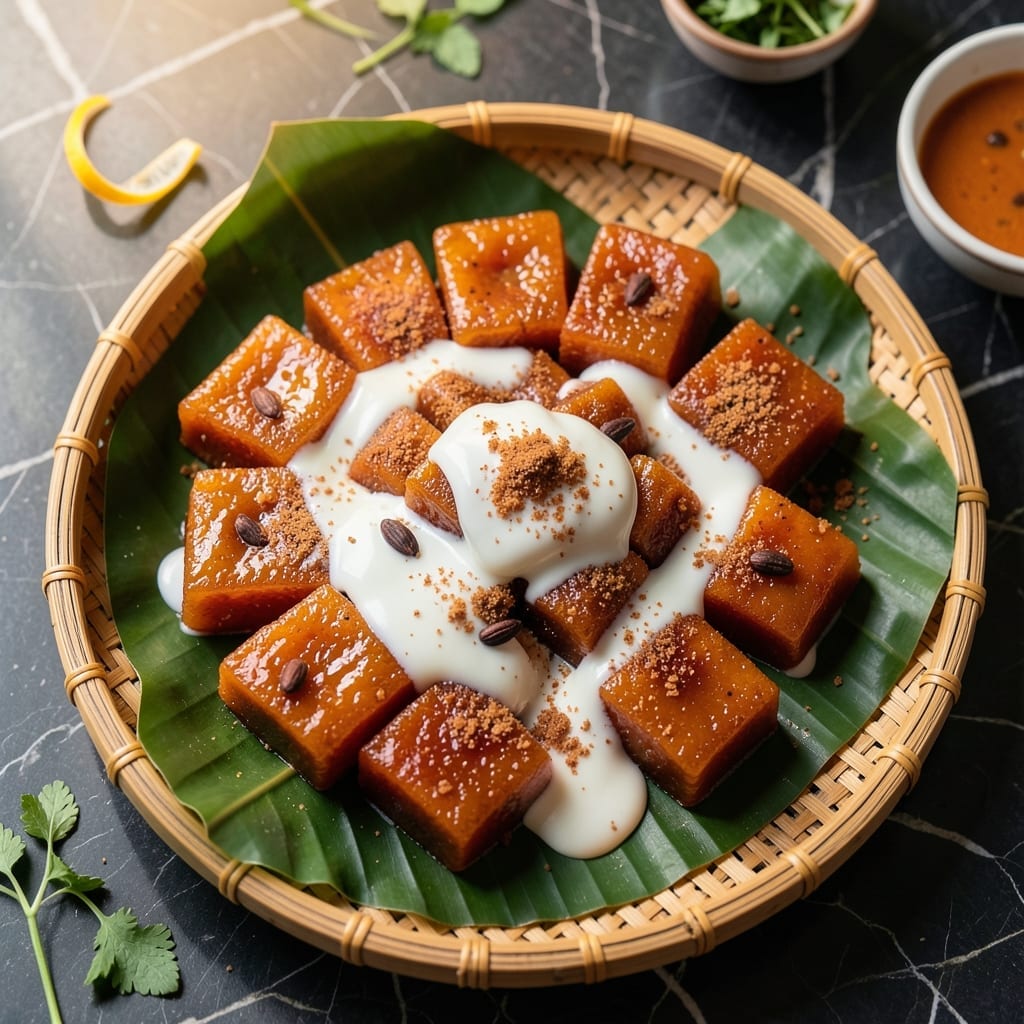
This traditional Filipino treat showcases the unique texture of glutinous rice flour in a beloved street food. The process transforms simple ingredients into a chewy, jelly-like dessert with a signature brown sugar glaze.
Steaming is the key method here, creating that distinctive soft yet slightly sticky consistency that makes this dish so satisfying. The brown sugar topping adds a caramelized sweetness that perfectly complements the mild flavor of the rice cakes.
What emerges from the steamer is a batch of golden-brown cutsinta with a glossy, slightly crisp sugar crust. Each piece offers a delightful contrast between the soft interior and the sweet, sticky exterior.
The result is a nostalgic dessert that’s both comforting and unique, perfect for sharing with family or enjoying as a sweet afternoon snack.
Ingredients for Kutsinta Recipe Using Glutinous Rice Flour
These traditional ingredients create a chewy, jelly-like dessert with signature caramelized sweetness.
| Ingredient | Amount | Notes |
|---|---|---|
| Glutinous Rice Flour 🌾 | 2 cups | Also called sweet rice flour |
| Brown Sugar 🟤 | 1 ½ cups | Divided for batter and topping |
| Water 💧 | 2 ½ cups | Warm, for batter consistency |
| Lye Water 🧪 | ½ tsp | Food-grade, essential for texture |
| Coconut Milk 🥥 | ½ cup | Full-fat for richness |
| Annato Seeds 🌶️ | ¼ tsp | Soaked in warm water for color |
| Vanilla Extract 🌿 | 1 tsp | Pure extract preferred |
| Salt 🧂 | ¼ tsp | Balances sweetness |
| Vegetable Oil 🫒 | 1 tbsp | For greasing molds |
| Shredded Coconut 🥥 | ¼ cup | Optional, for topping |
The glutinous rice flour is non-negotiable here—look for brands like Bob’s Red Mill or Mochiko at Asian markets or the international aisle. Lye water can be tricky to find; check Filipino grocery stores or online retailers specializing in Asian ingredients. The annato seeds give that traditional golden-brown hue, but they’re optional if you can’t source them. Freshness matters with the coconut milk—canned full-fat is ideal (don’t use the carton stuff).
No lye water? Baking soda at one-fourth the amount works in a pinch, though the texture won’t be quite the same. Swap brown sugar with coconut sugar for a deeper flavor. If you’re out of coconut milk, oat or almond milk with a teaspoon of coconut oil mimics the richness. The shredded coconut topping is optional but adds authentic texture. For color without annato, a pinch of turmeric works (but use sparingly).
Store glutinous rice flour in an airtight container for up to 6 months. Lye water keeps indefinitely unopened. Prepared kutsinta stays fresh at room temperature for 2 days or refrigerated for 5 days—reheat by steaming briefly to restore that signature chewiness.
Why You’ll Love This Recipe
- One-Bowl Wonder: I mix everything right in the pot—no extra bowls, just glutinous rice flour, brown sugar, and water whisked together.
- Sticky Sweet Magic: The brown sugar caramelizes into this chewy, jelly-like center with that perfect lye water bounce.
- Fiesta Ready: I bring these to parties and they’re always the first to disappear—great for merienda or dessert.
- Budget Stretcher: A bag of glutinous rice flour and a few pantry staples make dozens. Honestly, it costs less than a cup of coffee.
Step-by-Step Instructions for Kutsinta Using Glutinous Rice Flour
Master the traditional technique for achieving the signature chewy texture and glossy brown sugar topping.
Step 1: Prepare the Annato-Infused Water and Grease Molds
Soak the 0.25 tsp Annato Seeds in 2.5 cups Water for 10 minutes to extract the vibrant orange color. Strain the water to remove the seeds, reserving the colored liquid for the batter. This infusion creates the authentic golden-brown hue characteristic of this treat.
Lightly brush your molds with 1 tbsp Vegetable Oil to prevent sticking. I recommend using small ramekins or silicone molds for even cooking and easy removal. Preheat your steamer while you prepare the batter to ensure consistent heat throughout the process.
Step 2: Create the Glutinous Rice Flour Batter
In a large bowl, whisk together the 2 cups Glutinous Rice Flour, 0.25 tsp Salt, and 1 cup of the 1.5 cups Brown Sugar (reserve the remaining 0.5 cup for the topping). Gradually add the annato-infused 2.5 cups Water while whisking to prevent lumps from forming.
Stir in the 0.5 cup Coconut Milk, 1 tsp Vanilla Extract, and 0.5 tsp Lye Water until fully incorporated. The lye water is essential for achieving the proper chewy texture, so do not omit it. The batter should be smooth and thin enough to pour easily but thick enough to coat the back of a spoon.
Step 3: Steam the Kutsinta to Perfection
Pour the batter into the prepared molds, filling each about ¾ full. Place the molds in the steamer, ensuring they are spaced apart to allow steam to circulate. Cover with a lid and steam over medium heat for 30-35 minutes or until the centers are set and a toothpick inserted comes out clean.
Avoid lifting the lid during the first 20 minutes to prevent condensation from dripping onto the batter, which can create uneven textures. The surface should look slightly glossy and firm to the touch when done.
Step 4: Add the Brown Sugar Topping and Finish
While the kutsinta is steaming, prepare the topping by mixing the reserved 0.5 cup Brown Sugar with just enough water to create a thick, spreadable paste. After removing the kutsinta from the steamer, let it cool in the molds for 5 minutes, then carefully spread the brown sugar paste evenly over each piece.
Return theutsinta to the steamer and steam for an additional 5-7 minutes until the sugar topping has melted and formed a glossy glaze. The sugar will bubble slightly—this is normal and indicates it’s caramelizing.
Step 5: Cool and Serve with Shredded Coconut
Remove the kutsinta from the steamer and let it cool in the molds for 10 minutes. The texture will firm up as it cools, making it easier to remove. Run a small offset spatula around the edges if needed to loosen.
Once unmolded, sprinkle the tops with 0.25 cup Shredded Coconut for added texture and visual appeal. Serve warm or at room temperature. The idealutsinta will have a slightly sticky exterior, a dense and chewy interior, and a sweet, caramelized sugar crust on top.
Pro Tips For Making Kutsinta Recipe Using Glutinous Rice Flour
- Steam Low and Slow: Use medium-low heat for steaming—any higher and the kutsinta will cook too fast on the outside while staying raw inside. I learned this the hard way after pulling out a batch with a gooey center.
- Dissolve Sugar Fully: Whisk the brown sugar into the warm water until not a single grain remains. Sounds tedious, but it prevents those annoying sugar pockets that ruin the smooth, jelly-like texture.
- Skip the Overmixing: Stir the batter just until combined—overmixing develops gluten in the rice flour, making your kutsinta dense instead of soft and chewy.
- Use Fresh Lye Water: If your lye water has been sitting in the cupboard for months, replace it. Old lye water loses potency, and your kutsinta won’t get that signature slightly alkaline taste and bounce.
Serving Suggestions for This Recipe
Traditional Presentation
Serve these treats in small banana leaves or on a wooden platter for an authentic Filipino market feel. The natural greenery complements the golden-brown color beautifully. I always arrange them in a single layer to showcase the glossy sugar topping. 💛
Pairing with Coffee
Strong black coffee cuts through the sweetness perfectly. I recommend Barako coffee from the Philippines or a dark roast like Peet’s Major Dickason’s. The bitterness balances the caramelized sugar glaze wonderfully. Serve warm for the best experience.
Dessert Pairings
For a full merienda spread, pair with bibingka (coconut rice cake) or puto (steamed rice cakes). The contrasting textures create a delightful eating experience. These combinations are classics at Filipino fiestas and family gatherings.
Ice Cream Option
Add a scoop of ube or coconut ice cream on the side for a modern twist. The cold creaminess contrasts beautifully with the warm, chewy texture. I love using Magnolia brand ube ice cream when available.
Afternoon Snack
Serve with hot tea for a comforting afternoon treat. The warmth of the tea brings out the caramel notes in the sugar topping. I often enjoy mine with pandasal (salted bread) for a sweet-savory balance.
Garnish Ideas
Beyond shredded coconut, try topping with toasted sesame seeds or crushed peanuts for added crunch. A light drizzle of latik (coconut curds) adds extra richness and authenticity to the presentation.
Nutrition Facts
Frequently Asked Questions
Can I substitute regular rice flour?
No, glutinous rice flour is essential for the chewy texture. Regular rice flour lacks the sticky consistency needed.
Why does my kutsinta crack on top?
Cracks happen if the batter is too thick or steamed too quickly. Ensure your batter is smooth and steam on medium heat consistently.
How do I store leftovers?
Keep in an airtight container at room temperature for 2 days or refrigerate for 5 days. Re-steam briefly to restore chewiness.
What if I can’t find lye water?
Use baking soda at 1/8 tsp as a substitute, but texture may differ. Lye water is best for authenticity.

- Mujadara Rice and Lentils Recipe: Earthy Spiced Lentils With Caramelized Onions - November 1, 2026
- Naija Fried Rice Recipe: Street-Style Spice With Veggie Crunch - November 1, 2026
- Mushy Rice Recipe: Fluffy Grains Transformed in Minutes - November 1, 2026