
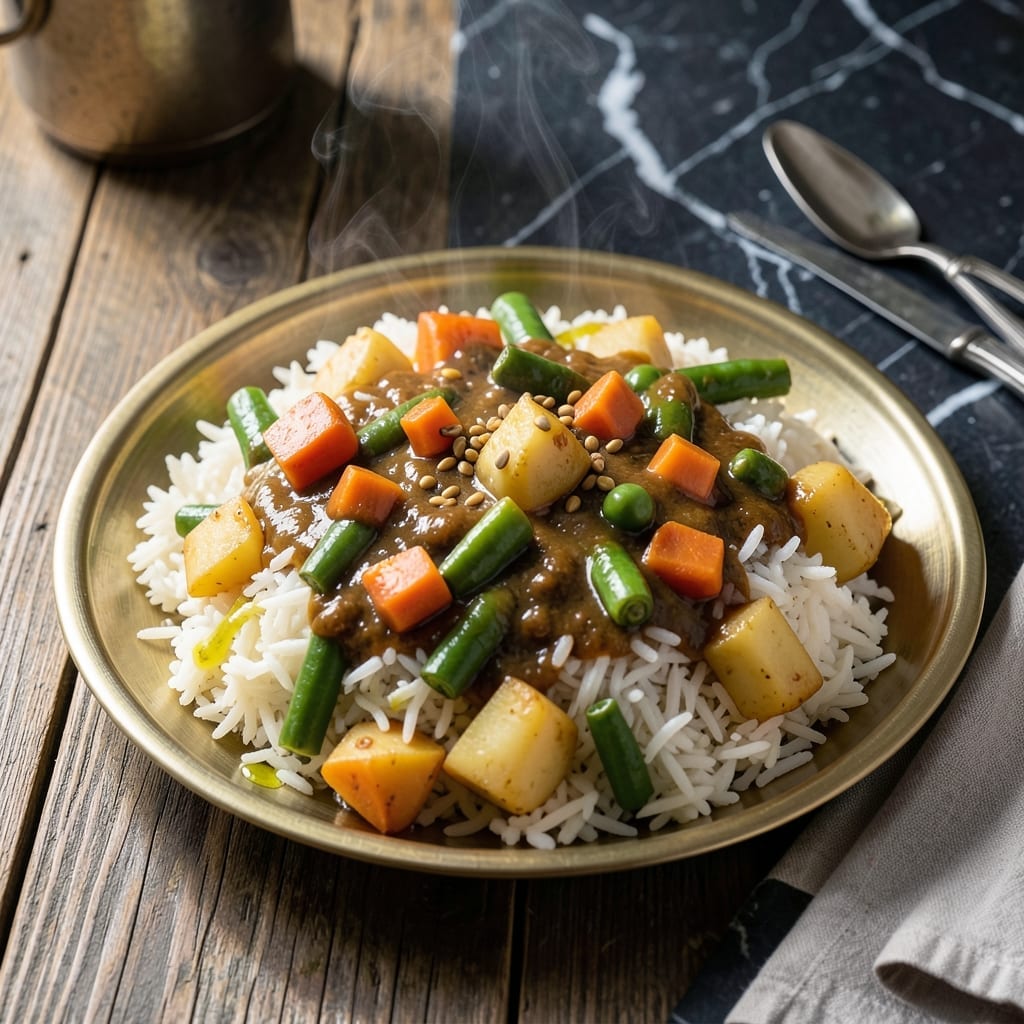
This traditional South Indian dish brings together the bold flavors of tamarind, vegetables, and spices in a single one-pot meal. I’ve perfected this recipe to balance tanginess with aromatic spices, creating a dish that’s both comforting and deeply flavorful.
The key lies in properly tempering mustard seeds, curry leaves, and dried red chilies to release their full aroma. The tamarind pulp adds a signature sour note, while turmeric and asafoetida provide depth and earthiness to the rice.
Every grain of rice absorbs the tangy, spiced tamarind broth, resulting in a dish that’s both hearty and light. The vegetables—carrots, beans, and potatoes—add texture and substance without overpowering the delicate balance of flavors.
Serve this with a side of yogurt or papad for a complete, satisfying meal that’s ready in under 45 minutes.
Ingredients for Kudamilagai Rice Recipe in Tamil
Pantry staples and fresh produce create this tangy, aromatic one-pot South Indian dish.
| Ingredient | Amount | Notes |
|---|---|---|
| Basmati Rice 🍚 | 2 cups | Rinsed and drained thoroughly |
| Tamarind Pulp 🍈 | ½ cup | Soaked in warm water |
| Carrots 🥕 | 2 whole | Peeled and diced |
| Green Beans 🌱 | 1 cup | Trimmed and cut into pieces |
| Potatoes 🥔 | 2 whole | Peeled and cubed |
| Mustard Seeds 🌿 | 1 tsp | For tempering |
| Curry Leaves 🍃 | 10 pieces | Fresh or dried |
| Dried Red Chilies 🌶️ | 4 whole | Broken into halves |
| Turmeric Powder 🌼 | ½ tsp | For earthy depth |
| Asafoetida 🧅 | ¼ tsp | Hing, for aroma |
| Split Pigeon Peas 🌾 | ½ cup | Toor dal, optional |
| Salt 🧂 | 1 ½ tsp | Adjust to taste |
| Coconut Oil 🥥 | 3 tbsp | For tempering and cooking |
| Water 💧 | 4 cups | For cooking rice and tamarind |
| Peanuts 🥜 | ¼ cup | Roasted, for garnish |
The tamarind pulp is critical for that signature sour tang—look for seedless pulp at Indian grocery stores like Patel Brothers or Subzi Mandi. Fresh curry leaves add unmatched aroma, but dried work in a pinch. For asafoetida, KMD or MDH brands are reliable. Turmeric should be vibrant orange (indicates freshness). The vegetables should be firm and fresh—avoid limp or discolored produce.
No tamarind? Lemon juice at half the amount plus a pinch of sugar mimics the tang (though less complex). Out of curry leaves? Skip them, but add extra mustard seeds for depth. Toor dal can be swapped for yellow lentils. For heat, adjust red chilies or add cayenne powder. Coconut oil is traditional, but any neutral oil works.
Store tamarind pulp in an airtight container in the fridge for up to 6 months. Curry leaves keep in the freezer for 3 months. Cooked rice stays fresh for 2 days in the fridge. Reheat with a splash of water to restore moisture.
Why You’ll Love This Recipe
- One-Pot Wonder: I toss everything in a single pot—rice, tamarind, and veggies—and let it simmer. No fancy techniques, just set it and forget it.
- Tangy Comfort: The tamarind pulp gives that perfect sour kick, while the basmati soaks it all up like a flavor sponge.
- Meal Prep Hero: Honestly, this tastes even better the next day. I pack it for lunch, and the veggies stay crisp.
- Budget Stretcher: Carrots, beans, potatoes—cheap, filling, and I always have them on hand. Feeds my family without breaking the bank.
Step-by-Step Instructions for Kudamilagai Rice
This traditional method ensures perfectly balanced tangy and spicy flavors in every bite.
Step 1: Prepare the Rice and Tamarind Mixture
Rinse the 2 cups Basmati Rice thoroughly under cold water until the water runs clear, then drain completely. I recommend soaking the rice for 15 minutes to achieve optimal texture. Meanwhile, soak the 0.5 cup Tamarind Pulp in 1 cup of the 4 cups Water for 10 minutes, then extract the juice by squeezing through your fingers.
This tamarind water will form the tangy base of your dish. The rice should be firm to the touch after soaking, not mushy. This preparation ensures even cooking and prevents the grains from breaking during the process.
Step 2: Temper the Spices
Heat the 3 tbsp Coconut Oil in a heavy-bottomed pot over medium heat. Add the 1 tsp Mustard Seeds and wait for them to pop, which should take about 30-45 seconds. Immediately add the 4 whole Dried Red Chilies, broken in half, and the 10 pieces Curry Leaves.
Stir for 15-20 seconds until the chilies darken slightly and the curry leaves become fragrant. Then add the 0.25 tsp Asafoetida and 0.5 tsp Turmeric Powder, stirring quickly to prevent burning. The aroma at this stage should be intensely fragrant, signaling that the spices are properly tempered.
Step 3: Cook the Vegetables and Lentils
Add the peeled and diced 2 whole Carrots, trimmed 1 cup Green Beans, and peeled and cubed 2 whole Potatoes to the pot. Stir to coat the vegetables in the tempered spices and cook for 3-4 minutes until they begin to soften slightly.
Incorporate the 0.5 cup Split Pigeon Peas and the 1.5 tsp Salt, then pour in the remaining 3 cups Water. Bring the mixture to a boil, then reduce the heat to low. The vegetables should be tender but retain some bite at this stage.
Step 4: Combine and Simmer
Add the soaked and drained 2 cups Basmati Rice to the pot, stirring gently to combine with the vegetables and spices. Pour in the extracted tamarind juice, ensuring the liquid covers the rice by about ½ inch.
Cover the pot and simmer on low heat for 15-18 minutes until the rice is fully cooked and the liquid has been absorbed. Check for doneness by pressing a grain of rice between your fingers—it should be soft with no hard center. Avoid stirring too much to prevent the rice from becoming mushy.
Step 5: Garnish and Rest
Once the rice is cooked, turn off the heat and let it sit covered for 5 minutes. This resting period allows the flavors to meld together. Sprinkle the 0.25 cup Peanuts over the top just before serving for added texture and a nutty contrast to the tangy dish.
The final dish should have a vibrant yellow color from the turmeric, with each grain of rice distinct yet infused with the flavors of tamarind and spices. Serve warm, ensuring each portion includes a mix of vegetables, rice, and peanuts for the full experience.
Pro Tips For Making Kudamilagai Rice Recipe In Tamil
- Soak the Rice: I learned this the hard way—soak basmati rice for at least 20 minutes before cooking to get fluffy, separate grains that don’t turn mushy in the tamarind pulp.
- Balance the Tamarind: Sounds weird, but it works: mix the tamarind pulp with warm water and strain it to remove fibers, or you’ll get bitter, stringy bits in your rice.
- Uniform Veggie Cuts: Cut carrots, beans, and potatoes into equal-sized pieces—about ½ inch thick—so they cook evenly and every bite has the same texture.
- Toast the Spices: After burning three batches, I finally figured out that toasting mustard seeds and urad dal in hot oil until they pop guarantees the tempering actually flavors the rice.
Essential Equipment for This Dish
Heavy-Bottomed Pot
Invest in a 5-7 quart heavy-bottomed pot with a tight-fitting lid—my go-to is a Presto pressure cooker base (without the lid). This prevents burning during tempering and ensures even heat distribution. The weight helps maintain steady temperatures, crucial for perfect rice texture.
Wooden Spoon
Use a long wooden spoon (about 12 inches) for stirring during tempering and cooking. Wood won’t scratch your pot and helps evenly distribute spices through the oil. I keep mine dedicated to Indian cooking to preserve flavors.
Tamarind Soaking Bowl
A medium glass bowl works best for soaking tamarind—avoid metal, which can react with the acid. I use a Pyres 4-cup glass measuring cup so I can measure water directly. The clear glass lets me monitor the tamarind’s color change as it softens. 💡
Fine Mesh Strainer
Extract tamarind juice through a fine mesh strainer to remove seeds and fibers. Press with the back of a spoon to get every last drop of pulp. A OXO Good Grips strainer fits perfectly over my soaking bowl, and the handle stays cool.
Rice Cooking Vessel
If doubling the recipe, switch to a wide, shallow pan (like a 12-inch stainless steel sauté pan) for better evaporation. This ensures the rice cooks evenly without turning mushy. The wide surface area helps the tamarind flavors concentrate beautifully.
Peanut Roasting Pan
Toast peanuts in a dry cast iron skillet over medium-low heat for 3-4 minutes until golden and fragrant. This enhances their nuttiness before garnishing. I use my Lodge 10-inch skillet—it retains heat perfectly for this task. 🔥
Nutrition Facts
Frequently Asked Questions
Can I use raw rice instead of basmati?
Yes, you can substitute with raw rice, but adjust the water ratio to 1:2.5. Basmati gives better texture, while raw rice may turn slightly sticky. Soak for 20 minutes to improve results.
How do I store leftovers?
Keep in an airtight container in the fridge for up to 2 days. Reheat with a splash of water to restore moisture. Avoid freezing as it affects the rice texture.
What if my tamarind pulp is too thick?
Soak it in warm water for 15 minutes and strain. If still too strong, dilute with extra water. The tangy flavor should balance the dish, not overpower it.
Can I skip the peanuts?
They add crunch but aren’t essential. Cashews or roasted chana dal make great alternatives. Omit entirely if preferred.

- Mujadara Rice and Lentils Recipe: Earthy Spiced Lentils With Caramelized Onions - November 1, 2026
- Naija Fried Rice Recipe: Street-Style Spice With Veggie Crunch - November 1, 2026
- Mushy Rice Recipe: Fluffy Grains Transformed in Minutes - November 1, 2026