
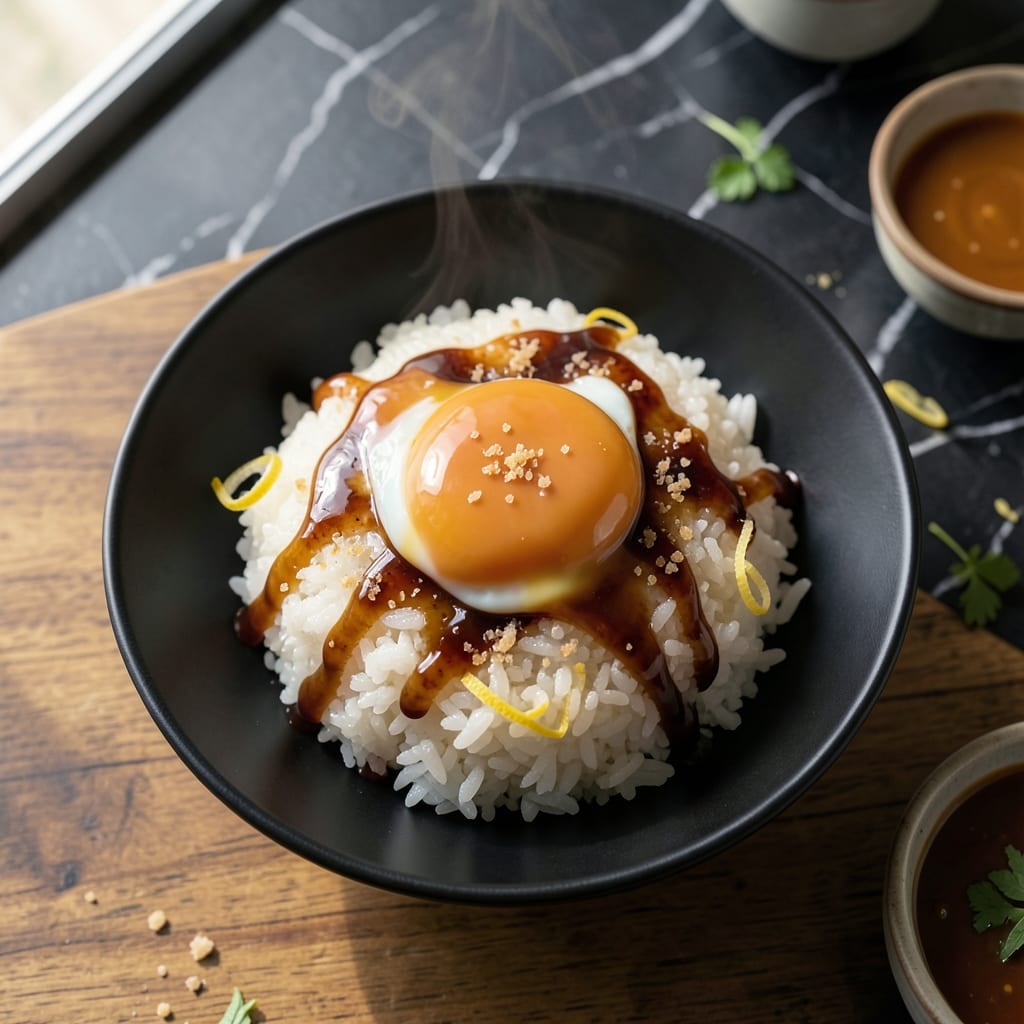
There’s something deeply comforting about a warm bowl of rice topped with silky, custard-like egg—this dish brings Japanese home cooking to your table. I’ve refined this method to ensure the egg remains perfectly tender every time.
The secret lies in gently whisking the eggs with a touch of dashi and soy sauce before pouring them over freshly steamed rice. A brief steam transforms the mixture into a custardy layer that clings to each grain.
What you get is a simple yet elegant bowl where the egg’s richness meets the rice’s subtle sweetness. The texture is velvety and light, never rubbery or overcooked.
Top with a drizzle of soy sauce, a sprinkle of green onions, or a dash of furikake for extra flavor. Here’s how to make it right.
Ingredients for Japanese Egg Rice Bowl
Simple ingredients, big comfort. Silky egg over warm rice with minimal effort.
| Ingredient | Amount | Notes |
|---|---|---|
| Short-Grain White Rice 🍚 | 2 cups | Sushi rice works perfectly |
| Water 💧 | 2 ½ cups | For cooking rice |
| Large Eggs 🥚 | 4 whole | Room temperature preferred |
| Dashi Stock 🍲 | ½ cup | Instant dashi powder works |
| Soy Sauce 🫒 | 2 tbsp | Low-sodium if preferred |
| Granulated Sugar 🧂 | 1 tsp | Balances the savory flavors |
| Mirin 🍶 | 1 tbsp | Sweet rice wine, optional |
| Green Onions 🧅 | 3 whole | Thinly sliced for garnish |
| Furikake Seasoning 🌿 | 2 tsp | Optional topping, nori komi preferred |
| Neutral Oil 🫒 | 1 tsp | For greasing the bowl |
| Toasted Sesame Seeds 🌰 | 1 tsp | For garnish, optional |
| Salt 🧂 | ¼ tsp | Adjust to taste |
The rice is the foundation here. Short-grain white rice (like Koshihikari or Calrose) gives you that sticky, slightly sweet base that holds the egg beautifully. Sushi rice from the Asian market works perfectly—just rinse it well before cooking. I grab mine from H Mart or the international aisle at Whole Foods. Dashi can be instant powder (look for Ajinomoto or Kikkoman brands) or traditional liquid if you’re feeling fancy.
No dashi? Chicken or vegetable broth works in a pinch (use half the amount since it’s saltier). Mirin missing? 1 tsp sugar plus 1 tsp rice vinegar approximates it. The soy sauce can be tamari for gluten-free. Want extra richness? Swap one egg for an extra yolk. Green onions wilting? Chives or scallions work just as well for that fresh bite.
Leftovers keep in the fridge for 2-3 days but the egg texture is best fresh. Reheat gently with a damp paper towel to prevent drying. Dashi powder lasts 6 months in the pantry, unopened. Store rice in an airtight container (or it attracts every bug in your kitchen).
Why You’ll Love This Recipe
- One-Pot Wonder: I just dump rice, eggs, and dashi in one pot—no fancy techniques, no extra pans.
- Umami Bomb: The soy and dashi turn simple eggs and rice into something ridiculously good.
- Breakfast or Dinner: Honestly, I’ve eaten this for lunch, dinner, and even as a late-night snack.
- Stretches a Dollar: Five main ingredients and it feeds me for days—my wallet’s favorite meal.
Step-by-Step Instructions for Japanese Egg Rice Bowl
Here’s how I make this dish with a silky egg custard that pairs perfectly with steamed rice.
Step 1: Cook the Short-Grain White Rice
Rinse the 2 cups Short-Grain White Rice under cold water until the water runs clear. This removes excess starch and prevents sticky rice. Drain well in a fine-mesh strainer.
Combine the drained rice and 2.5 cups Water in a rice cooker or heavy-bottomed pot. If using a pot, bring to a boil, then reduce to a simmer, cover, and cook for 15 minutes. Remove from heat and let it steam, covered, for another 10 minutes. The rice should be tender and slightly sticky, with all the water absorbed.
Step 2: Prepare the Egg Custard Mixture
In a bowl, whisk together the 4 whole Large Eggs, 0.5 cup Dashi Stock, 2 tbsp Soy Sauce, 1 tsp Granulated Sugar, and 1 tbsp Mirin until fully combined. The mixture should be smooth, with no streaks of egg yolk or white.
Strain the mixture through a fine-mesh sieve into a large measuring cup or bowl with a spout. This step removes any lumps, ensuring your custard is silky smooth. I like to do this over the sink to catch any stray bits.
Step 3: Steam the Egg Custard
Lightly grease a heatproof bowl or dish that fits inside your steamer with 1 tsp Neutral Oil. Pour the strained egg mixture into the bowl. Tap it gently on the counter to release any air bubbles for an even texture.
Place the bowl in a steamer set over simmering water. Cover and steam for 12-15 minutes. Check at 12 minutes—the custard is done when it’s just set but still slightly jiggly in the center, like fluffy scrambled eggs. Avoid overcooking, or it’ll turn rubbery.
Step 4: Assemble and Garnish
Divide the cooked rice among bowls. Slice or gently fold the egg custard and place it over the rice. Drizzle any remaining liquid from the custard bowl over the top for extra flavor.
Thinly slice the 3 whole Green Onions and sprinkle them over the top. Finish with a pinch of 2 tsp Furikake Seasoning, 1 tsp Toasted Sesame Seeds, and a tiny sprinkle of 0.25 tsp Salt to taste. Serve immediately while the egg is still warm and tender.
Pro Tips For Making Japanese Egg Rice Bowl
- Warm the dashi: Heat your dashi stock to just below boiling before adding eggs—cold stock makes the eggs cook unevenly and dulls the flavor.
- Beat eggs gently: Whisk the eggs just enough to blend yolks and whites, about 20 strokes; overbeating incorporates too much air and makes the texture spongy.
- Skip the rinse: Don’t rinse your short-grain rice before cooking—it washes away starch that helps create that sticky texture essential for this dish.
- Use room temp eggs: Take eggs out of the fridge 15 minutes before cooking; cold eggs shock in hot dashi and can turn rubbery instead of silky.
Perfect Pairings for japanese egg rice bowl
Side Dish Pairings
A simple miso soup with tofu and wakame seaweed complements this dish beautifully. I make mine with 1 tbsp white miso paste dissolved in 2 cups dashi. The umami depth balances the egg’s richness perfectly. 🥣
Pickled Vegetables
Tsukemono (Japanese pickles) add a refreshing crunch and tangy contrast. My go-to is quick-pickled cucumbers: thinly slice 1 English cucumber and soak in ¼ cup rice vinegar with 1 tsp sugar for 30 minutes before serving.
Protein Additions
For extra heartiness, top with grilled salmon or teriyaki chicken. I sear 4 oz salmon fillets skin-side down for 4-5 minutes, then flip and cook for 2 minutes. The protein’s savory notes elevate the meal without overpowering the egg.
Beverage Pairings
A cold green tea (sencha or genmaicha) cuts through the richness. For beer lovers, a crisp Sapporo or Asahi lager works wonderfully. The light, slightly sweet notes cleanse your palate between bites. 🍵
Fresh Garnishes
Add shredded nori for a briny ocean flavor or pickled ginger for a zesty kick. I also love a sprinkle of toasted sesame seeds for texture. These small additions make each bite exciting and dynamic.
Nutrition Facts
Frequently Asked Questions
Can I make this without dashi?
Yes! Substitute with ½ cup chicken or vegetable broth. It will still be flavorful, though dashi adds authentic umami depth.
Why strain the egg mixture?
Straining removes lumps for a silky-smooth texture. Skipping this can result in a grainy custard rather than the desired velvety finish.
Can I use brown rice?
Brown rice works but needs 45-50 minutes to cook. The texture will be chewier, so the dish loses some of its traditional softness.
How do I prevent rubbery eggs?
Steam for 12-15 minutes max and remove when the center is still slightly jiggly. Overcooking is the main cause of rubbery texture.

- Mujadara Rice and Lentils Recipe: Earthy Spiced Lentils With Caramelized Onions - November 1, 2026
- Naija Fried Rice Recipe: Street-Style Spice With Veggie Crunch - November 1, 2026
- Mushy Rice Recipe: Fluffy Grains Transformed in Minutes - November 1, 2026