
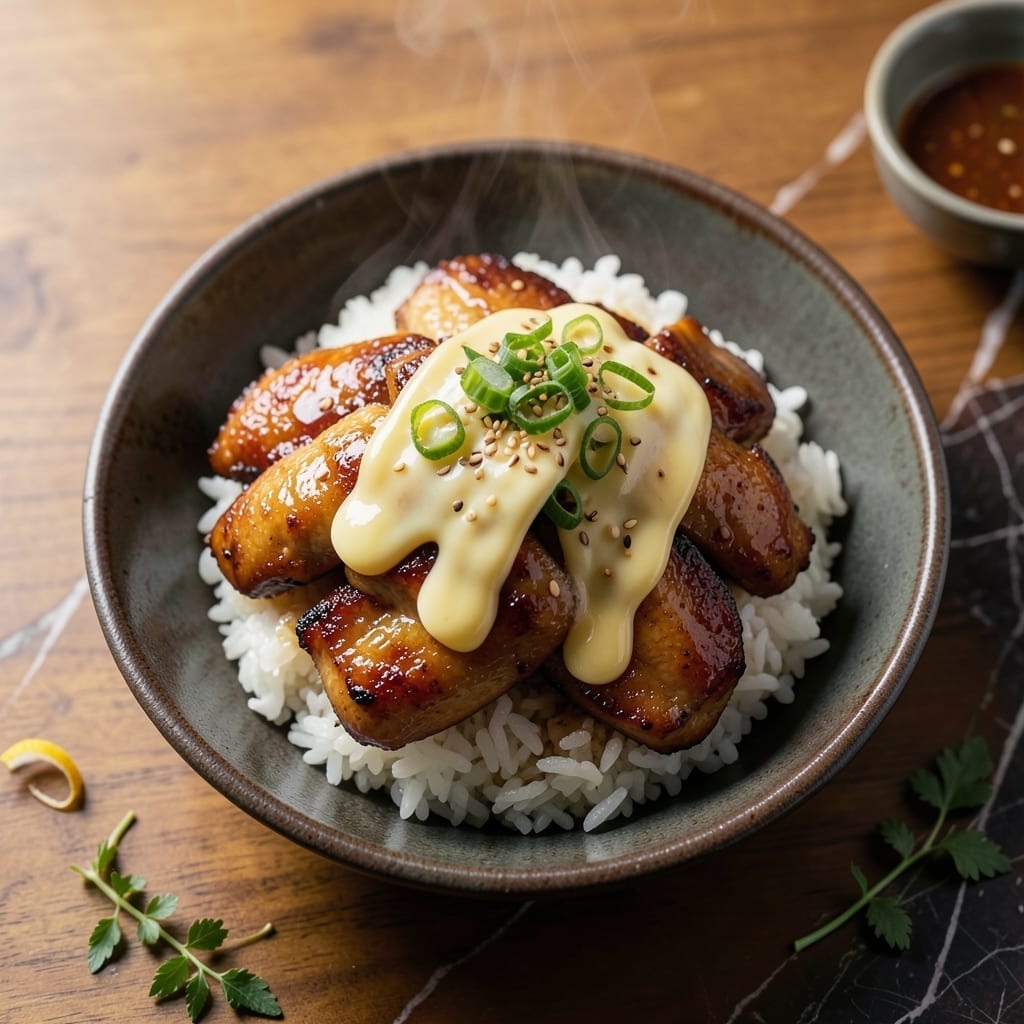
This Japanese classic combines tender chicken and silky eggs over steamed rice for a comforting one-bowl meal. I perfected this dish during my Charleston apprenticeship, where precision met home-style warmth.
The key is gentle cooking that keeps the eggs custardy and the chicken juicy. A simple dashi-based sauce infuses every bite with umami depth without overpowering the main ingredients.
You’ll achieve restaurant-quality results with basic ingredients and careful timing. The eggs should be just set, creating that signature velvety texture that makes oyakodon unforgettable.
Serve immediately while the eggs are still slightly runny. This dish comes together in under 30 minutes for a satisfying meal any night of the week.
Ingredients for Oyakodon Chicken and Egg Rice Bowl
Basic ingredients, extraordinary results. Just chicken, eggs, and a few pantry staples.
| Ingredient | Amount | Notes |
|---|---|---|
| Boneless Chicken Thighs 🍗 | 1 lb | Skin-on or off, cut into bite-sized pieces |
| Large Eggs 🥚 | 4 whole | Beaten for silky texture |
| Japanese Short-Grain Rice 🍚 | 2 cups | Rinsed until water runs clear |
| Dashi Stock 🍜 | 1 ½ cups | Homemade or instant granules |
| Soy Sauce 🫙 | 3 tbsp | Low-sodium preferred for balance |
| Mirin 🍶 | 2 tbsp | Sweet cooking rice wine |
| Sake 🍶 | 2 tbsp | Dry variety for depth |
| Granulated Sugar 🍚 | 1 tbsp | Balances savory flavors |
| Green Onions 🧅 | 3 whole | Thinly sliced for garnish |
| Fresh Ginger 🌿 | 1 piece | Peeled, grated (about 1 inch) |
| Vegetable Oil 🫒 | 1 tbsp | Neutral flavor for cooking |
| Sesame Seeds 🌰 | 1 tsp | Toasted for garnish |
The chicken is the foundation here. Thighs stay juicier than breasts—look for bone-in, skin-on if you want extra flavor (just remove the skin before cooking). I grab mine from Whole Foods or the local Asian market for better quality. The rice needs to be short-grain; Koshihikari or Calrose are perfect. Don’t skip rinsing it—removes excess starch for that ideal sticky texture.
Dashi can be homemade, but instant granules from Kikkoman work just fine. No mirin? Mix 1 tbsp sugar + 1 tbsp water per 2 tbsp needed. Sake can be swapped with dry white wine if that’s what’s open. The eggs are non-negotiable for that custardy texture—fresh is best. If you’re out of green onions, chives or scallions work too.
Leftovers keep in the fridge for 2 days max—the eggs firm up as they cool. Reheat gently with a splash of water to loosen. Dashi granules last 6-12 months in a cool, dark place. The rice? Cook fresh for each serving if you can.
Why You’ll Love This Recipe
- One Pot Wonder: I love that everything comes together in a single pan—chicken, eggs, and that savory dashi-soy broth soaking into the rice.
- Umami Bomb: The combo of soy sauce and dashi creates this deep, rich flavor that makes the chicken and eggs taste ridiculous.
- Weeknight Hero: Between us, this is my go-to when I need dinner fast but still want something cozy and filling.
- Budget Friendly: Boneless thighs and pantry staples like soy sauce keep costs low, and it feeds my family with leftovers for lunch.
Step-by-Step Instructions for Chicken and Egg Rice Bowl
Here’s my tested method for building layers of flavor in this comforting one-bowl meal.
Step 1: Cook the Rice to Perfection
Rinse the 2 cups Japanese Short-Grain Rice under cold water until the water runs clear—this removes excess starch and prevents gummy rice. I find that 3-4 rinses usually does the trick. Drain well in a fine-mesh strainer, shaking off any excess water.
Combine the rinsed rice with the 1.5 cups Dashi Stock in a rice cooker or heavy pot. Cook according to your rice cooker’s instructions or bring to a boil, then reduce to low heat, cover, and simmer for 15 minutes. Let it steam off heat for another 10 minutes—this resting time ensures each grain is plump and separate.
Step 2: Simmer the Chicken in Aromatic Broth
While the rice cooks, heat the 1 tbsp Vegetable Oil in a large skillet over medium heat. Add the 1 lb Boneless Chicken Thighs (cut into bite-sized pieces) and cook for 4-5 minutes until the pieces are lightly browned but not fully cooked through.
Add the 1 piece Fresh Ginger (peeled and grated), 3 tbsp Soy Sauce, 2 tbsp Mirin, 2 tbsp Sake, and 1 tbsp Granulated Sugar. Stir to combine, then add ½ cup water. Bring to a gentle simmer, then reduce to low heat. Cover and let cook for 8-10 minutes until the chicken is tender and the liquid has reduced slightly.
Step 3: Create the Silky Egg Mixture
In a bowl, beat the 4 whole Large Eggs until fully combined and slightly frothy. The key here is to not overbeat—you want a smooth, silky texture, not stiff peaks. I like to use a fork for this because it gives me more control than a whisk.
Pour the beaten eggs evenly over the chicken and simmering liquid in the skillet. Don’t stir immediately—let the eggs begin to set around the edges for about 1 minute. This creates a beautiful, custardy base for your dish.
Step 4: Finish and Garnish for Serving
Once the eggs start to set, gently fold them with a spatula, mixing them with the chicken and broth. Cook for another 2-3 minutes until the eggs are just set but still slightly runny in spots—this is the signature silky texture you’re after. Remove from heat immediately to prevent overcooking.
Divide the cooked rice among bowls and top with the chicken and egg mixture. Garnish with the 3 whole Green Onions (thinly sliced) and 1 tsp Sesame Seeds. Serve hot, with extra soy sauce on the side if desired. The contrast of the warm, savory topping with the fluffy rice is what makes this dish so satisfying.
Pro Tips For Making Oyakodon Chicken And Egg Rice Bowl
- Simmer Chicken First: Cook the chicken in the dashi-soy mixture until fully done before adding eggs—I learned this the hard way after ending up with undercooked meat and overcooked scrambled eggs.
- Use Warm Dashi: Always heat your dashi stock before combining with soy sauce; cold broth makes the eggs seize up and turn rubbery instead of silky.
- Cut Chicken Small: Slice boneless thighs into 1-inch pieces so they cook through in 3-4 minutes, which prevents the eggs from overcooking while waiting for the chicken.
- Beat Eggs Lightly: Just a quick whisk with chopsticks is enough—overbeating creates stiff curds, and you want that soft, custardy texture over the rice.
Best Sauces and Condiments for This Recipe
Classic Dashi Boost
I always keep Kikkoman dashi granules on hand for an instant umami kick. Sprinkle ½ tsp over the finished dish or stir into the egg mixture before cooking. This amplifies the savory depth without overpowering the delicate flavors. 💡
Spicy Sriracha Mayo
Mix 2 tbsp mayo with 1 tsp sriracha for a creamy, spicy contrast that cuts through the richness. I learned this trick from a Charleston ramen shop. Drizzle over the top just before serving for a modern twist.
Citrus Ponzu Drizzle
A splash of ponzu sauce adds bright, citrusy notes that balance the dish beautifully. I use 1 tbsp ponzu per bowl, drizzled over the eggs. The acidity wakes up all the flavors without overwhelming them.
Furikake Seasoning
Sprinkle 1 tsp furikake (Japanese rice seasoning) over each bowl for added texture and umami. The seaweed and sesame blend complements the chicken and eggs perfectly. I love the nori komi variety for this dish. 🌟
Pickled Ginger
Serve with 1 tbsp pickled ginger on the side for a refreshing palate cleanser between bites. The tangy, slightly sweet flavor contrasts wonderfully with the savory broth.
Sesame Oil Finish
A final drizzle of toasted sesame oil (just ½ tsp per bowl) adds aromatic depth. Use sparingly—this potent oil can dominate if overused. I always toast my sesame seeds fresh for garnish too.
Nutrition Facts
Frequently Asked Questions
Can I use chicken breast instead of thighs?
Yes, but thighs stay juicier. If using breast, cook for only 3-4 minutes to prevent dryness.
How do I get the eggs extra silky?
Remove from heat when eggs are 80% set—they’ll finish cooking from residual heat. Overcooking makes them rubbery.
What’s the best rice substitute?
Short-grain is ideal, but jasmine rice works in a pinch. Avoid long-grain—it won’t absorb the broth as well.
Can I make this ahead of time?
Cook rice fresh, but prep chicken/broth up to 1 day ahead. Reheat broth gently, then add eggs just before serving.

- Jollof Rice Sauce Recipe: West African Tomato and Spice Infusion - September 25, 2026
- Japanese Rice Soup Recipe: Umami-Rich Comfort in a Bowl - September 25, 2026
- Homemade Cream Of Rice Recipe: Silk-Smooth Breakfast in Minutes - September 25, 2026