
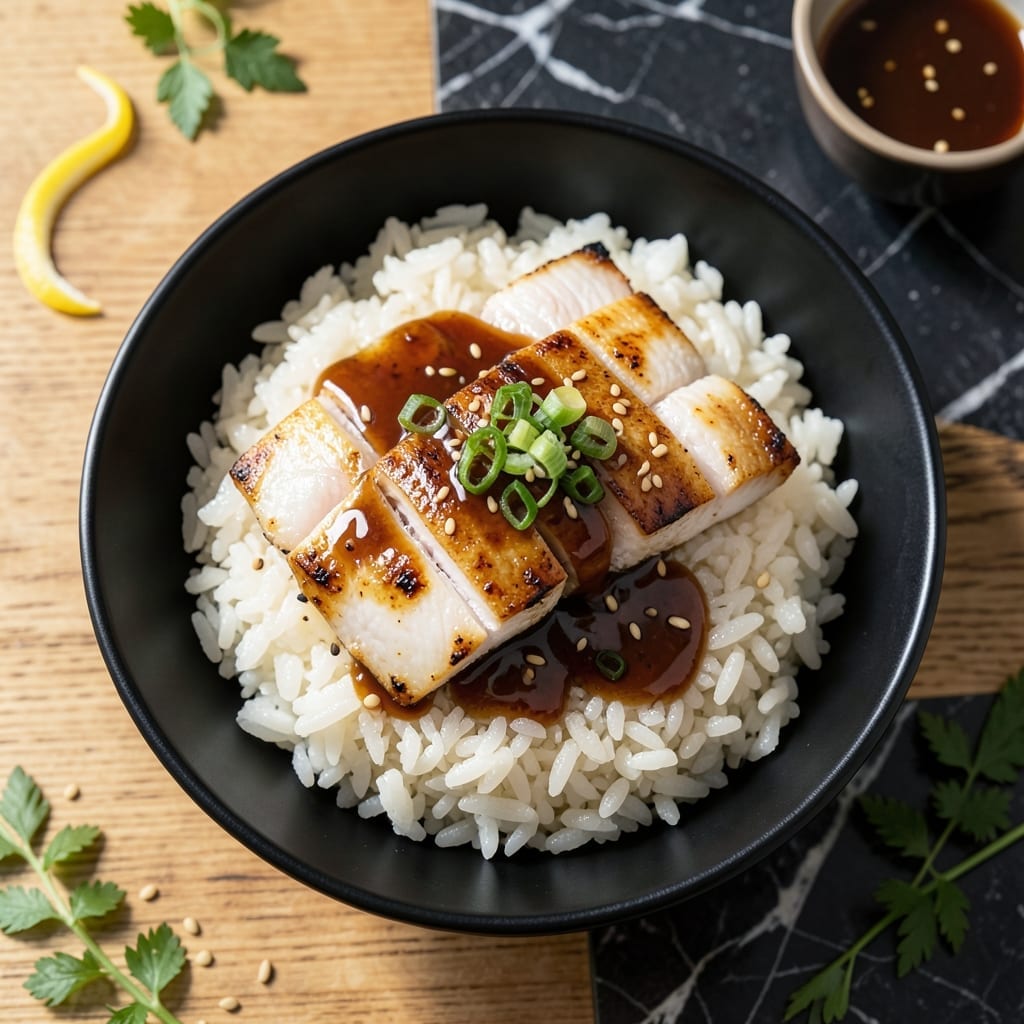
This wok-seared fish bowl brings authentic Japanese flavors to your table with minimal effort. The combination of tender fish, umami-rich glaze, and fragrant jasmine rice creates a balanced meal that’s both satisfying and elegant.
I developed this recipe to capture the essence of traditional donburi while keeping it accessible for home cooks. The fish is seared quickly in a hot wok, locking in moisture and building deep, savory notes in the glaze.
What you’ll love is how the steamed rice soaks up the extra sauce, making every bite flavorful. The dish comes together in under 30 minutes, proving that restaurant-quality meals don’t require complicated techniques.
Serve it for lunch or dinner—this bowl is versatile enough for any occasion.
Ingredients for Japanese Fish Rice Bowl
Pantry staples meet fresh fish for an umami-packed bowl you’ll crave.
| Ingredient | Amount | Notes |
|---|---|---|
| Jasmine Rice 🍚 | 1 ½ cups | Uncooked, rinsed before cooking |
| White Fish Fillets 🐟 | 1 ½ lb | Cod, halibut, or sea bass, skin-on |
| Soy Sauce 🫒 | ⅓ cup | Low-sodium preferred for balance |
| Mirin 🍶 | 3 tbsp | Sweet rice wine, essential for glaze |
| Sake 🍶 | 2 tbsp | Dry variety for depth |
| Brown Sugar 🧈 | 1 tbsp | Light or dark, for caramelization |
| Fresh Ginger 🌿 | 1 tbsp | Peeled and grated finely |
| Garlic Cloves 🧄 | 3 cloves | Minced for aromatic base |
| Green Onions 🧅 | 4 whole | Thinly sliced for garnish |
| Sesame Oil 🫒 | 1 tsp | Toasted, for finishing touch |
| Neutral Oil 🫒 | 2 tbsp | For searing fish, high smoke point |
| Dashi Stock 🍲 | ½ cup | Optional for extra umami depth |
| Sesame Seeds 🌰 | 1 tsp | Toasted, for garnish |
| Red Pepper Flakes 🌶️ | ¼ tsp | Optional for heat |
The fish is the star here—cod, halibut, or sea bass all work beautifully. Look for skin-on fillets at your fish counter (ask for center-cut pieces so they cook evenly). For the rice, jasmine is non-negotiable—its floral aroma pairs perfectly with the glaze. Mirin and sake are in the Asian aisle at Whole Foods or any well-stocked Kroger. Skip the cheap soy sauce; Kikkoman or San-J are worth the splurge.
No mirin? 1 tbsp sugar + 1 tbsp water per tablespoon of mirin works in a pinch. Sake can be swapped with dry white wine. If you can’t find dashi, fish stock or even water will do—just boost the soy sauce slightly. The ginger and garlic are key for the glaze’s depth, but ground ginger at half the amount saves time. For a veggie twist, swap fish for extra-firm tofu (press it first).
Leftovers keep 2-3 days in the fridge—reheat gently to avoid drying out the fish. The glaze and rice freeze well for up to 3 months, though the fish is best fresh. Pro tip: make extra rice—it soaks up leftover glaze like a dream (worth the extra minute).
Why You’ll Love This Recipe
- One Pot Meal: I love that the fish and rice cook together in one pot, so I’m not stuck washing a sink full of dishes.
- Umami Bomb: The soy, mirin, and sake glaze on the fish is ridiculously good—sweet, salty, and just sticky enough.
- Weeknight Hero: Honestly, it’s my go-to for busy evenings when I need something warm and satisfying fast.
- Budget Friendly: White fish fillets and jasmine rice stretch far, and leftovers taste even better the next day.
Step-by-Step Instructions for Japanese Fish Rice Bowl
Here’s the method I trust for perfectly balanced flavors and textures every single time.
Step 1: Cook the Jasmine Rice to Fluffy Perfection
Rinse the 1.5 cups jasmine rice under cold water until the water runs clear—this removes excess starch and prevents gummy rice. I use a fine-mesh strainer for this. Then combine it with 2 cups of water in a rice cooker or pot with a tight-fitting lid.
Bring to a boil, then reduce to a simmer, cover, and cook for 15 minutes. Remove from heat and let it steam, covered, for another 10 minutes. The rice is done when all the water is absorbed and the grains are tender with a slight bite. Fluff with a fork before serving to separate the grains.
Step 2: Create the Umami Glaze Base
In a small saucepan, combine the 0.33 cup soy sauce, 3 tbsp mirin, 2 tbsp sake, 1 tbsp brown sugar, 1 tbsp fresh ginger, and 3 cloves garlic cloves. Bring to a gentle simmer over medium heat and cook for 5-7 minutes until the mixture thickens slightly and the sugar dissolves completely.
Watch for small bubbles forming at the edges—that’s your cue it’s ready. Stir occasionally to prevent burning. The glaze should coat the back of a spoon with a glossy sheen. Remove from heat and set aside to cool slightly while you prepare the fish.
Step 3: Sear the White Fish Fillets to Golden Crispness
Pat the 1.5 lb white fish fillets completely dry with paper towels—moisture is the enemy of crispy skin. Heat the 2 tbsp neutral oil in a large skillet over medium-high heat until it shimmers but doesn’t smoke. Place the fillets skin-side down in the pan and press gently with a spatula for the first 10 seconds to prevent curling.
Cook undisturbed for 4-5 minutes until the skin is golden brown and crispy. Flip carefully and cook for another 2-3 minutes until the fish flakes easily with a fork. The flesh should be opaque and just cooked through—overcooking dries it out. Transfer to a plate and keep warm.
Step 4: Assemble the Rice Bowl with Finishing Touches
Divide the cooked jasmine rice among four bowls. Place a fish fillet on top of each serving. Reheat the glaze gently if it has thickened too much, then pour it evenly over the fish and rice. Drizzle each bowl with the 1 tsp sesame oil and sprinkle with the 4 whole green onions, thinly sliced.
For the final garnish, sprinkle with the 1 tsp sesame seeds and, if using, the 0.25 tsp red pepper flakes for a touch of heat. Serve immediately while the fish is hot and the rice is steaming. The contrast of crispy skin, tender fish, and fragrant rice makes this dish unforgettable.
Pro Tips For Making Japanese Fish Rice Bowl
- Pat Fish Dry: I learned this the hard way—wet fillets steam instead of sear. Give them a good pat with paper towels before they hit the pan, or your fish will stick and tear.
- Deglaze with Sake: After cooking the fish, pour in 2 tablespoons of sake to lift those browned bits. Sounds weird, but it works: that’s where the deep umami flavor lives.
- Rice First, Fish Later: Start the rice before anything else—jasmine takes 15-20 minutes. I used to rush and end up with cold rice or overcooked fish waiting around.
- Reduce the Sauce: Simmer the soy-mirin-sake mix for 3-4 minutes until slightly syrupy. My grandmother swore by this, and she was right: thin sauce soaks the rice and makes it soggy.
Regional Styles of These Flavors
Tokyo-Style Donburi
In the capital, this dish often features fresh tuna or salmon lightly seared and served over rice with a soy-dashi glaze. I love how Tokyo chefs use high-quality fish from Tsukiji Market, keeping the flavors clean and bright. The glaze is typically lighter here, letting the fish shine. 🗺️
Osaka’s Hearty Take
Osaka’s version tends to be more robust, with a thicker, sweeter glaze made with extra mirin and sugar. They often add shitake mushrooms or bok choy for texture. The fish is usually cooked longer for a firmer bite, appealing to the city’s love for bold flavors.
Hokkaido’s Seafood Richness
Up north, the cold waters provide incredible seafood, so Hokkaido-style bowls often use scallops or crab alongside fish. The glaze includes miso paste for depth, and the rice might be mixed with ikura (salmon roe) for a luxurious touch.
Kyoto’s Traditional Touch
Kyoto’s approach is more refined, with seasonal fish like cherry salmon in spring or mackerel in summer. The glaze is often infused with yuzu zest for a citrusy note. Presentation is key here, with garnishes arranged meticulously. 💛
Fukuoka’s Comfort Food
In Fukuoka, this bowl is a home-style staple, often made with local mackerel or sardines. The glaze is simpler, sometimes just soy sauce and sugar, and the rice is topped with a soft-boiled egg for extra richness. It’s hearty and comforting.
Nutrition Facts
Frequently Asked Questions
What type of fish works best for this dish?
Firm white fish like cod, halibut, or sea bass are ideal. Their mild flavor pairs perfectly with the umami glaze, and they hold up well to searing.
Can I substitute mirin or sake?
For mirin, use 1 tbsp sugar + 1 tbsp water per tablespoon. Dry white wine works in place of sake. Both swaps maintain the glaze’s sweetness and depth.
How do I prevent the fish from sticking?
Pat fillets completely dry and heat oil until shimmering. Press gently with a spatula for the first 10 seconds to prevent curling.
Can I make this ahead of time?
Cook rice and glaze up to 1 day ahead. Reheat glaze gently before assembling. Fish is best seared fresh to maintain crispy skin.

- Mujadara Rice and Lentils Recipe: Earthy Spiced Lentils With Caramelized Onions - November 1, 2026
- Naija Fried Rice Recipe: Street-Style Spice With Veggie Crunch - November 1, 2026
- Mushy Rice Recipe: Fluffy Grains Transformed in Minutes - November 1, 2026