
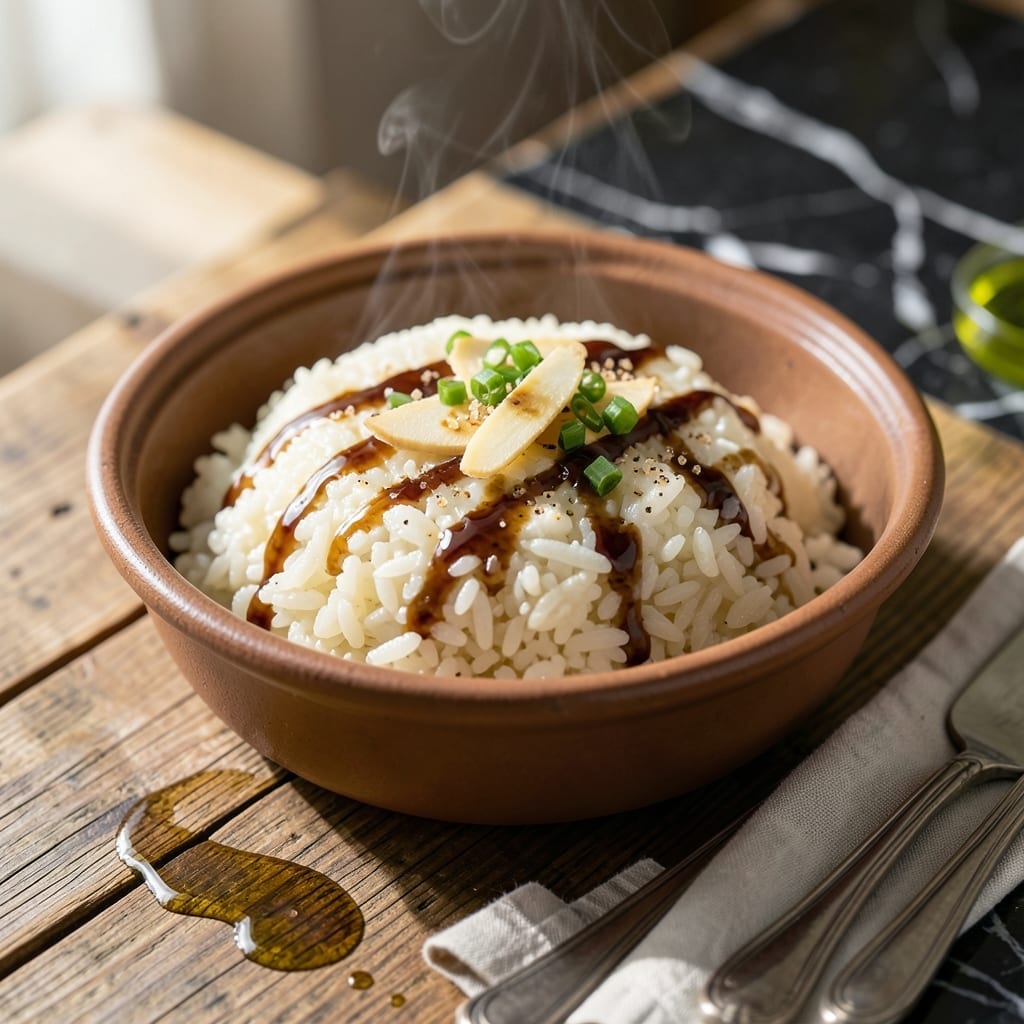
This Japanese ginger rice delivers fragrant grains with a subtle, zesty warmth that elevates any meal. I’ve refined the method to balance the ginger’s bite without overpowering the dish.
Simple ingredients and precise timing create perfectly fluffy rice infused with aromatic depth. The result is a comforting, versatile side that pairs beautifully with proteins or vegetables.
Ingredients for Japanese Ginger Rice
Fragrant short-grain rice meets zesty ginger for a simple yet sophisticated side dish.
| Ingredient | Amount | Notes |
|---|---|---|
| Japonica Short-Grain Rice 🍚 | 2 cups | Rinsed until water runs clear |
| Fresh Ginger Root 🌿 | 2 tbsp | Finely grated, peeled |
| Water 💧 | 2 ½ cups | Filtered preferred |
| Rice Vinegar 🍶 | 1 tbsp | Unseasoned variety |
| Soy Sauce 🫒 | 1 tbsp | Low-sodium or tamari for gluten-free |
| Granulated Sugar 🍚 | 1 tsp | Organic preferred |
| Sea Salt 🧂 | ½ tsp | Fine grain for even distribution |
| Toasted Sesame Oil 🫒 | 1 tsp | For finishing drizzle |
| Scallions 🧅 | 3 whole | Thinly sliced for garnish |
| Sesame Seeds 🌾 | 1 tsp | Toasted for garnish |
| Neutral Oil 🫒 | 1 tsp | For sautéing ginger |
The rice is everything here. Japonica short-grain (like Koshihikari or Nishiki) gives you that perfect sticky texture—avoid jasmine or basmati, which stay too separate. Most Asian markets carry these varieties in bulk, but Whole Foods has them too. For ginger, look for firm, smooth roots with no wrinkles. Older ginger gets fibrous and bitter.
No rice vinegar? Apple cider vinegar at half the amount works in a pinch (the flavor’s milder). Tamari can swap for soy sauce—use the same quantity. Out of sesame oil? A light drizzle of chili oil adds a different but still delicious finish. The sugar balances the ginger’s heat—maple syrup or agave can replace at a 1:1 ratio if you’re avoiding refined sugar.
Cooked rice keeps 4-5 days in the fridge—reheat with a splash of water. Freeze for up to 3 months in airtight containers. Toast sesame seeds in a dry pan for 30 seconds until fragrant (don’t walk away, they burn fast).
Why You’ll Love This Recipe
- One Pot Wonder: I just toss everything in the rice cooker—ginger, vinegar, soy—and let it work its magic.
- Zing in Every Bite: The fresh ginger and rice vinegar give it that bright, punchy kick that plain rice just can’t match.
- Meal Prep Hero: I make a big batch on Sunday and it pairs with everything from grilled chicken to stir-fried veggies all week.
- Budget Stretch: Japonica rice is cheap, and a little ginger goes a long way—this fills up a crowd without emptying my wallet.
Step-by-Step Instructions for Japanese Ginger Rice
Follow this precise method to infuse fragrant ginger warmth into every fluffy grain of rice.
Step 1: Prepare and Rinse the Japonica Short-Grain Rice
Place the 2 cups Japonica Short-Grain Rice in a fine-mesh strainer and rinse under cold water, swirling with your hand. Continue until the water runs completely clear—this removes excess starch that could make the rice gummy. I typically do this 3-4 times for optimal results.
Let the rice drain thoroughly in the strainer for 5 minutes. Meanwhile, finely grate the 2 tbsp Fresh Ginger Root using a microplane, ensuring you capture all the aromatic juices. This fresh ginger will infuse the rice with its signature zesty warmth.
Step 2: Sauté the Ginger and Bloom the Aromatics
In a medium saucepan with a tight-fitting lid, heat the 1 tsp Neutral Oil over medium heat. Add the grated ginger and sauté for 1-2 minutes until fragrant. You’ll notice the raw edge soften and the kitchen fill with a warm, pungent aroma—that’s your signal it’s ready.
Immediately add the drained rice to the pan and stir to coat the grains with the ginger-infused oil. Toast the rice for 1 minute, stirring constantly, until the edges of the grains appear slightly translucent. This step enhances the nutty depth of the rice.
Step 3: Cook the Rice with Seasoned Liquid
Pour in the 2.5 cups Water, 1 tbsp Rice Vinegar, 1 tbsp Soy Sauce, 1 tsp Granulated Sugar, and 0.5 tsp Sea Salt. Stir once to distribute the ginger and seasonings evenly, then bring to a boil over high heat.
Once boiling, reduce the heat to low, cover the pan, and simmer for 15 minutes. Do not lift the lid during this time—steam is crucial for even cooking. After 15 minutes, remove from heat and let it sit, covered, for an additional 10 minutes to steam finish.
Step 4: Fluff and Finish with Aromatic Garnishes
Gently fluff the rice with a fork, breaking up any clumps while preserving the individual grains. Drizzle the 1 tsp Toasted Sesame Oil over the rice and fold it in with the fork. The oil adds a rich, nutty fragrance that complements the ginger beautifully.
Thinly slice the 3 whole Scallions and toast the 1 tsp Sesame Seeds in a dry pan over medium heat for 1-2 minutes until golden brown and aromatic. Sprinkle both over the rice just before serving for a fresh, vibrant finish.
Pro Tips For Making Japanese Ginger Rice
- Rinse the Rice: Wash the Japonica rice until the water runs clear—this removes excess starch and keeps the grains separate instead of gummy. I learned this the hard way after my first few attempts turned out like porridge.
- Grate Ginger Fine: Use the smallest holes on your grater for the ginger to release its full flavor. Sounds tedious, but it actually changes the outcome—coarse shreds just don’t infuse the rice the same way.
- Skip the Over-soaking: Soak the rice for 20-30 minutes max. Any longer and you’ll lose that perfect sticky-yet-firm texture the dish needs.
- Add Vinegar Last: Stir in the rice vinegar after cooking, not before. Adding it too early can make the rice mushy—I was skeptical until I tried it and saw the difference.
Perfect Pairings for japanese ginger rice
Protein Pairings
This rice pairs beautifully with teriyaki-glazed salmon—the sweetness complements the ginger’s zing. I also love it with miso-marinated black cod for a richer, buttery contrast. The rice’s subtle warmth balances the fish’s umami depth. 🍣
Vegetable Sides
Steamed bok choy or stir-fried snap peas add freshness without overpowering the dish. For a heartier meal, try sautéed shiitake mushrooms with a splash of soy sauce—they absorb the rice’s aromatic flavors.
Soup Complements
A light miso soup with tofu and wakame makes a perfect starter. The soup’s savory broth enhances the rice’s ginger notes. I often serve this combo for a cozy, well-rounded Japanese-inspired meal.
Drink Pairings
Green tea (sencha or genmaicha) cleanses the palate between bites. For beer lovers, a crisp Sapporo or Asahi lager’s mild bitterness cuts through the rice’s richness. 🍵
Garnish Boosts
Add pickled ginger or quick-pickled cucumbers on the side for a tangy crunch. A sprinkle of furikake (Japanese rice seasoning) adds extra umami and texture to each bite.
Nutrition Facts
Frequently Asked Questions
Can I use ground ginger instead of fresh?
Fresh ginger is best for vibrant flavor, but in a pinch, use 1/2 tsp ground ginger per 1 tbsp fresh. Add it with the rice and liquid to prevent burning. The flavor will be milder but still aromatic.
Why is my rice mushy?
Over-rinsing or lifting the lid while cooking releases too much starch. Rinse just until water runs clear, and keep the lid on during the entire 15-minute simmer and 10-minute rest.
Can I make this in a rice cooker?
Sauté the ginger in oil first, then add all ingredients to the cooker. Use the standard rice setting, and let it rest 10 minutes after cooking for best texture.

- Mujadara Rice and Lentils Recipe: Earthy Spiced Lentils With Caramelized Onions - November 1, 2026
- Naija Fried Rice Recipe: Street-Style Spice With Veggie Crunch - November 1, 2026
- Mushy Rice Recipe: Fluffy Grains Transformed in Minutes - November 1, 2026