
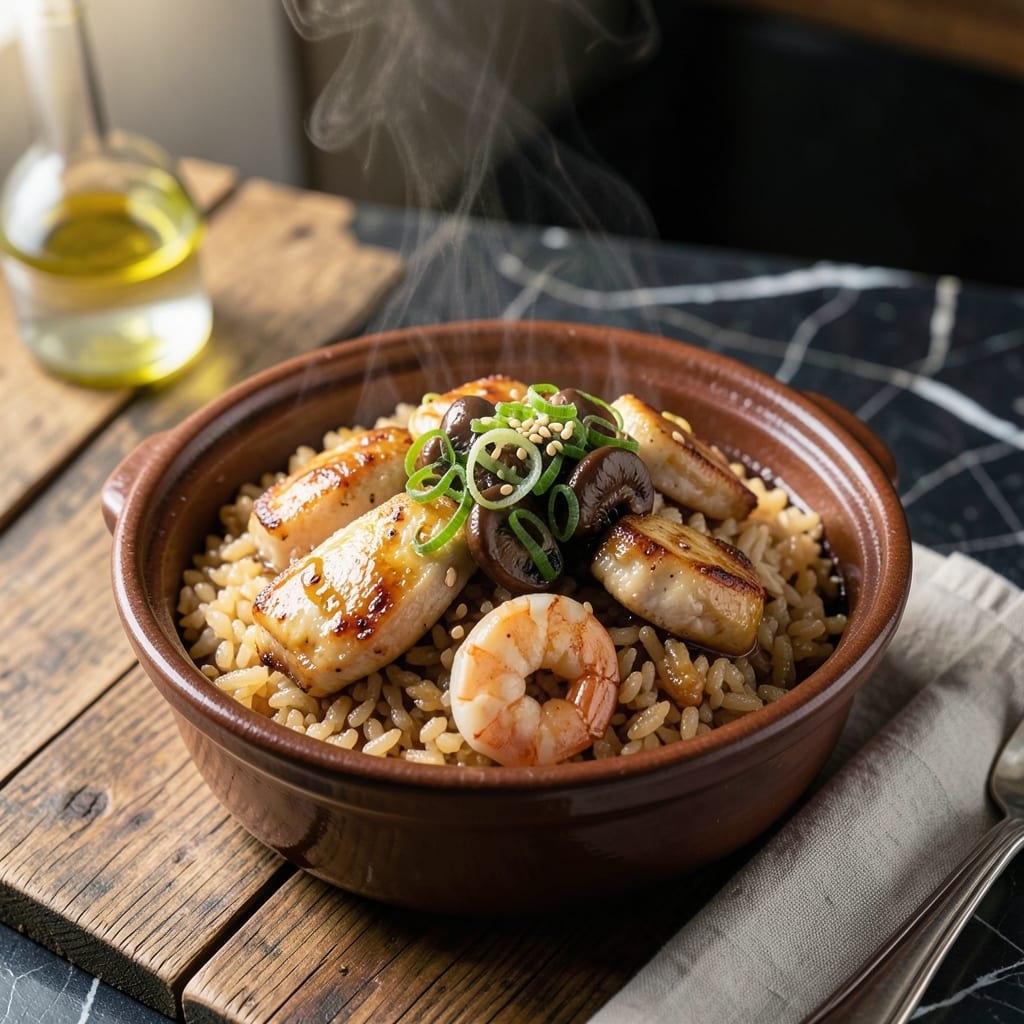
Traditional kamameshi brings the essence of Japanese comfort food to your kitchen with its umami-rich flavors and perfectly textured rice. This method uses a clay pot to create a dish that’s both simple and deeply satisfying.
The clay pot is the star here, allowing the rice to cook evenly while absorbing the savory dashi and soy-based seasonings. Each grain becomes infused with layers of flavor, from the earthy mushrooms to the delicate sweetness of the mirin.
What emerges is a dish with a golden crust at the bottom and fluffy, fragrant rice on top. The toppings—chicken, shrimp, and vegetables—add protein and color, making it a complete meal in one pot.
Serve it hot, straight from the clay pot, for an authentic experience. This recipe delivers warmth and tradition in every bite.
Ingredients for Japanese Kamameshi Rice
Traditional ingredients create authentic kamameshi with umami depth and perfect texture in every bite.
| Ingredient | Amount | Notes |
|---|---|---|
| Japanese Short-Grain Rice 🍚 | 2 cups | Rinsed until water runs clear |
| Dashi Stock 🍲 | 2 ½ cups | Traditional kombu and bonito preferred |
| Soy Sauce 🫒 | 3 tbsp | Low-sodium for balance |
| Mirin 🍶 | 2 tbsp | Sweet rice wine essential |
| Sake 🍶 | 2 tbsp | Dry variety recommended |
| Shiitake Mushrooms 🍄 | 4 whole | Fresh, sliced thinly |
| Chicken Thighs 🍗 | 1 lb | Boneless, skinless, diced |
| Shrimp 🦐 | ½ lb | Peeled, deveined, tails off |
| Carrot 🥕 | 1 whole | Julienned for texture |
| Green Onions 🧅 | 3 whole | Thinly sliced for garnish |
| Ginger Root 🌿 | 1 whole | Fresh, grated finely |
| Garlic Cloves 🧄 | 2 cloves | Minced for depth |
| Sesame Oil 🫒 | 1 tsp | Toasted for aroma |
| Neutral Oil 🫒 | 1 tbsp | For clay pot preparation |
The rice is non-negotiable—Japanese short-grain (like Koshihikari or Nishiki) delivers the sticky, slightly chewy texture essential to this dish. Dashi stock forms the flavor base, so use quality kombu and bonito flakes (available at Japanese markets or Amazon). The mirin and sake add layers of sweetness and acidity; Aji-Mirin is ideal for mirin, while any dry sake works for cooking.
Substitutions require care. No dashi? Chicken or vegetable stock with a splash of soy can work in a pinch. Mushroom stock adds umami depth if avoiding animal products. For the proteins, tofu or extra mushrooms maintain the dish’s heartiness. Mirin alternatives (like sugar plus vinegar) lack complexity, but half the amount of honey plus rice vinegar gets close if absolutely necessary.
Store the rice in an airtight container in a cool, dry place for up to 6 months. Dashi keeps 1 week refrigerated or 3 months frozen. Prepare ingredients fresh the day of cooking—especially the ginger and garlic—for optimal flavor.
Why You’ll Love This Recipe
- One Pot Magic: I just dump the rice, dashi, soy sauce, mirin, and sake into one pot and let it work its magic.
- Umami Bomb: The dashi and soy sauce combo creates this deep, savory flavor that’s honestly addictive.
- Weeknight Hero: I make a big batch on Sunday and it reheats beautifully for lunches all week.
- Budget Friendly: A little rice and broth go a long way—this feeds my family for days without breaking the bank.
Step-by-Step Instructions for Japanese Kamameshi Rice
Master the technique for authentic clay pot rice with layered flavors and perfect texture.
Step 1: Prepare and Season the Protein and Aromatics
Begin by dicing the 1 lb Chicken Thighs into 1-inch pieces and patting them dry with paper towels. Season lightly with a pinch of salt. Peel and devein the 0.5 lb Shrimp, keeping tails off as specified, and set aside.
Thinly slice the 4 whole Shiitake Mushrooms and julienne the 1 whole Carrot. Mince the 2 cloves Garlic Cloves and finely grate the 1 whole Ginger Root. This preparation ensures even cooking and optimal flavor distribution throughout the dish.
Step 2: Sear the Chicken and Shrimp
Heat a clay pot or heavy-bottomed pot over medium-high heat. Add the 1 tbsp Neutral Oil and swirl to coat the surface. When the oil shimmers, add the diced chicken thighs in a single layer. Sear undisturbed for 3-4 minutes until the bottoms develop a golden-brown crust.
Flip the chicken and add the shrimp to the pot. Cook for another 2-3 minutes until the shrimp turn opaque and pink and the chicken is nearly cooked through. Remove both proteins from the pot and set aside—they’ll finish cooking in the next steps.
Step 3: Sauté Aromatics and Toast the Rice
In the same pot, reduce the heat to medium and add the minced garlic, grated ginger, sliced shiitake mushrooms, and julienned carrot. Sauté for 2-3 minutes until the vegetables soften slightly and the aromatics become fragrant. This builds the flavor foundation for your kamameshi.
Add the 2 cups Japanese Short-Grain Rice to the pot and stir to coat the grains with the oil and aromatics. Toast the rice for 1-2 minutes until the edges of the grains become slightly translucent—this enhances the nutty depth of the rice.
Step 4: Add Liquids and Simmer
Pour in the 2.5 cups Dashi Stock, 3 tbsp Soy Sauce, 2 tbsp Mirin, and 2 tbsp Sake. Stir gently to combine, ensuring the rice is evenly distributed in the liquid. Bring the mixture to a gentle boil over medium-high heat.
Once boiling, reduce the heat to low, cover the pot with a tight-fitting lid, and simmer for 12-15 minutes. Avoid lifting the lid during this time to trap steam and ensure even cooking. The rice is done when the liquid is fully absorbed and the grains are tender.
Step 5: Finish and Garnish
Return the seared chicken and shrimp to the pot, nestling them into the rice. Drizzle the 1 tsp Sesame Oil over the top for added aroma. Cover the pot again and let it rest off the heat for 5 minutes to allow the flavors to meld.
Fluff the rice gently with a fork and garnish with the 3 whole Green Onions, thinly sliced. Serve immediately in the clay pot for a traditional presentation, ensuring each portion includes a mix of rice, proteins, and vegetables.
Pro Tips For Making Japanese Kamameshi Rice
- Soak the rice: Give your short-grain rice a good 30-minute soak in cold water before cooking—it guarantees even cooking and that sticky, tender texture kamameshi needs.
- Bloom the dashi: Heat your dashi stock just until it steams (not boils) before mixing with the other liquids. I learned this the hard way—boiling it dulls the umami flavor.
- Skip the rinse: After soaking, resist the urge to rinse the rice again—you’ll wash away the starch that makes kamameshi creamy. Just drain it well.
- Layer the flavors: Add the soy sauce, mirin, and sake to the rice before the dashi, then gently mix. Sounds weird, but it works: the rice absorbs the seasonings better this way.
Wine and Beer Pairings for This Dish
Japanese Beer Pairings
I love pairing kamameshi with a crisp Sapporo Premium Beer—its clean, slightly sweet profile complements the umami depth without overwhelming the dish. The light carbonation also cleanses your palate between bites of the rich, savory rice. 🍺
Sake Selections
A dry Junmai sake like Dassai 39 enhances the dish’s complexity with its subtle fruit notes. Serve it chilled in small cups to sip alongside the clay pot. The alcohol content helps cut through the richness of the seared chicken and shrimp.
Light White Wines
For wine lovers, a Pinot Grigio from Japan’s Yamanashi region offers citrusy brightness that balances the soy and dashi. I recommend Grace Koshu—its crisp acidity and mineral notes make it an ideal match for the earthy mushrooms.
Green Tea Option
If you prefer non-alcoholic pairings, a hot sencha green tea brings out the dish’s savory layers. The slight bitterness contrasts beautifully with the mirin’s sweetness. Brew it at 160°F for 2 minutes to avoid over-extraction.
Nutrition Facts
Frequently Asked Questions
Can I use a regular pot instead of a clay pot?
Yes, but a heavy-bottomed pot like enamel cast iron works best. Clay pots create the signature crispy bottom, but a Dutch oven can mimic the effect. Just preheat it well and use medium-low heat to prevent burning.
Why does my rice turn out mushy?
Over-stirring or too much liquid is usually the culprit. Use exactly 2.5 cups dashi for 2 cups rice and avoid stirring after adding liquid. Let it steam undisturbed for 12-15 minutes.
Can I make this vegetarian?
Swap chicken and shrimp for tofu or extra mushrooms. Use vegetable dashi and add 1 tbsp soy sauce extra for depth. The technique remains the same.

- Mujadara Rice and Lentils Recipe: Earthy Spiced Lentils With Caramelized Onions - November 1, 2026
- Naija Fried Rice Recipe: Street-Style Spice With Veggie Crunch - November 1, 2026
- Mushy Rice Recipe: Fluffy Grains Transformed in Minutes - November 1, 2026