
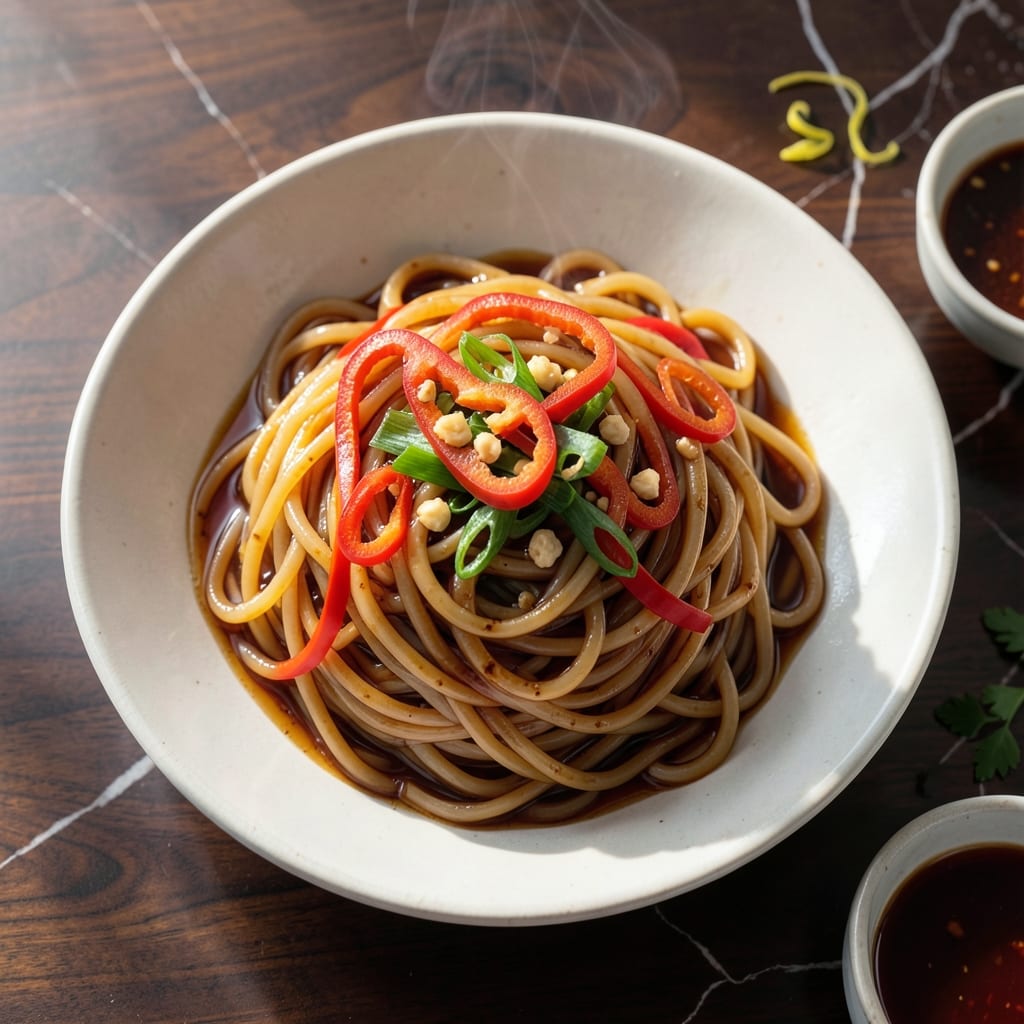
This Japanese shoyu long rice delivers authentic umami flavor with minimal effort. The dish transforms simple noodles into a savory masterpiece using just a handful of pantry staples.
I’ve refined this method to highlight the depth of shoyu while keeping the dish approachable. The key is balancing the soy sauce with subtle sweetness and a touch of garlic for complexity.
You’ll achieve perfectly tender noodles coated in a glossy, flavor-packed sauce that clings to every strand. It’s a versatile side that pairs beautifully with grilled proteins or vegetables.
Ready in under 20 minutes, this recipe brings restaurant-quality taste to your home kitchen.
Ingredients for Japanese Shoyu Long Rice
Handful of pantry staples. Authentic umami. Ready in a flash.
| Ingredient | Amount | Notes |
|---|---|---|
| Long Rice Noodles 🍜 | 8 oz | Dried, also called saifun |
| Shoyu Soy Sauce 🫙 | ½ cup | Japanese variety preferred |
| Garlic Cloves 🧄 | 4 cloves | Minced finely for even flavor |
| Brown Sugar 🍚 | 2 tbsp | Light or dark works |
| Mirin 🍶 | 2 tbsp | Sweet rice wine for balance |
| Neutral Oil 🛢️ | 1 tbsp | Vegetable or canola oil |
| Green Onions 🧅 | 3 whole | Thinly sliced for garnish |
| Sesame Seeds 🌰 | 1 tsp | Toasted for nuttiness |
| Ginger Root 🌿 | 1 tbsp | Freshly grated for zing |
| Dashi Stock 🥣 | 1 cup | Or substitute with vegetable broth |
| Sake 🍶 | 1 tbsp | Optional for depth |
| Red Pepper Flakes 🌶️ | ¼ tsp | For subtle heat |
The shoyu is non-negotiable here. Kikkoman or Yamasa at any grocery store works—just avoid low-sodium. Dried long rice noodles (sometimes labeled saifun) are in the Asian aisle. I grab mine at H Mart in bulk, but even the small packs at Kroger are fine. Fresh ginger and garlic make a difference, so don’t skip them (the pre-minced stuff in jars just doesn’t cut it).
No mirin? Mix 1 tbsp sugar + 2 tbsp water as a substitute. Out of dashi? Vegetable broth works in a pinch. Sake can be skipped, but it adds depth—dry sherry is the closest swap. For a gluten-free version, tamari instead of shoyu. The red pepper flakes? Totally optional, but I love the tiny kick they add.
Noodles cook in 5 minutes, so prep everything first. Sauce keeps 3-4 days in the fridge, but the noodles soften over time. Best eaten fresh, though leftovers reheat okay with a splash of water. Freeze sauce only (not noodles) for up to 3 months.
Why You’ll Love This Recipe
- One Pot Wonder: I just toss the long rice noodles with shoyu, garlic, and mirin in a single pan—minimal cleanup, maximum flavor.
- Sweet-Savory Magic: The brown sugar caramelizes with the shoyu, creating this sticky, umami-rich glaze that coats every noodle.
- Feeds a Crowd: I make a big batch for potlucks, and it’s always the first dish to disappear.
- Leftovers Rock: Honestly, it tastes even better the next day after the flavors meld overnight.
Step-by-Step Instructions for Japanese Shoyu Long Rice
Here’s the method I use to get perfectly sauced noodles with deep umami flavor every time.
Step 1: Rehydrate and Prepare the Long Rice Noodles
Place the 8 oz Long Rice Noodles in a large bowl and cover completely with hot tap water. I’ve found this works better than boiling water, which can make the noodles gummy. Let them soak for 8-10 minutes until they turn translucent and become pliable.
Drain the noodles in a colander and rinse under cold water to stop the cooking process. Gently squeeze out excess water with your hands—you want them damp but not dripping. This prevents the noodles from sticking together and ensures they absorb the sauce properly.
Step 2: Build the Flavor Base with Aromatics
Heat the 1 tbsp Neutral Oil in a large skillet or wok over medium-high heat. Add the 4 cloves Garlic Cloves and 1 tbsp Ginger Root, stirring constantly for 30-45 seconds until the aroma becomes intense and the garlic just begins to turn light golden at the edges.
Immediately add the 0.25 tsp Red Pepper Flakes and stir for 10 seconds to toast them lightly. This step is crucial—it wakes up the spices without burning them. The oil should be shimmering but not smoking at this point.
Step 3: Create the Umami-Rich Sauce
Pour in the 0.5 cup Shoyu Soy Sauce, 2 tbsp Brown Sugar, 2 tbsp Mirin, 1 cup Dashi Stock, and 1 tbsp Sake. Stir well to combine. Bring the mixture to a gentle simmer, then reduce the heat to medium-low.
Let it cook for 3-4 minutes until the sauce reduces slightly and the brown sugar fully dissolves. You’ll notice the sauce takes on a glossy sheen and the flavors begin to meld. Taste and adjust the balance if needed—though I rarely find this necessary with these proportions.
Step 4: Combine Noodles and Sauce
Add the drained long rice noodles to the skillet with the sauce. Using tongs, gently toss to coat every strand evenly. The noodles should glisten as they soak up the liquid. Cook for 2-3 minutes, stirring occasionally, until the noodles are heated through and have absorbed most of the sauce.
Watch for the moment when the noodles turn from opaque to fully translucent and the sauce clings to them in a glossy coating. If the mixture seems dry, add a splash of water, but remember the noodles will continue to absorb liquid as they sit.
Step 5: Garnish and Serve Immediately
Transfer the noodles to serving bowls. Sprinkle the 3 whole Green Onions, thinly sliced, and 1 tsp Sesame Seeds evenly over the top. The green onions add a fresh, crisp contrast to the rich noodles, while the sesame seeds provide a subtle nutty crunch.
Serve immediately while hot—the noodles are best fresh from the pan when they’re at their most tender and the sauce is at its most vibrant. The flavors will continue to develop as it sits, but the texture is ideal right away.
Pro Tips For Making Japanese Shoyu Long Rice
- Soak the Noodles: Cover long rice noodles in warm water for 10-15 minutes before cooking—I learned this the hard way after ending up with stubborn, uncooked strands in the middle.
- Bloom the Garlic: Cook minced garlic in oil on low heat until fragrant but not browned, about 30 seconds. After burning three batches, I finally figured out that bitter garlic ruins the shoyu flavor.
- Balance the Sauce: Mix 3 parts shoyu, 1 part mirin, and 1 part brown sugar for the sauce—this ratio actually changes the outcome. Sounds weird, but it works.
- Toss While Hot: Combine cooked noodles with the sauce immediately while they’re still steaming. My grandmother swore by this, and she was right: it helps the flavors cling better.
Serving Suggestions for Leftovers
Garnish Like a Pro
I always finish with a generous sprinkle of toasted sesame seeds for nuttiness and thinly sliced green onions for freshness. The contrast in textures and colors makes the dish visually appealing. 💫
Protein Pairings
This creation pairs beautifully with grilled teriyaki chicken or pan-seared salmon. The savory notes complement the umami in the noodles. For a vegetarian option, tofu works wonderfully.
Vegetable Sides
Steamed bok choy or stir-fried snap peas add a crisp, green element. I love the balance of the tender noodles with the crunch of fresh veggies.
Beverage Pairings
A cold Asahi beer or green tea cleanses the palate. For something stronger, try sake served slightly chilled to complement the dish’s Japanese roots. 🍵
Serving Temperature
Serve immediately while hot—the noodles absorb the sauce best right out of the pan. If storing, reheat gently with a splash of water to restore the glossy texture.
Presentation Tip
Use shallow bowls to showcase the long strands. A drizzle of chili oil on top adds color and a subtle kick for those who enjoy heat.
Nutrition Facts
Frequently Asked Questions
Can I use regular soy sauce instead of shoyu?
Yes, but shoyu has a sweeter, more balanced flavor. If using regular soy sauce, reduce it to 1/3 cup and add an extra 1 tbsp of sugar to mimic shoyu’s complexity.
How do I prevent the noodles from sticking?
Rinse them thoroughly after soaking and keep them damp before adding to the sauce. Use tongs to toss gently, and avoid overcrowding the pan. A splash of oil in the soaking water helps too.
What if my sauce is too salty?
Balance it by adding 1-2 tbsp of dashi or water and a touch of mirin. Stir well and taste before adjusting further. The noodles will absorb some saltiness as they cook.
Can I make this dish ahead of time?
Cook and sauce the noodles, then store in an airtight container for up to 2 days. Reheat with a splash of water to revive the texture. Avoid freezing sauced noodles.

- Mujadara Rice and Lentils Recipe: Earthy Spiced Lentils With Caramelized Onions - November 1, 2026
- Naija Fried Rice Recipe: Street-Style Spice With Veggie Crunch - November 1, 2026
- Mushy Rice Recipe: Fluffy Grains Transformed in Minutes - November 1, 2026