
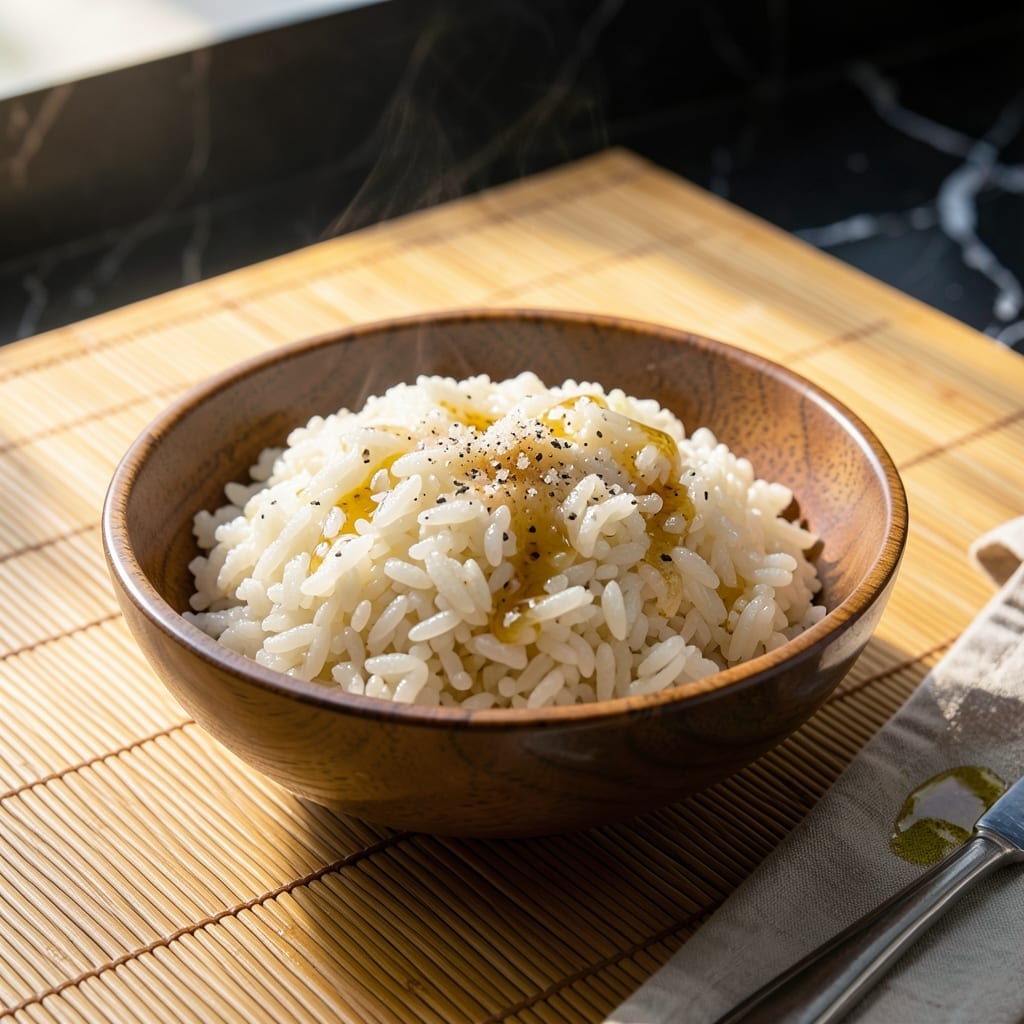
Achieving perfectly sticky sushi rice requires precision in both preparation and seasoning. This method delivers the ideal texture and sweetness for authentic maki rolls.
Short-grain Japanese rice is rinsed thoroughly to remove excess starch, then cooked with a careful water ratio. The seasoning blend of rice vinegar, sugar, and salt transforms plain rice into the glossy, slightly tangy base that defines great sushi.
The finished rice should be sticky enough to hold its shape when molded, yet still separate easily into individual grains. It serves as the foundation for all sushi rolls, complementing fillings without overpowering them.
Master this technique, and your homemade sushi will rival any restaurant version. The balance of sweetness and acidity makes each bite irresistibly fresh.
Ingredients for Maki Rice
Ten carefully selected ingredients create the foundation for authentic maki rice every time.
| Ingredient | Amount | Notes |
|---|---|---|
| Short-Grain Japanese Rice 🍚 | 2 cups | Sushi rice or calrose variety |
| Water 💧 | 2 ¼ cups | For cooking rice |
| Rice Vinegar 🍶 | ½ cup | Seasoned or unseasoned |
| Granulated Sugar 🍚 | 2 tbsp | For sweetness balance |
| Sea Salt 🧂 | 1 tsp | Fine grain preferred |
| Sake 🍶 | 2 tbsp | Optional for depth |
| Mirin 🍶 | 1 tbsp | Sweet rice wine |
| Kombu 🌿 | 1 piece | 2-inch square for cooking |
| White Sesame Seeds 🌰 | 1 tbsp | Toasted, for garnish |
| Nori Sheets 🌿 | 4 sheets | For rolling maki |
The rice is non-negotiable here. Short-grain Japanese rice like Koshihikari or Nishiki delivers the perfect sticky texture—long-grain varieties won’t work. Asian markets or the international aisle at Whole Foods carry the best selections. Look for labels specifying ‘sushi rice’ or ‘calrose.’ Avoid pre-rinsed or instant rice, as they lack the starch content needed for proper cohesion.
No rice vinegar? Apple cider vinegar with a pinch of sugar can substitute in a pinch, though the flavor profile shifts slightly. Mirin can be replaced with an additional tablespoon of sugar mixed with water. Kombu is optional but adds umami depth—dried shiitake mushrooms work as an alternative. For the sake, dry sherry offers a similar complexity to the finished rice.
Uncooked rice stores indefinitely in a cool, dry place. Once cooked, the seasoned rice is best used immediately but can be held at room temperature for up to 2 hours. Leftovers keep in the refrigerator for 2-3 days (the texture firms up). Never freeze cooked sushi rice—it ruins the delicate consistency.
Why You’ll Love This Recipe
- Hands-Off Cooking: The rice cooker does all the work while I prep the rest of my sushi spread.
- Sweet-Tangy Bite: That perfect balance of rice vinegar, sugar, and salt makes every grain addictive.
- Sushi Night Staple: I use this rice for rolls, bowls, or even onigiri—it’s my go-to base.
- Budget-Friendly Batch: A pound of short-grain rice stretches into multiple meals, and the seasoning costs pennies.
Step-by-Step Instructions for Maki Rice
Master these precise techniques to achieve the ideal sticky texture and balanced sweetness for sushi.
Step 1: Rinse and Soak the Short-Grain Japanese Rice
Place the 2 cups Short-Grain Japanese Rice in a fine-mesh strainer and rinse under cold water until the water runs clear. This removes excess starch that would make the rice gummy rather than perfectly sticky.
Once rinsed, combine the rice with the 2.25 cups Water and the 1 piece Kombu in your rice cooker or heavy pot. Let it soak for 30 minutes before cooking. The kombu infuses subtle umami depth into the grains.
Step 2: Cook the Rice with Precision
If using a rice cooker, cook according to the appliance’s standard setting. For stovetop, bring the rice, water, and kombu to a boil, then reduce to low heat, cover, and simmer for 15 minutes. Remove from heat and let it steam, covered, for an additional 10 minutes.
The rice should be tender with all water absorbed. Remove and discard the kombu piece at this point. The grains will still appear slightly firm—they’ll soften further as they absorb the seasoning mixture.
Step 3: Prepare the Seasoning Mixture
In a small saucepan, combine the 0.5 cup Rice Vinegar, 2 tbsp Granulated Sugar, 1 tsp Sea Salt, 2 tbsp Sake, and 1 tbsp Mirin. Heat over medium-low until the sugar and salt dissolve completely, stirring occasionally.
Don’t allow the mixture to boil—just warm it enough to dissolve the solids. This gentle heating preserves the delicate flavors of the rice vinegar and sake. Set aside to cool slightly while the rice finishes steaming.
Step 4: Fold the Seasoning into the Rice
Transfer the warm rice to a large, non-reactive bowl—wooden or glass works best. Using a rice paddle or silicone spatula, gently fold in the seasoning mixture with a cutting motion rather than stirring. This prevents crushing the grains.
Fan the rice with a handheld fan or piece of cardboard while folding to cool it quickly and give it a glossy finish. The rice is ready when it reaches body temperature and has a slight sheen. It should be sticky enough to hold together but not mushy.
Step 5: Finish and Prepare for Rolling
Sprinkle the 1 tbsp White Sesame Seeds over the seasoned rice and fold gently to distribute. Cover with a damp towel to prevent drying until ready to use. The rice should maintain its shape when pressed lightly between your fingers.
For best results, use the rice immediately for rolling with the 4 sheets Nori Sheets. The texture is ideal when fresh—it becomes too dry if left to sit for more than 2 hours at room temperature. Keep it covered until assembly.
Pro Tips For Making Maki Rice
- Rinse Thoroughly: Wash the short-grain rice 4-5 times until the water runs clear—this removes excess starch so your maki rice sticks just right without turning mushy.
- Use Exact Water: Measure water at a 1:1.1 ratio with rice (e.g., 1 cup rice to 1.1 cups water) and resist the urge to eyeball it; even a little extra makes the rice too soft for rolling.
- Warm the Vinegar: Gently heat the rice vinegar, sugar, and salt mixture just until the sugar dissolves—cold vinegar won’t distribute evenly and leaves grains unevenly seasoned.
- Fan While Mixing: While folding the vinegar mixture into the warm rice, fan it with a hand or tray to cool it faster; this gives the rice that signature glossy finish and prevents a sticky, gummy texture.
Creative Variations of This Dish
Spicy Sriracha Twist
Add 1 tbsp sriracha to your seasoning mixture for a subtle kick that pairs wonderfully with spicy tuna rolls. I also mix in ½ tsp toasted sesame oil to complement the heat. This variation adds excitement without overpowering the delicate rice flavor. 🌶️
Citrus Infusion
_replace 2 tbsp of rice vinegar with yuzu juice for a bright, citrusy note. The floral aroma works beautifully with salmon or crab fillings. I find 1 tsp of yuzu zest enhances the flavor further.
Black Sesame Version
Swap white sesame seeds for black sesame seeds for dramatic visual contrast. Toast 1 tbsp of black sesame seeds lightly before folding in. This creates stunning presentation for special occasions.
Coconut Rice Fusion
Replace ¼ cup of water with coconut milk during cooking for a tropical twist. Add 1 tsp of coconut flakes to the seasoning for texture. This pairs exceptionally well with shrimp or mango fillings.
Umami Boost
Add 1 tsp of soy sauce and ½ tsp of dashi powder to your seasoning mixture for deeper umami flavor. I recommend this for rolls with avocado or cucumber, where the rice needs to stand out more. 💡
Sweet Red Bean
Fold in ¼ cup of sweet red bean paste after seasoning for a dessert-style sushi rice. This creates a delicious base for fruit-filled rolls or as a sweet component in bento boxes.
Nutrition Facts
Frequently Asked Questions
What type of rice works best for sushi?
Use short-grain Japanese rice like Koshihikari or Nishiki. Avoid long-grain varieties as they lack the necessary starch for that perfect sticky texture.
Can I make it without a rice cooker?
Cook on the stovetop with 2.25 cups water per 2 cups rice. Simmer covered for 15 minutes, then steam off heat for 10 minutes.
How do I fix rice that’s too dry?
Sprinkle 1-2 tbsp water over the rice and fold gently. Cover with a damp towel for 5 minutes to rehydrate. Avoid adding more seasoning as this can make it too salty.
How long can I keep seasoned rice?
Use within 2 hours at room temperature for best texture. Refrigerated leftovers last 2-3 days but will firm up. Never freeze cooked sushi rice.

- Mujadara Rice and Lentils Recipe: Earthy Spiced Lentils With Caramelized Onions - November 1, 2026
- Naija Fried Rice Recipe: Street-Style Spice With Veggie Crunch - November 1, 2026
- Mushy Rice Recipe: Fluffy Grains Transformed in Minutes - November 1, 2026