
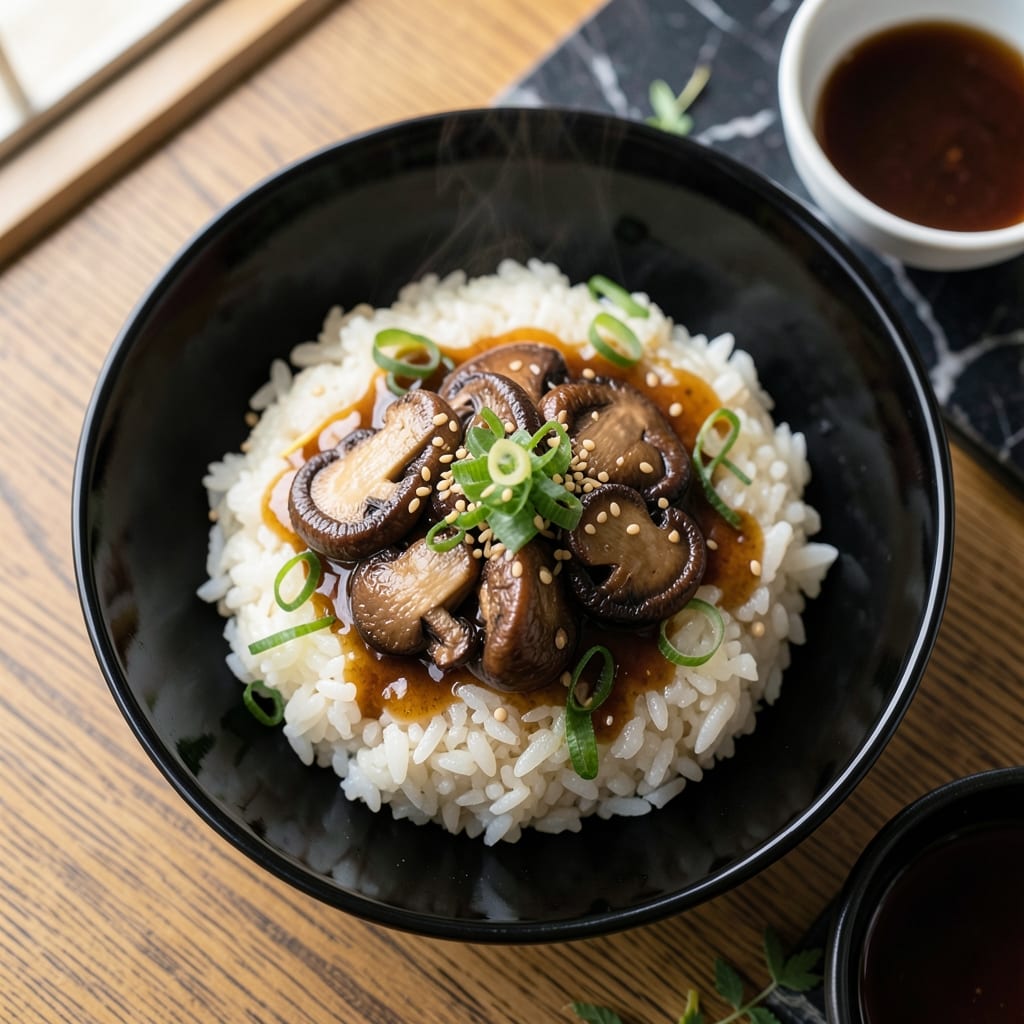
This vegetarian rice bowl brings the heart of Japanese comfort food to your table with layers of flavor and texture. The foundation is perfectly cooked short-grain rice, steamed to achieve that signature sticky yet separate consistency.
What makes this dish special is the balance between umami-rich elements and fresh garden vegetables. I use a combination of soy-based seasonings and mushrooms to create depth, while crisp cucumber and carrot add brightness and crunch.
The beauty lies in its simplicity and versatility. Each component can be prepared ahead, making this a practical choice for busy weeknights. The assembly process allows for personalization, letting everyone create their ideal combination.
You’ll end up with a nourishing, satisfying meal that’s as visually appealing as it is delicious. The contrast between warm rice and cool vegetables makes every bite interesting.
Ingredients for Japanese Rice Bowl Recipe Vegetarian
Short-grain rice, umami mushrooms, and crisp garden vegetables create this vibrant bowl.
| Ingredient | Amount | Notes |
|---|---|---|
| Short-Grain White Rice 🍚 | 2 cups | Rinsed until water runs clear |
| Water 💧 | 2 ½ cups | For cooking rice |
| Shiitake Mushrooms 🍄 | 8 oz | Fresh, sliced thinly |
| Soy Sauce 🫒 | ¼ cup | Use low-sodium for control |
| Mirin 🍶 | 2 tbsp | Sweet rice wine for balance |
| Rice Vinegar 🍋 | 1 tbsp | Unseasoned variety preferred |
| Sesame Oil 🫒 | 1 tsp | Toasted for depth of flavor |
| Carrot 🥕 | 1 whole | Julienned or matchstick-cut |
| English Cucumber 🥒 | 1 whole | Seeds removed, thinly sliced |
| Scallions 🧅 | 4 whole | Thinly sliced for garnish |
| Nori Sheets 🍙 | 2 sheets | Toasted and cut into strips |
| Sesame Seeds 🌰 | 1 tbsp | Toasted for garnish |
| Vegetable Oil 🫒 | 1 tbsp | Neutral-flavored for cooking |
| Sugar 🍚 | 1 tsp | To balance acidity |
The rice is non-negotiable here—short-grain Japanese rice (like Koshihikari or Nishiki) gives that perfect sticky texture. Find it at Asian grocery stores or well-stocked supermarkets. For shiitake, fresh is ideal (look for firm caps with white stems), but dried work too (rehydrate and slice). The soy sauce should be Japanese-style, not Chinese—Kikkoman or Yamasa are reliable brands.
No shiitake? Cremini or white button mushrooms work in a pinch. Out of mirin? 1 tbsp sugar plus 1 tbsp water mimics the sweetness. Skip the nori if you must (it’s mostly for garnish), but toasted sesame seeds add essential crunch. The rice vinegar can be swapped for apple cider vinegar, though the flavor will be slightly sharper. Fresh ginger (1 tsp grated) boosts the umami if you’ve got it.
Cooked rice holds for 2 days in the fridge—store it airtight to prevent drying. Prep veggies up to 1 day ahead (keep cucumber separate to avoid sogginess). The mushrooms taste even better the next day, so feel free to make extra. Assemble bowls just before serving to maintain that perfect warm-cool contrast.
Why You’ll Love This Recipe
- One Pot Wonder: I love that this comes together in a single saucepan—just rice, shiitakes, and a quick soy-mirin glaze.
- Umami Bomb: The shiitakes soak up that soy and mirin like sponges, making every bite ridiculous.
- Lunchbox Hero: Honestly, it reheats like a dream and stays moist for days in the fridge.
- Pantry Friendly: I always have these ingredients on hand, so it’s my go-to when the fridge looks sad.
Step-by-Step Instructions for Japanese Rice Bowl Vegetarian
This method delivers perfectly seasoned rice with vibrant, fresh toppings every time.
Step 1: Cook the Short-Grain White Rice
Rinse the 2 cups Short-Grain White Rice in a fine-mesh strainer under cold water until the water runs completely clear. This removes excess starch and prevents gummy rice. I usually go through 4-5 rinses to get it right.
Combine the rinsed rice with the 2.5 cups Water in a medium saucepan with a tight-fitting lid. Bring to a boil over high heat, then immediately reduce to low heat, cover, and simmer for 15 minutes. Don’t peek during cooking—steam is your friend here.
Remove from heat and let it rest, covered, for 10 minutes. The grains should be tender and slightly sticky with no hard centers. This resting period allows the steam to finish cooking the rice evenly.
Step 2: Sauté the Shiitake Mushrooms
While the rice cooks, heat the 1 tbsp Vegetable Oil in a large skillet over medium-high heat. Add the 8 oz Shiitake Mushrooms (sliced thinly as noted) and cook for 5-6 minutes, stirring occasionally, until they release their moisture and develop a golden brown color.
Stir in the 0.25 cup Soy Sauce, 2 tbsp Mirin, 1 tbsp Rice Vinegar, and 1 tsp Sugar. Reduce heat to medium and cook for another 2-3 minutes until the liquid reduces slightly and coats the mushrooms. This creates a glossy, umami-rich glaze.
Remove from heat and stir in the 1 tsp Sesame Oil. The mushrooms should be tender with a deep, savory flavor that will complement the rice beautifully. Set aside while you prepare the remaining toppings.
Step 3: Prepare the Fresh Vegetable Toppings
Julienne or matchstick-cut the 1 whole Carrot into thin strips. I use a mandoline for perfectly even cuts, but a sharp knife works fine with a steady hand. The carrot adds a sweet crunch that balances the dish.
For the 1 whole English Cucumber, cut it in half lengthwise and use a spoon to scrape out the seeds. Thinly slice the cucumber halves into half-moons. This shape distributes nicely across the bowl and provides a refreshing contrast.
Thinly slice the 4 whole Scallions on a diagonal for elegant presentation. Toast the 2 sheets Nori Sheets briefly over low heat or with a kitchen torch, then cut into thin strips. Finally, toast the 1 tbsp Sesame Seeds in a dry pan over low heat for 1-2 minutes until fragrant and lightly golden.
Step 4: Assemble the Rice Bowls
Divide the cooked rice evenly among four bowls. Arrange the glazed shiitake mushrooms on one side of each bowl. The rice should be warm and slightly sticky, providing the perfect base for the toppings.
Scatter the julienned carrot, sliced cucumber, and scallions artfully across the rice. Sprinkle the toasted nori strips and sesame seeds over the top. The colors should be vibrant and the arrangement inviting.
Drizzle any remaining mushroom glaze from the pan over the bowls for an extra burst of flavor. Serve immediately while the rice is still warm and the toppings are fresh and crisp.
Pro Tips For Making Japanese Rice Bowl Recipe Vegetarian
- Rinse the Rice: Wash the short-grain rice in 3-4 changes of water until it runs nearly clear—I learned this the hard way after ending up with gummy rice more than once.
- Slice Mushrooms Thin: Cut shiitakes into ¼-inch slices so they soften quickly and soak up the soy-mirin glaze; thicker pieces stay chewy and uneven.
- Simmer, Don’t Boil: Keep the rice at a gentle simmer with the lid on—cranking the heat too high burns the bottom and leaves the top undercooked.
- Reduce the Glaze: After cooking mushrooms, let the soy and mirin bubble for 2-3 minutes until syrupy; it clings better to the rice and packs more flavor.
Serving Suggestions for This Dish
Garnish with Freshness
Sprinkle toasted sesame seeds and nori strips right before serving to maintain their crisp texture. I like to add a few extra scallion slices on top for a pop of green color and mild onion flavor. 💛
Add a Protein Boost
For extra staying power, top with a soft-boiled egg or cubed tofu that’s been marinated in soy sauce. The creamy yolk or tender tofu pairs beautifully with the umami mushrooms.
Drizzle for Extra Flavor
Create a quick dressing with 1 tbsp each soy sauce, rice vinegar, and sesame oil for drizzling. This adds a glossy finish and ties all the components together with an extra layer of flavor.
Serve with Sides
Offer pickled ginger or quick-pickled radishes on the side for a tangy contrast. A small bowl of miso soup complements the meal perfectly without overpowering the main dish.
Family-Style Serving
Arrange all toppings in separate bowls and let everyone build their own creation. This interactive approach is especially fun for kids and encourages them to try different flavor combinations. ✨
Temperature Contrast
Serve the rice hot and the vegetables chilled for the best experience. The warm-cool contrast is what makes this dish so satisfying and texturally interesting.
Nutrition Facts
Frequently Asked Questions
Can I use brown rice instead of white?
Yes, but adjust the cooking time to 40-45 minutes with 3 cups water. Brown rice has a nuttier flavor and chewier texture that still pairs well with the toppings.
What if I don’t have shiitake mushrooms?
Cremini or white button mushrooms work fine. For more umami, add 1 tsp soy sauce extra to the glaze. The flavor will be slightly milder but still delicious.
How long will leftovers keep?
Store components separately in airtight containers for up to 3 days. Reheat rice with a splash of water to restore moisture. Assemble just before eating.
Can I make this gluten-free?
Swap soy sauce for tamari and ensure all sauces are certified gluten-free. The rest of the ingredients are naturally gluten-free. Always check labels!

- Mujadara Rice and Lentils Recipe: Earthy Spiced Lentils With Caramelized Onions - November 1, 2026
- Naija Fried Rice Recipe: Street-Style Spice With Veggie Crunch - November 1, 2026
- Mushy Rice Recipe: Fluffy Grains Transformed in Minutes - November 1, 2026