
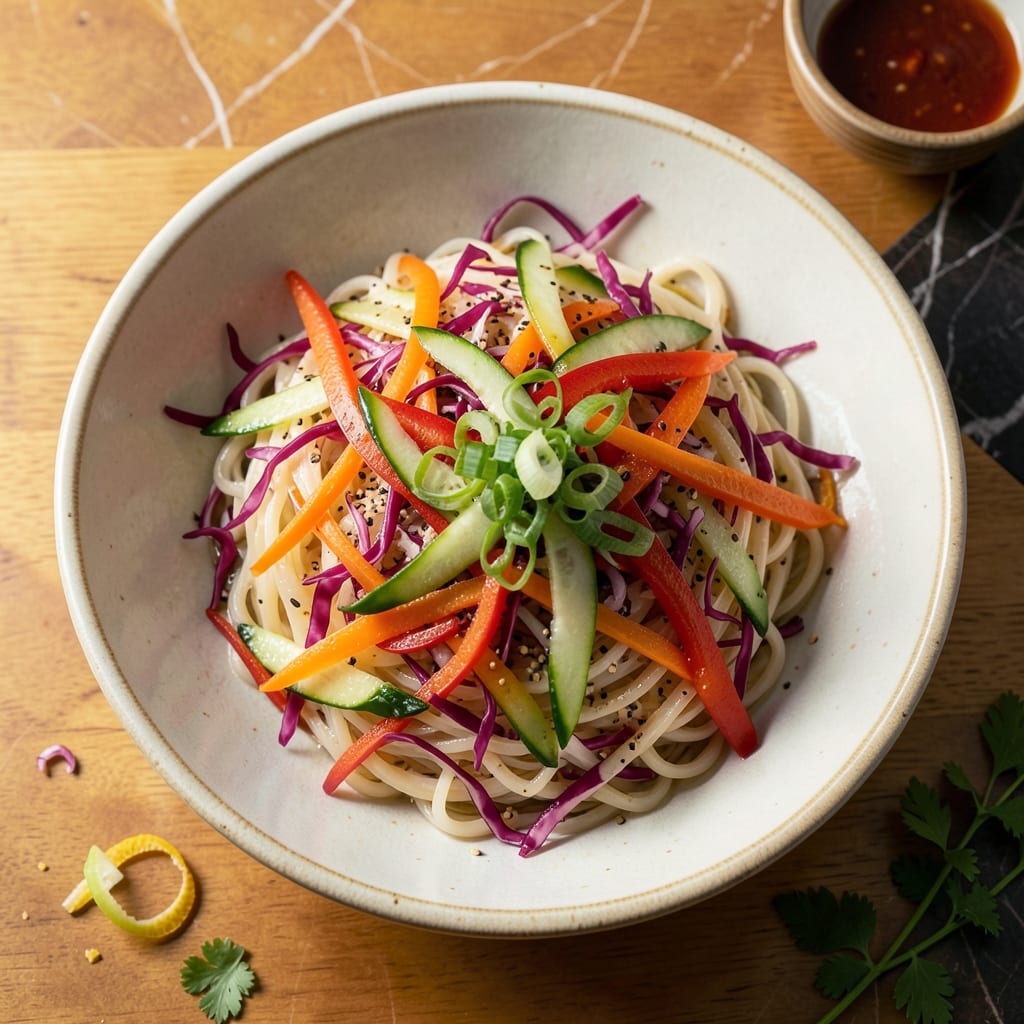
This chilled noodle dish delivers a perfect balance of textures and flavors. Rice noodles provide a delicate base for crisp vegetables and a tangy sesame-lime dressing.
The salad comes together quickly with simple ingredients, offering a refreshing vegan option that’s ideal for warm days or light meals.
Ingredients for Japanese Rice Noodle Salad
Rice noodles, crisp vegetables, and a bold sesame-lime dressing form this refreshing dish.
| Ingredient | Amount | Notes |
|---|---|---|
| Rice Noodles 🍜 | 8 oz | Thin vermicelli style preferred |
| Red Bell Pepper 🌶️ | 1 whole | Thinly julienned for crunch |
| Carrots 🥕 | 2 whole | Shredded or julienned |
| Cucumber 🥒 | 1 whole | Seeds removed, thinly sliced |
| Red Cabbage 🥬 | 2 cups | Thinly shredded for color |
| Scallions 🧅 | 4 whole | Thinly sliced on diagonal |
| Fresh Cilantro 🌿 | ½ cup | Roughly chopped for garnish |
| Sesame Seeds 🌰 | 2 tbsp | Toasted for dressing and garnish |
| Peanuts 🥜 | ½ cup | Unsalted, roughly chopped |
| Soy Sauce 🫒 | 3 tbsp | Low-sodium preferred for balance |
| Rice Vinegar 🍶 | 3 tbsp | Seasoned variety adds depth |
| Lime Juice 🍋 | 2 tbsp | Freshly squeezed for brightness |
| Maple Syrup 🍁 | 1 tbsp | Pure grade for sweetness |
| Sesame Oil 🫒 | 1 tbsp | Toasted for nutty aroma |
| Garlic Cloves 🧄 | 2 cloves | Minced for dressing intensity |
The rice noodles are non-negotiable—vermicelli width provides the perfect delicate texture. Asian markets carry the best selection, but most supermarkets stock them in the international aisle. Look for 100% rice flour on the label to ensure they’re vegan. For the vegetables, organic produce isn’t mandatory, but vibrant colors indicate peak freshness. The red cabbage should have tightly packed leaves with no wilting.
No rice vinegar? Apple cider vinegar at half the amount works in a pinch, though the flavor profile shifts slightly. For the soy sauce, tamari is a gluten-free alternative with a deeper taste. The peanuts can be swapped for cashews or almonds—just ensure they’re unsalted. If cilantro isn’t your herb of choice, Thai basil or mint offers a pleasant variation without overpowering the dish.
Store cooked noodles separately from vegetables to maintain texture. The salad keeps 3-4 days refrigerated in an airtight container. The dressing can be made 5 days ahead and actually improves as flavors meld. Freezing isn’t recommended—the noodles turn mushy upon thawing.
Why You’ll Love This Recipe
- No Cook Needed: I just soak the rice noodles while chopping the bell pepper and cucumber—no pots, no fuss.
- Crunch in Every Bite: The red cabbage stays crisp, the carrots add sweetness, and the tangy dressing ties it all together.
- Lunchbox Hero: Honestly, it tastes even better the next day, and the colors stay vibrant for meal prep.
- Budget Stretcher: A bag of rice noodles and a handful of veggies feed four, and I always have the ingredients on hand.
Step-by-Step Instructions for Japanese Rice Noodle Salad
Master this refreshing dish with precise timing and proper technique for optimal texture.
Step 1: Prepare and Soak the Rice Noodles
Place the 8 oz Rice Noodles in a large bowl and cover completely with hot water. I use the hottest tap water available—this softens them without overcooking. Let them soak for 8-10 minutes until pliable but still slightly firm to the bite.
Drain immediately in a colander and rinse under cold water to stop the cooking process. This prevents the noodles from becoming mushy. Shake the colander gently to remove excess water, then transfer the noodles to a clean kitchen towel to absorb any remaining moisture.
Step 2: Chop and Prepare All Vegetables
Thinly julienne the 1 whole Red Bell Pepper into 2-inch strips. Shred the 2 whole Carrots using a mandoline or box grater for consistent texture. Slice the 1 whole Cucumber in half lengthwise, remove the seeds with a spoon, then thinly slice into half-moons.
Thinly shred the 2 cups Red Cabbage and slice the 4 whole Scallions on a diagonal into ¼-inch pieces. Roughly chop the 0.5 cup Fresh Cilantro. This uniformity ensures every bite contains a balanced mix of textures and flavors.
Step 3: Toast Nuts and Seeds for Dressing
In a dry skillet over medium heat, toast the 2 tbsp Sesame Seeds for 1-2 minutes until golden brown and fragrant, stirring constantly. Transfer immediately to a small bowl to cool.
In the same skillet, toast the 0.5 cup Peanuts for 3-4 minutes until lightly browned and aromatic. Roughly chop them once cooled. Toasting intensifies their nutty flavor and adds a satisfying crunch to the finished salad.
Step 4: Whisk Together the Dressing
In a small bowl, combine the 3 tbsp Soy Sauce, 3 tbsp Rice Vinegar, 2 tbsp Lime Juice, 1 tbsp Maple Syrup, and 1 tbsp Sesame Oil. Whisk vigorously until the mixture is fully emulsified and slightly thickened.
Add the minced 2 cloves Garlic Cloves and half of the toasted sesame seeds to the dressing. Allow it to sit for 5 minutes to let the flavors meld. Taste and adjust seasoning if needed, though the balance should be perfect as written.
Step 5: Assemble and Chill the Salad
In a large serving bowl, combine the drained rice noodles, all prepared vegetables, and the remaining toasted sesame seeds. Pour the dressing over and toss gently but thoroughly to coat every component evenly.
Sprinkle the chopped peanuts and remaining cilantro over the top. Cover and refrigerate for at least 30 minutes to allow the flavors to develop. Serve chilled, garnished with additional cilantro if desired. The salad keeps well for up to 2 days in the refrigerator.
Pro Tips For Making Japanese Rice Noodle Salad
- Rinse the Noodles: After cooking, rinse rice noodles under cold water to stop the cooking process and remove excess starch—this keeps them from turning into a gummy mess.
- Thinly Slice Cabbage: Use a sharp knife or mandoline to shred red cabbage into fine strips; it softens just enough to eat raw without overpowering the salad with crunch.
- Salt the Cucumber: Toss cucumber slices with a pinch of salt and let sit for 10 minutes before adding to the salad—I learned this the hard way after watering down my dressing one too many times.
- Use Warm Water: Soak rice noodles in warm (not boiling) water for 5-7 minutes for even cooking; boiling water can make them mushy before they’re fully tender.
Flavor Customization for This Recipe
Add Heat and Spice
For a spicy kick, add 1-2 tsp sriracha or 1 tbsp gochujang paste to the dressing. I love how this balances the sweetness of the maple syrup. A pinch of red pepper flakes sprinkled on top adds visual pop too. 🌶️
Sweeter Variations
Increase the maple syrup to 2 tbsp for a sweeter profile, or swap it for honey if vegan isn’t a concern. Adding 1 diced mango or ½ cup mandarin oranges brings tropical sweetness that pairs beautifully with the sesame-lime base.
Herb Swaps
If cilantro isn’t your favorite, try Thai basil or mint leaves for a different aromatic note. I’ve found that 1 tbsp finely chopped lemongrass in the dressing adds an amazing citrusy depth that complements the lime beautifully.
Nut-Free Option
Replace peanuts with toasted sunflower seeds or pumpkin seeds for a nut-free version. Both provide excellent crunch without allergens. I toast them in the same skillet for 2-3 minutes until golden and fragrant.
Extra Crunch
Add ½ cup crispy fried shallots or wonton strips for additional texture. These can be store-bought or homemade. I sprinkle them on just before serving to keep them crisp. 💫
Protein Boost
For a heartier meal, add 1 cup cubed tofu (baked or pan-fried) or 1 cup edamame. Both absorb the dressing flavors well. I prefer firm tofu pressed and baked at 400°F for 20 minutes for the best texture.
Nutrition Facts
Frequently Asked Questions
Can I use a different type of noodle?
Vermicelli works best, but soba or udon noodles can be substituted. Cook according to package instructions and rinse with cold water to stop cooking. Avoid thicker noodles as they may overpower the salad.
How do I prevent the noodles from sticking?
Rinse thoroughly with cold water after soaking and toss with a bit of sesame oil. This creates a light barrier. Also, drain well before mixing with other ingredients.
Can I make this ahead of time?
Yes! Prepare the salad up to 24 hours in advance, but keep the dressing separate until serving. Store components in airtight containers in the refrigerator.
What if I don’t like cilantro?
Try Thai basil or mint for a fresh alternative. Both pair well with the sesame-lime flavors. Remove stems and chop leaves finely for even distribution.

- Jollof Rice Sauce Recipe: West African Tomato and Spice Infusion - September 25, 2026
- Japanese Rice Soup Recipe: Umami-Rich Comfort in a Bowl - September 25, 2026
- Homemade Cream Of Rice Recipe: Silk-Smooth Breakfast in Minutes - September 25, 2026