
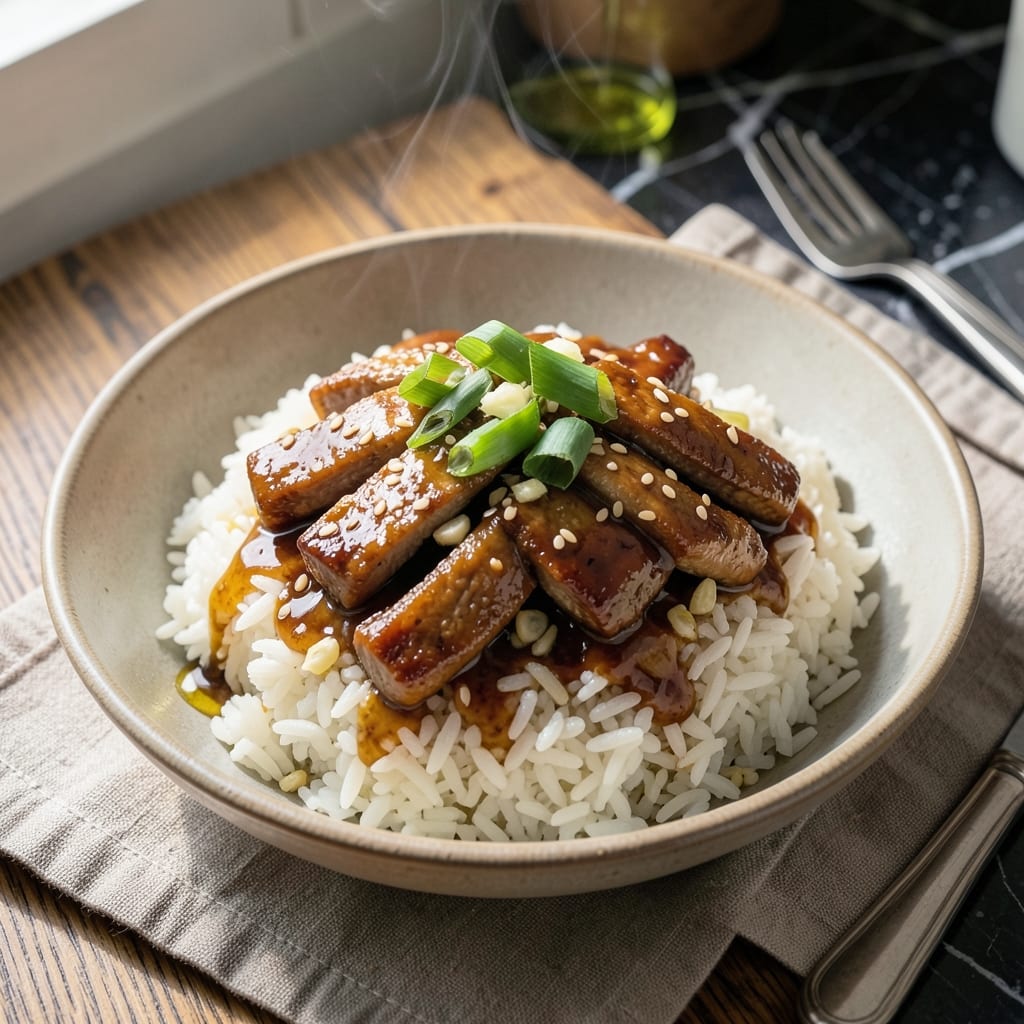
There’s a unique satisfaction in achieving that signature wok char at home with this traditional dish. The high-heat cooking method transforms simple ingredients into something extraordinary with minimal effort.
What sets this creation apart is the perfect balance of savory soy, aromatic garlic, and the distinctive wok hei flavor that defines Mongolian cuisine. The rice develops a slight crispness while maintaining its tender core.
You’ll end up with a dish that captures the essence of street food stalls—smoky, savory, and deeply satisfying. Each grain carries the flavor of the wok, creating a texture that’s both tender and slightly crisp.
The beauty lies in its simplicity and speed, coming together in under 20 minutes with basic pantry staples. This is authentic flavor without the restaurant markup.
Ingredients for Mongolian Rice
Simple pantry staples transform into a wok-charred masterpiece with authentic Mongolian flair.
| Ingredient | Amount | Notes |
|---|---|---|
| Jasmine Rice 🍚 | 2 cups | Uncooked, rinsed thoroughly |
| Vegetable Oil 🫒 | 3 tbsp | High smoke point preferred |
| Garlic Cloves 🧄 | 4 cloves | Minced finely for even distribution |
| Fresh Ginger 🌿 | 1 tbsp | Peeled and minced |
| Green Onions 🧅 | 4 whole | Thinly sliced, whites and greens separated |
| Soy Sauce 💧 | 3 tbsp | Low-sodium recommended |
| Dark Soy Sauce 💧 | 1 tbsp | For depth of color and flavor |
| Oyster Sauce 🍶 | 2 tbsp | Vegetarian oyster sauce if preferred |
| Sesame Oil 🫒 | 1 tsp | Toasted, for finishing |
| Carrot 🥕 | 1 whole | Julienned for texture contrast |
| Frozen Peas 🌱 | ½ cup | Thawed if preferred |
| Large Eggs 🥚 | 2 whole | Beaten lightly for scrambling |
| White Pepper 🧂 | ½ tsp | Ground, for authentic flavor |
| Salt 🧂 | ½ tsp | Adjust to taste at end |
The rice is the foundation—Jasmine rice gives the right texture, but any long-grain works in a pinch. Vegetable oil with a high smoke point is non-negotiable for achieving that signature wok char. I source mine from Asian markets where the turnover is high, ensuring freshness. The dark soy sauce adds depth you won’t get from regular soy, so don’t skip it (look for Pearl River Bridge brand).
No oyster sauce? Hoisin or vegetarian oyster sauce works, though the flavor shifts slightly. Fresh ginger is ideal, but ground ginger at half the amount in a pinch. The carrots add sweetness and crunch—substitute bell peppers if you prefer. For extra authenticity, swap white pepper for black, but it’s not critical. If avoiding eggs, tofu cubes make a great protein alternative.
Cooked rice holds in the fridge for 3-4 days but loses texture—best made fresh. The sauce components (soy, oyster) keep indefinitely unopened, but refrigerate after opening for up to 6 months. Ginger and garlic freeze beautifully for 3 months (peel and chop before freezing).
Why You’ll Love This Recipe
- One Pot Meal: I love that everything cooks together—jasmine rice soaking up the garlic and ginger infusing the oil, no extra pans to wash.
- Flavor Explosion: The combination of fresh ginger, garlic, and green onions gives it that restaurant-quality taste without the takeout price.
- Weeknight Hero: Honestly, it’s my go-to for busy evenings when I need something quick but still packed with flavor.
- Budget Friendly: A handful of affordable ingredients stretches to feed four, and leftovers taste even better the next day.
Step-by-Step Instructions for Mongolian Rice
Master the wok technique for perfectly charred grains with rich umami depth in every bite.
Step 1: Prepare and Cook the Jasmine Rice
Rinse the 2 cups Jasmine Rice thoroughly under cold water until the water runs clear to remove excess starch. This prevents the grains from becoming gummy during cooking. Transfer the rinsed rice to a rice cooker or pot with 2¼ cups water and cook until tender.
Once cooked, spread the rice on a baking sheet to cool completely. I recommend using day-old rice for this recipe as it has less moisture and will achieve better wok hei (breath of the wok) when stir-fried. The grains should be separate and slightly firm to the touch.
Step 2: Stir-Fry Aromatics and Vegetables
Heat 2 tbsp Vegetable Oil in a wok or large skillet over high heat until shimmering. Add the 4 cloves minced Garlic Cloves and 1 tbsp Fresh Ginger, stir-frying for 30 seconds until fragrant. Be careful not to let them burn.
Add the julienned Carrot and 0.5 cup Frozen Peas, stir-frying for 2-3 minutes until the carrots begin to soften but retain a slight bite. Push the vegetables to one side of the wok. The wok should be hot enough that the vegetables sizzle upon contact.
Step 3: Scramble the Eggs and Combine
Pour the remaining 1 tbsp Vegetable Oil into the cleared space in the wok. Add the 2 whole Large Eggs (lightly beaten) and scramble quickly with a spatula until just set but still slightly runny. This should take about 45 seconds.
Immediately add the cooled rice to the wok, breaking up any clumps with your spatula. Stir-fry for 2-3 minutes until the rice is heated through and begins to take on a slight toasted aroma. The eggs should be fully cooked and distributed evenly throughout the rice.
Step 4: Season and Finish
Drizzle the 3 tbsp Soy Sauce, 1 tbsp Dark Soy Sauce, and 2 tbsp Oyster Sauce over the rice mixture. Add the 0.5 tsp White Pepper and 0.5 tsp Salt. Stir-fry for another 2 minutes until everything is evenly coated and the rice develops a light char.
Remove from heat and stir in the sliced Green Onions (both whites and greens) and 1 tsp Sesame Oil. The green onions should wilt slightly from the residual heat but retain their vibrant color. Taste and adjust seasoning if needed before serving.
Pro Tips For Making Mongolian Rice
- Pre-cook the rice: Use day-old, chilled jasmine rice—it fries up fluffier and less sticky. If starting fresh, spread it on a tray to cool and dry for 15 minutes before stir-frying.
- Minced ginger and garlic: Finely mince the ginger and garlic instead of grating—they’ll distribute better in the oil and won’t burn as quickly. I learned this the hard way after scraping blackened bits off the pan.
- Hot wok, quick stir: Crank the heat to high and keep the rice moving constantly. After burning three batches, I finally figured out that letting it sit too long turns it mushy.
- Green onions last: Toss in the green onions at the very end—just 30 seconds of cooking keeps them crisp and bright. Sounds weird, but it works.
Flavor Customization for This Recipe
Spice It Up
For heat lovers, add 1-2 tsp chili garlic sauce or ½ tsp red pepper flakes when stir-frying the aromatics. I love how this adds a fiery kick without overpowering the dish’s balance. Adjust to taste—start small and build up gradually. 🌶️
Extra Umami Depth
Boost the savory profile with 1 tbsp hoisin sauce or 1 tsp fish sauce mixed into the soy sauce blend. This creates a richer, more complex flavor that still feels authentic. The hoisin adds sweetness, while fish sauce enhances the salty depth.
Protein Variations
Swap the eggs for ½ lb diced chicken breast or shrimp for a heartier meal. Cook the protein separately first, then combine with the rice at the end. I often use leftover char siu pork for a restaurant-style twist.
Vegetable Swaps
Replace carrots and peas with bell peppers and snap peas for extra crunch. For a meaty texture, try shiitake mushrooms—add them when stir-frying the aromatics. Each swap brings a new dimension while keeping the dish’s core identity.
Herb Finishes
Fresh cilantro or Thai basil can replace or complement the green onions. I use ¼ cup chopped cilantro for a bright, citrusy finish. Add just before serving to preserve their fresh aroma. 💫
Garnish Ideas
Top with crushed peanuts or sesame seeds for texture contrast. A drizzle of sriracha adds color and heat. These small touches elevate the dish visually and flavor-wise without complicating the process.
Nutrition Facts
Frequently Asked Questions
What kind of rice works best?
Jasmine rice is ideal for its fragrant aroma and slightly sticky texture. Long-grain white rice makes a good substitute in a pinch. Avoid instant rice as it lacks the right texture.
Can I make this without a wok?
Yes! Use a large skillet or stir-fry pan with high sides. Heat it over medium-high heat to mimic wok temperatures. A cast iron skillet works particularly well.
How do I get that smoky wok flavor at home?
Crank the heat to maximum and work in small batches. Let the pan get very hot between additions. The high heat creates the characteristic char and aroma.
What if my rice turns mushy?
Use day-old, cold rice and break up clumps before cooking. Overcrowding the pan steams instead of frying. Spread rice on a tray to cool completely after cooking.

- Jollof Rice Sauce Recipe: West African Tomato and Spice Infusion - September 25, 2026
- Japanese Rice Soup Recipe: Umami-Rich Comfort in a Bowl - September 25, 2026
- Homemade Cream Of Rice Recipe: Silk-Smooth Breakfast in Minutes - September 25, 2026