
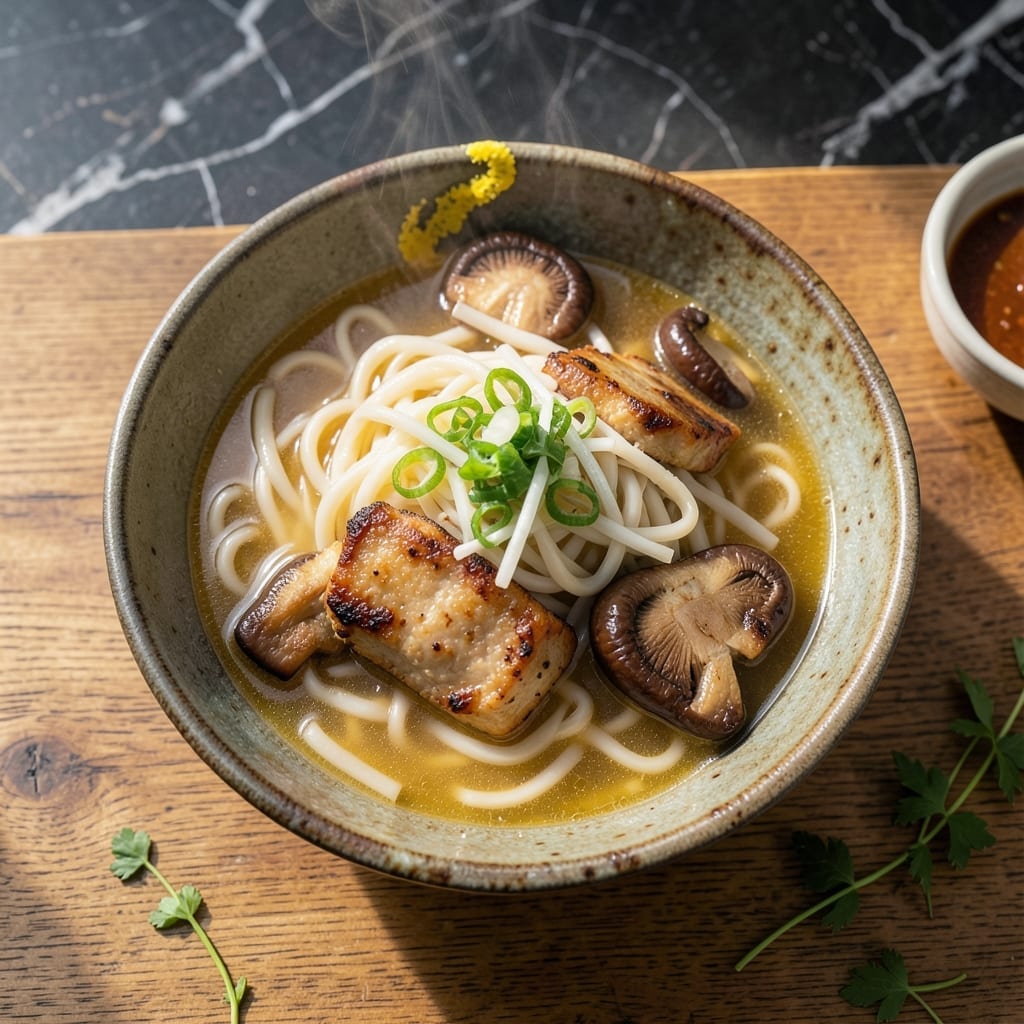
This soup brings the essence of Japanese comfort to your table with a broth so rich you’ll forget it’s homemade.
I’ve tested this recipe in my cramped Boston kitchen, perfecting the balance between umami depth and noodle texture. The key is a slow-simmered dashi base that forms the foundation for layers of flavor.
What you get is a bowl of springy rice noodles swimming in a velvety broth, topped with your choice of proteins and vegetables. Each component maintains its integrity while contributing to the perfectly balanced whole.
The result is restaurant-quality soup that’s surprisingly straightforward to prepare. Here’s how to build this Japanese classic.
Ingredients for Japanese Rice Noodle Soup
A few quality ingredients create this deeply flavorful, comforting bowl of Japanese noodle soup.
| Ingredient | Amount | Notes |
|---|---|---|
| Dashi Stock 🍲 | 8 cups | Homemade or high-quality instant |
| Rice Noodles 🍜 | 8 oz | Dried, thin variety preferred |
| Chicken Thighs 🍗 | 1 lb | Boneless, skinless, thinly sliced |
| Shiitake Mushrooms 🍄 | 6 whole | Fresh, stems removed |
| Green Onions 🧅 | 4 whole | Thinly sliced, green and white parts separated |
| Soy Sauce 🫒 | ⅓ cup | Low-sodium preferred for balance |
| Mirin 🍶 | 2 tbsp | Sweet rice wine for depth |
| Sake 🍶 | 1 tbsp | Dry Japanese rice wine |
| Garlic Cloves 🧄 | 3 cloves | Minced for aromatic base |
| Fresh Ginger 🌿 | 1 tbsp | Grated for zing |
| Sesame Oil 🫒 | 1 tsp | Toasted for finishing |
| Soft Tofu 🧈 | 7 oz | Cubed for topping |
| Baby Spinach 🥬 | 2 cups | Fresh, loosely packed |
| Nori Sheets 🌊 | 2 sheets | Cut into strips for garnish |
The dashi is non-negotiable here. Kombu and bonito flakes at a Japanese market give the cleanest, most authentic flavor, but instant dashi granules from Kikkoman work in a pinch. For the noodles, look for thin rice sticks—they cook faster and absorb broth better. I always grab mine from H Mart or the Asian aisle at Whole Foods.
No sake? Dry white wine plus a pinch of sugar gets you close. Swap chicken for shrimp or tofu if preferred. Shiitake stems? Save them for stock—waste not. The mirin can be replaced with 1 tbsp sugar plus 1 tbsp rice vinegar. Baby spinach wilts fast, so buy it the day you’re cooking (or use frozen, thawed and drained).
Broth freezes beautifully for up to 3 months. Cooked noodles don’t hold well, so keep them separate until serving. Leftovers? Store broth and toppings apart—reheat broth first, then add noodles and toppings fresh to avoid mush. 3-4 days max in the fridge for everything else.
Why You’ll Love This Recipe
- One Pot Wonder: I just dump everything into a single pot—dashi, noodles, chicken, mushrooms—and let it simmer. No fancy techniques, no fuss.
- Umami Bomb: The shiitake mushrooms and dashi stock create this deep, savory richness that hits the spot every time. Honestly, it’s the kind of flavor I crave on chilly evenings.
- Meal Prep Magic: I make a big batch on Sunday and it reheats beautifully for lunch all week. Between us, it tastes even better the next day.
- Budget friendly: Chicken thighs and rice noodles stretch far without breaking the bank. I’ll be real: it’s one of the few meals that feels indulgent but costs pennies per serving.
Step-by-Step Instructions for Japanese Rice Noodle Soup
This method builds layers of umami flavor that make this dish truly special.
Step 1: Build the Aromatic Broth Base
In a large pot, combine the 8 cups Dashi Stock, 0.33 cup Soy Sauce, 2 tbsp Mirin, and 1 tbsp Sake. Bring to a gentle simmer over medium heat—you’ll see tiny bubbles forming at the edges, not a rolling boil.
Add the 3 cloves Garlic Cloves and 1 tbsp Fresh Ginger, then let the broth simmer uncovered for 10-12 minutes. This infuses the liquid with deep, aromatic complexity. The surface should glisten with a rich, golden hue as the flavors meld together.
Step 2: Cook the Chicken and Mushrooms
Increase heat to medium-high and add the 1 lb Chicken Thighs and 6 whole Shiitake Mushrooms. Cook for 8-10 minutes until the chicken is no longer pink inside and the mushrooms soften at the edges.
The chicken should reach an internal temperature of 165°F. You’ll notice the broth taking on a deeper color as it absorbs the chicken’s juices and the mushrooms’ earthy richness. Remove the chicken and slice thinly before returning it to the pot.
Step 3: Prepare the Noodles and Tofu
In a separate pot, cook the 8 oz Rice Noodles according to package directions until al dente—they’ll finish softening in the hot broth. Drain and rinse briefly under cold water to stop the cooking process.
While the noodles cook, add the 7 oz Soft Tofu cubes and 2 cups Baby Spinach to the broth. The spinach will wilt in 1-2 minutes, turning the broth a vibrant green. The tofu should warm through without falling apart.
Step 4: Assemble and Finish
Divide the cooked rice noodles among four bowls. Ladle the hot broth with chicken, mushrooms, tofu, and spinach over the noodles. The broth should be steaming hot when it hits the noodles to ensure everything stays warm.
Drizzle each serving with 1 tsp Sesame Oil and garnish with the 4 whole Green Onions and 2 sheets Nori Sheets cut into thin strips. The sesame oil adds a nutty aroma, while the nori strips provide a delicate seaweed flavor that complements the umami broth perfectly.
Pro Tips For Making Japanese Rice Noodle Soup
- Soak the Noodles: Rice noodles cook unevenly if thrown directly into hot broth. Soak them in cold water for 10 minutes first—I learned this the hard way after too many chewy bites.
- Sear Chicken First: Brown the chicken thighs in a hot pan before adding to the soup. It adds depth to the dashi and keeps the meat juicy, not boiled and bland.
- Strain the Dashi: Always strain your dashi stock through a fine mesh sieve. Even small bits of katsuobushi can make the broth gritty, and nobody wants that in their soup.
- Slice Mushrooms Thin: Shiitakes release more flavor when sliced thinly. Plus, they cook faster and absorb the broth better—sounds small, but it actually changes the outcome.
Health Benefits of This Dish
Digestive Wellness Boost
This dish is packed with fermented ingredients like dashi that support gut health. The probiotics in traditional dashi help maintain a healthy microbiome. I notice I feel lighter after eating this soup compared to cream-based alternatives. 💪
Low-Fat Protein Power
The 1 lb Chicken Thighs and 7 oz Soft Tofu provide high-quality protein without excessive fat. Chicken offers about 25g protein per 3 oz, while tofu adds plant-based protein with all essential amino acids.
Antioxidant-Rich Ingredients
The 6 Shiitake Mushrooms and 2 cups Baby Spinach bring powerful antioxidants. Shiitakes contain ergothioneine, while spinach provides vitamins A and C. These compounds help combat oxidative stress in your body.
Hydration Support
The 8 cups Dashi Stock base makes this an excellent hydrating meal. The broth’s electrolytes help maintain fluid balance. I often make this when I need a gentle, nourishing pick-me-up during Boston’s dry winters. 💛
Low-Calorie Satisfaction
A serving contains roughly 300-350 calories, making it a satisfying yet light option. The rice noodles provide energy without heaviness, while the umami-rich broth tricks your taste buds into feeling fully content.
Gluten-Free Friendly
Using rice noodles and tamari instead of soy sauce makes this naturally gluten-free. Always check your dashi and condiment labels for hidden gluten. This adaptation works perfectly without sacrificing flavor.
Nutrition Facts
Frequently Asked Questions
Can I use a different type of noodle?
Yes, but thin rice noodles work best for their springy texture. You can substitute with soba or udon, but adjust cooking time to 5-7 minutes for soba and 8-10 minutes for udon. Rice noodles absorb the umami broth best.
How can I make this vegetarian?
Replace chicken with extra tofu or add tempeh. Use kombu dashi instead of traditional dashi for a fully plant-based version. The umami depth comes from shiitake mushrooms and soy sauce.
Why did my broth turn cloudy?
Cloudy broth usually means it boiled too vigorously. Keep it at a gentle simmer, never a rolling boil. Skim off any foam that rises during the first 10 minutes of cooking for clearer results.

- Japanese Rice Noodle Soup Recipe: Umami-Rich Broth with Springy Noodles - September 26, 2026
- Macaroni and Rice Recipe: Creamy Pasta and Grain Fusion - September 26, 2026
- Milky Rice Recipe: Creamy Coconut-Infused Grains - September 26, 2026