
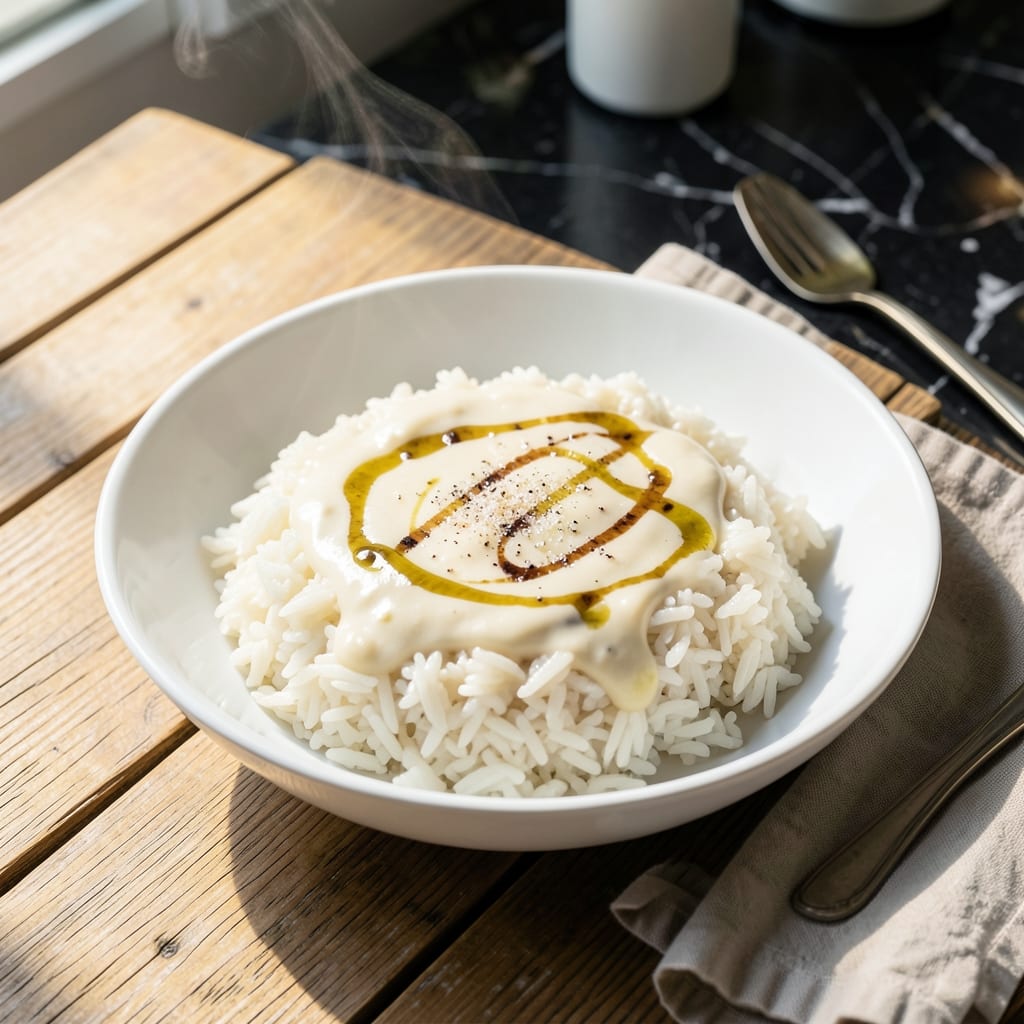
This milky rice dish transforms simple grains into a creamy, coconut-infused delight that’s both comforting and elegant. The slow simmering process allows the rice to absorb the rich coconut milk, creating a texture that’s velvety smooth.
I’ve refined this method to ensure every grain stays tender without becoming mushy. The key is patience—letting the rice cook low and slow until it reaches that perfect, porridge-like consistency.
What you’ll end up with is a dish that’s lightly sweet, fragrant, and utterly satisfying. It’s the kind of recipe that feels special but requires minimal effort.
Serve it warm or chilled, plain or topped with fresh fruit. Here’s how to make it perfectly every time.
Ingredients for Milky Rice
Simple pantry staples create this rich, coconut-infused rice dish with velvety texture.
| Ingredient | Amount | Notes |
|---|---|---|
| Jasmine Rice 🌾 | 1 ½ cups | Rinsed until water runs clear |
| Coconut Milk 🥥 | 2 cups | Full-fat, canned preferred |
| Water 💧 | 2 cups | For adjusting consistency |
| Granulated Sugar 🍚 | 2 tbsp | Adjust to taste preference |
| Salt 🧂 | ½ tsp | Fine sea salt preferred |
| Vanilla Extract 🌿 | 1 tsp | Pure extract for best flavor |
| Cardamom Pods 🌿 | 4 whole | Lightly crushed, optional |
| Cinnamon Stick 🌿 | 1 whole | For aromatic infusion |
| Pandan Leaves 🌿 | 2 whole | Fresh or frozen, optional |
| Condensed Milk 🥛 | ½ cup | Sweetened, for richness |
| Butter 🧈 | 1 tbsp | Salted or unsalted |
| Raisins 🍇 | ¼ cup | Optional, for texture |
The coconut milk is non-negotiable for that signature creaminess. Full-fat canned from Thai Kitchen or Native Forest gives the best results—light versions just won’t deliver the same richness. Look for brands without additives. Jasmine rice is ideal here (that floral note pairs perfectly), but basmati works too. Just avoid instant rice—it’ll turn to mush.
No coconut milk? Whole milk with a splash of cream gets you close, though the flavor profile shifts. Condensed milk can be swapped for coconut condensed milk (found at Asian markets). Want it less sweet? Cut the sugar or skip the condensed milk entirely. The spices are optional but cardamom adds authentic depth. Fresh pandan leaves take this to another level (find them frozen at specialty stores).
Leftovers thicken as they cool. Stir in a splash of warm milk to revive. Keeps 3-4 days refrigerated, but honestly it’s best fresh. Not freezer-friendly—the texture separates. Serve warm or chilled, but don’t reheat more than once.
Why You’ll Love This Recipe
- One Pot Wonder: I just dump jasmine rice, coconut milk, and water in a pot—no fancy steps, no stress.
- Creamy Coconut Bliss: The coconut milk turns the rice so rich and fragrant, I could eat it plain.
- Breakfast or Dessert: Honestly, it’s my go-to for lazy Sunday brunches or a quick sweet fix after dinner.
- Budget Stretch: A bag of jasmine rice and a can of coconut milk feed my family for days without breaking the bank.
Step-by-Step Instructions for Coconut-Infused Milky Rice
This method ensures perfectly creamy grains with rich aromatic depth every time.
Step 1: Rinse and Soak the Jasmine Rice
Place the 1.5 cups jasmine rice in a fine-mesh strainer and rinse under cold running water until the water runs completely clear. This removes excess starch and prevents gummy texture. I always rinse for at least 30 seconds to ensure purity.
Transfer the rinsed rice to a bowl and cover with fresh water. Let it soak for 20-30 minutes while you prepare the other ingredients. Soaking shortens the cooking time and helps the grains absorb liquid evenly for that signature creamy consistency.
Step 2: Infuse the Liquids with Aromatics
In a medium saucepan, combine the 2 cups coconut milk, 2 cups water, 2 tbsp granulated sugar, 0.5 tsp salt, 1 tsp vanilla extract, 4 whole cardamom pods, 1 whole cinnamon stick, and 2 whole pandan leaves. Heat over medium until the mixture just begins to shimmer—you’ll see tiny bubbles at the edges.
Let it steep off heat for 5 minutes to allow the flavors to meld. The aroma should be fragrant and warm. Strain the mixture through a fine-mesh sieve to remove the whole spices and pandan leaves, pressing gently to extract all flavor.
Step 3: Cook the Rice to Creamy Perfection
Return the infused liquid to the saucepan and bring to a gentle boil over medium-high heat. Add the drained rice and stir once to distribute. Reduce heat to low, cover, and simmer for 15-18 minutes until most of the liquid is absorbed and the surface looks dimpled.
Resist the urge to stir during cooking—this can break the grains and release excess starch. The rice is ready when the surface liquid is mostly gone and the grains are tender with a slight bite. You should see small craters forming on the surface as the rice cooks.
Step 4: Finish with Richness and Texture
Remove the pan from heat. Stir in the 0.5 cup condensed milk, 1 tbsp butter, and 0.25 cup raisins. The residual heat will melt the butter and slightly warm the condensed milk, creating a luscious, creamy sauce that coats each grain.
Cover and let it rest for 10 minutes. This final step allows the rice to fully absorb the remaining liquid and the flavors to develop completely. The texture should be rich and pudding-like, with each grain distinct yet swimming in the creamy coconut sauce.
Pro Tips For Making Milky Rice
- Rinse the Rice: Soak jasmine rice for 10 minutes then rinse until water runs clear—this removes excess starch so your milky rice stays creamy, not gummy.
- Balance the Liquids: Use a 1:1 ratio of coconut milk to water (e.g., 1 cup each for 1 cup rice) to get that rich, velvety texture without being overly thick or thin.
- Simmer Low and Slow: Once boiling, drop to the lowest heat and cover tightly—no peeking—to let the rice absorb the coconut milk fully without scorching.
- Sweeten Last: Stir in sugar only after the rice is cooked through; adding it early can make the grains tough and prevent even absorption of the milky liquid.
Common Mistakes When Making Great milky rice
Over-Stirring the Rice
I see this happen often—stirring the rice while it cooks releases excess starch, turning your dish into a gluey mess. Once you add the rice to the simmering liquid, give it one gentle stir to distribute, then leave it alone. Trust the process. 💡
Skipping the Rinse
Don’t skip rinsing your jasmine rice until the water runs clear. This removes surface starch that would otherwise make the final dish gummy. I rinse for at least 30 seconds to ensure a smooth, creamy texture without clumping.
Using the Wrong Heat
Cooking this dish over too high heat can cause the coconut milk to separate or scorch. Keep the heat at low after the initial boil. The goal is a gentle simmer, not a rolling boil. Patience is key to achieving that perfect porridge-like consistency.
Ignoring Liquid Ratios
Using too little liquid results in dry, undercooked rice, while too much can make it soupy. Stick to the 2 cups coconut milk and 2 cups water ratio for every 1.5 cups rice. If it looks dry mid-cook, add warm water 1 tbsp at a time.
Rushing the Rest
After cooking, let the rice rest off heat for 10 minutes. This allows the grains to absorb the remaining liquid and the flavors to meld. Skipping this step can leave you with a thin, watery sauce instead of the rich, creamy texture you want.
Over-Sweetening
It’s easy to go overboard with sugar, but the coconut milk and condensed milk already add sweetness. Start with the 2 tbsp granulated sugar and adjust after tasting. You can always add more, but you can’t take it out once it’s in. 🥥
Nutrition Facts
Frequently Asked Questions
Can I use a different type of rice?
Jasmine rice works best, but basmati is a good substitute. Avoid instant rice as it can turn mushy. For best results, stick to long-grain varieties.
What if I don’t have coconut milk?
Whole milk with a splash of cream will work in a pinch. The flavor will be different but still creamy. For a dairy-free option, try almond milk with 1 tbsp coconut oil added.
How do I know when it’s done?
The rice is ready when most liquid is absorbed and grains are tender. Look for small craters on the surface. It should have a porridge-like consistency.
Can I make this ahead of time?
Yes, but it thickens as it cools. Stir in warm milk to revive before serving. Best eaten within 3-4 days when refrigerated.

- Milky Rice Recipe: Creamy Coconut-Infused Grains - September 26, 2026
- Rice Minced Beef Recipe: Savory Stir-Fry with Garlic and Soy - September 26, 2026
- Sausage Egg and Rice Recipe: Hearty Breakfast in One Skillet - September 26, 2026