
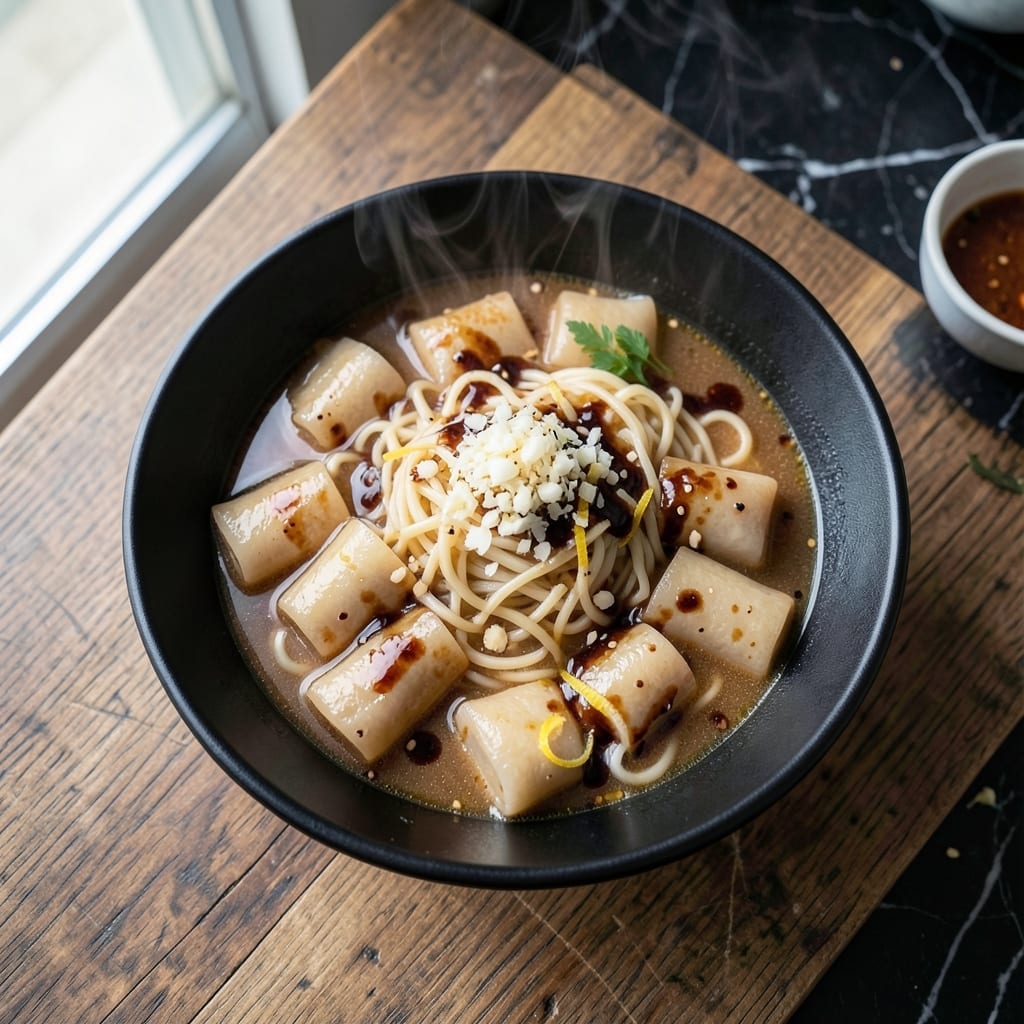
This dish brings together two beloved textures in a single bowl—chewy rice cakes and slurpable ramen noodles. The combination creates a satisfying contrast that keeps every bite interesting.
I developed this recipe to showcase how these ingredients complement each other perfectly. The rice cakes absorb the rich broth while maintaining their signature chew, and the ramen adds a hearty, comforting element.
The key is cooking the rice cakes just right so they soften without losing their texture. The ramen noodles soak up the flavorful broth, creating a dish that’s both filling and deeply satisfying.
Serve hot with your favorite garnishes for a meal that’s as fun to eat as it is delicious.
Ingredients for Ramen and Rice Cake
Chewy rice cakes and slurpable noodles meet in this satisfying, texture-packed bowl.
| Ingredient | Amount | Notes |
|---|---|---|
| Korean Rice Cakes 🍚 | 8 oz | Cylindrical or flat, fresh or frozen |
| Ramen Noodles 🍜 | 4 packages | Discard seasoning packets or save for other uses |
| Chicken Broth 🥣 | 4 cups | Low-sodium preferred for control |
| Soy Sauce 🫒 | ¼ cup | Use reduced-sodium if preferred |
| Sesame Oil 🫒 | 1 tbsp | Toasted for deeper flavor |
| Garlic Cloves 🧄 | 4 cloves | Minced for maximum flavor |
| Fresh Ginger Root 🌿 | 1 tbsp | Grated finely for even distribution |
| Green Onions 🧅 | 4 whole | Thinly sliced, whites and greens separated |
| Carrots 🥕 | 2 whole | Julienned or thinly sliced |
| Mushrooms 🍄 | 8 oz | Shiitake or white button, sliced |
| Soft-Boiled Eggs 🥚 | 4 whole | Optional garnish, 6-minute cook time |
| Nori Sheets 🌊 | 2 sheets | Thinly sliced for garnish |
| Sesame Seeds 🌰 | 1 tbsp | Toasted for garnish |
| Red Pepper Flakes 🌶️ | ½ tsp | Adjust to spice preference |
| Sugar 🧂 | 1 tsp | Balances the savory flavors |
The rice cakes are the star here. Korean grocery stores carry the best selection—look for the cylindrical variety in the refrigerated section. If using frozen, thaw them in cold water first (don’t skip this step). The ramen noodles should be the standard instant kind, but discard the seasoning packets—you’re making your own flavorful broth. For the broth base, low-sodium chicken broth lets you control the saltiness.
No Korean rice cakes? Thick udon noodles can stand in, though the texture won’t be identical. Swap soy sauce for tamari if you need gluten-free. Fresh ginger not on hand? Ground ginger at one-third the amount works, but fresh is better. For mushrooms, any variety will do—shiitake adds an earthy depth, but white button or cremini are fine too. Out of sesame oil? Perilla oil adds a nice nutty touch.
This keeps well for 3-4 days in the fridge, but the rice cakes may firm up—reheat with a splash of water. Freeze without garnishes for up to 2 months. The broth actually tastes better the next day as flavors meld (worth the wait).
Why You’ll Love This Recipe
- One Pot Wonder: I toss everything—ramen, rice cakes, broth—in one pot and walk away. Honestly, cleanup is just a single bowl.
- Umami Bomb: The soy sauce and sesame oil turn the chicken broth into this deep, savory pool that clings to every chewy rice cake.
- Weeknight Hero: Between us, I’ve served this for lazy dinners, potlucks, and even breakfast-for-dinner when the fridge was bare.
- Stretches Far: A pack of ramen and a bag of rice cakes feed four for under five bucks. I’ll be real: leftovers taste even better the next day.
Step-by-Step Instructions for Ramen and Rice Cake Dish
Here’s the method. Straightforward, tested, works every time.
Step 1: Prepare the Aromatics and Vegetables
Mince the 4 cloves Garlic Cloves and grate the 1 tbsp Fresh Ginger Root until you have fine, even pieces. This ensures they distribute evenly throughout the dish and infuse every bite with flavor.
Thinly slice the 4 whole Green Onions, keeping the whites and greens separate for layering flavors. Julienne the 2 whole Carrots into matchstick-sized pieces and slice the 8 oz Mushrooms thinly. Uniform cuts guarantee even cooking and a professional presentation.
Step 2: Cook the Ramen Noodles and Rice Cakes
Discard the seasoning packets from the 4 packages Ramen Noodles and cook the noodles in boiling water for 2 minutes until just softened. Drain immediately and rinse under cold water to stop the cooking process—this prevents them from becoming mushy.
In a separate pot, add the 8 oz Korean Rice Cakes to boiling water and cook for 3-4 minutes until they float to the top and turn slightly translucent. Drain and set aside. If using frozen rice cakes, soak them in warm water for 10 minutes first to thaw.
Step 3: Build the Flavorful Broth
In a large pot, heat the 1 tbsp Sesame Oil over medium heat. Add the minced garlic, grated ginger, and the white parts of the green onions. Sauté for 1-2 minutes until fragrant but not browned—burnt garlic turns bitter.
Pour in the 4 cups Chicken Broth, 0.25 cup Soy Sauce, 1 tsp Sugar, and 0.5 tsp Red Pepper Flakes. Stir well and bring to a gentle simmer. Taste and adjust the seasoning if needed, but remember the rice cakes and ramen will absorb some of the saltiness.
Step 4: Combine All Elements
Add the cooked ramen noodles and Korean rice cakes to the simmering broth. Stir gently to combine and let everything heat through for 2-3 minutes. The rice cakes will plump up further, soaking in the savory broth.
Add the sliced carrots and mushrooms, cooking for another 3-4 minutes until the vegetables are tender but still retain a slight bite. Avoid overcooking—they should add texture, not turn to mush.
Step 5: Garnish and Serve
Ladle the hot ramen and rice cake mixture into bowls. Top each serving with the green onion greens, 1 tbsp Sesame Seeds, and thinly sliced 2 sheets Nori Sheets for a touch of umami depth.
For the final touch, place a soft-boiled egg on top of each bowl. The runny yolk will mix into the broth, adding richness. Serve immediately while hot, encouraging everyone to mix the chewy rice cakes with the slurpable noodles for the full experience.
Pro Tips For Making Ramen And Rice Cake
- Soak the rice cakes: I learned this the hard way—dry rice cakes stay hard in the center unless you soak them in warm water for 10-15 minutes before adding to the broth.
- Cook noodles separately: Ramen noodles turn mushy fast, so boil them for just 2 minutes, drain, and add to your bowl right before serving.
- Skip cold broth: After burning three batches, I finally figured out that hot chicken broth prevents the rice cakes from turning into a gummy mass when simmered.
- Finish with sesame oil: Drizzle about 1 teaspoon of sesame oil at the very end—it adds depth and ties all the flavors together in a way that stirring it in earlier just doesn’t.
Storing and Reheating ramen and rice cake
Refrigerator Storage
Let this dish cool to room temperature before storing—I use glass containers with tight-fitting lids. It keeps in the fridge for 3-4 days, though the rice cakes may firm up slightly. The flavors actually deepen overnight as the ingredients meld together. ❄️
Freezer Storage
For longer storage, freeze without garnishes in quart-sized freezer bags for up to 2 months. Squeeze out excess air to prevent freezer burn. I recommend portioning into single servings for easy reheating later.
Stovetop Reheating
Transfer to a pot and reheat over medium-low heat for 5-7 minutes, stirring occasionally. Add ¼ cup water or broth to loosen the sauce and restore the rice cakes’ chewiness. This method preserves the best texture. 🔥
Microwave Reheating
Place in a microwave-safe bowl with a splash of water. Cover with a damp paper towel and heat on 70% power for 2-3 minutes, stirring halfway. This prevents the ramen from drying out.
Garnish After Reheating
Add fresh garnishes like green onions, nori, or soft-boiled eggs after reheating to maintain their texture and appearance. This keeps the dish looking and tasting fresh.
Nutrition Facts
Frequently Asked Questions
Can I use instant ramen seasoning?
It’s best to skip the seasoning packets to control saltiness. The homemade broth with soy sauce and sesame oil provides better flavor balance.
How do I prevent mushy rice cakes?
Cook them for only 3-4 minutes in boiling water until they float. Drain immediately and add to the broth last to maintain their chewy texture.
What can I substitute for rice cakes?
Thick udon noodles work as a backup, though the texture differs. For gluten-free, try tapioca pearls, but adjust cooking times to 5-6 minutes.
Can I make this dish spicier?
Add extra red pepper flakes or a spoonful of gochujang to the broth. Start with ½ teaspoon and adjust to your heat preference.

- Ramen and Rice Cake Recipe: Chewy Meets Slurpable in One Bowl - September 26, 2026
- Korean Rice Cake Recipe Maangchi: Chewy Pillows in Spicy Sweet Glaze - September 26, 2026
- Korean Rice Cake Vegetarian Recipe: Chewy Pillows With Savory Spice - September 26, 2026