
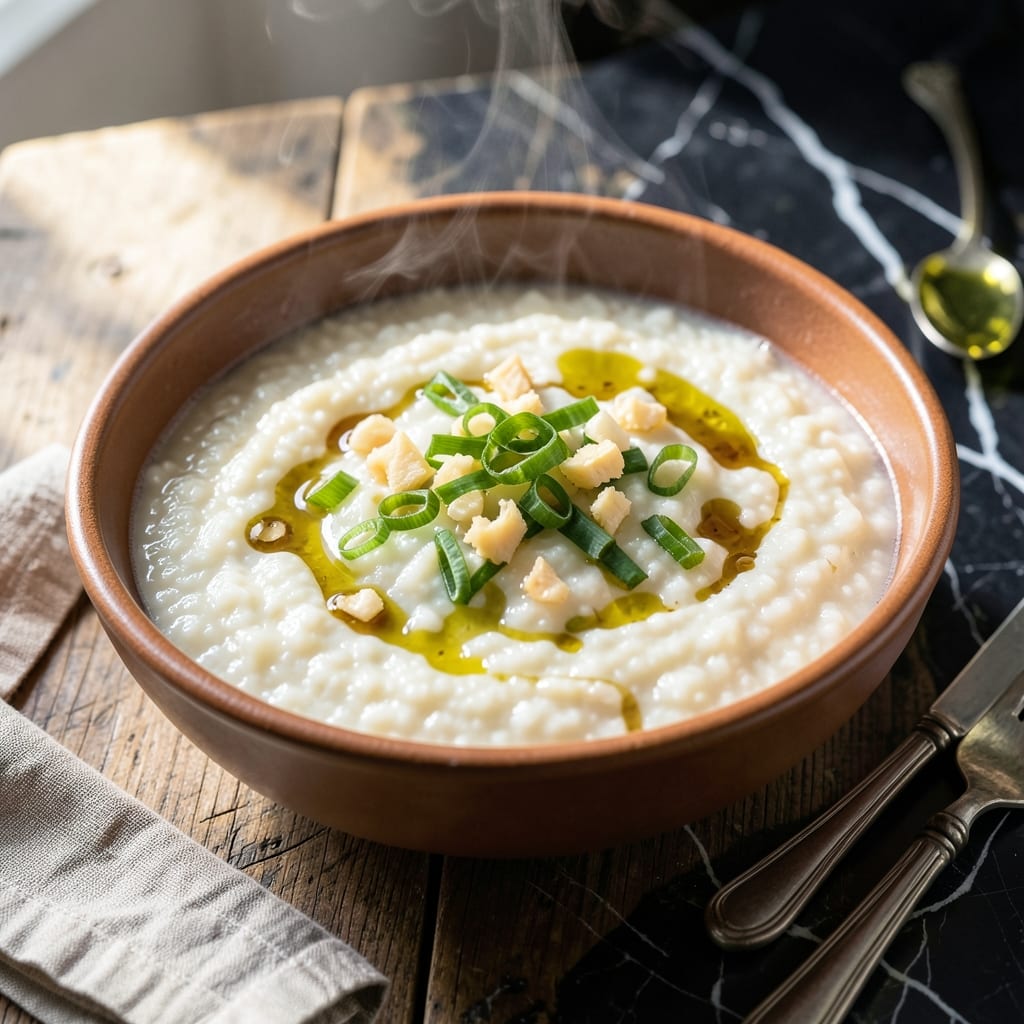
There’s comfort in a bowl of silky congee that soothes like nothing else. This gentle rice gruel transforms humble ingredients into a nourishing dish with minimal effort.
Simmered with ginger and finished with scallions, it achieves a creamy texture without dairy. The rice breaks down naturally, creating a porridge-like consistency that’s both light and satisfying.
The base recipe is naturally vegan, making it adaptable for any diet. A simple ratio of rice to water and 30 minutes of gentle cooking deliver perfect results every time.
Serve as a blank canvas for toppings or enjoy it plain for pure, simple nourishment. This is cooking at its most essential and rewarding.
Ingredients for Rice Gruel
This gentle dish requires just a handful of pantry staples and fresh aromatics.
| Ingredient | Amount | Notes |
|---|---|---|
| Jasmine Rice 🍚 | 1 cup | Rinsed until water runs clear |
| Water 💧 | 8 cups | Or use vegetable broth |
| Fresh Ginger 🌿 | 2 tbsp | Peeled and julienned |
| Scallions 🧅 | 4 whole | Thinly sliced, white and green parts separated |
| Garlic Cloves 🧄 | 3 cloves | Minced finely |
| Vegetable Oil 🫒 | 1 tbsp | Or use neutral coconut oil |
| Sea Salt 🧂 | 1 tsp | Adjust to taste |
| White Pepper 🌶️ | ½ tsp | Freshly ground preferred |
| Soy Sauce 🫙 | 2 tbsp | Low-sodium or tamari for gluten-free |
| Sesame Oil 🫒 | 1 tsp | Toasted, for finishing |
| Cilantro Leaves 🌿 | ¼ cup | Fresh, roughly chopped |
| Fried Shallots 🧅 | ¼ cup | Store-bought for convenience |
The rice is non-negotiable—Jasmine or short-grain breaks down best for that signature silky texture. Find it in the bulk bins at Whole Foods or any Asian market. For ginger, look for firm, smooth roots with no wrinkles. Scallions should be crisp with bright green tops. Organic if possible, since you’ll use the whole thing. The vegetable oil can be any neutral variety, but avoid strongly flavored oils like unrefined coconut.
Out of jasmine? Arborio or sushi rice work in a pinch, though the texture will be slightly thicker. No fresh ginger? Ground ginger at one-quarter the amount (so 1.5 tsp here) is an acceptable substitute. For a gluten-free version, tamari replaces soy sauce seamlessly. If you’re skipping the fried shallots, toasted sesame seeds add a nice crunch.
Congee thickens as it cools. Store leftovers in the fridge for up to 4 days—reheat with extra water or broth. Freeze portions for up to 3 months. The ginger and scallions can be prepped a day ahead and stored separately in the fridge.
Why You’ll Love This Recipe
- One Pot Wonder: I just toss jasmine rice, water, and a handful of aromatics into a single pot and let it simmer—no fancy techniques, no stress.
- Ginger-Garlic Magic: The fresh ginger and garlic cloves infuse every spoonful with a warm, savory depth that’s ridiculously comforting.
- Breakfast to Dinner: Honestly, I’ve served this for a cozy morning start and as a light evening meal—it’s that adaptable.
- Pennywise Comfort: A big batch costs pennies, and leftovers reheat beautifully for days when I’m too tired to cook.
Step-by-Step Instructions for Silky Congee With Ginger and Scallions
Master this technique for perfectly creamy results with minimal hands-on effort.
Step 1: Rinse and Prepare the Jasmine Rice
Begin by placing the 1 cup Jasmine Rice in a fine-mesh strainer. Rinse under cold running water, swirling the grains with your hand, until the water runs completely clear. This removes excess starch, which prevents the congee from becoming gummy during the long cooking process.
Drain the rice thoroughly, then let it sit in the strainer for 5 minutes to remove any lingering moisture. Properly rinsed rice is essential for achieving that signature silky texture that defines an exceptional congee.
Step 2: Sauté the Aromatics in Vegetable Oil
Heat the 1 tbsp Vegetable Oil in a large, heavy-bottomed pot over medium heat. Add the 2 tbsp Fresh Ginger, white parts of the 4 whole Scallions, and 3 cloves Garlic Cloves. Sauté for 2-3 minutes until fragrant but not browned.
This step builds the flavor foundation. The ginger should smell bright and pungent, while the garlic and scallions soften slightly. Be careful not to let them color—burnt aromatics will impart bitterness to your congee.
Step 3: Toast the Rice and Add Water
Add the drained 1 cup Jasmine Rice to the pot with the aromatics. Stir for 1-2 minutes to lightly toast the grains. This step enhances the rice’s natural nuttiness and prevents it from becoming mushy too quickly.
You’ll notice the rice becomes slightly translucent at the edges. Pour in the 8 cups Water, then add the 1 tsp Sea Salt and 0.5 tsp White Pepper. Stir well to combine, ensuring the rice doesn’t stick to the bottom of the pot.
Step 4: Simmer Low and Slow to Perfection
Bring the mixture to a boil over high heat, then immediately reduce to low heat. Maintain a gentle simmer, stirring occasionally for the first 20 minutes to prevent sticking. As the rice breaks down, the mixture will transform from a loose porridge to a creamy consistency.
After 45 minutes of total cooking time, the congee should have a smooth, velvety texture. If it becomes too thick before the rice is fully broken down, add hot water 1 cup at a time. The grains should be completely soft with no chalky centers.
Step 5: Finish and Garnish
Remove the pot from heat. Stir in the 2 tbsp Soy Sauce and 1 tsp Sesame Oil. The congee should glisten slightly from the sesame oil. Taste and adjust seasoning with additional Sea Salt if needed.
Ladle into bowls and garnish with the green parts of the Scallions, 0.25 cup Cilantro Leaves, and 0.25 cup Fried Shallots. The fried shallots add a delightful crunch that contrasts beautifully with the creamy congee. Serve immediately while hot.
Pro Tips For Making Rice Gruel
- Rinse the Rice: Give the jasmine rice a quick rinse under cold water until it runs clear—I learned this the hard way when my first few batches turned out gummy.
- Simmer Low and Slow: Keep the heat at a gentle simmer, not a rolling boil, or the gruel will scorch at the bottom. About 20-25 minutes of patience does the trick.
- Grate the Ginger: Sounds weird, but it works: freshly grated ginger blends into the gruel better than minced, so you get that warm flavor in every spoonful.
- Add Scallions Last: Stir in the scallions at the very end—adding them early turns them mushy and loses their bright, fresh bite.
Health Benefits of This Dish
Gentle Digestion Aid
This dish is a traditional remedy for upset stomachs—the long simmering process breaks down rice starches into easily digestible components. The ginger aids digestion naturally, while the soft texture requires minimal chewing, making it ideal for recovery days. 💪
Hydration Boost
The high water-to-rice ratio creates a hydrating dish that helps replenish fluids. Each bowl contains about 2 cups of liquid, which your body absorbs efficiently along with the rice’s natural electrolytes. I always feel more balanced after eating it.
Low-Fat Nourishment
With just 1 tbsp oil for the entire recipe, this is virtually fat-free yet deeply satisfying. The vegetable broth option adds nutrients without calories, making it perfect for light, health-conscious meals. It’s comfort food that loves you back.
Gut Health Support
Fermented toppings like kimchi or pickled vegetables add probiotics when served with this dish. The warm congee base helps activate these beneficial bacteria. I love adding 1 tbsp of sauerkraut for extra gut-friendly power.
Energy Without Heaviness
The slow-release carbohydrates in broken-down rice provide steady energy without spikes. Unlike processed grains, this maintains blood sugar levels while being gentle on your system. It’s my go-to breakfast when I need lasting fuel. ✨
Allergen-Friendly
Naturally free from dairy, gluten (when using tamari), and common allergens, this adapts easily to most dietary needs. The base recipe uses just 4 core ingredients, making it simple to verify safety for sensitive eaters.
Nutrition Facts
Frequently Asked Questions
Can I use a rice cooker for this?
Yes, most rice cookers have a porridge setting perfect for congee. Use the same 1:8 rice-to-water ratio and let it cook undisturbed. Check after 45 minutes and add more hot water if needed.
Why is my congee too thick?
It likely cooked too long or the heat was too high. Simply stir in hot water 1 cup at a time until it reaches your desired consistency. Remember it thickens as it cools.
What can I use instead of jasmine rice?
Arborio or sushi rice work well, though the texture will be slightly thicker. Avoid long-grain varieties as they don’t break down as nicely.
How long will leftovers keep?
Store in the fridge for up to 4 days or freeze for 3 months. Reheat with extra water or broth to restore the creamy texture.

- Rice Gruel Recipe: Silky Congee With Ginger and Scallions - September 26, 2026
- Vegan Black Licorice Recipe: Bold Anise Flavor Without Dairy - September 26, 2026
- Jook Recipe Rice Cooker: Hands-Free Congee Perfection - September 26, 2026