
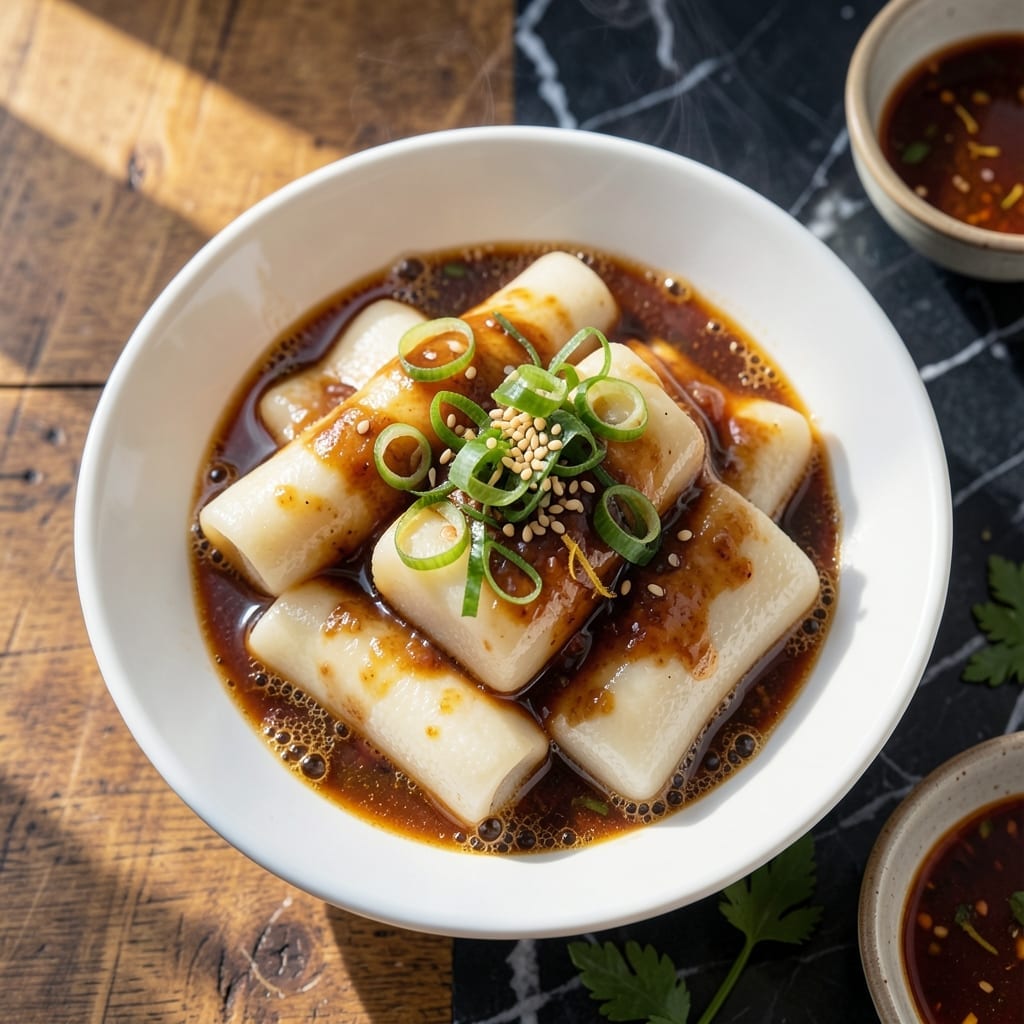
There’s something magical about the first time you achieve the perfect texture with Korean rice cakes—chewy yet tender, with just the right resistance. This traditional dish transforms simple ingredients into a celebration of flavor and consistency.
The secret lies in the preparation of the rice flour batter and the cooking method. Proper steaming ensures the cakes develop that signature pillowy softness, while the spicy-sweet glaze adds layers of complexity that make every bite unforgettable.
What emerges is a dish that’s both comforting and exciting, with a balance of heat and sweetness that dances on the palate. The rice cakes absorb the glaze beautifully, creating a harmonious blend of textures and tastes.
The result is a dish that honors tradition while delivering restaurant-quality results at home. These rice cakes are versatile enough for weeknight dinners or special occasions.
Ingredients for Korean Rice Cake Recipe Maangchi
Transform simple pantry staples into pillowy, chewy delights with this traditional approach.
| Ingredient | Amount | Notes |
|---|---|---|
| Korean Rice Flour 🌾 | 2 cups | Also called sweet rice flour |
| Water 💧 | 1 ½ cups | Warm, for batter |
| Kosher Salt 🧂 | ½ tsp | For seasoning batter |
| Gochujang 🌶️ | ½ cup | Korean red pepper paste |
| Soy Sauce 🫒 | 3 tbsp | Low-sodium preferred |
| Brown Sugar 🍚 | 3 tbsp | Packed, for glaze |
| Rice Vinegar 🍶 | 1 tbsp | For glaze balance |
| Garlic Cloves 🧄 | 4 cloves | Minced, for glaze |
| Ginger 🌿 | 1 tbsp | Freshly grated |
| Sesame Oil 🫒 | 1 tsp | Toasted, for aroma |
| Vegetable Oil 🫒 | 1 tbsp | For greasing pan |
| Toasted Sesame Seeds 🌰 | 2 tbsp | For garnish |
| Green Onions 🧅 | 4 whole | Thinly sliced for topping |
The rice flour is non-negotiable here—Korean rice flour (often labeled sweet rice flour) delivers the signature chew. H Mart or K-Foods carry authentic brands like Shin Shun. Don’t confuse it with regular rice flour; the texture difference is dramatic. For the gochujang, look for Sempio or Chung Jung One at Asian markets—these brands balance heat and sweetness perfectly without artificial additives.
No gochujang? Sriracha plus 1 tbsp miso paste mimics the depth (not ideal but workable). Brown sugar can be honey or maple syrup at equal volume, though the flavor profile shifts. Short on rice vinegar? Apple cider vinegar at half the amount. The sesame oil is worth seeking out—Kadoya or Ottogi are reliable. Fresh ginger is preferred, but ground ginger at one-third the amount works in the glaze.
Fresh rice cakes keep 3-4 days refrigerated in an airtight container. The glaze thickens as it cools—reheat gently with a splash of water. For make-ahead, steam the cakes and store separately from the glaze (up to 5 days). Freezing isn’t recommended as it alters the signature pillowy texture.
Why You’ll Love This Recipe
- No-Fuss Mixing: I just stir rice flour, water, and a pinch of salt—no fancy techniques, no kneading, and it still turns out soft and chewy every time.
- Spicy-Sweet Magic: The gochujang and soy sauce combo gives that perfect balance of heat and umami that keeps me reaching for another bite.
- Weeknight Lifesaver: Between us, this comes together faster than takeout, and it’s just as satisfying with leftovers that reheat beautifully.
- Pantry Hero: Honestly, rice flour and those two sauces are all I need to make this on a whim—no last-minute grocery runs.
Step-by-Step Instructions for Korean Rice Cakes in Spicy Sweet Glaze
Master the technique for creating these pillowy delights with the perfect balance of heat and sweetness.
Step 1: Prepare the Rice Cake Batter
In a large mixing bowl, whisk together the 2 cups Korean Rice Flour with the 0.5 tsp Kosher Salt. I recommend sifting the flour first to prevent lumps in your batter, which ensures a smooth texture in the final rice cakes.
Gradually add the 1.5 cups Water while continuing to whisk. The water should be warm to help activate the rice flour’s sticky properties. Mix until completely smooth—this should take about 2-3 minutes of vigorous whisking. The batter will be thick but pourable, similar to pancake batter consistency.
Step 2: Steam the Rice Cakes to Perfection
Lightly grease a heatproof dish that will fit in your steamer with 1 tbsp Vegetable Oil. Pour the batter into the prepared dish, smoothing the top with a spatula. The layer should be about ½-inch thick for optimal texture.
Place the dish in a steamer over boiling water, cover tightly, and steam for 20-25 minutes. Check that the water doesn’t boil out during steaming. The rice cakes are done when the surface looks set and slightly translucent, and a toothpick inserted comes out clean. Remove from heat and let cool slightly.
Step 3: Create the Spicy Sweet Glaze
In a saucepan, combine 0.5 cup Gochujang, 3 tbsp Soy Sauce, 3 tbsp Brown Sugar, 1 tbsp Rice Vinegar, 4 cloves Garlic Cloves (minced), and 1 tbsp Ginger. Cook over medium heat for 3-4 minutes, stirring constantly until the sugar dissolves and the mixture begins to simmer.
Reduce heat to low and let the glaze thicken slightly for another 2 minutes. The glaze should coat the back of a spoon but still be pourable. Remove from heat and stir in 1 tsp Sesame Oil for added depth of flavor.
Step 4: Assemble and Finish the Dish
Once the steamed rice cake has cooled enough to handle, cut it into bite-sized pieces. I prefer 1-inch squares for even coating. Arrange the pieces on a serving plate or in a shallow dish.
Pour the warm glaze over the rice cakes, using a spoon to ensure even coverage. The glaze should cling to each piece beautifully. Immediately sprinkle with 2 tbsp Toasted Sesame Seeds and top with 4 whole Green Onions (thinly sliced). Serve warm for the best texture experience.
Pro Tips For Making Korean Rice Cake Recipe Maangchi
- Steam First, Boil Later: I learned this the hard way—par-cooking the rice cakes in steam for 5 minutes before boiling prevents them from turning to mush in the sauce. Sounds weird, but it actually changes the outcome.
- Bloom Your Gochujang: Heat the gochujang in a dry pan for 30 seconds before adding liquids. My grandmother swore by this, and it deepens the flavor without extra effort.
- Skip the Cold Water: Use warm water for the rice flour batter—cold water makes the cakes dense and rubbery. After a few failed batches, I finally figured out this simple fix.
- Salt the Boiling Water: Add 1 teaspoon of kosher salt to the boiling water when cooking the rice cakes. It’s the thing that matters most for seasoning them evenly before the sauce even hits.
Common Mistakes When Making Perfect Results
Wrong Flour Choice
Using regular rice flour instead of Korean rice flour is the most common mistake. The texture difference is dramatic—regular flour produces grainy, crumbly results. I always check the label for sweet rice flour or glutinous rice flour to guarantee that signature chew. 🌾
Inadequate Mixing
Lumpy batter ruins the final texture. Whisk vigorously for 2-3 minutes until completely smooth. I sift my flour first to prevent clumps from forming in the first place.
Improper Steaming
Skipping the warm water or not covering tightly leads to uneven cooking. Steam for the full 20-25 minutes with a tight lid. I check the water level halfway through to ensure it doesn’t boil dry.
Glaze Overcooking
Boiling the glaze too hard causes it to thicken into a sticky paste. Keep it at a gentle simmer for 3-4 minutes on medium heat, then reduce to low. The glaze should coat a spoon but still be pourable.
Premature Cutting
Slicing the rice cake while hot makes it gummy. Let it cool for 5-10 minutes first. I test by touching the surface—it should feel firm but slightly springy before cutting into 1-inch squares.
Glaze Absorption Issues
Pouring cold glaze over warm rice cakes prevents proper coating. Keep the glaze warm and pour it immediately after cutting. I use a spoon to gently toss the pieces, ensuring every surface gets covered. 💫
Nutrition Facts
Frequently Asked Questions
What’s the best substitute for Korean rice flour?
Use sweet rice flour or glutinous rice flour—they’re the same thing. Avoid regular rice flour, as it creates a grainy texture. In a pinch, tapioca starch works but changes the chewiness.
Why did my rice cakes turn out hard?
Over-steaming or using cold water in the batter can cause this. Steam for 20-25 minutes max and ensure your water is warm when mixing. Let them cool slightly before cutting.
Can I make the glaze less spicy?
Reduce the gochujang to ¼ cup and add 1 tbsp honey or 1 tbsp sugar to balance. For mild heat, replace half with miso paste.
How do I store leftovers?
Keep in an airtight container for 3-4 days in the fridge. Reheat gently with a splash of water to restore the glaze’s texture. Avoid freezing.

- Korean Rice Cake Recipe Maangchi: Chewy Pillows in Spicy Sweet Glaze - September 26, 2026
- Korean Rice Cake Vegetarian Recipe: Chewy Pillows With Savory Spice - September 26, 2026
- Rice Gruel Recipe: Silky Congee With Ginger and Scallions - September 26, 2026