
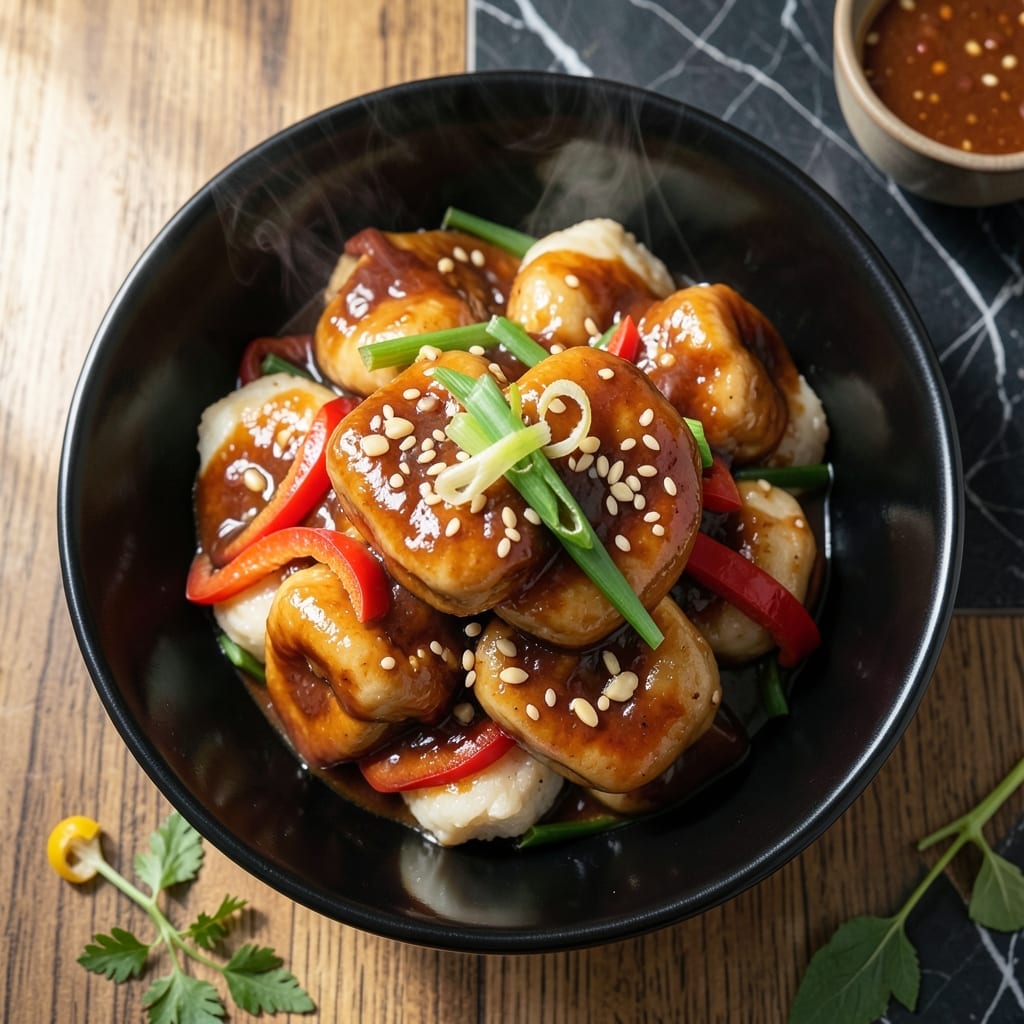
I’ve refined this vegetarian take on tteokbokki to capture the essence of Korea’s beloved street food without meat. The chewy rice cakes absorb the bold, spicy-sweet sauce beautifully, creating a satisfying dish that’s both comforting and packed with flavor.
This version uses simple ingredients but stays true to traditional techniques. The sauce builds depth through gochujang, soy, and a touch of sugar, while vegetables add texture and freshness. It comes together in under 30 minutes with minimal effort.
What you get are soft, pillowy rice cakes coated in a glossy, savory sauce with just the right amount of heat. The dish balances spicy, sweet, and umami notes perfectly, making it addictive and deeply satisfying.
Serve hot for the best texture, as the rice cakes firm up slightly as they cool. This dish works as a main or side.
Ingredients for Korean Rice Cake Vegetarian
Simple ingredients, bold flavors. These create that addictive chewy-spicy Korean classic.
| Ingredient | Amount | Notes |
|---|---|---|
| Korean Rice Cakes 🍚 | 1 lb | Cylindrical tteok, fresh or frozen |
| Gochujang 🌶️ | ¼ cup | Korean red pepper paste |
| Soy Sauce 🫒 | 3 tbsp | Low-sodium preferred |
| Brown Sugar 🍯 | 2 tbsp | Light or dark variety |
| Garlic Cloves 🧄 | 4 cloves | Minced for sauce |
| Ginger 🌿 | 1 tbsp | Fresh, grated finely |
| Sesame Oil 🫒 | 1 tbsp | Toasted for aroma |
| Vegetable Broth 💧 | 1 cup | Low-sodium for control |
| Carrots 🥕 | 1 whole | Julienned for texture |
| Green Onions 🧅 | 4 whole | Sliced thinly for garnish |
| Cabbage 🥬 | 2 cups | Thinly sliced, napa or green |
| Sesame Seeds 🌾 | 1 tbsp | Toasted for garnish |
| Corn Syrup 🍯 | 1 tbsp | Optional for glossy finish |
| Red Pepper Flakes 🌶️ | ½ tsp | Adjust for heat level |
The rice cakes are the foundation—Korean markets or H Mart carry the best fresh ones, but frozen works too (thaw before using). Gochujang is non-negotiable; look for brands like Sempio or Chongga in the Asian aisle. Fresh ginger and garlic make a huge difference here (the jarred stuff just won’t cut it). For the soy sauce, I always grab Kikkoman low-sodium—lets you control the salt better.
No gochujang? Sriracha plus miso paste gets you close, but the flavor won’t be the same. Swap brown sugar for honey if you prefer, but keep the amount identical. The vegetables are flexible—try zucchini or mushrooms if you’re out of cabbage. Pre-shredded coleslaw mix works in a pinch. For extra umami, add a tablespoon of mushroom soy sauce (available at Asian grocers).
The sauce comes together fast but tastes better after 10-15 minutes of simmering. Store leftovers in an airtight container in the fridge for up to 3 days. Reheat with a splash of water to loosen the sauce.
Why You’ll Love This Recipe
- One Pot Wonder: I love that everything cooks together in a single pan—the rice cakes soak up that garlicky gochujang sauce while I barely lift a finger.
- Sweet and Spicy: The brown sugar balances the gochujang heat so well it’s my kind of addictive.
- Meal Prep Hero: Honestly, it reheats beautifully for lunches all week long.
- Budget Friendly: Rice cakes and pantry staples make this a wallet-friendly dish I can make anytime.
Step-by-Step Instructions for Korean Rice Cake Vegetarian Dish
This method delivers perfectly chewy rice cakes with a rich, spicy sauce every time.
Step 1: Prepare the Rice Cakes and Vegetables
If using frozen Korean rice cakes, soak them in warm water for 15-20 minutes until soft and pliable. Drain well and set aside. This prevents them from turning gummy during cooking.
While they soak, julienne the carrots, thinly slice the cabbage into ribbons, and slice the green onions into 2-inch pieces. Keep the green and white parts separate for now. Having everything prepped ensures smooth cooking later.
Step 2: Make the Spicy Sauce Base
In a large bowl, whisk together the 0.25 cup Gochujang, 3 tbsp Soy Sauce, 2 tbsp Brown Sugar, minced 4 cloves Garlic Cloves, 1 tbsp Ginger, 1 tbsp Sesame Oil, and 0.5 tsp Red Pepper Flakes. Stir until the brown sugar dissolves completely.
The mixture should be smooth and glossy. Taste and adjust the spice level if needed, but remember the heat will mellow slightly during cooking. This base is the soul of your dish, so take your time with it.
Step 3: Cook the Vegetables and Sauce
Heat a large skillet or wok over medium-high heat. Add the 1 cup Vegetable Broth and the sauce mixture, stirring to combine. Bring to a gentle simmer, then add the carrots and cabbage. Cook for 4-5 minutes until the vegetables soften slightly but retain a bit of crunch.
Add the drained Korean rice cakes and 1 tbsp Corn Syrup to the pan. Stir gently to coat everything in the sauce. Cook for another 5-6 minutes, stirring occasionally, until the rice cakes absorb some of the sauce and turn translucent.
Step 4: Finish and Garnish
Remove from heat and stir in the sliced green onions. Sprinkle the 1 tbsp Sesame Seeds on top. Let it sit for 2-3 minutes to allow the flavors to meld together beautifully.
The rice cakes should be tender and chewy, with a glossy sheen from the sauce. The vegetables will have softened just enough to soak up the spicy, savory flavors while still offering a satisfying texture contrast. Serve immediately while hot.
Pro Tips For Making Korean Rice Cake Vegetarian
- Soak Rice Cakes: I learned this the hard way—if using frozen or vacuum-sealed rice cakes, soak them in warm water for 10-15 minutes until soft. They’ll absorb the sauce better and won’t turn into chewy bullets in your stir-fry.
- Bloom the Gochujang: Cook the gochujang with a splash of oil for 1-2 minutes before adding liquids. It deepens the flavor and removes that raw, pasty taste.
- Skip the Overcrowding: After burning three batches, I finally figured out that rice cakes need space in the pan. Cook in batches if needed—steaming them just makes them gummy.
- Add Sugar Last: Stir in the brown sugar at the very end, just before serving. It caramelizes quickly and can make the sauce bitter if cooked too long with the other ingredients.
Creative Variations of This korean rice cake vegetarian
Spicy Kimchi Twist
Add ½ cup chopped kimchi with its juices when cooking the vegetables. This adds tangy depth and extra heat. I also sprinkle 1 tsp kimchi powder for an authentic Korean touch that enhances the dish beautifully. 🌶️
Creamy Coconut Version
Replace vegetable broth with 1 cup coconut milk for a milder, creamy sauce. The coconut balances the spice perfectly. Stir in 2 tbsp lime juice at the end for brightness.
Mushroom Umami Boost
Sauté 1 cup shiitake mushrooms before adding the sauce for extra meaty texture. I use fresh shiitakes from my local H Mart. This variation satisfies even non-vegetarians with its hearty flavor.
Sweet Potato Addition
Add 1 cup diced sweet potato when cooking the vegetables. The sweetness contrasts wonderfully with the spicy sauce. Cook until tender, about 8-10 minutes total. 💛
Gluten-Free Adaptation
Swap regular soy sauce for tamari and use gluten-free rice cakes. The flavor remains authentic while being celiac-friendly. I use San-J tamari for consistent quality.
Extra Veggie Load
Add 1 cup baby spinach or 1 zucchini (julienned) for more freshness. These cook quickly, so add them in the final 2-3 minutes to preserve their texture and color.
Nutrition Facts
Frequently Asked Questions
Can I use fresh rice cakes instead of frozen?
Yes! Fresh rice cakes work perfectly and may even be better. Skip the soaking step and add them directly to the sauce. They’ll cook in 3-4 minutes once the sauce simmers.
How do I adjust the spice level?
Start with 0.25 tsp red pepper flakes for mild heat. For extra kick, add up to 1 tsp or a dash of gochugaru. Taste as you go and balance with a little extra sugar if needed.
What if my sauce is too thick?
Thin it with 2-3 tbsp water or broth and simmer for 1-2 minutes. The rice cakes will absorb liquid as they cook, so keep some extra broth on hand.
Can I make this gluten-free?
Use tamari instead of soy sauce and check that your rice cakes are certified gluten-free. The taste stays authentic.

- Korean Rice Cake Vegetarian Recipe: Chewy Pillows With Savory Spice - September 26, 2026
- Rice Gruel Recipe: Silky Congee With Ginger and Scallions - September 26, 2026
- Vegan Black Licorice Recipe: Bold Anise Flavor Without Dairy - September 26, 2026