
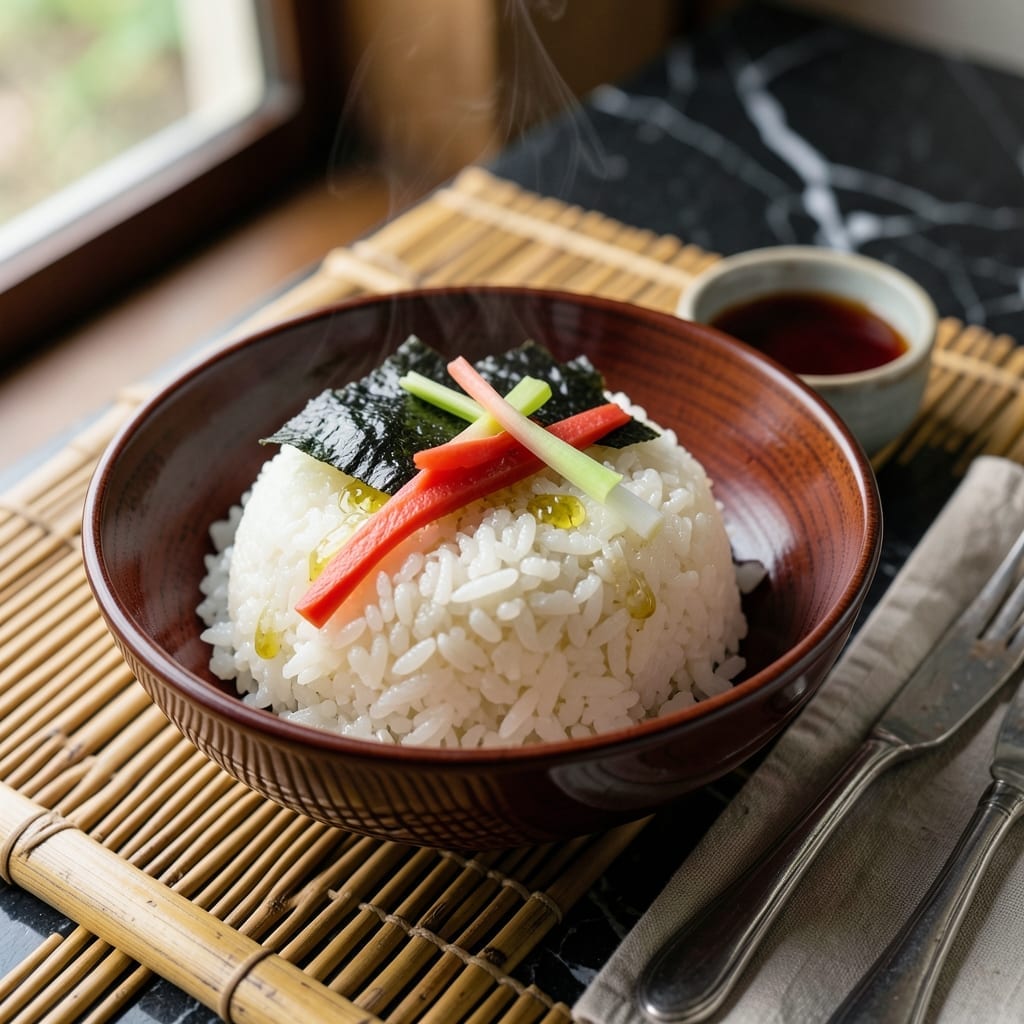
Achieving perfectly cooked Japanese rice starts with the right technique and precise measurements. This method delivers the signature short-grain stickiness that defines authentic Japanese cuisine.
The key is rinsing the rice thoroughly to remove excess starch, then using the correct water ratio—typically 1:1.1 rice to water. A rice cooker makes this foolproof, but a heavy pot with a tight lid works just as well on the stovetop.
After soaking the rice for 30 minutes, the cooking process transforms the grains into tender, glossy morsels that cling together beautifully. The result is fluffy yet cohesive rice that pairs perfectly with any dish.
Master this foundation, and you’ll elevate every Japanese meal you prepare. Here’s how to get it right every time.
Ingredients for Japanese Rice
Short-grain rice and a few pantry staples create authentic Japanese-style rice at home.
| Ingredient | Amount | Notes |
|---|---|---|
| Japanese Short-Grain Rice 🍚 | 2 cups | Rinsed until water runs clear |
| Water 💧 | 2.2 cups | Filtered preferred for purity |
| Rice Vinegar 🍶 | 1 tbsp | Optional for slight tang |
| Salt 🧂 | ½ tsp | Diamond Crystal preferred |
| Sugar 🍚 | ½ tsp | Optional for balance |
| Dashi Stock 🍜 | ¼ cup | Vegan dashi for authenticity |
| Sake 🍶 | 1 tbsp | Dry variety recommended |
| Mirin 🍶 | 1 tbsp | Aji-mirin for sweetness |
| Sesame Oil 🫒 | ½ tsp | Toasted for aroma |
| Nori Sheet 🍱 | 1 sheet | Crumbled for garnish |
| Green Onions 🧅 | 2 whole | Thinly sliced for topping |
| Sesame Seeds 🌾 | 1 tsp | Toasted for crunch |
The rice quality is non-negotiable here. Koshihikari or Nishiki brands from Asian grocery stores deliver the right texture. Avoid jasmine or basmati—they lack the necessary stickiness. For vegan dashi, kombu seaweed simmered in water works perfectly. Look for short-grain labels explicitly, as medium or long grain won’t achieve the desired cohesion.
No sake? Dry white wine at half the amount works in a pinch. Mirin can be replaced with 1 tsp sugar plus 2 tsp water. If omitting dashi, use plain water but add a pinch of salt to compensate. The rice vinegar is optional but adds brightness—apple cider vinegar works too. For a gluten-free version, ensure all liquids are certified GF.
Uncooked rice stores in an airtight container for 1-2 years in a cool, dark place. Cooked rice keeps in the fridge for 3-4 days or freezes well for 1 month. Always rinse before cooking to remove surface starch, which prevents gummy texture.
Why You’ll Love This Recipe
- One Pot Wonder: I just rinse, cook, and mix—no fancy techniques, and the rice comes out perfect every time.
- Sweet-Tangy Balance: The rice vinegar, sugar, and salt create that signature sticky-sweet flavor that makes sushi and bowls irresistible.
- Meal Prep Hero: I make a big batch on Sunday and use it for bento boxes, stir-fries, and even fried rice all week.
- Budget Stretch: A two-pound bag of short-grain rice costs pennies per serving, and honestly, it feels like a luxury.
Step-by-Step Instructions for Japanese Rice
Achieve perfectly sticky, glossy grains with this precise method every single time.
Step 1: Rinse and Soak the Japanese Short-Grain Rice
Place the 2 cups Japanese Short-Grain Rice in a fine-mesh strainer and rinse under cold running water, swishing the rice with your hand. Continue until the water runs completely clear—this removes excess starch that could make the rice gummy.
Transfer the drained rice to your rice cooker or heavy pot and add the 2.2 cups Water. Let the rice soak for 30 minutes at room temperature. This soaking step is critical—it allows the grains to absorb moisture evenly, preventing uneven cooking and ensuring consistent texture.
Step 2: Cook with Aromatic Liquids
After soaking, add the 0.25 cup Dashi Stock, 1 tbsp Sake, and 1 tbsp Mirin to the rice and water. These ingredients infuse the grains with subtle umami depth while maintaining the rice’s natural sweetness.
If using a rice cooker, start the standard cycle. For stovetop cooking, bring to a boil over medium-high heat, then immediately reduce to low, cover, and simmer for 15 minutes. Resist the urge to lift the lid—steam is what transforms the rice from dry to perfectly tender.
Step 3: Season and Rest the Rice
Once the rice finishes cooking, let it steam covered for an additional 10 minutes. This resting period allows the grains to fully absorb residual moisture and settle into their ideal texture.
In a small bowl, combine the 1 tbsp Rice Vinegar, 0.5 tsp Salt, and 0.5 tsp Sugar. Gently fold this mixture into the cooked rice with a rice paddle or wooden spoon, using a slicing motion to separate the grains without crushing them. The rice vinegar adds a delicate tang that balances the richness.
Step 4: Finish and Garnish
Drizzle the 0.5 tsp Sesame Oil over the rice and fold gently to distribute. This adds a nutty aroma that complements the rice’s natural sweetness. Transfer to a serving bowl.
Crumble the 1 sheet Nori Sheet over the top, then sprinkle with the 2 whole Green Onions, thinly sliced, and the 1 tsp Sesame Seeds. The garnishes add visual appeal and textural contrast, with the nori providing a subtle oceanic note that enhances the dish’s authenticity.
Pro Tips For Making Japanese Rice
- Rinse Thoroughly: Wash the rice in 3-4 changes of cold water until it runs clear—I learned this the hard way after ending up with gummy, starchy rice.
- Use the Right Ratio: Stick to 1:1.1 rice-to-water ratio (e.g., 1 cup rice to 1.1 cups water) for perfect texture. Sounds fussy, but it actually changes the outcome.
- Let It Steam: After cooking, turn off the heat and let it sit covered for 10 minutes—my grandmother swore by this, and she was right.
- Season While Warm: Mix in rice vinegar, salt, and sugar while the rice is still hot so the flavors absorb evenly. I was skeptical until I tried it.
Common Mistakes When Making japanese rice
Skipping the Rinse
Never skip rinsing your rice—this removes excess starch that would make your dish gummy. I rinse until the water runs completely clear, which takes 3-4 washes typically. This step is non-negotiable for achieving that perfect, separate-yet-sticky texture. 💪
Incorrect Water Ratios
Using the wrong water ratio leads to either mushy or undercooked grains. For Japanese short-grain, stick to 1:1.1 rice to water—so 2 cups rice needs 2.2 cups water. Measure precisely; even ¼ cup off can ruin the texture.
Neglecting the Soak
Soaking for 30 minutes allows grains to absorb moisture evenly. Skipping this creates uneven cooking with hard centers. I set a timer to ensure I don’t cut this step short, especially when I’m in a hurry.
Lifting the Lid
Every time you lift the lid during cooking, you release precious steam that’s essential for even cooking. Whether using a rice cooker or stovetop, keep it covered until the full 15 minutes of cooking plus 10 minutes of resting are complete.
Overmixing the Rice
When folding in seasonings, use a gentle slicing motion with a rice paddle. Vigorous stirring crushes the grains and releases too much starch, making the rice pasty. I learned this the hard way after ruining a batch with enthusiastic mixing. 😅
Using Wrong Rice
Only short-grain Japanese rice like Koshihikari or Nishiki works here. Jasmine or basmati lack the starch structure for that signature stickiness. Check labels carefully—medium or long grain won’t give you authentic results.
Nutrition Facts
Frequently Asked Questions
What happens if I don’t rinse the rice?
Skipping the rinse leaves excess starch that makes the grains gummy. Always rinse until the water runs clear, usually 3-4 washes, for the best texture.
Can I use a different type of rice?
Only short-grain Japanese rice like Koshihikari or Nishiki works. Other varieties lack the starch needed for that signature stickiness.
How long should I soak the rice?
Soak for 30 minutes at room temperature. This ensures even moisture absorption and prevents hard centers in the cooked grains.
Why is the water ratio important?
A 1:1.1 rice-to-water ratio is critical for perfect texture. Too much water makes it mushy; too little leaves it undercooked.

- Mujadara Rice and Lentils Recipe: Earthy Spiced Lentils With Caramelized Onions - November 1, 2026
- Naija Fried Rice Recipe: Street-Style Spice With Veggie Crunch - November 1, 2026
- Mushy Rice Recipe: Fluffy Grains Transformed in Minutes - November 1, 2026