
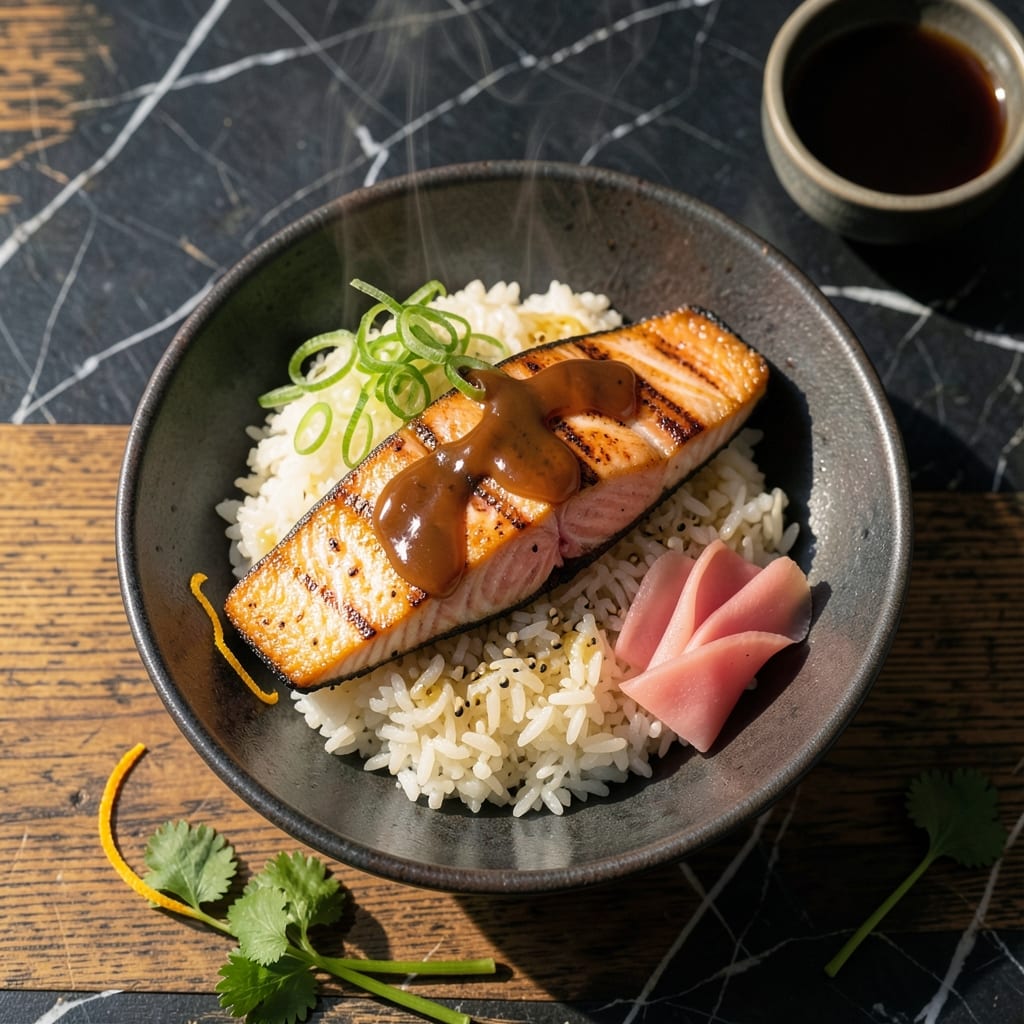
This Japanese-inspired salmon bowl brings restaurant-quality flavors to your home kitchen with minimal effort. The wok-searing technique creates a perfectly crispy exterior while keeping the inside tender and moist, locking in every bit of umami richness.
I developed this recipe to showcase the natural sweetness of salmon with a savory miso glaze that caramelizes beautifully during cooking. The buttery rice base soaks up all the delicious juices, creating a harmony of textures and tastes in every bite.
The beauty of this dish lies in its balance—rich salmon, fluffy rice, and fresh vegetables come together for a meal that’s both nourishing and deeply satisfying. Each component complements the others without overpowering.
Ready in under 30 minutes, this bowl proves that healthy, flavorful meals don’t need to be complicated. The result is a dish that tastes as good as it looks, with layers of flavor in every forkful.
Ingredients for Japanese Salmon Rice Bowl
Fresh salmon, umami-packed glaze, and fluffy rice—pantry staples elevate this dish beautifully.
| Ingredient | Amount | Notes |
|---|---|---|
| Salmon Fillets 🐟 | 1 ½ lb | Skin-on, center-cut preferred |
| White Miso Paste 🥣 | 3 tbsp | Fermented, smooth texture |
| Soy Sauce 🫒 | 2 tbsp | Low-sodium preferred |
| Mirin 🍶 | 2 tbsp | Sweet rice wine for glaze |
| Sake 🍶 | 1 tbsp | Dry variety for depth |
| Jasmine Rice 🍚 | 2 cups | Uncooked, rinsed thoroughly |
| Cucumber 🥒 | 1 whole | English or Persian, thinly sliced |
| Radishes 🍠 | 4 whole | Thinly sliced for crunch |
| Scallions 🧅 | 3 whole | Thinly sliced, white and green parts |
| Avocado 🥑 | 1 whole | Ripe, sliced just before serving |
| Sesame Seeds 🌰 | 2 tsp | Toasted for garnish |
| Neutral Oil 🫒 | 2 tbsp | High smoke point for searing |
| Water 💧 | 2 ½ cups | For cooking rice |
| Sesame Oil 🫒 | 1 tsp | For finishing drizzle |
| Lemon Wedges 🍋 | 4 pieces | For serving |
The salmon is key here—wild-caught sockeye or king salmon gives you the richest flavor and best texture. Look for skin-on fillets with vibrant color (not brown or dull) at Whole Foods or your local seafood counter. The miso paste matters too: white miso is milder and sweeter, perfect for this glaze. Avoid the red or aka miso—it’s too intense. Trader Joe’s has a great pre-packaged white miso if you don’t have an Asian market nearby.
No mirin? Mix 1 tbsp rice vinegar + 1 tsp sugar for a quick substitute. Sake can be swapped with dry white wine (or skip it—just use an extra splash of soy). For the rice, short-grain sushi rice works too if you can’t find jasmine. The veggies are flexible: shredded carrots, edamame, or even pickled ginger add great crunch and color. Don’t skip the sesame seeds—toasted ones add a nutty depth that ties everything together.
Cooked rice holds well at room temp for 2 hours, but the salmon is best served fresh off the wok. Leftovers keep for 2-3 days in the fridge—reheat the rice with a splash of water to fluff it up. The miso glaze can be made ahead and stored for 1 week in the fridge.
Why You’ll Love This Recipe
- One Pan Wonder: I just sear the salmon, glaze it with miso, mirin and sake, then serve over rice—minimal dishes, maximum flavor.
- Umami Bomb: That white miso paste mixed with soy sauce creates this rich, savory depth that makes every bite irresistible.
- Meal Prep Hero: I make a big batch on Sunday and it keeps beautifully for lunches all week—salmon stays tender, rice soaks up the sauce.
- Budget Stretcher: Salmon fillets go further when paired with rice and veggies, and a little miso paste goes a long way.
Step-by-Step Instructions for Japanese Salmon Rice Bowl
Here’s how I build layers of flavor without overwhelming the fresh ingredients.
Step 1: Prepare the Jasmine Rice Foundation
Rinse the 2 cups Jasmine Rice under cold water until the water runs clear—this removes excess starch and prevents gummy grains. I use my hands to agitate the rice gently, changing the water 3-4 times until it stays transparent.
Combine the drained rice with 2.5 cups Water in a pot with a tight-fitting lid. Bring to a boil over high heat, then immediately reduce to low, cover, and simmer for 15 minutes. Don’t peek—steam is what makes it fluffy. After 15 minutes, turn off the heat and let it rest, covered, for 10 minutes.
Step 2: Create the Miso Glaze for Salmon
In a small saucepan, whisk together the 3 tbsp White Miso Paste, 2 tbsp Soy Sauce, 2 tbsp Mirin, and 1 tbsp Sake over medium-low heat. Cook for 3-4 minutes, stirring constantly, until the mixture thickens slightly and becomes glossy.
You’ll notice the raw edge of the miso mellows out as it heats. Don’t let it boil vigorously or it’ll become bitter. Once it coats the back of a spoon, remove it from heat and set aside. This glaze will transform the salmon into something restaurant-worthy.
Step 3: Sear and Glaze the Salmon Fillets
Pat the 1.5 lb Salmon Fillets completely dry with paper towels—moisture is the enemy of a good sear. Heat 2 tbsp Neutral Oil in a large skillet over medium-high heat until it shimmers. Place the salmon skin-side down and press gently with a spatula for 10 seconds to prevent curling.
Cook undisturbed for 4-5 minutes until the skin is crisp and golden. Flip carefully and cook for another 2-3 minutes. Brush the miso glaze generously over the top and sides of each fillet, then transfer to a plate. The glaze will caramelize slightly under the residual heat.
Step 4: Assemble the Rice Bowl with Fresh Garnishes
Fluff the cooked jasmine rice with a fork and divide it among serving bowls. Top each with a salmon fillet, then arrange the thinly sliced Cucumber, thinly sliced Radishes, and thinly sliced Scallions around the fish. The contrast of cool, crisp vegetables against the warm salmon is non-negotiable.
Slice the 1 whole Avocado just before serving and add it to the bowls. Drizzle everything with 1 tsp Sesame Oil and sprinkle with 2 tsp Sesame Seeds. Serve immediately with 4 pieces Lemon Wedges on the side for a bright finish.
Pro Tips For Making Japanese Salmon Rice Bowl
- Pat Salmon Dry: I learned this the hard way—blot the fillets with paper towels before marinating, or the miso glaze won’t caramelize properly. It’s the difference between sticky-sweet and watery disappointment.
- Bloom the Miso: Whisk the white miso paste with a splash of hot sake or mirin first to dissolve it completely. Sounds fussy, but it prevents clumps in your glaze and guarantees even flavor.
- Skin-Side Down First: Start searing the salmon skin-side down in a hot pan for 3-4 minutes before flipping. This crisps the skin and keeps the fish from sticking—resist the urge to peek.
- Use Leftover Marinade: After removing the salmon, simmer the leftover marinade for 2-3 minutes to kill bacteria, then drizzle it over the bowl. I skip this when I’m lazy, but the dish tastes noticeably richer when I don’t.
Serving Suggestions for japanese salmon rice bowl
Bowl Presentation
I serve this in wide, shallow bowls to showcase the vibrant layers. Start with a generous scoop of fluffy rice as your base, creating a slight well in the center for the salmon. The rice should be the star of the visual presentation. 💛
Salmon Placement
Place the salmon fillet gently on top of the rice, skin-side up to display that perfect crispy texture. Drizzle any remaining miso glaze from the pan over the fish for extra shine. This makes the dish look as good as it tastes.
Garnish Arrangement
Fan out the cucumber and radish slices on one side of the bowl, then sprinkle scallions across the top. The colors should pop against the salmon and rice. Add avocado slices last to prevent browning.
Final Touches
Sprinkle toasted sesame seeds evenly over everything and drizzle with sesame oil. Place lemon wedges on the rim of the bowl for guests to squeeze fresh juice as they eat. 🌟
Serving Temperature
Serve immediately while the salmon is hot and the rice is warm. The contrast of temperatures between the warm components and cool garnishes is part of what makes this dish special.
Family-Style Option
For gatherings, arrange all components on a large platter and let everyone build their own bowls. This works great for parties and makes the meal more interactive.
Nutrition Facts
Frequently Asked Questions
Can I use a different type of rice?
Yes! Short-grain sushi rice or even brown rice work well. Adjust water ratios and cooking times as needed. Sushi rice may need 1.25 cups water per 1 cup rice.
How do I know when the salmon is done?
The internal temperature should reach 145°F. The flesh will flake easily with a fork when fully cooked. Avoid overcooking to maintain moisture.
Can I make this ahead of time?
Cooked rice holds for 2 hours at room temp. Prep veggies in advance, but cook salmon fresh for best texture. Leftovers keep for 2-3 days refrigerated.
What if I don’t have mirin?
Mix 1 tbsp rice vinegar + 1 tsp sugar as a substitute. The slight sweetness and acidity mimic mirin’s role in the glaze perfectly.

- Mujadara Rice and Lentils Recipe: Earthy Spiced Lentils With Caramelized Onions - November 1, 2026
- Naija Fried Rice Recipe: Street-Style Spice With Veggie Crunch - November 1, 2026
- Mushy Rice Recipe: Fluffy Grains Transformed in Minutes - November 1, 2026