
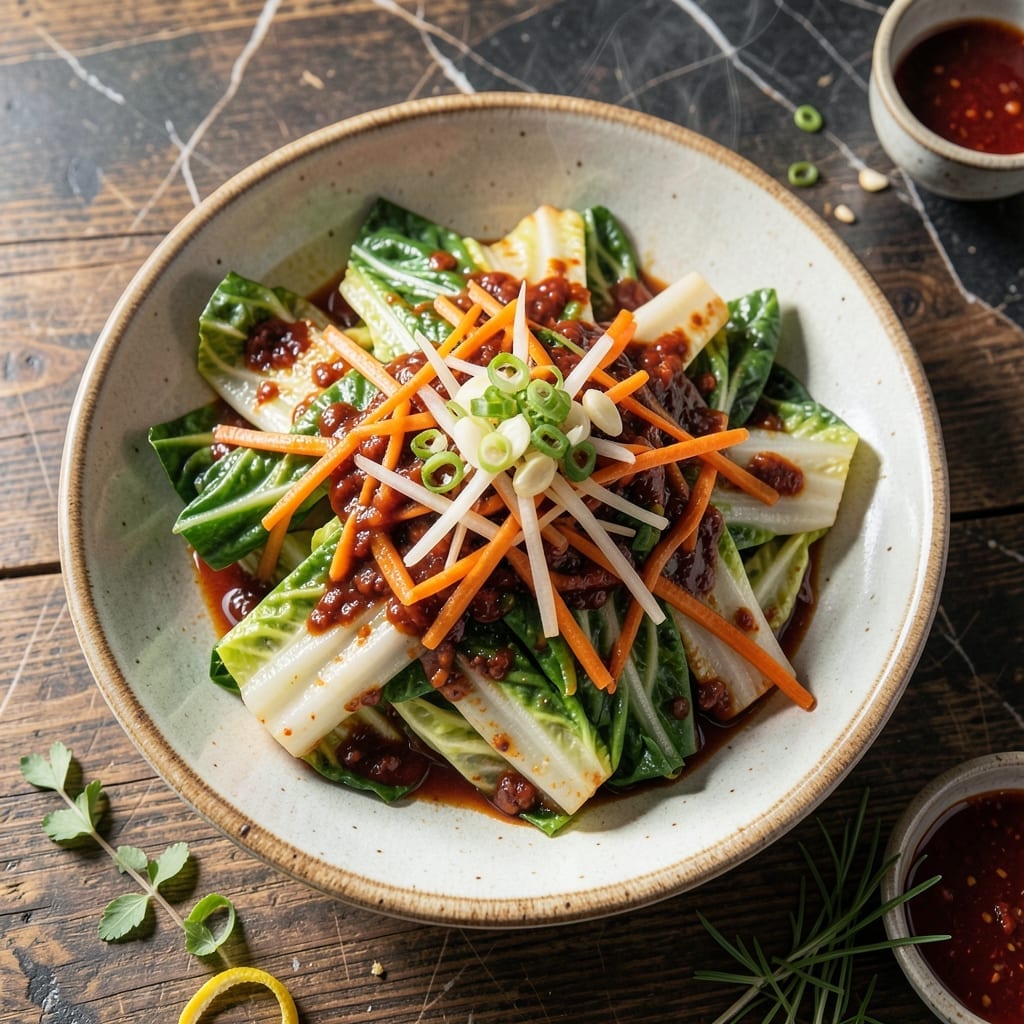
This gluten-free kimchi delivers authentic fermentation without rice flour, using a simple porridge alternative that maintains traditional texture and flavor.
The method relies on a one-to-one swap of rice flour with cornstarch or potato starch, creating the same thick, sticky brine that clings perfectly to each cabbage leaf.
After mixing the vegetables with the seasoned paste, the kimchi ferments at room temperature for 1-2 days, then continues in the refrigerator for up to 2 weeks.
You’ll achieve that signature tangy, spicy crunch with none of the gluten, making this version accessible without sacrificing authenticity.
Ingredients for Kimchi Recipe No Rice Flour
Fresh vegetables and bold spices create authentic gluten-free kimchi with traditional texture and flavor.
| Ingredient | Amount | Notes |
|---|---|---|
| Napa Cabbage 🥬 | 2 lb | Cut into 2-inch pieces, rinsed well |
| Korean Radish (Mu) 🥕 | 8 oz | Julienned or matchstick cut |
| Carrots 🥕 | 2 whole | Julienned for texture |
| Green Onions 🧅 | 6 whole | Cut into 2-inch pieces |
| Garlic Cloves 🧄 | 8 cloves | Minced finely |
| Fresh Ginger 🌿 | 1 tbsp | Grated or minced |
| Korean Red Pepper Flakes (Gochugaru) 🌶️ | 1 cup | Adjust for desired spice level |
| Fish-Free Soy Sauce 🫒 | ½ cup | Gluten-free tamari or coconut aminos |
| Cornstarch 🌾 | ⅓ cup | For gluten-free porridge base |
| Sugar 🍚 | ¼ cup | Organic or raw preferred |
| Kosher Salt 🧂 | ¼ cup | For initial brining |
| Water 💧 | 4 cups | For soaking and porridge |
| Asian Chives 🌿 | ½ cup | Optional for added aroma |
The cabbage quality is paramount. Napa cabbage with crisp, unblemished leaves yields the best texture—avoid pre-cut or wilted heads. For the Korean red pepper flakes, H Mart or Korean markets carry authentic gochugaru, but Amazon also stocks reliable brands. The cornstarch swap is non-negotiable here; Bob’s Red Mill offers a consistently fine grind that dissolves cleanly into the porridge.
No Korean radish? Daikon radish works identically—just peel and cut to matchstick size. For a milder kimchi, reduce gochugaru by half and add extra carrot for sweetness. Fish-free soy sauce is critical for vegan authenticity; San-J Tamari is a trusted gluten-free brand. If avoiding sugar, coconut sugar or maple syrup can substitute at a 1:1 ratio (the flavor profile shifts slightly but remains balanced).
Store unopened gochugaru in the freezer for 1 year to preserve potency. Once fermented, kimchi keeps for 2 weeks refrigerated in an airtight container. The flavor deepens over time, so taste after 3 days and adjust fermentation duration to preference.
Why You’ll Love This Recipe
- No Rice Hassle: I skip the rice flour entirely—just cabbage, radish, and a bold garlic kick.
- Flavor Bomb: The garlic and radish ferment into this tangy, spicy punch that’s ridicously good.
- Meal Prep Hero: I jar it Sunday and it’s ready for fried rice, stews, or straight from the fridge all week.
- Budget Stretch: One head of cabbage makes gallons. Honestly, it’s my cheapest, longest-lasting staple.
Step-by-Step Instructions for Kimchi Without Rice Flour
This gluten-free method delivers authentic fermentation with a cornstarch porridge base for perfect texture.
Step 1: Prepare the Vegetables for Brining
Begin by cutting the 2 lb Napa Cabbage into 2-inch pieces and rinsing them thoroughly to remove any dirt. Transfer to a large colander and sprinkle evenly with the 0.25 cup Kosher Salt.
Toss gently to ensure all pieces are coated, then set aside. Meanwhile, julienne the 8 oz Korean Radish (Mu) and the 2 whole Carrots, then cut the 6 whole Green Onions into 2-inch pieces. This preparation ensures even fermentation and consistent texture.
Step 2: Soak and Rinse the Cabbage
Place the salted cabbage in a large bowl and cover with the 4 cups Water. Let it soak at room temperature for 1-2 hours, stirring occasionally to dissolve the salt. The cabbage should soften slightly but retain a crisp bite.
After soaking, drain the cabbage and rinse it under cold water 3-4 times to remove excess salt. Drain thoroughly in a colander for 20-30 minutes, pressing gently to expel any remaining water. Proper rinsing prevents overly salty kimchi.
Step 3: Make the Gluten-Free Porridge Base
In a small saucepan, combine the 0.33 cup Cornstarch, 0.25 cup Sugar, and 2 cups Water. Cook over medium heat, stirring constantly, until the mixture thickens into a translucent porridge—this should take 5-7 minutes.
Remove from heat and let cool to room temperature. The porridge should coat the back of a spoon but remain pourable. This cornstarch base replaces traditional rice flour, ensuring a gluten-free result with the same binding properties.
Step 4: Create the Seasoning Paste
In a large bowl, combine the cooled porridge with the 1 cup Korean Red Pepper Flakes (Gochugaru), 0.5 cup Fish-Free Soy Sauce, 8 cloves minced Garlic Cloves, and 1 tbsp Fresh Ginger. Mix until smooth and vibrant.
The paste should be thick but spreadable. Adjust the gochugaru for your preferred spice level, though 1 cup provides a balanced heat. Fold in the julienned radish, carrots, green onions, and 0.5 cup Asian Chives for added aroma.
Step 5: Combine and Begin Fermentation
Add the drained cabbage to the seasoning paste and mix thoroughly using your hands (wear gloves to avoid staining). Ensure every piece is evenly coated—this guarantees consistent flavor in every bite.
Pack the kimchi into clean, airtight jars, pressing down to remove air pockets. Leave 1 inch of headspace to allow for expansion. Seal and let ferment at room temperature for 1-2 days, then refrigerate. The kimchi is ready when it develops a tangy aroma and effervescent bubbles.
Pro Tips For Making Kimchi Recipe No Rice Flour
- Salt the Cabbage Twice: After the first salting, rinse and drain the cabbage, then salt it again lightly before adding the paste—I learned this the hard way when my first batch turned out bland.
- Grate the Radish Fine: Shred the Korean radish (mu) as finely as possible so it releases more liquid to compensate for the missing rice flour slurry.
- Skip Overcrowding: When mixing the paste into the veggies, do it in batches—stuffing too much into the bowl at once leads to uneven coating and bruised cabbage.
- Use Extra Garlic: Sounds weird, but it works: add 2-3 extra garlic cloves to the paste since the lack of rice flour means you’ll need more flavor to balance the fermentation.
Regional Styles of This kimchi recipe no rice flour
Northern Korean Style
This regional approach uses less garlic and more radish for a milder, sweeter profile. I reduce the garlic to 4 cloves and increase Korean radish to 12 oz. The fermentation happens at cooler temperatures, around 55-60°F, for a slower, more nuanced development. 💛
Southern Korean Style
Southern versions are bolder and spicier, with extra gochugaru—I add 2-3 tbsp more for that fiery kick. They also include 1 tbsp fish-free shrimp substitute for umami depth. Ferment at room temperature for 1-2 days before refrigerating.
Vegan Seoul Style
Seoul’s vegan kimchi often incorporates 1 cup grated Asian pear for natural sweetness. I mix it into the porridge for a smoother texture. This version ferments quickly, so check after 24 hours at room temperature to avoid over-souring.
Jeju Island Style
Jeju kimchi uses more sea salt—about ⅓ cup—and includes 1 cup chopped mustard greens for extra bite. The island’s volcanic soil gives radishes a unique mineral taste, but any radish works. Ferment in a cool, dark place for 3 days. 🌶️
Modern Fusion Style
For a twist, I add 1 tbsp miso paste to the seasoning for depth. Some modern versions include 1 diced apple for sweetness. Ferment as usual, but taste after 1 day to adjust for the added ingredients.
Nutrition Facts
Frequently Asked Questions
Can I use potato starch instead of cornstarch?
Yes! Potato starch works perfectly as a 1:1 substitute for cornstarch. It creates the same thick, sticky porridge that clings to vegetables. Just mix it with water and sugar, then cook until translucent.
Why does my kimchi taste too salty?
This usually happens if the cabbage wasn’t rinsed thoroughly after brining. Rinse 3-4 times under cold water, then drain well. If it’s still too salty, soak the cabbage in fresh water for 30 minutes before mixing.
How long can I store this in the fridge?
Properly fermented kimchi keeps for up to 2 weeks refrigerated in an airtight container. The flavor deepens over time, so taste after 3 days and adjust fermentation to your preference.

- Mujadara Rice and Lentils Recipe: Earthy Spiced Lentils With Caramelized Onions - November 1, 2026
- Naija Fried Rice Recipe: Street-Style Spice With Veggie Crunch - November 1, 2026
- Mushy Rice Recipe: Fluffy Grains Transformed in Minutes - November 1, 2026