
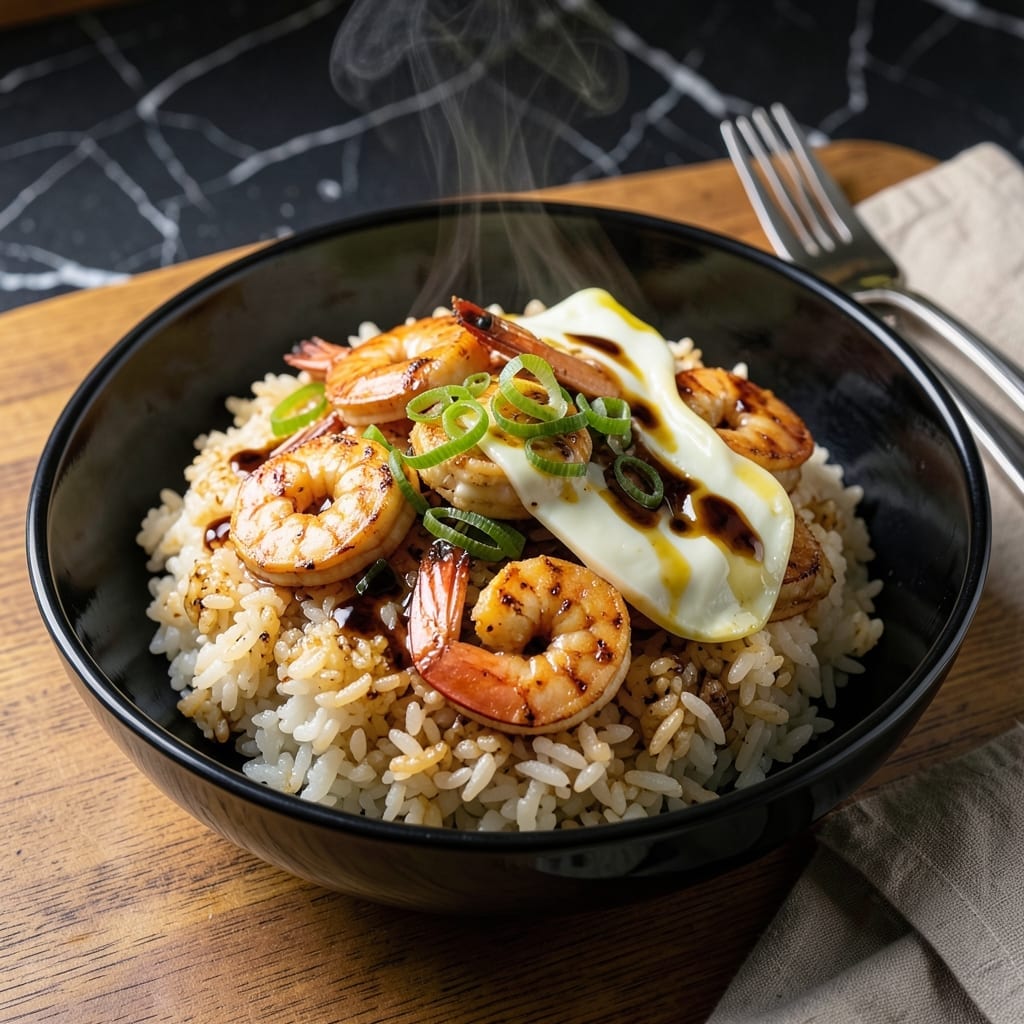
This Japanese-inspired fried rice delivers bold umami flavor with every bite, combining tender shrimp with perfectly cooked rice and traditional seasonings. The wok-tossed technique ensures each grain absorbs the savory sauce evenly.
I’ve refined this method to balance speed and authenticity, using simple ingredients that come together in under 30 minutes. The shrimp stay plump and juicy while the rice develops a light, smoky char from high heat.
The secret lies in day-old rice and a splash of soy sauce, which creates that signature golden-brown color and rich depth. Every element works in harmony without overpowering the shrimp’s natural sweetness.
Serve this as a side or main dish—its versatility makes it a weeknight staple. The result is consistently restaurant-quality with minimal effort.
Ingredients for Japanese Shrimp Fried Rice
Plump shrimp, day-old rice, and umami-rich seasonings create this wok-tossed classic in under thirty minutes.
| Ingredient | Amount | Notes |
|---|---|---|
| Large Shrimp 🦐 | 1 lb | Peeled, deveined, tails off |
| Cooked White Rice 🍚 | 4 cups | Day-old, chilled preferred |
| Large Eggs 🥚 | 2 whole | Lightly beaten |
| Soy Sauce 💧 | 3 tbsp | Low-sodium or regular |
| Sesame Oil 🫒 | 1 tbsp | Toasted, for finish |
| Green Onions 🧅 | ½ cup | Thinly sliced, whites and greens separated |
| Carrot 🥕 | 1 whole | Medium, finely diced |
| Frozen Peas 🌱 | ½ cup | Thawed under running water |
| Garlic Cloves 🧄 | 3 cloves | Minced finely |
| Fresh Ginger 🌿 | 1 tbsp | Grated or minced |
| Neutral Oil 🫒 | 2 tbsp | Vegetable or canola |
| Salt 🧂 | ½ tsp | Kosher or sea salt |
| Black Pepper 🌶️ | ¼ tsp | Freshly ground |
| Nori Sheets 🍙 | 1 sheet | Cut into thin strips for garnish |
The shrimp are non-negotiable for texture—wild-caught from Whole Foods or Costco are reliable for consistent size and sweetness. Day-old rice is critical (the good stuff, not the pre-shredded kind): Jasmine or short-grain hold their shape best. For the soy sauce, Kikkoman or Yamasa deliver authentic flavor without additives. Toasted sesame oil adds depth, but skip the unrefined stuff—it burns too easily.
Swapping proteins? Scallops or firm white fish like cod work well (pat dry first). No shrimp at all? Extra-firm tofu pressed and cubed gets crispy. Vegetable flexibility here—zucchini or bell peppers can replace carrots. The ginger must be fresh (the jarred kind lacks punch). Low-sodium soy sauce? Use 1 extra tbsp to compensate for the flavor difference.
Leftovers hold beautifully—3-4 days in the fridge, though the rice may dry slightly. Reheat in a skillet with a splash of water. Freezes for up to 2 months (thaw in fridge overnight). Always use day-old rice—fresh cooks up mushy (worth the extra minute).
Why You’ll Love This Recipe
- 20-Minute Meal: I can have this on the table faster than takeout arrives. Just toss shrimp, rice, and eggs with soy and sesame oil—no fancy prep.
- Umami Bomb: The soy sauce and sesame oil combo hits that perfect savory-sweet balance. Honestly, it’s the kind of flavor that makes you pause mid-bite.
- Leftover Hero: Day-old rice works even better, so it’s my go-to for using up extras. Plus, it reheats like a dream for lunch the next day.
- Budget Stretcher: A pound of shrimp and a few pantry staples feed my family of four without breaking the bank. I’ll be real: it’s my wallet’s best friend.
Step-by-Step Instructions for Japanese Shrimp Fried Rice
Master the technique and timing for a dish that delivers consistent, restaurant-quality results.
Step 1: Prepare the Shrimp and Aromatics
Pat the 1 lb Large Shrimp completely dry with paper towels to ensure proper searing. Season with 0.5 tsp Salt and 0.25 tsp Black Pepper. This prevents the shrimp from steaming in the pan and promotes even browning.
Finely dice the 1 whole Carrot into uniform ¼-inch pieces. Mince the 3 cloves Garlic Cloves and grate the 1 tbsp Fresh Ginger. Thinly slice the 0.5 cup Green Onions, keeping whites and greens separate. Thaw the 0.5 cup Frozen Peas under running water and drain well.
Step 2: Scramble the Eggs and Cook the Shrimp
Heat 1 tbsp Neutral Oil in a wok or large skillet over medium-high heat until shimmering. Add the 2 whole Large Eggs and scramble quickly until just set but still slightly runny. Remove and set aside.
In the same pan, add the remaining 1 tbsp Neutral Oil. Add the shrimp in a single layer and cook undisturbed for 1-2 minutes per side until pink and opaque. Transfer to a plate, leaving any rendered oil in the pan.
Step 3: Sauté Vegetables and Build the Base
Increase heat to high. Add the carrot and cook for 2 minutes, stirring constantly. Add the garlic, ginger, and green onion whites, then stir-fry for 30 seconds until fragrant. This develops the aromatic foundation of the dish.
Add the 4 cups Cooked White Rice, breaking up any clumps with your spatula. The rice should sizzle upon contact with the pan. Stir-fry for 2 minutes to toast the grains slightly and absorb the flavors.
Step 4: Combine All Elements and Finish
Return the shrimp and scrambled eggs to the pan. Drizzle the 3 tbsp Soy Sauce evenly over the mixture. Add the peas and stir-fry for 2-3 minutes until everything is heated through and the soy sauce has coated all ingredients evenly.
Remove from heat and stir in the 1 tbsp Sesame Oil. Taste and adjust seasoning if needed. The sesame oil adds a final layer of nutty aroma that defines this Japanese-style preparation.
Step 5: Garnish and Serve Immediately
Transfer to a serving dish and top with the reserved green onion greens. Cut the 1 sheet Nori Sheets into thin strips and sprinkle over the top for visual appeal and an additional umami boost.
Serve while hot, when the shrimp are still plump and the rice grains retain their individual texture. The dish should have a balanced savory-sweet profile with visible specks of color from the vegetables and shrimp.
Pro Tips For Making Japanese Shrimp Fried Rice
- Chill the Rice: Use day-old, cold rice straight from the fridge—fresh rice turns mushy. I learned this the hard way after my first few batches came out like porridge.
- Salt the Shrimp: Toss the shrimp with a pinch of salt and a teaspoon of soy sauce before cooking; it keeps them juicy and adds depth to every bite.
- Hot Wok, Fast Cook: Crank the heat to high and keep the wok smoking hot—this is non-negotiable for that classic sear on shrimp and rice.
- Finish with Sesame: Drizzle the sesame oil at the very end, off the heat, so it keeps its nutty aroma instead of burning away. Sounds weird, but it works.
Dietary Considerations for japanese shrimp fried rice
Gluten-Free Adaptation
Swap the soy sauce for tamari—San-J brand offers a reliable gluten-free version with the same umami depth. I always check labels to confirm no wheat additives. The flavor difference is minimal, and your dish stays authentic. 💪
Dairy-Free Note
This dish is naturally dairy-free, with no butter or cream in the traditional preparation. The sesame oil and soy sauce provide all the richness needed. Just ensure your shrimp and rice haven’t been cross-contaminated with dairy during prep.
Shellfish Allergy Alternative
Replace shrimp with extra-firm tofu, pressed and cubed for a similar texture. Marinate the tofu in 1 tbsp soy sauce and 1 tsp sesame oil for 15 minutes before cooking. The tofu absorbs the flavors beautifully and holds up to high heat.
Low-Sodium Option
Use low-sodium soy sauce and boost umami with 1 tsp fish sauce or 1 tbsp miso paste mixed into the eggs. I find Red Boat fish sauce adds depth without excess salt. Taste as you go and adjust seasoning at the end.
Vegetable Variations
For a lower-carb version, replace rice with cauliflower rice—sauté it first to remove excess moisture. The texture differs, but the flavors still shine. Add 1 extra egg to help bind everything together in the pan.
Nutrition Facts
Frequently Asked Questions
Can I use fresh rice instead of day-old?
Fresh rice is too moist and will turn mushy when stir-fried. Always use day-old, chilled rice for the best texture. Spread hot rice on a tray to cool quickly if you’re in a hurry.
Why do you cook shrimp first then remove it?
This prevents overcooking. Shrimp cook in 1-2 minutes per side and stay tender when added back later. Keeping them in the pan too long makes them rubbery.
What’s the best oil for high-heat stir-frying?
Use neutral oils like vegetable or canola with a high smoke point. Avoid olive oil—it burns at stir-fry temperatures. Sesame oil is only for finishing.
How do I prevent my fried rice from being dry?
Don’t overcook the rice in the final stir-fry. Add 1-2 tbsp water if needed to restore moisture. The soy sauce and sesame oil should provide enough liquid.

- Mujadara Rice and Lentils Recipe: Earthy Spiced Lentils With Caramelized Onions - November 1, 2026
- Naija Fried Rice Recipe: Street-Style Spice With Veggie Crunch - November 1, 2026
- Mushy Rice Recipe: Fluffy Grains Transformed in Minutes - November 1, 2026