
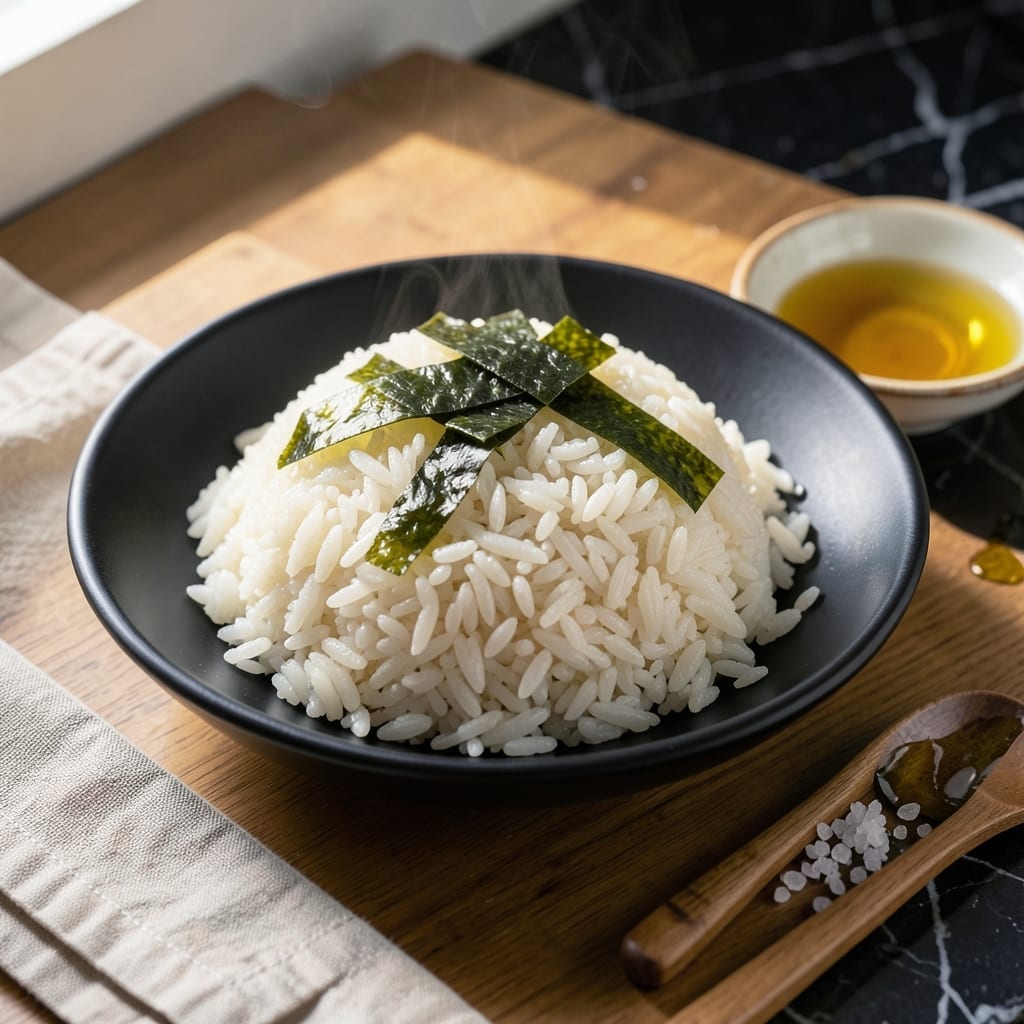
Japanese Koshihikari rice delivers pearl-like grains with a naturally sweet aroma that elevates any meal. This premium short-grain variety transforms simple ingredients into something extraordinary with proper preparation.
The secret lies in the washing and soaking process, which removes excess starch while allowing the grains to absorb water evenly. Using a 1:1.1 rice-to-water ratio ensures each grain cooks to perfect tenderness without becoming mushy.
What emerges is rice with a glossy sheen, delicate sweetness, and a slightly sticky texture that holds together beautifully. It pairs equally well with teriyaki chicken as it does with a simple bowl of miso soup.
Master this foundation and you’ll have the base for countless authentic Japanese dishes. The results speak for themselves.
Ingredients for Koshihikari Rice
Premium short-grain rice and simple seasonings create this authentic Japanese foundation dish with minimal effort.
| Ingredient | Amount | Notes |
|---|---|---|
| Koshihikari Rice 🍚 | 2 cups | Premium short-grain Japanese variety |
| Filtered Water 💧 | 2.2 cups | For 1:1.1 rice-to-water ratio |
| Rice Vinegar 🍶 | 1 tbsp | For optional seasoning rinse |
| Sea Salt 🧂 | ½ tsp | Fine grain preferred for even distribution |
| Kombu Sheet 🌿 | 1 piece | 2-inch square for umami (optional) |
| Sake 🍶 | 1 tbsp | For enhanced aroma (optional) |
| Mirin 🍯 | 1 tsp | For subtle sweetness (optional) |
| Toasted Sesame Seeds 🌰 | 1 tbsp | For garnish and texture |
| Nori Sheet 🌿 | ½ sheet | Thinly sliced for garnish (optional) |
| Scallions 🧅 | 2 whole | Thinly sliced for fresh finish |
| Vegetable Oil 🫒 | ½ tsp | For rice cooker bowl coating |
The rice quality is non-negotiable here. Koshihikari from Japanese markets or specialty grocers like H Mart delivers the best texture and aroma. Look for bags labeled with the harvest year—fresher means better stickiness and sweetness. For water, filtered is ideal (tap can affect flavor). The 1:1.1 ratio is critical; even a slight deviation can make grains mushy or undercooked.
No Koshihikari? Calrose or sushi rice are acceptable substitutes, though the sweetness won’t be as pronounced. For seasoning, white rice vinegar works if you lack the rice variety. Skip the kombu if unavailable—dried shiitake can add similar umami depth. The sake and mirin can be replaced with dry white wine and sugar in a pinch, but use sparingly.
Uncooked rice keeps 6-12 months in a cool, dark place in its original packaging. Prepared rice stays fresh for 3-4 days refrigerated. For longer storage, freeze in portions—reheats perfectly with a splash of water. Always wash rice before cooking to remove excess starch and prevent clumping.
Why You’ll Love This Recipe
- Set and Forget: It’s just rice, water, and a kombu sheet in the pot—I walk away and let the rice cooker do its thing.
- Umami in Every Bite: The kombu infuses the koshihikari with this subtle ocean depth, and the rice vinegar finishes it with a bright pop.
- Meal Prep Hero: I make a big batch Sunday and it pairs with everything from miso salmon to quick stir-fries all week.
- Budget Stretcher: Honestly, a pound of koshihikari plus pantry staples feeds four for less than a takeout bowl.
Step-by-Step Instructions for Koshihikari Rice
Master the preparation of this premium Japanese rice using a precise method for ideal texture and aroma.
Step 1: Rinse and Soak the Rice
Place the 2 cups Koshihikari Rice in a fine-mesh strainer and rinse under cold running water. Use your fingers to gently agitate the grains while rinsing. The water will appear cloudy at first—continue until it runs nearly clear, which typically takes 4-5 rinses.
Once rinsed, transfer the rice to a bowl and cover with fresh cold water. Let it soak for 20-30 minutes. This step removes excess starch for fluffier grains and ensures even cooking. Drain thoroughly in a colander before proceeding.
Step 2: Prepare the Rice Cooker with Optional Flavor Enhancers
Add the drained rice to your rice cooker bowl. For enhanced flavor, add the 1 piece Kombu Sheet, 1 tbsp Sake, and 1 tsp Mirin directly to the bowl. These optional ingredients infuse subtle umami and sweetness without overpowering the rice’s natural taste.
Pour in the 2.2 cups Filtered Water and gently stir once to distribute the rice evenly. Avoid over-stirring, which can break the grains. If using, add the 0.5 tsp Sea Salt now for seasoning throughout the cooking process.
Step 3: Cook and Rest for Perfect Texture
Before starting the cooker, coat the inside of the bowl with the 0.5 tsp Vegetable Oil to prevent sticking. Close the lid and select the standard white rice setting. Koshihikari typically requires 15-20 minutes of cooking time, depending on your appliance.
Once the cooker switches to “keep warm,” let the rice rest undisturbed for 10-15 minutes. This crucial step allows the grains to steam and absorb any remaining moisture, resulting in evenly cooked, glossy rice with a sweet aroma.
Step 4: Fluff and Garnish for Serving
After resting, open the lid and remove the Kombu Sheet if used. Gently fold the rice from the bottom to the top using a rice paddle or silicone spatula. This fluffing separates the grains without crushing them, preserving their individual integrity.
Transfer to a serving bowl and sprinkle with the 1 tbsp Toasted Sesame Seeds for texture. Thinly slice the 2 whole Scallions and the 0.5 sheet Nori Sheet (if using) as garnishes. For an optional bright finish, drizzle with the 1 tbsp Rice Vinegar and mix lightly just before serving.
Pro Tips For Making Koshihikari Rice
- Soak the Rice: Give Koshihikari a 30-minute soak in cold filtered water before cooking—it softens the grains and guarantees even cooking, especially for this sticky variety.
- Use Less Water: Cut the water by about 5% compared to standard rice ratios; Koshihikari absorbs less liquid but still comes out fluffy if you don’t overdo it.
- Skip the Rinse: I learned this the hard way—rinsing washes away the starch that makes Koshihikari’s texture so good, so just swirl it once or twice in the water you’ll cook it in.
- Add Kombu Early: Toss the dried kombu sheet into the pot with the rice and water from the start, then remove it after cooking—it infuses subtle umami without overpowering the dish.
Common Mistakes When Making This Dish
Over-rinsing the Rice
While thorough rinsing removes excess starch, going overboard can strip away the rice’s natural nutrients and flavor. I stop after 4-5 rinses when the water runs just slightly cloudy—this preserves the grains’ sweetness and integrity. 💧
Wrong Water Ratio
Using a 1:1 ratio instead of the recommended 1:1.1 can leave your rice undercooked or dry. For 2 cups rice, stick to 2.2 cups filtered water to achieve that perfect, slightly sticky consistency.
Skipping the Soak
Soaking for 20-30 minutes allows the grains to absorb water evenly, preventing uneven cooking. Without this step, the center of each grain may remain hard while the outer layer turns mushy.
Peeking Mid-Cook
Every time you open the rice cooker lid, you release steam and lower the temperature, which can extend cooking time and lead to inconsistent results. Trust the process and resist the urge to check until it’s done. 🔥
Over-stirring After Cooking
Vigorously stirring the rice can break the delicate grains and turn your perfect batch into a sticky paste. Instead, use a rice paddle to gently fold from the bottom up, preserving the individual pearl-like consistency.
Ignoring the Rest
Letting the rice rest for 10-15 minutes after cooking allows it to steam in its own moisture, enhancing texture and flavor. Skipping this step often results in rice that’s dry or unevenly cooked.
Nutrition Facts
Frequently Asked Questions
How many times should I rinse the rice?
Rinse until the water runs nearly clear, typically 4-5 times. This removes excess starch for fluffier grains without stripping natural flavor.
Can I use a regular pot instead of a rice cooker?
Yes! Use a heavy pot with a tight lid. Bring to a boil, then reduce to low heat for 15 minutes. Turn off heat and rest for 10 minutes.
Why does my rice turn out mushy?
Mushy rice usually means too much water or over-stirring. Stick to the 1:1.1 rice-to-water ratio and gently fold instead of stirring.
How long can I store cooked rice?
Refrigerate in an airtight container for 3-4 days. For longer storage, freeze in portions for up to 1 month.

- Mujadara Rice and Lentils Recipe: Earthy Spiced Lentils With Caramelized Onions - November 1, 2026
- Naija Fried Rice Recipe: Street-Style Spice With Veggie Crunch - November 1, 2026
- Mushy Rice Recipe: Fluffy Grains Transformed in Minutes - November 1, 2026