
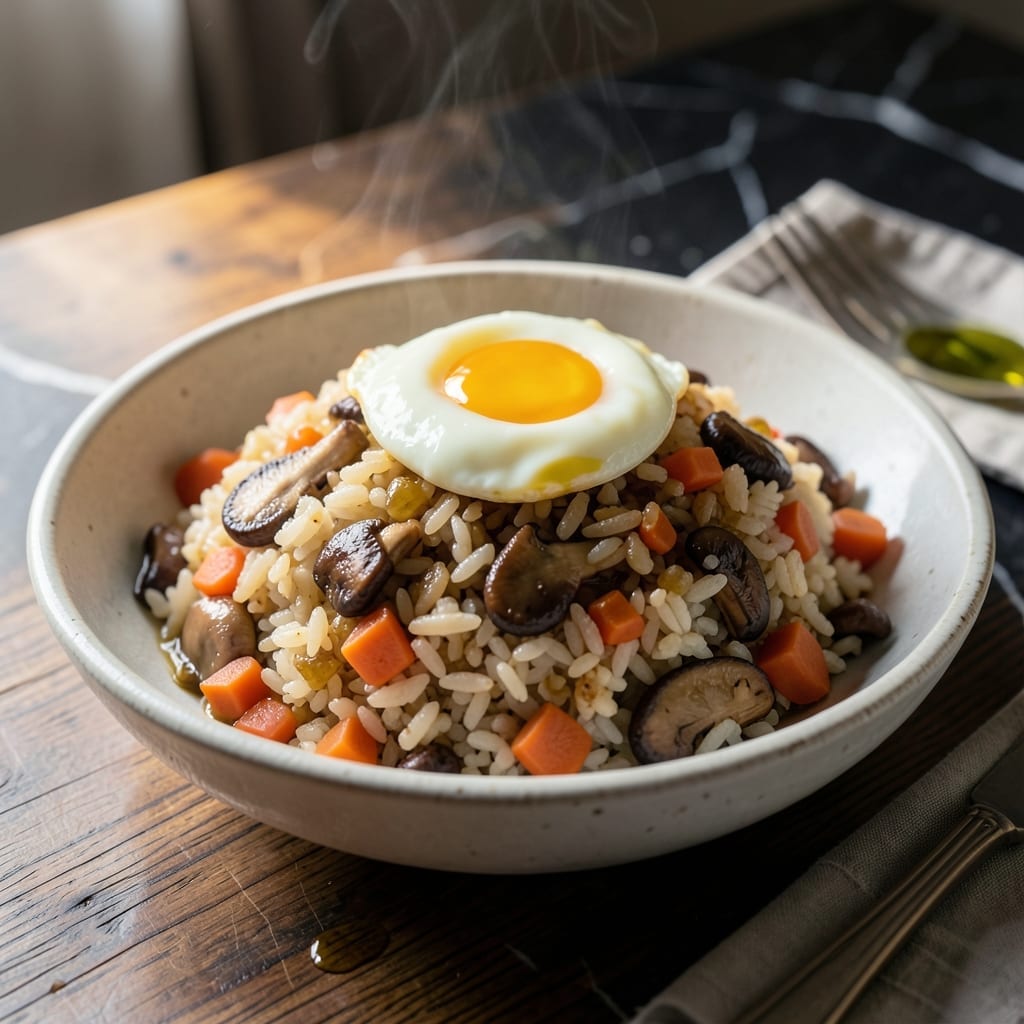
This Kyoto-style fried rice transforms humble ingredients into a dish packed with umami depth and wok-seared perfection. The technique hails from Japan’s culinary heart, where dashi and soy sauce create layers of savory complexity.
What sets this version apart is the careful balance of textures—tender rice, crisp vegetables, and silky egg—all unified by a glossy, flavorful sauce. Traditional Kyoto ingredients like dashi stock and mirin elevate the dish beyond ordinary fried rice.
The process is precise but accessible: high heat, constant motion, and timing that ensures each grain stays distinct. The result is a plate that looks as impressive as it tastes, with every bite delivering authentic Japanese comfort.
Ready in under 30 minutes, it’s proof that great fried rice relies on method as much as ingredients. Here’s how to master it at home.
Ingredients for Kyoto Fried Rice
Authentic Japanese ingredients bring Kyoto’s wok tradition to your home kitchen with depth and precision.
| Ingredient | Amount | Notes |
|---|---|---|
| Cooked Japanese Short-Grain Rice 🍚 | 4 cups | Day-old, chilled for best texture |
| Dashi Stock 🍲 | ½ cup | Traditional Japanese stock base |
| Soy Sauce 🫙 | 3 tbsp | Low-sodium preferred for balance |
| Mirin 🍶 | 2 tbsp | Sweet Japanese cooking wine |
| Neutral Oil 🛢️ | 2 tbsp | High smoke point for wok frying |
| Large Eggs 🥚 | 2 whole | Beaten lightly before cooking |
| Carrot 🥕 | 1 whole | Medium, finely diced for texture |
| Green Onions 🧅 | 3 whole | Thinly sliced, whites and greens separated |
| Shiitake Mushrooms 🍄 | 4 pieces | Fresh, stems removed and diced |
| Garlic Cloves 🧄 | 2 cloves | Minced for aromatic depth |
| Fresh Ginger 🌿 | 1 tbsp | Finely grated for zing |
| Sesame Oil 🫒 | 1 tsp | Toasted, added at the end |
| White Pepper 🌶️ | ½ tsp | Ground, for subtle heat |
| Seaweed Sheets 🍣 | 1 sheet | Nori, shredded for garnish |
Dashi stock is non-negotiable for authentic flavor. Look for instant dashi granules at Asian markets or specialty sections of Whole Foods. Mirin adds essential sweetness—avoid cheap imitations with corn syrup. The rice must be Japanese short-grain (Koshihikari or sushi rice work perfectly) and preferably day-old to prevent mushiness in the wok.
No mirin? Substitute 1 tbsp sugar plus 1 tbsp water per tablespoon, though the depth won’t be identical. Dried shiitakes (rehydrated and chopped) work if fresh aren’t available. For a vegetarian twist, use vegetable dashi—Kombu-only dashi keeps it umami-rich without fish. Always use low-sodium soy to control salt levels.
Cooked rice keeps in the fridge for 3 days—ideal for fried rice. Dashi granules last 6-12 months unopened, 3 months after opening. Store mirin and sesame oil in a cool, dark place (they’ll keep for 1 year unopened). Nori sheets stay fresh for 2 months in a sealed container.
Why You’ll Love This Recipe
- 20-Minute Meal: I can have this on the table faster than ordering takeout—just rice, dashi, and a quick toss in the pan.
- Umami Bomb: The dashi and soy sauce combo hits that deep, savory note that makes every bite crave-worthy.
- Leftover Hero: Honestly, it’s my favorite way to use up yesterday’s rice and turn it into something way better.
- Pantry Staples: Between us, I always have these ingredients on hand, so it’s my go-to when the fridge looks bare.
Step-by-Step Instructions for Kyoto Fried Rice
Master the wok technique that delivers authentic umami depth with every bite.
Step 1: Prepare Aromatics and Vegetables
Finely dice the carrot into uniform ¼-inch pieces for even cooking. Remove stems from the 4 pieces Shiitake Mushrooms and dice the caps into similar-sized pieces. This consistency ensures all components cook at the same rate.
Mince the 2 cloves Garlic Cloves and finely grate the 1 tbsp Fresh Ginger until you have a paste-like consistency. Thinly slice the 3 whole Green Onions, keeping the white and green portions separate for layered flavor. Shred the 1 sheet Seaweed Sheets into thin strips for garnish.
Step 2: Scramble Eggs in the Wok
Heat 1 tbsp of the 2 tbsp Neutral Oil in a wok over medium-high heat until it shimmers. Pour in the 2 whole Large Eggs that have been lightly beaten. Let them set for 10 seconds before gently stirring with a spatula to create soft, fluffy curds.
Cook until the eggs are just set but still slightly runny, about 30-45 seconds. Remove the eggs from the wok and set aside. This prevents overcooking when you add them back later. The residual heat will finish cooking them perfectly.
Step 3: Stir-Fry Vegetables and Aromatics
Add the remaining 1 tbsp Neutral Oil to the wok and increase heat to high. Add the diced carrot and 4 pieces Shiitake Mushrooms, stir-frying for 2-3 minutes until the edges begin to soften and brown slightly.
Push the vegetables to one side and add the minced 2 cloves Garlic Cloves and grated 1 tbsp Fresh Ginger to the center of the wok. Stir for 15-20 seconds until fragrant but not browned. Add the white portions of the 3 whole Green Onions and stir-fry for another 30 seconds.
Step 4: Combine Rice and Seasonings
Add the 4 cups Cooked Japanese Short-Grain Rice to the wok, breaking up any clumps with your spatula. The chilled rice should separate easily. Pour in the 0.5 cup Dashi Stock, 3 tbsp Soy Sauce, and 2 tbsp Mirin evenly over the rice.
Stir-fry for 3-4 minutes until the liquid is fully absorbed and the rice takes on a glossy appearance. The grains should be heated through and beginning to crisp slightly. Return the scrambled eggs to the wok and incorporate gently.
Step 5: Finish and Garnish
Drizzle the 1 tsp Sesame Oil over the fried rice and sprinkle with 0.5 tsp White Pepper. Toss everything together for 1 minute to distribute the flavors evenly. The rice should have a slight sheen from the sesame oil and a fragrant aroma.
Remove from heat and garnish with the green portions of the 3 whole Green Onions and the shredded 1 sheet Seaweed Sheets. Each grain should be distinct yet coated with the umami-rich seasonings, and the vegetables should retain a slight bite.
Pro Tips For Making Kyoto Fried Rice
- Use Day-Old Rice: Fresh rice is too moist—spread cooked short-grain rice on a tray and refrigerate overnight so it dries out and fries up fluffy, not mushy.
- Heat the Oil Hot: Crank the heat to medium-high before adding oil, then let it shimmer for 10 seconds before tossing in rice to get those slightly crispy edges without steaming.
- Season in Layers: Add soy sauce and mirin to the dashi stock first, not straight to the rice, to distribute flavor evenly and prevent soggy patches.
- Don’t Overcrowd the Pan: I learned this the hard way—fry in batches if needed, because too much rice at once steams instead of sears, and you’ll lose that signature Kyoto texture.
Perfect Pairings for This kyoto fried rice
Traditional Pairings
I love serving this with miso soup—the mild, savory broth complements the umami depth beautifully. Use 1 cup dashi and 2 tbsp miso paste for a quick version. The liquid contrasts nicely with the fried rice’s texture. 🥣
Protein Additions
For extra heartiness, top with teriyaki chicken or grilled salmon. I marinate chicken thighs in 3 tbsp soy sauce and 1 tbsp mirin for 30 minutes before grilling. Salmon adds omega-3s and pairs naturally with the dish’s flavors.
Fresh Accompaniments
A simple cucumber sunomono salad cuts through the richness. Thinly slice 1 cucumber and toss with 2 tbsp rice vinegar and 1 tsp sugar. The cool, tangy crunch refreshes your palate between bites.
Beverage Matches
Green tea is the classic choice—I recommend sencha for its light, grassy notes. For beer lovers, a crisp Japanese lager like Asahi Super Dry works perfectly. The effervescence cleanses your palate. 🍺
Garnish Ideas
Enhance the presentation with pickled ginger or toasted sesame seeds. The ginger adds a bright, tangy pop, while sesame seeds provide nutty crunch. Both are traditional Kyoto garnishes that elevate the dish visually.
Nutrition Facts
Frequently Asked Questions
Can I use freshly cooked rice?
No, always use day-old chilled rice. Fresh rice contains too much moisture and will turn mushy in the wok.
What can I substitute for dashi?
Use 1 tsp fish sauce mixed with ½ cup water or a light chicken broth. The flavor won’t be identical but adds needed umami.
How do I prevent the eggs from overcooking?
Cook them separately first, then set aside. Add back at the end just to warm through. This keeps them tender.
Can I make this vegetarian?
Yes! Use kombu dashi (seaweed-based) and add tofu or extra mushrooms for protein.

- Mujadara Rice and Lentils Recipe: Earthy Spiced Lentils With Caramelized Onions - November 1, 2026
- Naija Fried Rice Recipe: Street-Style Spice With Veggie Crunch - November 1, 2026
- Mushy Rice Recipe: Fluffy Grains Transformed in Minutes - November 1, 2026