
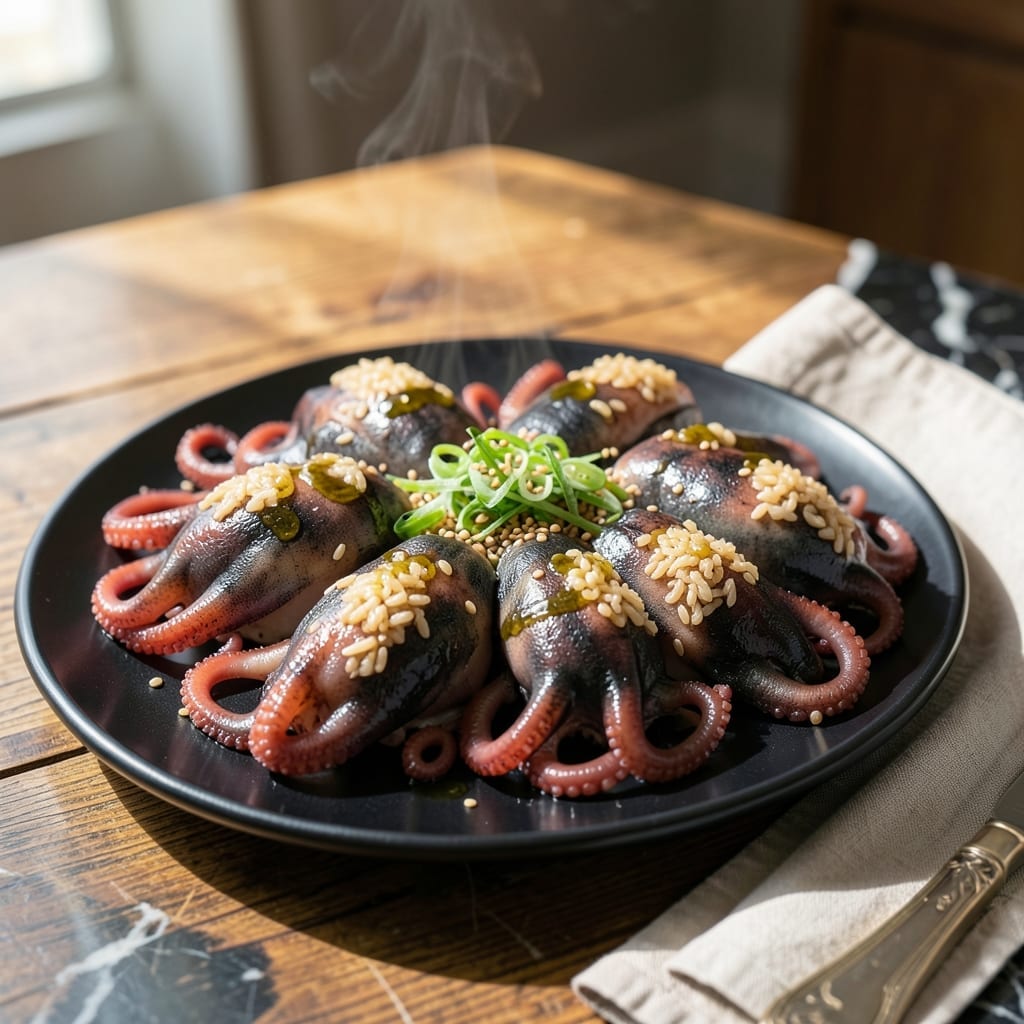
This traditional dish brings together the briny sweetness of fresh squid with the comforting heartiness of seasoned rice. The technique relies on precise stuffing and high-heat cooking to achieve that signature charred exterior while keeping the filling tender.
I’ve refined this method to ensure the rice absorbs the squid’s natural umami, creating a balance of flavors that’s both rich and delicate. The key is using short-grain rice, which holds its shape while soaking up the savory broth.
A quick sear in a hot wok or pan locks in the ocean-fresh taste, while the rice inside steams to perfection. The result is a dish that’s as impressive as it is satisfying, with every bite offering a contrast of textures.
Serve it with a drizzle of soy sauce and a side of pickled ginger for a meal that feels both rustic and refined. This is authentic Japanese home cooking at its best.
Ingredients for Japanese Squid Stuffed with Rice
Fresh squid, short-grain rice, and a handful of pantry staples bring this dish to life.
| Ingredient | Amount | Notes |
|---|---|---|
| Fresh Squid 🦑 | 1 ½ lb | Cleaned, bodies and tentacles separated |
| Short-Grain Rice 🍚 | 1 ½ cups | Uncooked, rinsed thoroughly |
| Dashi Stock 🍲 | 2 cups | Or substitute with fish stock |
| Soy Sauce 🫒 | 3 tbsp | Low-sodium preferred |
| Mirin 🍶 | 2 tbsp | Sweet cooking rice wine |
| Sake 🍶 | 2 tbsp | Dry Japanese rice wine |
| Green Onions 🧅 | 4 whole | Thinly sliced, white and green parts |
| Fresh Ginger 🌿 | 1 tbsp | Minced or grated |
| Garlic Cloves 🧄 | 3 cloves | Minced finely |
| Shiitake Mushrooms 🍄 | 4 whole | Diced, stems removed |
| Sesame Oil 🫒 | 1 tbsp | Toasted for finishing |
| Pickled Ginger 🌿 | ½ cup | For serving, thinly sliced |
| Neutral Oil 🫒 | 2 tbsp | For high-heat searing |
| Salt 🧂 | ½ tsp | Adjust to taste |
| Black Pepper 🌶️ | ¼ tsp | Freshly ground |
The squid is everything. Fresh whole squid from a trusted seafood counter is ideal—look for bright, glossy skin and a mild ocean scent (never fishy). Short-grain rice like Koshihikari or Calrose absorbs the umami-rich broth beautifully. Most Asian markets carry these varieties, but well-stocked supermarkets often have them too. Avoid pre-cut squid rings; whole bodies hold their shape better for stuffing.
No dashi? Fish stock plus a pinch of MSG mimics the depth. Mirin and sake can be replaced with dry sherry plus a teaspoon of sugar in a pinch. Shiitake mushrooms add meaty texture—cremini or white mushrooms work fine if that’s what you have. The green onions can be swapped for chives (use double the amount). Always taste the filling before stuffing—adjust seasoning then.
Stuffed squid keeps in the fridge for 1 day before cooking (great for prep ahead). Leftovers? Not ideal—squid toughens when reheated. Best eaten fresh, straight from the wok. If you must store, cool quickly and refrigerate for up to 24 hours.
Why You’ll Love This Recipe
- One-Pan Wonder: I love that everything cooks together—squid, rice, and dashi—in a single pot, leaving me almost no cleanup.
- Umami Bomb: The soy, mirin, and dashi stock soak into the rice and squid like a flavor hug, honest to goodness addictive.
- Feeds a Crowd: Between us, this dish stretches further than you’d think—great for family dinners or meal-prepping lunches.
- Budget Stretch: Fresh squid is cheaper than I expected, and a little rice goes a long way, so my wallet never complains.
Step-by-Step Instructions for Japanese Squid Stuffed With Rice
Master this technique for perfectly tender squid with aromatic rice filling and charred umami depth.
Step 1: Prepare Squid and Cook Rice Filling
Rinse the 1.5 lb Fresh Squid bodies and tentacles, then pat completely dry. Set aside. In a medium saucepan, combine the 1.5 cups Short-Grain Rice, 2 cups Dashi Stock, 3 tbsp Soy Sauce, 2 tbsp Mirin, and 2 tbsp Sake. Bring to a boil, then reduce to a simmer.
Cover and cook for 15 minutes until the rice is tender and liquid is absorbed. Stir in the 4 whole Green Onions, 1 tbsp Fresh Ginger, 3 cloves Garlic Cloves, and 4 whole Shiitake Mushrooms. Cook for an additional 2 minutes until fragrant. Remove from heat and let cool slightly.
Step 2: Stuff Squid Bodies
Fill each squid body with the rice mixture, leaving about ½ inch space at the top to prevent bursting. Secure the openings with toothpicks. Season the outside of the squid with 0.5 tsp Salt and 0.25 tsp Black Pepper.
Arrange the stuffed squid in a single layer on a plate. If any rice mixture remains, set it aside to cook separately with the tentacles for serving alongside the main dish.
Step 3: Sear Squid to Charred Perfection
Heat the 2 tbsp Neutral Oil in a large skillet or wok over medium-high heat until shimmering. Add the stuffed squid and cook for 3-4 minutes per side until the exterior is golden brown and slightly charred.
Add the reserved rice mixture and tentacles to the pan during the last 2 minutes of cooking. Cook until the tentacles curl and turn opaque, and the rice develops a light crust.
Step 4: Rest and Serve with Garnishes
Transfer the squid to a cutting board and let rest for 2 minutes. Remove toothpicks before serving. Slice each squid into 1-inch rings to showcase the rice filling.
Drizzle with 1 tbsp Sesame Oil and serve with 0.5 cup Pickled Ginger on the side. The pickled ginger cuts through the richness and balances the deep umami flavors of the dish.
Pro Tips For Making Japanese Squid Stuffed With Rice
- Blanch the Squid: Plunge squid bodies into boiling water for 30 seconds before stuffing—this tightens the flesh so the rice filling doesn’t leak out during cooking. I learned this the hard way after watching my first three attempts turn into squid-flavored porridge.
- Use Cold Rice: Cook and cool your short-grain rice completely before stuffing, or it’ll turn mushy when steamed inside the squid. Spread it on a tray for 10 minutes—it’s the fastest way to guarantee firm, separate grains.
- Skip Overstuffing: Fill squid tubes no more than two-thirds full, or they’ll burst while simmering. Sounds obvious, but I still catch myself squeezing in “just a little more” every time.
- Simmer in Dashi: Poach the stuffed squid in dashi stock with a splash of soy and mirin instead of plain water—it infuses the rice with flavor while cooking. My grandmother swore by this, and she was right: the difference is night and day.
Troubleshooting This Recipe
Rice Too Crumbly
If your filling falls apart, the rice likely didn’t absorb enough liquid. I use exactly 2 cups Dashi Stock to 1.5 cups Short-Grain Rice for the perfect sticky texture. Let the rice rest covered for 5 minutes off heat after cooking. 💡
Squid Bursts Open
Overfilling is the main culprit. Leave ½ inch of space at the top of each squid body, and secure with toothpicks before searing. Also, pat the squid completely dry to prevent steam buildup inside.
Filling Dry or Bland
This usually means the seasoning was light. Taste your rice mixture before stuffing and adjust with 1-2 tsp Soy Sauce or a pinch of Salt. The dashi should provide enough umami, but sometimes it needs a boost.
Squid Turns Rubbery
High heat and quick cooking are key. Sear over medium-high heat for no more than 3-4 minutes per side. If the squid cooks too long, it toughens. I check for doneness when the exterior turns opaque and slightly charred.
Rice Undercooked
Ensure your rice is fully tender before stuffing. If the grains are still firm after 15 minutes, add ¼ cup Dashi Stock and cook for another 5 minutes. Short-grain rice should be soft but still hold its shape.
Char Not Developing
Your pan might not be hot enough. Heat the 2 tbsp Neutral Oil until it shimmers before adding the squid. A cast-iron skillet or wok works best for that deep, smoky char. Avoid crowding the pan to ensure even browning. 🔥
Nutrition Facts
Frequently Asked Questions
Can I use pre-cooked rice for the filling?
Freshly cooked short-grain rice works best for texture and flavor absorption. Pre-cooked rice may be too dry or firm. If using leftovers, warm it with a splash of Dashi Stock to restore moisture before stuffing.
How do I know when the squid is fully cooked?
The exterior should turn opaque and slightly charred after 3-4 minutes per side over medium-high heat. The flesh will feel firm but still tender when pressed. Overcooking makes it rubbery.
What’s the best way to prevent the filling from falling out?
Leave ½ inch of space at the top of each squid body and secure the opening with toothpicks. Patting the squid completely dry first prevents steam buildup that can burst the seam.
Can I bake this instead of searing?
Yes, bake at 375°F for 15-20 minutes for a gentler method. However, you’ll miss the signature charred flavor. For best results, finish with a quick sear in a hot pan.

- Mujadara Rice and Lentils Recipe: Earthy Spiced Lentils With Caramelized Onions - November 1, 2026
- Naija Fried Rice Recipe: Street-Style Spice With Veggie Crunch - November 1, 2026
- Mushy Rice Recipe: Fluffy Grains Transformed in Minutes - November 1, 2026