
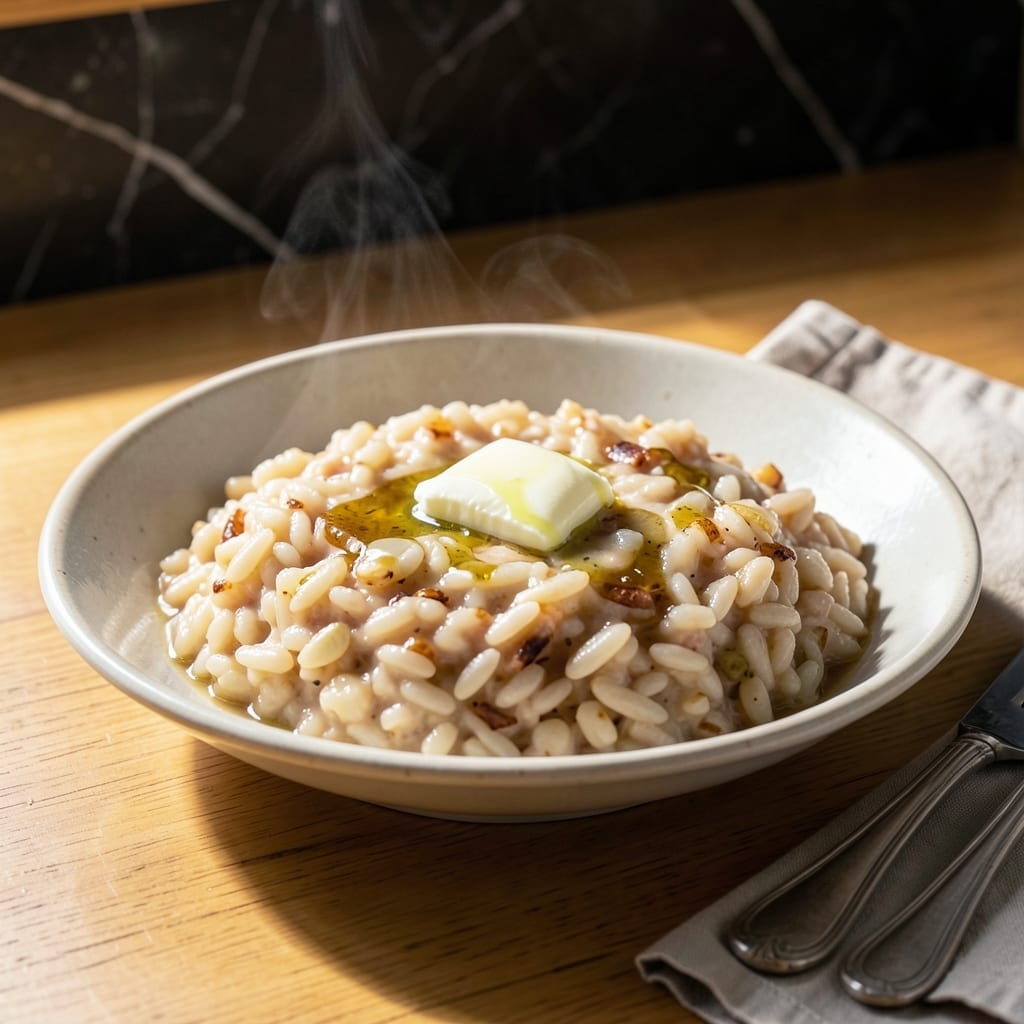
There’s a special satisfaction in creating creamy Italian rice that rivals any trattoria. This Arborio dish transforms simple ingredients into something extraordinary.
I’ve perfected the technique to achieve that signature velvety texture without constant stirring. The garden herbs add freshness that balances the richness beautifully.
The result is a dish with luxurious mouthfeel and complex flavors. Each bite delivers the comfort of traditional Italian cooking with modern simplicity.
Ready in under an hour, this recipe proves that authentic taste doesn’t require complicated methods.
Ingredients for Italian Rice
Simple ingredients transform into luxurious, velvety Italian comfort in this dish.
| Ingredient | Amount | Notes |
|---|---|---|
| Arborio Rice 🌾 | 1 ½ cups | Short-grain for creamy texture |
| Chicken Stock 🍲 | 5 cups | Low-sodium preferred, kept warm |
| White Wine 🍷 | ½ cup | Dry variety for acidity |
| Shallot 🧅 | 1 whole | Finely minced for subtle onion flavor |
| Garlic Cloves 🧄 | 3 cloves | Minced for aromatic base |
| Unsalted Butter 🧈 | 4 tbsp | Divided, for richness |
| Parmesan Cheese 🧀 | ¾ cup | Freshly grated from wedge |
| Heavy Cream 🥛 | ¼ cup | Full-fat for velvety finish |
| Fresh Thyme 🌿 | 2 tsp | Chopped, leaves only |
| Fresh Rosemary 🌿 | 1 tsp | Finely chopped for depth |
| Fresh Parsley 🌿 | ¼ cup | Chopped, for garnish and freshness |
| Salt 🧂 | 1 tsp | Diamond Crystal kosher preferred |
| Black Pepper 🌶️ | ½ tsp | Freshly ground for best flavor |
| Olive Oil 🫒 | 2 tbsp | Extra-virgin for initial sauté |
The Arborio rice is non-negotiable—short-grain only for that signature creamy texture. Whole Foods or Eataly carry authentic Italian varieties, but standard grocery store Arborio works fine. For the chicken stock, low-sodium allows better control over seasoning. The Parmesan must be freshly grated from a wedge; pre-grated contains anti-caking agents that disrupt the melt.
Need a substitution for white wine? Dry vermouth is the closest match, or use extra stock with a splash of lemon juice. Shallots can be swapped for yellow onion in a pinch, though the flavor is more pronounced. For a vegetarian version, vegetable stock replaces chicken stock seamlessly. The heavy cream adds richness, but whole milk in a pinch (though texture will be lighter).
Store Arborio rice in an airtight container in a cool, dark place for up to 1 year. Fresh herbs last 5-7 days wrapped in damp paper towels in the fridge. The dish itself keeps 3-4 days refrigerated, though it thickens—stir in a splash of stock when reheating.
Why You’ll Love This Recipe
- One Pot Wonder: I just dump Arborio, stock, and wine in one pan—minimal cleanup, maximum flavor.
- Garlic-Infused Creaminess: The shallots and garlic cook down into the rice, making every bite rich and aromatic.
- Weeknight Hero: Honestly, it’s my go-to for busy evenings when I need something hearty fast.
- Budget Stretcher: A little Arborio goes a long way, and leftovers taste even better the next day.
Step-by-Step Instructions for Creamy Arborio with Garden Herbs
Master the technique of coaxing maximum creaminess from Arborio while balancing bright herbaceous notes.
Step 1: Sauté Aromatics in Olive Oil
Heat the 2 tbsp Olive Oil in a heavy-bottomed pot over medium heat until it shimmers. Add the 1 whole Shallot, finely minced, and cook for 3-4 minutes until translucent and just beginning to soften.
Stir in the 3 cloves Garlic Cloves, minced, along with the 2 tsp Fresh Thyme and 1 tsp Fresh Rosemary. Cook for 1 minute until fragrant but not browned—this builds the aromatic foundation without bitterness.
Season with the 1 tsp Salt and 0.5 tsp Black Pepper to enhance the flavors as they bloom.
Step 2: Toast the Arborio Rice
Add the 1.5 cups Arborio Rice to the pot and stir continuously for 2-3 minutes until the grains become slightly translucent at the edges. This toasting step is crucial—it creates a nutty depth and ensures each grain absorbs liquid evenly.
You’ll notice the rice develops a pearlescent sheen; this indicates the starches are beginning to release, which is essential for the final creamy texture. Avoid letting the rice brown, as this can impart a burnt flavor.
Step 3: Deglaze and Begin the Risotto Process
Pour in the 0.5 cup White Wine and stir until the liquid is fully absorbed and the alcohol smell has cooked off, about 2-3 minutes. The acidity in the wine balances the richness of the dish and brightens the herb flavors.
Begin adding the 5 cups Chicken Stock, kept warm, ½ cup at a time. Stir frequently, allowing each addition to be nearly fully absorbed before adding the next. This gradual process coaxes the starches out of the rice, creating the signature creamy consistency.
The risotto is ready for the next addition when the liquid has reduced to a thin film on the surface and the rice exposed by your spoon holds its shape briefly before flowing back.
Step 4: Finish with Butter, Cream, and Parmesan
Once the rice is al dente—tender with a slight bite at the center—remove the pot from heat. Stir in 2 tbsp Unsalted Butter until melted, then add the 0.25 cup Heavy Cream and 0.75 cup Parmesan Cheese.
Fold gently until the mixture is velvety and glossy. The butter emulsifies with the starches, while the Parmesan adds a salty, umami depth. Taste and adjust seasoning if needed, though the Parmesan often provides sufficient saltiness.
Step 5: Rest and Garnish
Let the risotto rest off heat for 2-3 minutes to allow the flavors to meld. The texture will thicken slightly as it sits, which is ideal.
Garnish with the 0.25 cup Fresh Parsley, chopped, just before serving. The parsley adds a fresh, vibrant contrast to the rich, creamy dish. Serve immediately while the risotto is at its peak consistency.
Pro Tips For Making Italian Rice
- Toast the Rice: Cook the Arborio in the shallot-garlic oil for 2-3 minutes until edges look translucent—I learned this the hard way when my risotto turned out gummy instead of creamy.
- Warm the Stock: Keep your chicken stock simmering in a pot next to the stove. Cold stock slows down cooking and makes the rice seize up.
- Skip the Rinse: Resist the urge to rinse the Arborio—those starches are what give your dish its signature silky texture.
- Use Dry Wine: A crisp white like Pinot Grigio works better than sweet varieties. The acidity cuts through the richness and balances the dish.
Essential Equipment for This Dish
Quality Cookware
I always use a heavy-bottomed pot for risotto—All-Clad stainless steel or enamel-coated cast iron distribute heat evenly. Thin pots create hot spots that burn the rice. A 3-4 quart size is perfect for this recipe.
Wooden Spoon Essential
A wooden spoon is my go-to for stirring. It won’t scratch your pot and gives you a feel for the rice’s texture as it cooks. I prefer one with a flat edge for scraping the bottom gently.
Accurate Thermometer
While not traditional, I love using an instant-read thermometer to monitor my stock temperature. Keep it at 180-190°F in a separate pot. ThermoWorks makes reliable models that last for years. 🌡️
Fine Grater for Cheese
For the Parmesan, a Microplane creates the finest, most meltable texture. The pre-shredded stuff just doesn’t compare. I also use it for zesting citrus when I add it to variations.
Stockpot for Broth
Keep your chicken stock warm in a separate 2-quart saucepan. Adding cold liquid to risotto slows the cooking process. I use a low flame to maintain that perfect temperature without simmering.
Sharp Chef’s Knife
A good 8-inch chef’s knife makes quick work of the aromatics. I recommend Wüsthof or Victorinox for home cooks. Proper prep ensures even cooking and consistent texture. 💡
Nutrition Facts
Frequently Asked Questions
What can I use instead of Arborio?
Carnaroli or Vialone Nano are excellent substitutes. These short-grain varieties have similar starch content for creaminess. Avoid long-grain types like basmati—they won’t absorb liquid the same way.
How do I prevent mushy risotto?
Stop cooking when rice is al dente—tender with a slight bite. Overcooking releases too much starch. Also, add stock gradually, letting it absorb nearly completely between additions.
Can I make this ahead of time?
Risotto is best served immediately, but you can par-cook it. Spread on a tray to cool quickly, then refrigerate for up to 2 hours. Finish with extra warm stock and butter before serving.

- Mujadara Rice and Lentils Recipe: Earthy Spiced Lentils With Caramelized Onions - November 1, 2026
- Naija Fried Rice Recipe: Street-Style Spice With Veggie Crunch - November 1, 2026
- Mushy Rice Recipe: Fluffy Grains Transformed in Minutes - November 1, 2026