
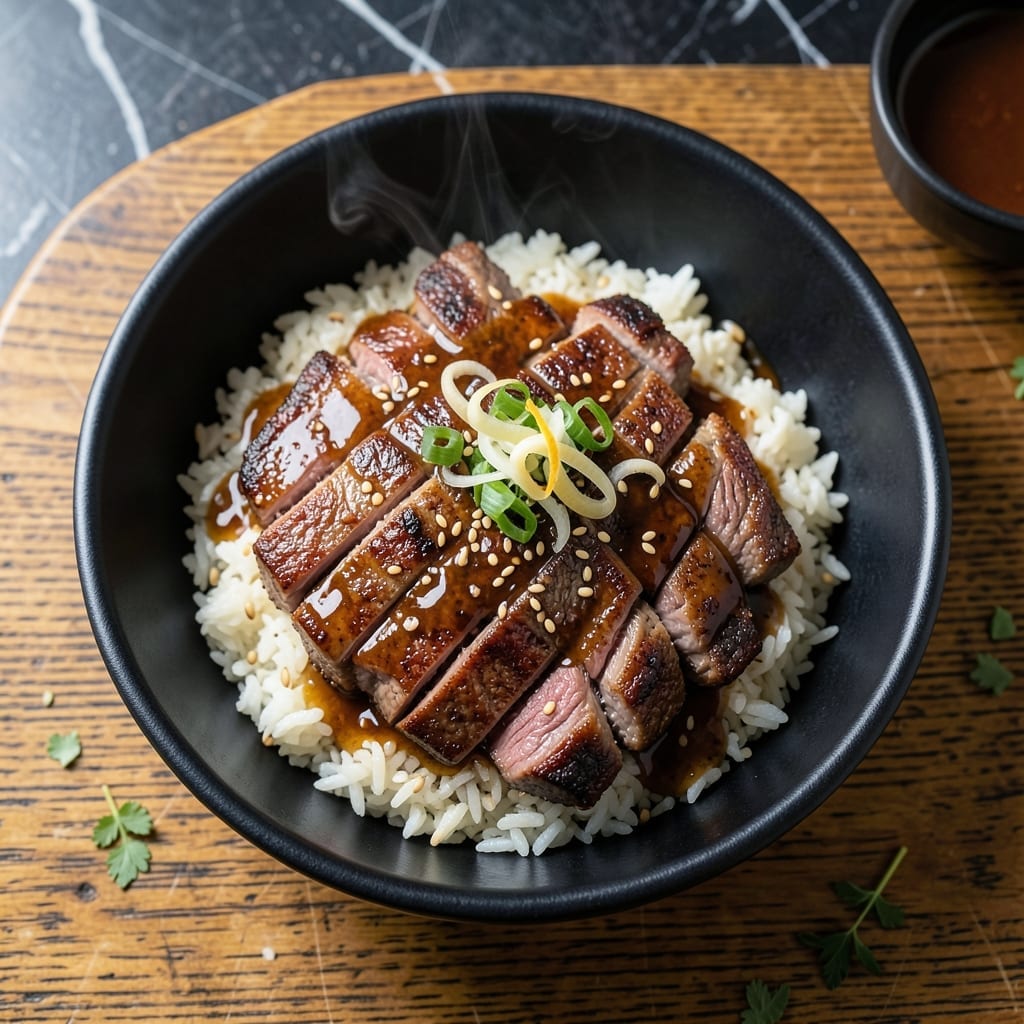
This hibachi-style dish brings the sizzle of Japanese steakhouses to your kitchen with minimal effort. The secret lies in a simple marinade and high-heat cooking that locks in juices while creating a caramelized crust.
I’ve refined this method to use everyday ingredients without sacrificing authenticity. Thinly sliced beef cooks in minutes, while the rice absorbs savory flavors from the umami-rich sauce. It’s a balanced meal with protein, carbs, and bold taste.
The result is tender, flavorful steak paired with perfectly seasoned rice, finished with a glossy glaze. Serve it with quick-pickled vegetables or a fried egg for extra depth. This recipe delivers restaurant-quality results at home.
Ready to recreate the experience? Here’s how to make it happen.
Ingredients for Japanese Steak and Rice
Ribeye, jasmine rice, umami-packed sauces—this hibachi-style meal uses everyday market ingredients for authentic flavor.
| Ingredient | Amount | Notes |
|---|---|---|
| Ribeye Steak 🥩 | 1 ½ lb | Thinly sliced against the grain |
| Jasmine Rice 🍚 | 2 cups | Uncooked, rinsed thoroughly |
| Soy Sauce 🫒 | ½ cup | Low-sodium preferred for control |
| Mirin 🍶 | ¼ cup | Sweet rice wine, essential |
| Sake 🍶 | ¼ cup | Dry Japanese rice wine |
| Garlic Cloves 🧄 | 4 cloves | Minced finely for marinade |
| Fresh Ginger 🌿 | 1 tbsp | Grated, peel first |
| Brown Sugar 🍚 | 2 tbsp | Packed, for caramelization |
| Sesame Oil 🫒 | 1 tbsp | Toasted variety for depth |
| Vegetable Oil 🫒 | 2 tbsp | High smoke point for searing |
| Green Onions 🧅 | 4 whole | Thinly sliced for garnish |
| Carrots 🥕 | 1 cup | Julienned matchstick cut |
| Zucchini 🥒 | 1 cup | Thinly sliced lengthwise |
| Butter 🧈 | 2 tbsp | Unsalted, for finishing |
| Black Pepper 🌶️ | 1 tsp | Freshly cracked preferred |
The beef is non-negotiable—ribeye with good marbling delivers the rich flavor and tender texture you expect from hibachi. Whole Foods or Costco carry quality cuts, but any butcher can slice it paper-thin for you (ask for ‘shabu-shabu’ thickness). The rice must be jasmine; its floral aroma complements the savory components. For mirin and sake, Kikkoman and Takara are reliable brands found in most Asian markets.
No ribeye? Sirloin or flank steak work but require careful slicing against the grain. Missing mirin? 1 tbsp sugar + 1 tbsp water per tbsp needed. Sake can be swapped with dry sherry in a pinch. For the vegetables, any quick-cooking options (mushrooms, bell peppers) are fair game. The brown sugar can be substituted with honey or maple syrup, though the flavor profile will shift slightly.
Pre-slice all ingredients before cooking—hibachi moves fast. Store raw beef in the fridge for up to 2 days, or freeze for 3 months. Cooked leftovers keep 3-4 days refrigerated. Reheat gently to avoid overcooking the steak.
Why You’ll Love This Recipe
- One Pan Meal: I sear the ribeye, then use the same pan for the rice—minimal cleanup, maximum flavor.
- Umami Bomb: The soy, mirin, and sake create that sticky, savory glaze that makes every bite irresistible.
- Weeknight Hero: Honestly, it’s fancy enough for guests but simple enough for a Tuesday dinner.
- Lunch Tomorrow: Leftovers taste even better the next day, and the rice soaks up all that extra sauce.
Step-by-Step Instructions for Japanese Steak and Rice
Master the technique for tender beef and perfectly cooked rice with this authentic approach.
Step 1: Marinate the Ribeye Steak
In a bowl, whisk together the 0.5 cup Soy Sauce, 0.25 cup Mirin, 0.25 cup Sake, 1 tbsp Fresh Ginger, 4 cloves Garlic Cloves, 2 tbsp Brown Sugar, and 1 tsp Black Pepper until the sugar dissolves completely. The mixture should be smooth with a glossy sheen, indicating the sugar has fully incorporated.
Add the 1.5 lb Ribeye Steak, thinly sliced against the grain, to the marinade. Ensure each slice is fully coated by gently tossing with your hands or tongs. Cover and refrigerate for 30 minutes to 2 hours—this allows the flavors to penetrate without over-tenderizing the meat.
Step 2: Cook the Jasmine Rice
Rinse the 2 cups Jasmine Rice thoroughly under cold water until the water runs clear. This removes excess starch, preventing gummy rice. Drain completely in a fine-mesh sieve, shaking gently to remove all surface moisture.
Combine the drained rice with 2 cups water in a saucepan. Bring to a boil over high heat, then reduce to low, cover, and simmer for 15 minutes. Remove from heat and let it steam, covered, for an additional 10 minutes until all liquid is absorbed and the grains are tender yet distinct.
Step 3: Sear the Steak and Vegetables
Heat a large skillet or griddle over high heat until very hot. Add 1 tbsp Vegetable Oil and swirl to coat the surface evenly. Working in batches to avoid crowding, sear the marinated ribeye for 2-3 minutes per side until deeply browned and cooked to medium-rare. Transfer to a plate and tent with foil to keep warm.
In the same skillet, add the remaining 1 tbsp Vegetable Oil and the 1 cup Carrots and 1 cup Zucchini. Sauté for 4-5 minutes until the vegetables are tender-crisp and slightly charred. The carrots should soften slightly while the zucchini retains a slight bite.
Step 4: Assemble and Finish
Return the steak to the skillet with the vegetables. Drizzle with 1 tbsp Sesame Oil and add 2 tbsp Butter, tossing everything together until the butter melts and coats the ingredients. The sesame oil adds a nutty aroma, while the butter enriches the dish with a silky finish.
Sprinkle with the 4 whole Green Onions, thinly sliced, and toss once more. Serve the steak and vegetables immediately over the cooked jasmine rice, ensuring each plate gets an equal portion of the tender beef and vibrant vegetables.
Pro Tips For Making Japanese Steak And Rice
- Sear High, Flip Once: Crank the pan to smoking hot before adding the ribeye, then resist the urge to poke or flip—just one turn guarantees a perfect crust. I learned this the hard way after my first three attempts stuck to the pan.
- Rice Rinse Thoroughly: Wash the jasmine rice until the water runs clear, or you’ll end up with gummy, starchy bites. Sounds tedious, but it’s the only way to get that light, fluffy texture that soaks up the sauce.
- Rest the Steak: After cooking, give the ribeye a solid 5-10 minutes under foil before slicing. Skip this and all the juices will end up on the cutting board, not in your mouth.
- Deglaze with Sake: After searing, pour in a splash of sake to lift all those browned bits—it adds depth to the sauce and saves you from scrubbing the pan later. I was skeptical until I tried it.
Flavor Customization for These Flavors
Spicy Kick
Add ½ tsp red pepper flakes or 1 tbsp sriracha to the marinade for heat lovers. I also like a drizzle of chili oil at the end. This balances the sweetness from the mirin and brown sugar beautifully.
Sweet Glaze
For a sweeter finish, mix 1 tbsp honey with 1 tsp soy sauce and brush onto the steak during the last minute of cooking. The honey caramelizes quickly, creating a glossy, sticky coating. 💛
Citrus Brightness
Brighten the dish with zest and juice of 1 lime added to the marinade. The acidity cuts through the richness of the ribeye. I also sprinkle lime wedges on the side for serving.
Umami Boost
Enhance the savory depth by adding 1 tbsp miso paste to the marinade. It blends seamlessly with the soy sauce and mirin. For extra umami, sprinkle toasted sesame seeds on top before serving.
Herb Infusion
Fresh herbs can transform this dish. Stir 2 tbsp chopped cilantro into the cooked rice or garnish with Thai basil leaves. These herbs add a fresh, aromatic layer to the rich flavors. 🌿
Nutty Crunch
Toast ¼ cup crushed peanuts or cashews in a dry pan until fragrant, then sprinkle over the finished dish. The crunch contrasts beautifully with the tender steak and soft rice.
Nutrition Facts
Frequently Asked Questions
What cut of beef works best for hibachi-style steak?
Ribeye is ideal for its marbling and tenderness. For budget options, sirloin or flank steak work if sliced paper-thin against the grain. Always choose well-marbled cuts for best results.
How do I prevent the rice from turning mushy?
Rinse jasmine rice thoroughly until water runs clear to remove excess starch. Use a 1:1 rice-to-water ratio and avoid stirring while cooking. Let it steam 10 minutes off heat.
Can I make this ahead of time?
Marinate the steak up to 24 hours ahead. Cook rice and vegetables fresh, but reheat gently in a skillet with a splash of water. Avoid overcooking the steak when reheating.
What’s a good substitute for mirin?
Mix 1 tbsp sugar with 1 tbsp water per tbsp needed. For depth, add a splash of rice vinegar. This mimics mirin’s sweetness and mild acidity.

- Jamaican Jollof Rice Recipe: Island Spice in Every Bite - October 18, 2026
- Hamburger Rice Hot Dish Recipe: Midwest Comfort in One Pan - October 18, 2026
- Iranian Cabbage Rice Recipe: Aromatic Herbs and Spiced Layers - October 18, 2026