
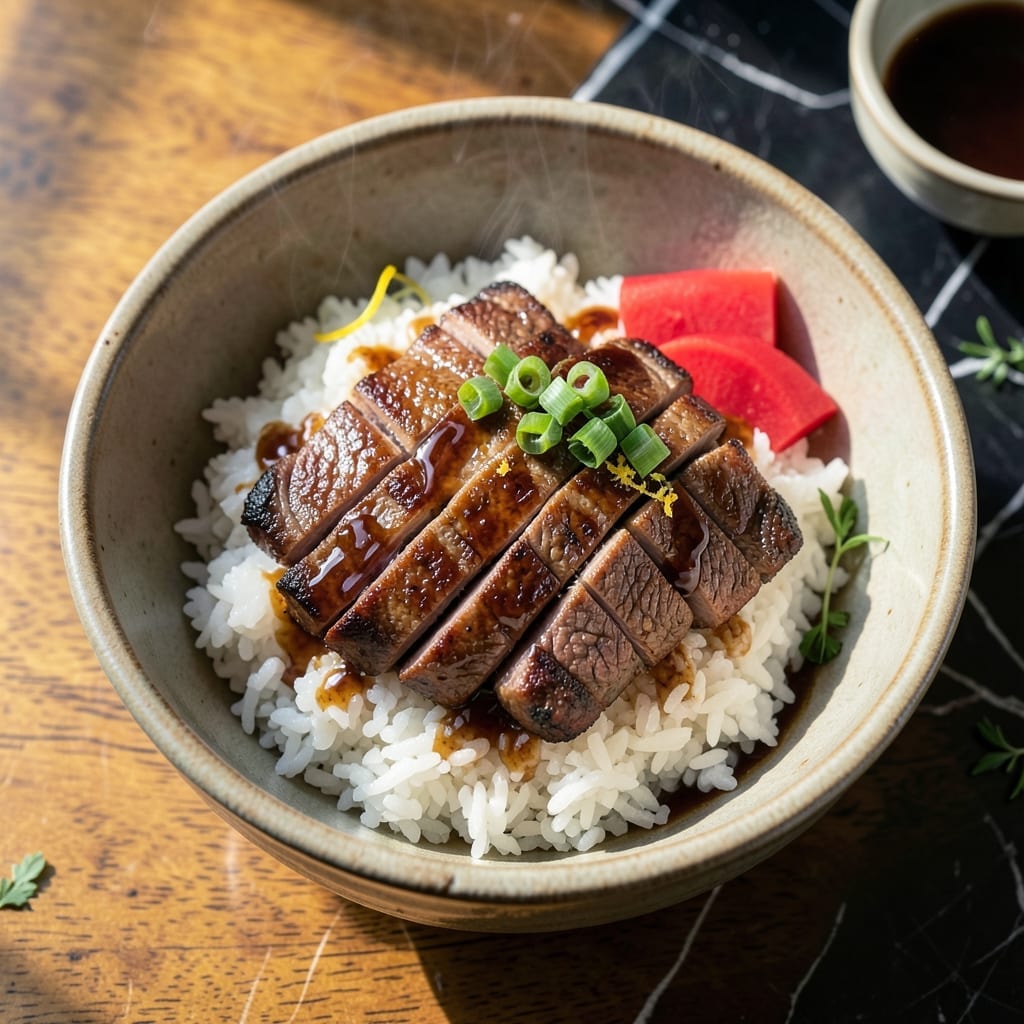
This Japanese steak rice bowl brings restaurant-quality flavors to your home kitchen with a perfectly balanced combination of tender beef and fluffy rice.
The dish starts with thinly sliced beef marinated in a savory-sweet sauce, then quickly seared to maintain juiciness. Each component is prepared with precision to ensure authentic taste and texture without complicated techniques.
Layered over steamed rice, the beef soaks up its own flavorful juices while fresh vegetables add crunch and color. The result is a satisfying meal that comes together faster than takeout.
Serve hot for a dish that delivers on both flavor and presentation every time.
Ingredients for Japanese Steak Rice Bowl
Tender beef, fluffy rice, and vibrant vegetables come together for this authentic dish.
| Ingredient | Amount | Notes |
|---|---|---|
| Ribeye Steak 🥩 | 1 ½ lb | Thinly sliced against grain |
| Jasmine Rice 🍚 | 2 cups | Rinsed until water runs clear |
| Soy Sauce 🫒 | ⅓ cup | Low-sodium preferred for balance |
| Mirin 🍶 | ¼ cup | Sweet rice wine essential |
| Sake 🍶 | 2 tbsp | Dry variety for cooking |
| Brown Sugar 🍚 | 2 tbsp | Packed light or dark |
| Garlic Cloves 🧄 | 4 cloves | Minced for marinade depth |
| Fresh Ginger 🌿 | 1 tbsp | Finely grated for zing |
| Scallions 🧅 | 4 whole | Thinly sliced for garnish |
| Carrots 🥕 | 2 whole | Julienned for color contrast |
| Sesame Oil 🫒 | 1 tbsp | Toasted variety for aroma |
| Neutral Oil 🫒 | 2 tbsp | High smoke point for searing |
| Sesame Seeds 🌰 | 1 tbsp | Toasted for garnish crunch |
| Water 💧 | 2 ½ cups | For rice cooking liquid |
The beef is critical here. Ribeye offers the best marbling for juiciness—Whole Foods or a local butcher can slice it thinly for you (ask for sukiyaki cut). USDA Choice grade works well for home cooking. Avoid pre-cut stew meat; it’s often from tougher cuts. For the rice, jasmine or short-grain provides the right sticky texture to soak up the sauce.
No mirin? Substitute 1 tbsp rice vinegar plus 1 tsp sugar per tbsp mirin. Sake can be replaced with dry white wine in a pinch. For a gluten-free version, use tamari instead of soy sauce. The ginger and garlic must be fresh—no powdered substitutes. Carrots can be swapped for zucchini or bell peppers if preferred.
Store raw beef in the fridge for up to 2 days or freeze for 3 months. Cooked leftovers keep for 4 days refrigerated. Reheat gently to avoid drying the beef. The rice marinade flavors intensify overnight, making this dish even better the next day.
Why You’ll Love This Recipe
- One Pan Dinner: I love that the steak, rice, and sauce all come together in one skillet—minimal cleanup, maximum flavor.
- Umami Bomb: The soy-mirin-sake combo makes the ribeye taste like it’s from a Tokyo steakhouse. Honestly, it’s ridiculous how good it is.
- Meal Prep Hero: I make a big batch on Sunday and pack it for lunch all week—steak stays tender, rice soaks up the sauce beautifully.
- Dollar Stretcher: Ribeye feels fancy, but a little goes a long way here. Between us, it’s cheaper than takeout and twice as satisfying.
Step-by-Step Instructions for Japanese Steak Rice Bowl
Master these techniques to achieve tender beef, perfectly cooked rice, and a balanced sauce every time.
Step 1: Marinate the Ribeye Steak
In a bowl, whisk together the 0.33 cup Soy Sauce, 0.25 cup Mirin, 2 tbsp Sake, 2 tbsp Brown Sugar, minced 4 cloves Garlic Cloves, and grated 1 tbsp Fresh Ginger until the sugar dissolves completely. This creates a sweet-savory foundation that tenderizes the beef.
Add the thinly sliced 1.5 lb Ribeye Steak to the marinade, ensuring each piece is fully coated. Cover and refrigerate for 30 minutes to 1 hour. The meat should absorb the flavors and develop a glossy sheen when ready.
Step 2: Cook the Jasmine Rice
Rinse the 2 cups Jasmine Rice under cold water until the water runs clear, then drain thoroughly. This removes excess starch and prevents gummy rice. Combine the rice with the 2.5 cups Water in a saucepan and bring to a boil.
Once boiling, reduce heat to low, cover, and simmer for 15 minutes. Remove from heat and let it rest, covered, for 10 minutes. The grains should be tender and separate easily with a fork.
Step 3: Sear the Marinated Steak
Heat 1 tbsp Sesame Oil and 2 tbsp Neutral Oil in a large skillet over medium-high heat until shimmering. Remove the ribeye from the marinade (reserve the marinade) and sear in batches for 2-3 minutes per side until deeply browned and cooked to medium-rare.
Transfer the steak to a cutting board and let it rest for 5 minutes before slicing thinly against the grain. This preserves the juices and ensures tenderness.
Step 4: Reduce the Marinade into Sauce
Pour the reserved marinade into the same skillet and bring to a boil. Reduce heat to medium and simmer for 5-7 minutes until the sauce thickens slightly and coats the back of a spoon. Stir frequently to prevent burning.
The sauce should transform from thin and watery to a glossy, syrupy consistency. Taste and adjust seasoning if needed, though the balance of sweet and salty should already be perfect.
Step 5: Assemble the Rice Bowls
Divide the cooked jasmine rice among four bowls. Arrange the sliced ribeye over the rice, then drizzle the reduced sauce generously over the beef. Top with julienned 2 whole Carrots, thinly sliced 4 whole Scallions, and toasted 1 tbsp Sesame Seeds for texture and color.
Serve immediately while the steak is still warm. The rice should be fluffy, the beef tender and juicy, and the sauce should tie everything together with a glossy finish.
Pro Tips For Making Japanese Steak Rice Bowl
- Sear on High: I learned this the hard way—ribeye needs a screaming-hot pan for 2-3 minutes per side to get that crusted edge without overcooking the center.
- Slice Against Grain: After resting the steak 5 minutes, cut it thin against the grain so every bite in your bowl stays tender, not chewy.
- Rinse the Rice: Jasmine rice can get gummy, so rinse it 3-4 times until the water runs clear to remove excess starch.
- Reduce the Sauce: Simmer the soy, mirin, and sake together for 2-3 minutes to thicken it slightly—it’ll cling to the steak and rice instead of pooling at the bottom.
Perfect Pairings for This Recipe
Vegetable Sides
Quick-pickled cucumbers add a refreshing crunch that cuts through the richness. Thinly slice 1 English cucumber and toss with ¼ cup rice vinegar, 1 tsp sugar, and a pinch of salt. Let sit for 15 minutes before serving. 🥗
Wine Pairings
A dry Japanese sake like Gekkeikan Horin enhances the umami flavors beautifully. For wine lovers, try a light Pinot Noir with bright acidity. Both options complement without overpowering the dish’s delicate balance. 🍶
Beer Options
Crisp lagers like Asahi Super Dry or Sapporo cleanse the palate. Their light body and subtle bitterness pair perfectly with the savory-sweet sauce. Avoid heavy stouts or hoppy IPAs that can clash with the flavors.
Finishing Touches
Add a soft-boiled egg on top for extra richness—the runny yolk mixes deliciously with the sauce. Sprinkle with shichimi togarashi (Japanese seven-spice) for a subtle kick. These small additions elevate the dish significantly.
Simple Salad
A basic cabbage slaw works wonders. Shred 2 cups green cabbage and toss with a light dressing of 1 tbsp soy sauce, 1 tsp sesame oil, and ½ tsp honey. It adds texture without competing flavors.
Dessert Pairing
End with matcha ice cream or mochi for a light, complementary finish. The subtle bitterness of matcha contrasts nicely with the meal’s savory notes, while mochi offers a chewy, sweet conclusion. ✨
Nutrition Facts
Frequently Asked Questions
What cut of beef works best for this dish?
Ribeye is ideal for its marbling and tenderness. For a budget option, sirloin or flank steak work well if sliced thinly against the grain.
Can I use a different type of rice?
Jasmine is traditional, but short-grain or sushi rice also work. Avoid long-grain varieties like basmati, as they don’t absorb the sauce as well.
How do I prevent the beef from becoming tough?
Slice against the grain and sear for only 2-3 minutes per side. Overcooking or skipping the marinade can make the beef chewy.
Can I make this ahead of time?
Marinate the beef overnight for deeper flavor, but cook just before serving. Store leftovers in an airtight container for up to 4 days.

- Mujadara Rice and Lentils Recipe: Earthy Spiced Lentils With Caramelized Onions - November 1, 2026
- Naija Fried Rice Recipe: Street-Style Spice With Veggie Crunch - November 1, 2026
- Mushy Rice Recipe: Fluffy Grains Transformed in Minutes - November 1, 2026