
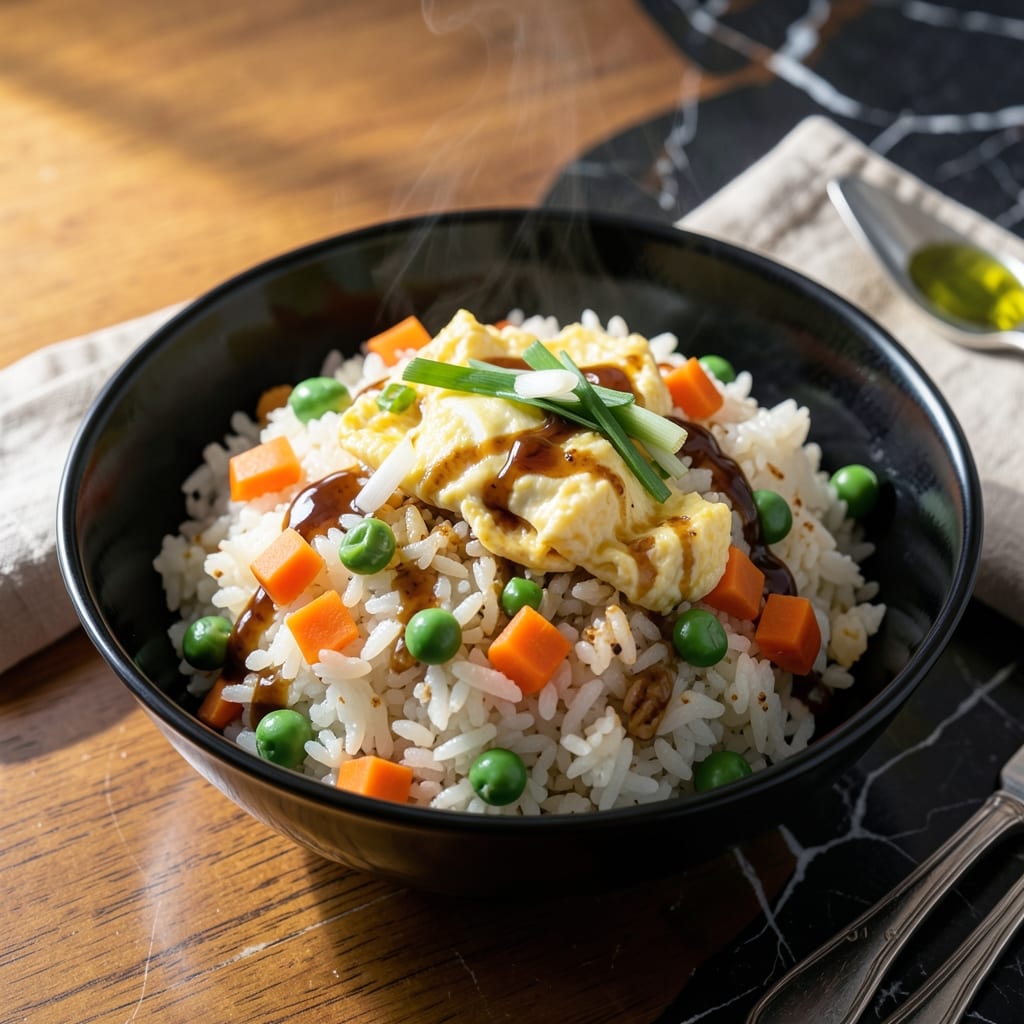
This Japanese-style fried rice delivers wok-charred flavor with delicate egg ribbons woven throughout. The technique creates layers of umami using simple pantry staples and fresh ingredients.
High heat and constant stirring produce those signature crispy bits while keeping the rice tender. The scrambled eggs add richness and visual appeal, making it a complete, satisfying meal.
Ingredients for Japanese Style Fried Rice
Day-old rice, fresh aromatics, and pantry staples create this wok-charred Japanese classic with delicate egg ribbons.
| Ingredient | Amount | Notes |
|---|---|---|
| Cooked White Rice 🍚 | 4 cups | Day-old, chilled preferred |
| Large Eggs 🥚 | 3 whole | Beaten for egg ribbons |
| Green Onions 🧅 | 4 whole | Thinly sliced, green parts reserved |
| Carrot 🥕 | 1 whole | Small dice, finely chopped |
| Frozen Peas 🌱 | ½ cup | Thawed, patted dry |
| Garlic Cloves 🧄 | 3 cloves | Minced finely |
| Fresh Ginger Root 🌿 | 1 tbsp | Peeled, grated |
| Soy Sauce 🥫 | 3 tbsp | Low-sodium preferred |
| Sesame Oil 🫒 | 1 tbsp | Toasted, for finishing |
| Vegetable Oil 🫒 | 3 tbsp | High smoke point for wok |
| White Pepper 🧂 | ½ tsp | Freshly ground preferred |
| Salt 🧂 | ½ tsp | Adjust to taste |
| Nori Sheets 🌊 | 1 sheet | Cut into thin strips |
| Mirin 🍶 | 1 tbsp | Sweet cooking rice wine |
| Dashi Powder 🍜 | 1 tsp | Instant, dissolved in 1 tbsp water |
The rice is critical here. Day-old, chilled jasmine or short-grain holds up best to high heat without turning mushy—freshly cooked rice will steam instead of fry. Koshihikari or Nishiki brands are excellent choices for authentic texture. For the vegetables, organic carrots and peas from Whole Foods offer superior sweetness, but standard grocery store varieties work perfectly fine for a weeknight meal.
No mirin? 1 tbsp dry sherry plus 1/2 tsp sugar mimics the flavor profile. Out of dashi? Chicken or vegetable broth works in a pinch, though the umami depth won’t be quite the same. For a vegetarian version, skip the dashi entirely. The green onions can be substituted with chives at a 1:1 ratio, and if you’re missing nori, a sprinkle of furikake seasoning adds similar salty-savory notes.
This keeps beautifully in the fridge for up to 4 days, though the egg ribbons are best fresh. Reheat in a skillet with a splash of water to restore moisture. For longer storage, freeze in airtight containers for up to 3 months—thaw in the fridge overnight before reheating.
Why You’ll Love This Recipe
- I’ll be real: I use whatever veggies are lingering. Frozen peas and a lone carrot still make it spot-on.
- 20-Minute Meal: I can get this from fridge to table faster than takeout arrives. The eggs and peas cook while the rice crisps—no multitasking stress.
- Umami Bomb: That hit of soy sauce with sweet carrots and scallions? Ridiculously good. My kids fight over the crispy rice bits at the bottom.
- Weeknight Hero: Honestly, it’s my Tuesday night lifesaver—great hot or cold in lunchboxes the next day.
Step-by-Step Instructions for Japanese Style Fried Rice
Master the wok technique for restaurant-quality results with authentic umami depth and texture.
Step 1: Prepare the Aromatics and Protein Base
Heat 2 tbsp Vegetable Oil in a wok over high heat until shimmering. Add the minced Garlic Cloves and grated Fresh Ginger Root, stir-frying for 15-20 seconds until fragrant but not browned. Immediately add the small diced Carrot and cook for 1-2 minutes until slightly softened.
Push the aromatics to one side of the wok and pour in the beaten Large Eggs. Scramble quickly with a spatula, creating thin ribbons. Cook until just set but still moist, about 30-45 seconds, then remove the egg ribbons and set aside. This ensures they remain tender when combined later.
Step 2: Char the Vegetables and Rice
Add the remaining 1 tbsp Vegetable Oil to the wok. Toss in the thinly sliced Green Onions (white parts only) and thawed Frozen Peas, stir-frying for 1 minute until the peas are bright green and the onions begin to soften. The wok should be hot enough to create a slight char on some pieces.
Add the 4 cups Cooked White Rice, breaking up any clumps with your spatula. Press the rice firmly against the wok surface for 20-30 seconds to develop a light crispness. Stir in the 3 tbsp Soy Sauce and 1 tbsp Mirin, coating the rice evenly. The rice should take on a deep golden hue.
Step 3: Integrate Umami Layers
Return the egg ribbons to the wok along with the dissolved Dashi Powder. Stir-fry for 1-2 minutes until everything is heated through and the rice has absorbed the umami-rich liquids. The dashi adds a subtle oceanic depth that defines authentic Japanese flavor.
Sprinkle with 0.5 tsp Salt and 0.5 tsp White Pepper, adjusting to taste. The white pepper provides a gentle heat without overpowering the dish. Toss in the reserved green onion tops and thinly stripped Nori Sheets, stirring just until the nori softens slightly, about 30 seconds.
Step 4: Finish and Serve
Drizzle with 1 tbsp Sesame Oil and give the fried rice a final toss to distribute the nutty aroma. The sesame oil should glisten on the surface, adding a final layer of fragrance. Remove from heat immediately to prevent overcooking.
Serve hot, garnished with additional nori strips if desired. Each bite should deliver a balance of textures: tender egg ribbons, slightly crisp rice, and the chewy nori. The flavor profile combines the sweetness of mirin, the saltiness of soy, and the deep umami of dashi for a truly authentic experience.
Pro Tips For Making Japanese Style Fried Rice
- Chill the Rice: Use day-old, cold rice straight from the fridge—freshly cooked rice turns mushy. I learned this the hard way after making gloppy fried rice more times than I’d like to admit.
- Dice Carrots Fine: Cut the carrots into tiny, even cubes (about ¼-inch) so they cook through fast in the pan. Sounds tedious, but it actually changes the outcome.
- Push Rice Aside: When adding the eggs, scramble them in a cleared section of the pan first. After burning three batches, I finally figured out this keeps them from disappearing into the rice.
- Frozen Peas Last: Toss the frozen peas in during the final minute of cooking—they’ll heat through without turning to mush. Skip thawing them first, or they’ll bleed color into your rice.
Make-Ahead Tips for japanese style fried rice
Prep Ahead Strategy
Cook your 4 cups rice a day ahead—I use Nishiki short-grain for authentic texture. Spread it on a baking sheet, refrigerate uncovered for 1 hour, then transfer to an airtight container. This prevents clumping and ensures perfect fried rice consistency. 💡
Veggie Prep
Chop all vegetables the night before: 1 small diced carrot, 4 sliced green onions, and 3 minced garlic cloves. Store in separate containers to maintain freshness. The ½ cup peas can stay in the freezer until cooking day.
Sauce Mix
Combine your 3 tbsp soy sauce, 1 tbsp mirin, and 1 tsp dashi powder dissolved in water in a small jar. Shake well and refrigerate. This ensures even flavor distribution when you’re ready to cook.
Egg Ribbon Trick
Beat your 3 large eggs the morning of cooking and store in the fridge. For extra-fluffy ribbons, add 1 tsp water to the eggs before beating. This small step makes a noticeable difference in texture.
Storage Tips
Store prepped ingredients in the fridge for up to 2 days before cooking. Keep the rice separate from vegetables to prevent sogginess. When ready to cook, let the rice sit at room temperature for 15 minutes while you prep the wok. ⏰
Freezer Option
For longer storage, freeze the cooked rice in 2-cup portions for up to 3 months. Thaw overnight in the fridge before using. The vegetables and sauce mix can be prepped and frozen separately for up to 1 month.
Nutrition Facts
Frequently Asked Questions
Can I use fresh rice instead of day-old?
Day-old, chilled rice works best because it’s drier. Fresh rice contains too much moisture and will steam instead of fry, resulting in mushy texture.
What can I substitute for mirin?
Use 1 tbsp dry sherry plus ½ tsp sugar or 1 tbsp rice vinegar plus ½ tsp sugar. Both mimic mirin’s sweet-tangy flavor profile in the dish.
How do I prevent the eggs from overcooking?
Cook the eggs separately first, then set aside. Add them back at the end just to heat through. This keeps the ribbons tender and distinct.
Can I make this with other proteins?
Add cooked shrimp, chicken, or tofu with the rice. Use ½ lb protein per 4 cups rice for balanced texture and flavor.

- Mujadara Rice and Lentils Recipe: Earthy Spiced Lentils With Caramelized Onions - November 1, 2026
- Naija Fried Rice Recipe: Street-Style Spice With Veggie Crunch - November 1, 2026
- Mushy Rice Recipe: Fluffy Grains Transformed in Minutes - November 1, 2026