
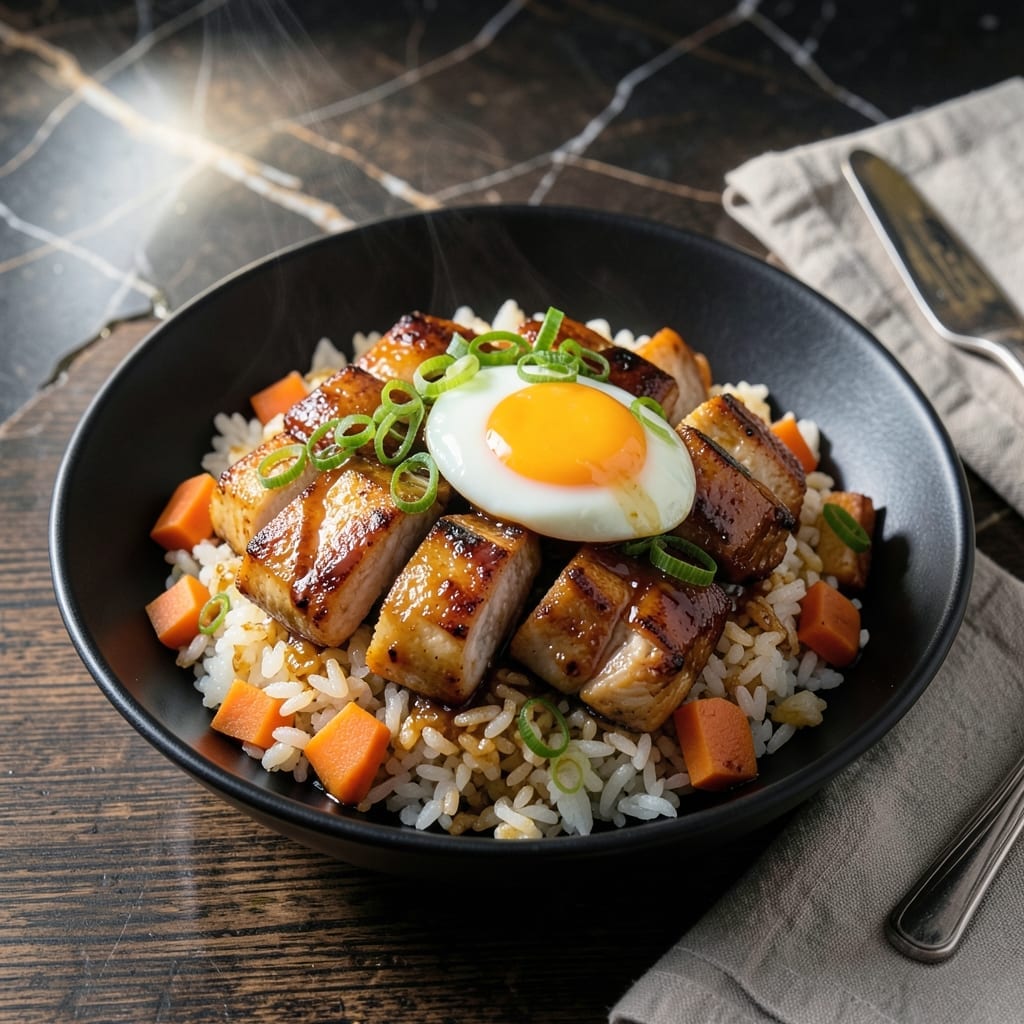
This Japanese teriyaki fried rice delivers savory umami in every bite with perfectly glazed, caramelized edges. The dish balances traditional techniques with bold, sweet-salty teriyaki flavor for a meal that’s both comforting and authentic.
Using day-old rice and high heat ensures each grain stays separate and slightly crisp, while the teriyaki sauce coats every component with its signature shine. It’s a foolproof way to elevate leftovers into a restaurant-worthy dish.
Ingredients for Japanese Teriyaki Fried Rice
Pantry staples and fresh aromatics combine for this umami-packed dish with caramelized edges.
| Ingredient | Amount | Notes |
|---|---|---|
| Day-Old Cooked White Rice 🍚 | 4 cups | Cold, preferably overnight |
| Boneless Chicken Thighs 🍗 | 1 lb | Diced into small pieces |
| Large Eggs 🥚 | 2 whole | Lightly beaten |
| Carrots 🥕 | 1 whole | Finely diced |
| Green Onions 🧅 | 3 whole | Thinly sliced, whites and greens separated |
| Garlic Cloves 🧄 | 3 cloves | Minced finely |
| Fresh Ginger 🌿 | 1 tbsp | Peeled and grated |
| Soy Sauce 🫒 | 3 tbsp | Low-sodium preferred |
| Teriyaki Sauce 🍯 | ½ cup | Store-bought or homemade |
| Mirin 🍶 | 2 tbsp | Sweet rice wine |
| Sesame Oil 🫒 | 1 tbsp | Toasted for aroma |
| Neutral Cooking Oil 🫒 | 2 tbsp | Such as vegetable or canola |
| Sesame Seeds 🌰 | 1 tsp | Toasted for garnish |
| Nori Sheets 🍱 | 1 sheet | Cut into thin strips |
| Salt 🧂 | ½ tsp | Adjust to taste |
| Black Pepper 🌶️ | ¼ tsp | Freshly ground |
The rice quality is non-negotiable. Day-old jasmine or short-grain works best—freshly cooked rice turns mushy. For the chicken, thighs over breasts for juicier results. Most Asian markets carry mirin and high-quality soy sauce, but well-stocked Whole Foods locations have them too. The ginger and garlic should be fresh; pre-minced versions lack the bright, pungent kick needed for authentic flavor.
No teriyaki sauce on hand? Use equal parts soy sauce and honey with a pinch of garlic powder. Vegetable or tofu can replace chicken for a meat-free version. Mirin can be swapped with 1 tbsp sugar + 1 tbsp rice vinegar. For gluten-free, ensure soy sauce and teriyaki are labeled as such. The carrots are flexible—bell peppers or peas add color and crunch.
Fried rice is best eaten fresh, but leftovers keep well. Store in an airtight container for up to 3 days in the fridge. Reheat in a skillet to restore texture—microwaving makes it soggy. Garnishes like sesame seeds and nori strips should be added fresh for optimal crunch and flavor.
Why You’ll Love This Recipe
- One Pan Wonder: I love that everything cooks together—rice, chicken, and veggies—with barely any cleanup.
- Sweet-Savory Magic: The teriyaki glaze caramelizes on the chicken thighs, and the green onions add that fresh pop.
- My Go-To Weeknight: Honestly, it’s my 25-minute dinner lifesaver on busy nights.
- Stretches Leftovers: Day-old rice soaks up the sauce beautifully, and it tastes even better the next day.
Step-by-Step Instructions for Japanese Teriyaki Fried Rice
Master the wok technique for perfectly glazed grains with tender chicken and vibrant vegetables.
Step 1: Prepare and Cook the Chicken
Heat 2 tablespoons neutral cooking oil in a wok or large skillet over medium-high heat until shimmering. Add the 1 lb boneless chicken thighs diced into small pieces, seasoned with ½ teaspoon salt and ¼ teaspoon black pepper.
Cook for 5-6 minutes until the chicken is golden brown and cooked through, stirring occasionally to ensure even browning. The pieces should be tender with no pink remaining inside. Remove the chicken to a plate and set aside.
Step 2: Sauté Aromatics and Vegetables
In the same wok, add the diced carrots, minced 3 cloves garlic cloves, and grated 1 tablespoon fresh ginger. Stir-fry for 2 minutes until the carrots begin to soften and the aromatics release their fragrance.
Add the thinly sliced whites of the 3 whole green onions and cook for an additional 1 minute until they turn translucent. Push all ingredients to one side of the wok to create space for the next step.
Step 3: Scramble Eggs and Combine with Rice
Pour the 2 whole large eggs (lightly beaten) into the cleared space in the wok. Scramble quickly with a spatula, breaking into small curds that cook to a soft, slightly moist texture in about 1 minute.
Add the 4 cups day-old cooked white rice, breaking up any clumps with your spatula. Stir-fry for 2-3 minutes until the rice is heated through and begins to crisp slightly at the edges.
Step 4: Finish with Sauces and Garnishes
Drizzle the 3 tablespoons soy sauce, ½ cup teriyaki sauce, and 2 tablespoons mirin evenly over the rice mixture. Add the 1 tablespoon sesame oil and the reserved chicken. Stir-fry for another 2-3 minutes until everything is coated and the sauce has reduced slightly to a glossy sheen.
Remove from heat and stir in the green parts of the green onions, 1 sheet nori sheets cut into thin strips, and 1 teaspoon sesame seeds. Taste and adjust seasoning if needed before serving immediately.
Pro Tips For Making Japanese Teriyaki Fried Rice
- Chill Your Rice: Use day-old rice straight from the fridge—it’s drier and fries up fluffier. I learned this the hard way after making mushy rice with fresh batches.
- Velvet the Chicken: Toss the chicken thighs with 1 teaspoon of cornstarch before cooking. It keeps them tender and helps the teriyaki sauce cling better.
- High Heat First: Crank the wok or skillet to smoking hot before adding oil and rice. After burning three batches, I finally figured out this is the only way to get that classic sear.
- Scramble Eggs Separately: Cook the eggs first, remove them, then add back at the end. Sounds weird, but it works—prevents them from turning rubbery in the hot pan.
Pro Cooking Tips for Perfect Results
Wok Heat Control
Use a carbon steel wok for even heat distribution. Preheat on high heat for 2 minutes until smoking slightly. I swear by my Made In wok for this. The key is maintaining that searing heat throughout cooking. 🔥
Rice Prep Trick
Spread day-old rice on a baking sheet and refrigerate uncovered for 30 minutes before cooking. This dries the grains further, ensuring maximum crispiness. Never use fresh rice—it’ll turn to mush in the wok.
Layered Flavors
Bloom the garlic and ginger in oil before adding other ingredients. This releases their essential oils for deeper aroma. I always grate my ginger fresh using a Microplane for the finest texture.
Sauce Timing
Add the teriyaki sauce last to prevent burning. The sugars caramelize quickly, so keep the heat at medium-high and stir constantly for 2-3 minutes until glossy.
Egg Technique
Push ingredients to one side of the wok to create a well for scrambling eggs. Use a fish spatula for easy flipping. Cook just until set—about 1 minute—to keep them tender.
Garnish Freshness
Toast sesame seeds in a dry pan for 1 minute until golden before garnishing. Cut nori strips just before serving to preserve their crisp texture. Fresh garnishes make all the difference. ✨
Nutrition Facts
Frequently Asked Questions
Can I use fresh rice instead of day-old?
No, fresh rice contains too much moisture and will turn mushy. Day-old rice is drier, allowing it to fry up fluffy and separate. Spread leftover rice on a tray and refrigerate uncovered for 30 minutes if in a hurry.
What protein can I swap for chicken?
Try shrimp, tofu, or pork for equally great results. For shrimp, cook just until pink (2-3 minutes). Press and drain tofu well first to avoid sogginess. Pork should be diced small for quick cooking.
Why did my rice turn out sticky?
This usually means the heat wasn’t high enough or the rice wasn’t dry enough. Use medium-high heat and keep stirring. Break up clumps before adding to the wok. Overcrowding can also cause steam instead of frying.

- Jimmy Dean Sausage and Rice Recipe: Hearty One-Pot Savory Delight - October 19, 2026
- Indian Jasmine Rice Recipe: Fragrant Basmati-Free Elegance - October 19, 2026
- KFC Rizo Rice Recipe: Copycat Side Dish With Savory Spice Blend - October 19, 2026