
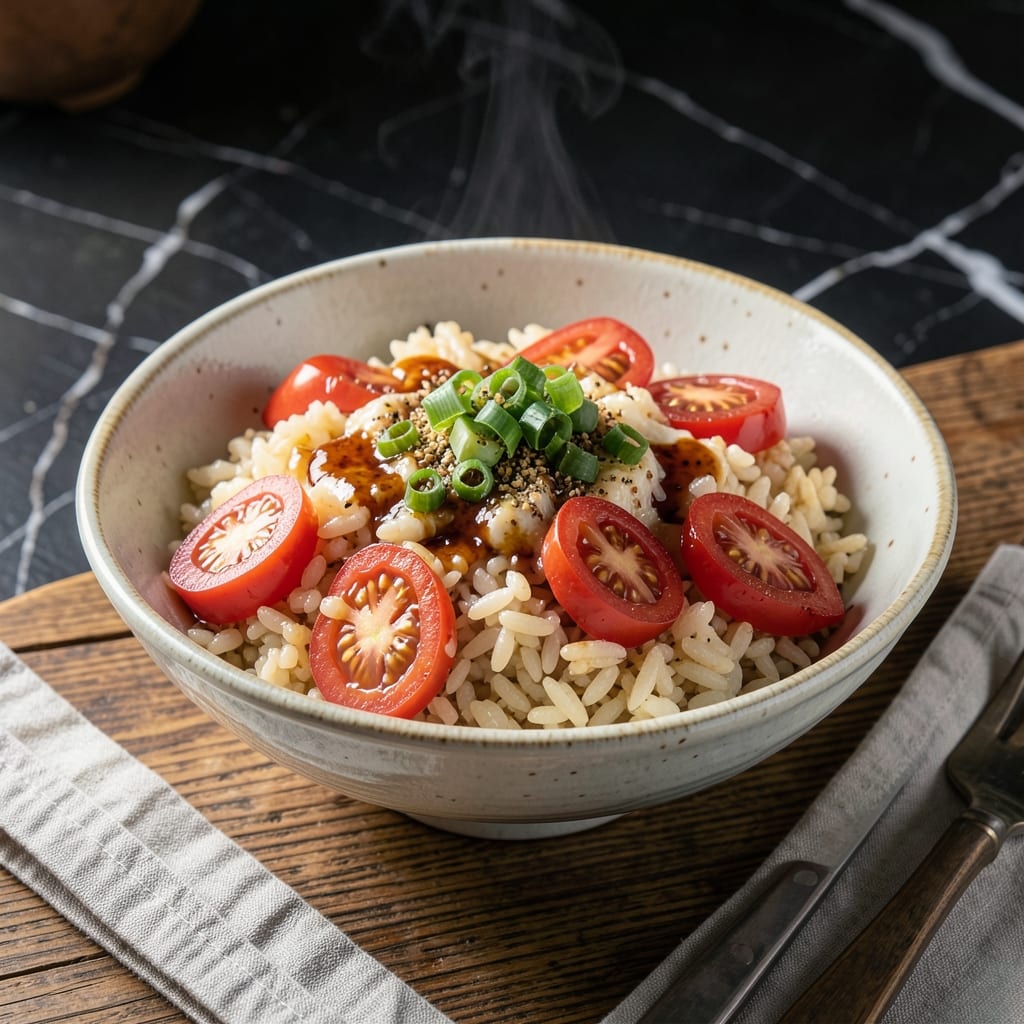
This Japanese-inspired rice dish transforms simple ingredients into a flavorful one-pot meal with minimal effort. The rice cooker handles the work while you enjoy the process.
By combining ripe tomatoes with traditional seasonings, this recipe creates a perfectly balanced dish that’s both comforting and authentic. The tomatoes break down naturally, infusing every grain with their natural sweetness.
The beauty of this method lies in its simplicity—just add everything to the cooker and let it work its magic. No stirring, no monitoring, just hands-off cooking that delivers consistent results.
What emerges is a vibrant, savory rice dish that pairs beautifully with grilled proteins or stands alone as a satisfying vegetarian meal. The umami depth will surprise you.
Ingredients for Japanese Tomato Rice Cooker
Simple pantry items and fresh produce create this vibrant one-pot dish with authentic Japanese flavors.
| Ingredient | Amount | Notes |
|---|---|---|
| Japanese Short-Grain Rice 🍚 | 2 cups | Rinsed until water runs clear |
| Ripe Tomatoes 🍅 | 2 whole | Medium-sized, roughly chopped |
| Dashi Stock 🥣 | 1 ½ cups | Vegetarian dashi for strict diet |
| Soy Sauce 🫒 | 2 tbsp | Low-sodium preferred |
| Mirin 🍶 | 1 ½ tbsp | Sweet rice wine for balance |
| Sake 🍶 | 1 tbsp | Dry cooking sake |
| Granulated Sugar 🍚 | 1 tsp | Balances acidity of tomatoes |
| Vegetable Oil 🫒 | 1 tbsp | Neutral flavor preferred |
| Garlic Cloves 🧄 | 2 cloves | Minced finely |
| Fresh Ginger 🌿 | 1 tsp | Grated for zing |
| Green Onions 🧅 | 3 whole | Thinly sliced for garnish |
| Sesame Seeds 🌰 | 1 tsp | Toasted for aroma |
| Nori Sheet 🍱 | 1 sheet | Torn into strips for garnish |
| Kosher Salt 🧂 | ½ tsp | Adjust to taste |
The rice is non-negotiable—Japanese short-grain (like Koshihikari or Nishiki) gives you that sticky, slightly sweet texture essential for this dish. Asian markets have the best selection, but most Whole Foods locations carry it too. Dashi is the umami backbone; look for vegetarian versions (like kombu-based) to keep it meat-free without sacrificing depth.
No mirin? 1 tbsp sugar + 1 tbsp water per tbsp mirin works in a pinch. Sake can be swapped with dry white wine, though the flavor profile shifts slightly. Fresh ginger is key (that bottled stuff lacks punch), but ground ginger at half the amount works if desperate. Tomatoes must be ripe—underripe ones won’t break down properly and taste mealy.
Store cooked rice in an airtight container for up to 3 days. The dashi base keeps 1 week refrigerated, or freeze for 3 months. Garnishes like green onion and nori should be added fresh—don’t mix them in ahead of time or they’ll get soggy.
Why You’ll Love This Recipe
- Set and Forget: I toss everything in the rice cooker and walk away—no stirring, no watching, just perfect tomato-infused rice every time.
- Umami Bomb: The dashi and soy sauce blend with sweet tomatoes creates this deep, savory flavor that hits all the right notes.
- Lunchbox Hero: I pack this for work and it tastes even better cold the next day. My coworkers always ask for the recipe.
- Pantry Friendly: Between us, I use canned tomatoes sometimes and it still turns out ridiculously good. Saves me a grocery run.
Step-by-Step Instructions for Japanese Tomato Rice
This method delivers perfectly balanced umami with minimal active cooking time.
Step 1: Prepare the Rice and Tomato Base
Rinse the 2 cups Japanese short-grain rice in a fine-mesh strainer under cold water until the water runs completely clear. This removes excess starch and prevents the rice from becoming gummy. Drain thoroughly.
Add the drained rice to your rice cooker pot. Roughly chop the 2 whole ripe tomatoes and add them directly to the pot. The juices will infuse the rice with natural sweetness and acidity.
Step 2: Combine the Umami Liquid Components
Pour the 1.5 cups dashi stock into the rice cooker. This forms the cooking liquid base that will absorb into the grains. Add the 2 tbsp soy sauce, 1.5 tbsp mirin, 1 tbsp sake, and 1 tsp granulated sugar.
The soy sauce provides saltiness and depth, while the mirin and sake contribute balanced sweetness and complexity. The sugar tempers the tomatoes’ acidity, creating harmony in every bite.
Stir gently to distribute the tomatoes and liquids evenly. The rice grains should be fully submerged with about ½ inch of liquid above them.
Step 3: Incorporate Aromatics and Begin Cooking
Heat the 1 tbsp vegetable oil in a small pan over medium heat. Add the 2 cloves minced garlic and 1 tsp grated fresh ginger. Sauté for 30-45 seconds until fragrant but not browned.
Immediately add this aromatic mixture to the rice cooker pot and stir to combine. This step is crucial—raw garlic and ginger would overpower the dish, while briefly cooking them mellows their intensity and releases their essential oils.
Add the 0.5 tsp kosher salt and stir once more. Close the rice cooker lid and start the cooking cycle using the standard white rice setting.
Step 4: Finish and Garnish for Service
When the rice cooker switches to “keep warm,” let the rice steam undisturbed for an additional 10 minutes. This ensures the grains absorb all the liquid and the flavors fully meld. The tomatoes should have broken down completely, creating a light, saucy texture.
Gently fluff the rice with a rice paddle, breaking up any remaining tomato pieces. Thinly slice the 3 whole green onions, toast the 1 tsp sesame seeds in a dry pan for 30 seconds until fragrant, and tear the 1 sheet nori into thin strips. These garnishes add freshness, crunch, and a touch of oceanic umami to each serving.
Transfer to serving bowls and top with the green onions, sesame seeds, and nori. The rice should be tender with distinct grains, and the tomato pieces should have melted into the dish, creating a vibrant, fragrant meal.
Pro Tips For Making Japanese Tomato Rice Cooker
- Soak the Rice: Give the short-grain rice a 20-30 minute soak before cooking—it plumps up the grains and guarantees that fluffy, sticky texture you want. I learned this the hard way after too many batches turned out dry.
- Peel the Tomatoes: Sounds tedious, but peeling the tomatoes first removes any bitterness and lets their sweetness shine. A quick blanch in boiling water for 10 seconds makes the skins slide right off.
- Don’t Over-Stir: Resist the urge to stir the rice once the cooker starts—it breaks the grains and turns your rice into a mushy mess. The rice cooker does the work, so let it.
- Add Dashi Last: Mix the dashi stock into the rice cooker right before starting, not earlier. Adding it too soon dilutes the tomato flavor and makes the rice taste flat.
Regional Styles of These Flavors
Hokkaido Style
In Northern Japan, they often add 1 tbsp miso paste to the cooking liquid for extra umami depth. I discovered this version in Sapporo—it creates a richer, more complex flavor profile that’s perfect for cold weather. The miso blends beautifully with the tomato’s natural sweetness. 🌟
Okinawa Variation
This tropical version incorporates ½ cup chopped bitter melon for a unique twist. The bitterness balances the tomatoes’ sweetness, creating a refreshing contrast. I first tried this at a small family restaurant in Naha—it’s surprisingly addictive.
Kansai Approach
The Osaka region prefers a slightly sweeter profile, so they increase the mirin to 2 tbsp and add 1 tsp honey. This version pairs wonderfully with grilled fish. I love how the extra sweetness makes the dish more kid-friendly.
Tokyo Street Food
In the capital, you’ll often find this dish served with a soft-boiled egg on top. The runny yolk mixes into the rice, creating a creamy texture. I always add a sprinkle of shichimi togarashi for a little heat.
Kyoto Temple Style
Monks in Kyoto prepare a vegetarian version using shitake mushroom dashi instead of traditional dashi. They also add ½ cup diced carrots for color and texture. This version feels particularly wholesome and grounding. 💛
Nutrition Facts
Frequently Asked Questions
Can I use canned tomatoes instead of fresh?
Yes, use 2 cups canned diced tomatoes with their juice. Drain slightly for a thicker texture, but don’t remove all liquid or the rice may dry out. Fresh tomatoes offer brighter flavor though.
Why is rinsing the rice important?
Rinsing removes excess starch, preventing gummy rice and ensuring each grain stays separate. Stop when the water runs clear—usually after 3-4 rinses. This step guarantees perfect texture.
How do I adjust for a smaller rice cooker?
Halve all ingredients for a 3-cup capacity cooker. Maintain the same ratios for liquid and seasonings. Avoid overfilling—leave 1 inch of space at the top.
Can I skip the dashi stock?
Use 1.5 cups water + 1 tsp dashi powder or substitute with vegetable broth. The umami depth will be milder, but the dish remains tasty.

- Mujadara Rice and Lentils Recipe: Earthy Spiced Lentils With Caramelized Onions - November 1, 2026
- Naija Fried Rice Recipe: Street-Style Spice With Veggie Crunch - November 1, 2026
- Mushy Rice Recipe: Fluffy Grains Transformed in Minutes - November 1, 2026