
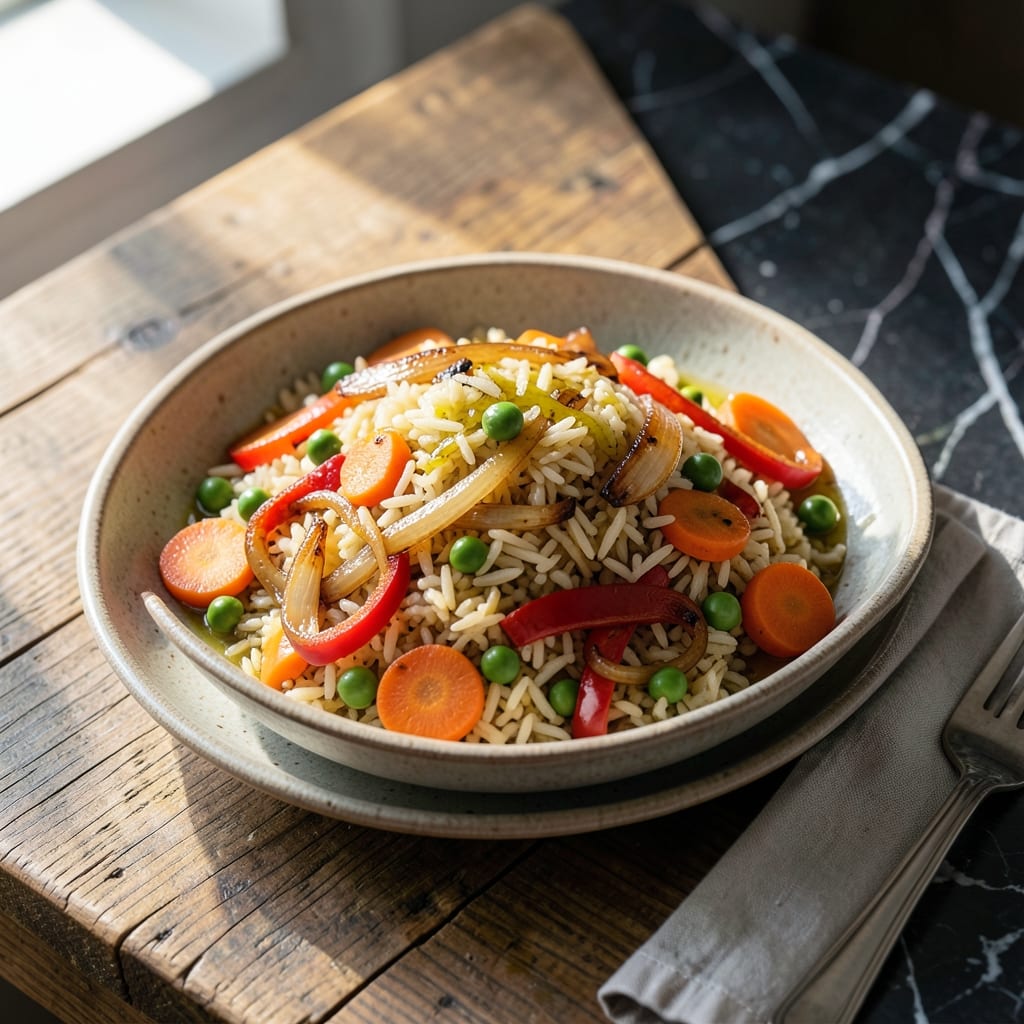
There’s something deeply satisfying about a one-pot dish that combines tender jasmine rice with crisp, vibrant vegetables. This method transforms simple ingredients into a fragrant, flavorful side with minimal effort.
The beauty lies in the technique: everything cooks together, allowing the rice to absorb the vegetables’ natural sweetness while maintaining its light, fluffy texture. A few aromatic spices elevate the dish without overpowering it.
You’ll end up with perfectly cooked grains, bright vegetables, and a subtle fragrance that complements any main course. The entire process requires just one pot and about 30 minutes of mostly hands-off time.
Ideal for busy weeknights or as a base for heartier meals. This approach delivers consistent, restaurant-quality results every time.
Ingredients for Jasmine Rice and Veggies
One pot, a handful of fresh ingredients, and a fragrant dish comes together effortlessly.
| Ingredient | Amount | Notes |
|---|---|---|
| Jasmine Rice 🍚 | 1 ½ cups | Rinsed until water runs clear |
| Vegetable Broth 🥣 | 2 ½ cups | Low-sodium preferred for control |
| Carrots 🥕 | 2 whole | Peeled and diced into small cubes |
| Red Bell Pepper 🌶️ | 1 whole | Seeds removed, finely diced |
| Frozen Green Peas 🌱 | 1 cup | No need to thaw before adding |
| Yellow Onion 🧅 | 1 whole | Finely diced for even cooking |
| Garlic Cloves 🧄 | 3 cloves | Minced for maximum flavor release |
| Extra-Virgin Olive Oil 🫒 | 2 tbsp | Divided for sautéing and finishing |
| Ground Turmeric 🌿 | ½ tsp | For color and subtle earthiness |
| Ground Cumin 🌿 | ½ tsp | Toasted briefly to enhance aroma |
| Sea Salt 🧂 | 1 tsp | Adjust to taste at the end |
| Freshly Ground Black Pepper 🌶️ | ¼ tsp | Adds a subtle heat finish |
| Fresh Cilantro 🌿 | ¼ cup | Chopped, for garnish and brightness |
| Lemon Juice 🍋 | 1 tbsp | Freshly squeezed for acidity |
The jasmine rice is non-negotiable here—its floral aroma defines the dish. Look for Thai jasmine rice at Asian markets or the international aisle (brands like Elephant or Three Ladies are reliable). Rinse it well to remove excess starch, which keeps the grains separate. For the broth, vegetable stock with low sodium lets you control the seasoning precisely. The veggies should be fresh and firm—avoid limp peppers or sprouting onions.
No jasmine rice? Basmati works in a pinch though the flavor is different. Swap bell peppers for zucchini or broccoli (cut small so they cook through). Out of fresh cilantro? Fresh parsley or mint at half the amount can substitute. For extra richness, add a splash of coconut milk at the end. The turmeric and cumin can be replaced with curry powder if that’s what’s in your pantry.
Leftovers keep well for 4-5 days in the fridge, though the rice may firm up a bit. Reheat with a splash of water or broth to restore moisture. This dish doesn’t freeze beautifully—the veggies can get mushy. For best results, cook the rice fresh and add the garnishes just before serving.
Why You’ll Love This Recipe
- I’ll be real: frozen peas and pantry staples make this dish as kind to my wallet as it is to my taste buds.
- One Pot Wonder: I toss the rice, broth, and veggies in a single pot and let it work its magic—no babysitting required.
- Savory & Fragrant: The jasmine rice soaks up the vegetable broth while the carrots and bell peppers add a subtle sweetness that’s just right.
- Meal Prep Hero: Between us, this keeps beautifully for lunch the next day, and the flavors actually get better overnight.
Step-by-Step Instructions for Jasmine Rice and Veggies
This one-pot method delivers perfectly cooked rice and vegetables with minimal cleanup.
Step 1: Sauté Aromatics to Build Flavor Foundation
Heat 1 tablespoon of the extra-virgin olive oil in a large pot with a tight-fitting lid over medium heat. Add the yellow onion and cook for 3-4 minutes until it begins to soften and turn translucent at the edges.
Add the minced garlic cloves, ground turmeric, and ground cumin. Stir constantly for 30-45 seconds until the spices become fragrant and the garlic starts to turn light golden brown. Be careful not to let the garlic burn, as this will impart a bitter flavor to the dish.
Step 2: Toast Rice and Incorporate Vegetables
Stir in the 1.5 cups jasmine rice and cook for 1-2 minutes, stirring frequently, until the grains are evenly coated with oil and begin to look slightly transparent. This toasting step enhances the nutty flavor of the rice.
Add the diced carrots and red bell pepper, stirring to combine. Cook for an additional 2 minutes to allow the vegetables to begin softening and absorb the spices. The carrots should start to brighten in color, indicating they’re beginning to cook.
Step 3: Simmer with Broth and Peas
Pour in the 2.5 cups vegetable broth and add the 1 cup frozen green peas. Stir well to distribute all ingredients evenly. Bring the mixture to a boil over medium-high heat.
Once boiling, add 1 tsp sea salt and 0.25 tsp freshly ground black pepper. Reduce heat to low, cover the pot with the lid, and let it simmer undisturbed for 15 minutes. The liquid should be gently bubbling, and steam should escape from under the lid.
Step 4: Rest and Finish with Fresh Elements
After 15 minutes, remove the pot from heat but keep the lid on. Let it rest for 10 minutes—this allows the rice to steam and absorb any remaining liquid. The rice should be tender and the vegetables fully cooked through.
Remove the lid and fluff the rice gently with a fork. Drizzle with the remaining 1 tablespoon extra-virgin olive oil, then add the 1 tbsp lemon juice and 0.25 cup fresh cilantro. Stir to combine, tasting and adjusting seasoning if needed before serving.
Pro Tips For Making Jasmine Rice And Veggies
- Rinse the Rice: Soak jasmine rice in cold water for 5 minutes, then rinse until the water runs clear—this removes excess starch so your grains stay fluffy, not gummy.
- Sauté Veggies First: Cook carrots and red bell pepper in the pot for 3-4 minutes before adding liquid; their natural sweetness deepens when lightly browned.
- Use Broth, Not Water: Swap water for vegetable broth when cooking the rice—it infuses every bite with flavor, especially important with the mild taste of jasmine.
- Add Peas at the End: Stir in frozen green peas only in the last 2 minutes of cooking; they’ll heat through without turning mushy and keep their bright color.
Common Mistakes When Making This Dish
Overcrowding the Pot
Using a pot that’s too small forces ingredients to cook unevenly. I always use a 3-4 quart pot for this quantity to give the rice room to expand. Crowding leads to mushy veggies and undercooked grains. 🔥
Skipping the Rinse
Unrinsed jasmine rice releases excess starch, creating a gummy texture. I rinse mine in a fine-mesh strainer until the water runs completely clear—usually 3-4 times. This small step makes a noticeable difference in the final dish.
Peeking While Cooking
Lifting the lid during simmering releases precious steam and drops the temperature. Once I add the broth and cover, I resist the urge to check for the full 15 minutes. Patience here ensures perfectly tender rice.
Underseasoning the Broth
Low-sodium broth needs a flavor boost. I taste the liquid before adding it and adjust with ½ tsp salt if needed. The rice absorbs all the seasoning, so starting with well-seasoned broth is crucial.
Overcooking the Veggies
Adding soft vegetables like bell peppers too early turns them to mush. I dice them uniformly (¼-inch pieces) and add them with the rice so they finish cooking simultaneously. This maintains their texture.
Ignoring the Rest
The final 10-minute rest is non-negotiable. I’ve learned the hard way that skipping this step leaves the rice undercooked on top. The residual steam finishes the job perfectly.
Nutrition Facts
Frequently Asked Questions
Can I use brown jasmine rice instead?
Yes, but adjust the liquid and cooking time. Use 3 cups broth and simmer for 40-45 minutes instead. Brown rice takes longer to soften.
What other vegetables work well?
Broccoli, zucchini, or mushrooms are great additions. Cut them into ¼-inch pieces for even cooking. Add leafy greens like spinach at the very end.
How do I prevent mushy rice?
Rinse the rice thoroughly and avoid stirring while cooking. Let it rest 10 minutes after simmering to absorb excess moisture.
Can I make this in a rice cooker?
Sauté aromatics first, then add all ingredients to the cooker. Use the standard rice setting and let it rest before serving.

- Mujadara Rice and Lentils Recipe: Earthy Spiced Lentils With Caramelized Onions - November 1, 2026
- Naija Fried Rice Recipe: Street-Style Spice With Veggie Crunch - November 1, 2026
- Mushy Rice Recipe: Fluffy Grains Transformed in Minutes - November 1, 2026