
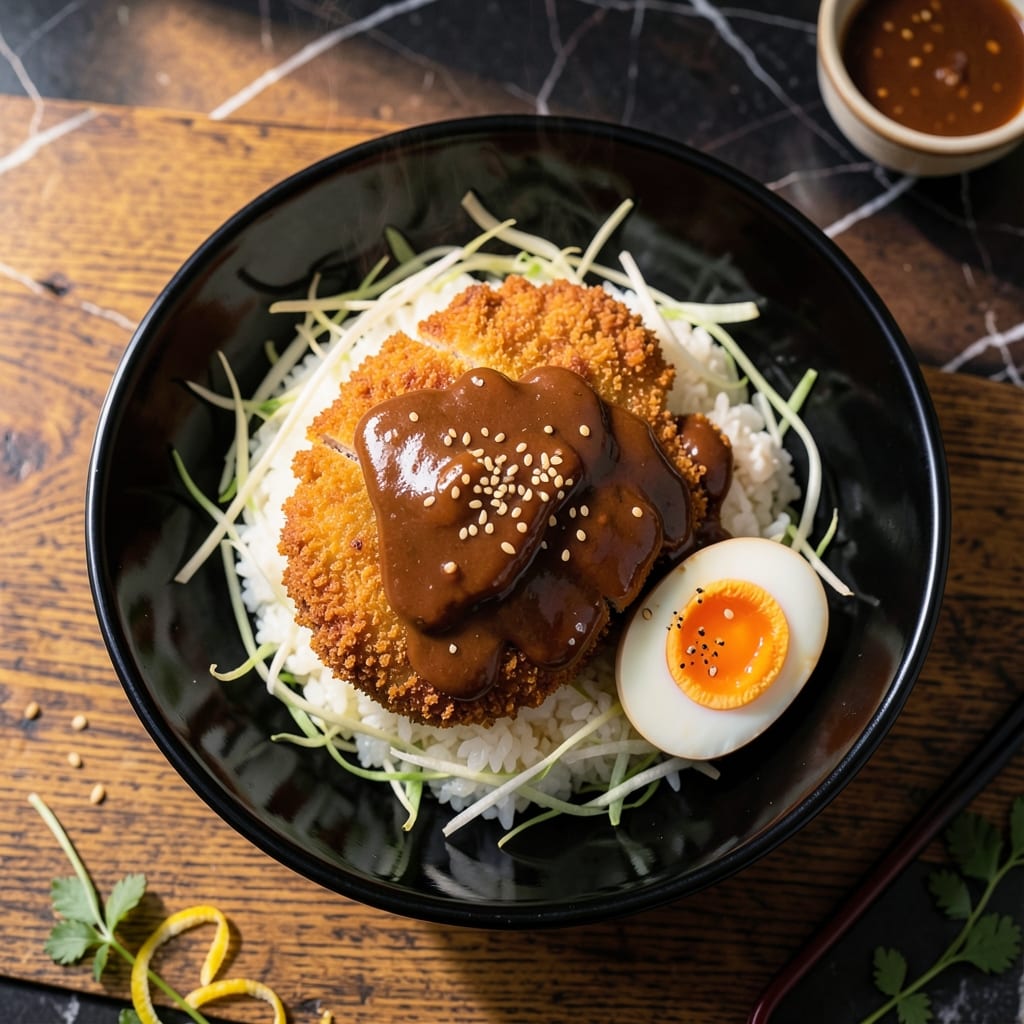
This Japanese-inspired dish combines a crispy breaded cutlet with steaming rice for a satisfying meal. I’ve refined the technique to ensure the katsu stays golden and crunchy, even after assembly.
The secret lies in the double-coating method—flour, egg, then panko breadcrumbs—for maximum crispiness. The cutlet is pan-fried until deeply browned, then rested briefly to maintain its texture.
Serving it over hot rice allows the steam to soften the cutlet just enough without losing its signature crunch. A drizzle of tonkatsu sauce ties everything together beautifully.
Perfect for a comforting dinner that’s both hearty and visually appealing.
Ingredients for Katsu Rice Bowl
Pork cutlets, panko, and rice create this satisfying Japanese-inspired bowl with signature crunch.
| Ingredient | Amount | Notes |
|---|---|---|
| Pork Cutlets 🥩 | 4 whole | Boneless, 1/2-inch thick |
| All-Purpose Flour 🌾 | ½ cup | For dredging cutlets |
| Large Eggs 🥚 | 2 whole | Beaten for egg wash |
| Panko Breadcrumbs 🍞 | 1 ½ cups | Japanese-style for maximum crispiness |
| Neutral Oil 🫒 | 1 cup | For frying, high smoke point |
| Jasmine Rice 🍚 | 2 cups | Uncooked, rinsed before cooking |
| Tonkatsu Sauce 🍯 | ½ cup | Store-bought or homemade |
| Green Cabbage 🥬 | 2 cups | Thinly shredded, for garnish |
| Carrot 🥕 | 1 whole | Julienned, for garnish |
| Garlic Powder 🧄 | 1 tsp | Seasoning for cutlets |
| Onion Powder 🧅 | 1 tsp | Seasoning for cutlets |
| Salt 🧂 | 1 tsp | Kosher or sea salt |
| Black Pepper 🌶️ | ½ tsp | Freshly ground preferred |
| Sesame Seeds 🌰 | 1 tbsp | Toasted, for garnish |
The pork cutlets are non-negotiable for authenticity. Look for boneless pork loin chops at your butcher or Whole Foods meat counter—ask them to slice to 1/2-inch thickness. Panko breadcrumbs must be Japanese-style (they’re coarser and create that signature crunch). For the rice, jasmine or short-grain works best, as their sticky texture holds up to the sauce.
No pork? Chicken thighs (pounded thin) or tofu cutlets work well—adjust cooking time accordingly. Out of panko? Regular breadcrumbs at double the amount (but the texture won’t be as crispy). Tonkatsu sauce can be swapped with a mix of ketchup and Worcestershire (though traditionalists may frown). The garnishes are flexible—shredded lettuce or pickled veggies add great contrast.
Cooked rice holds for 4-5 days in the fridge, but the katsu is best fresh. Reheat cutlets in the oven to 375°F for 10-12 minutes to revive crispiness. Assemble bowls just before serving so the steam doesn’t soften the cutlet prematurely. Leftover cutlets freeze well for up to 1 month.
Why You’ll Love This Recipe
- One Pan Wonder: I bread and fry the pork cutlets in one skillet, then reuse it for the rice—minimal cleanup, maximum flavor.
- Crispy Perfection: That panko crust stays shatteringly crisp while the pork stays juicy inside. Honestly, it’s the texture contrast that gets me every time.
- Weeknight Hero: I’ve served this for quick dinners, lunchbox leftovers, and even a casual dinner party—always disappears fast.
- Budget Stretcher: Pork cutlets and panko are affordable, and one batch easily feeds four. I’ll be real: it’s my go-to when I need to impress without overspending.
Step-by-Step Instructions for Katsu Rice Bowl
Master the technique for achieving perfectly crispy pork cutlets to crown your steaming rice bowl.
Step 1: Bread and Season the Pork Cutlets
Pat the pork cutlets dry with paper towels to ensure the breading adheres properly. Season both sides with the garlic powder, onion powder, salt, and black pepper. This dry seasoning blend enhances the flavor of the meat without overpowering the dish.
Set up a breading station with three shallow dishes: the all-purpose flour in the first, the beaten large eggs in the second, and the panko breadcrumbs in the third. Dredge each cutlet in the flour, shaking off excess, then dip it in the egg wash, allowing any excess to drip off before pressing it firmly into the panko breadcrumbs. Ensure each cutlet is evenly coated on all sides for maximum crispiness.
Step 2: Fry the Cutlets to Golden Perfection
Heat the neutral oil in a large, deep skillet over medium-high heat until it reaches 350°F. To test, drop a small piece of panko into the oil—if it sizzles and floats immediately, it’s ready. Carefully place two breaded cutlets into the hot oil, ensuring they are not crowded.
Fry for 4-5 minutes per side until the cutlets are deep golden brown and the internal temperature reaches 145°F. Use a slotted spatula to turn the cutlets only once to maintain the integrity of the breading. Transfer the fried cutlets to a wire rack set over a baking sheet to drain excess oil, which keeps them crispy.
Step 3: Cook the Jasmine Rice
Rinse the jasmine rice under cold water until the water runs clear to remove excess starch, which prevents the grains from sticking together. Combine the rice with 3 cups of water in a saucepan and bring to a boil. Once boiling, reduce the heat to low, cover, and simmer for 15 minutes.
Remove from heat and let it sit, covered, for an additional 10 minutes. Fluff with a fork before serving. The rice should be tender and each grain distinct, providing a perfect base for the crispy cutlet.
Step 4: Assemble the Katsu Rice Bowl
Place a generous portion of steamed jasmine rice in each bowl. Slice the fried pork cutlets into ½-inch thick strips and arrange them neatly over the rice. Drizzle the tonkatsu sauce generously over the cutlets, allowing it to seep slightly into the rice for added flavor.
Garnish with the thinly shredded green cabbage, julienned carrot, and toasted sesame seeds. The fresh, crisp vegetables and nutty sesame seeds add texture and balance the richness of the fried cutlet and savory sauce. Serve immediately while the cutlets are still crispy and the rice is hot.
Pro Tips For Making Katsu Rice Bowl
- Double-Fry the Cutlets: I learned this the hard way—frying once at 350°F then again at 375°F gives that shatteringly crisp panko crust that stays crunchy even after sitting on the rice.
- Press the Panko Hard: After dredging in egg, really pack those breadcrumbs onto the pork with your fingers—this makes a real difference in keeping the coating from falling off during frying.
- Rest Before Frying: Give your breaded cutlets 5-10 minutes on a wire rack before hitting the oil; the coating adheres better and you’ll skip the frustration of breadcrumbs sliding into the pan.
- Use Fresh Panko: Sounds obvious, but stale panko absorbs oil and turns soggy—always check the bag’s date and if it’s been open too long, swap it out for a fresh batch.
Serving Suggestions for katsu rice bowl
Plating for Impact
Place the steaming rice in a deep bowl to create height. I use stoneware bowls from Le Creuset for that rustic presentation. Arrange the sliced katsu in a fan pattern on top, letting the sauce cascade down the sides. This visual appeal makes the dish even more inviting.
Fresh Garnish Layers
Pile the shredded cabbage and julienned carrots on one side of the bowl. The vibrant colors pop against the golden katsu. Sprinkle toasted sesame seeds generously over everything—they add a nutty crunch that complements the crispy cutlet perfectly.
Sauce Drizzle Technique
Warm the tonkatsu sauce slightly before drizzling—it flows better. Use a squeeze bottle for precise zigzag patterns over the katsu and rice. I like to add an extra drizzle just before serving to refresh the flavors. 💛
Side Pairings
A simple miso soup adds warmth without overwhelming the main dish. For contrast, serve with pickled ginger or quick-pickled cucumbers—their acidity cuts through the richness beautifully.
Family-Style Serving
For gatherings, present the katsu whole on a platter with rice and garnishes in separate bowls. Let everyone assemble their own bowls—it keeps the cutlet crispy longer. This interactive approach always makes the meal more memorable. 🔥
Kid-Friendly Adaptation
Deconstruct the bowl for picky eaters: serve rice, katsu strips, and garnishes separately. My kids love dipping the crispy cutlets in tonkatsu sauce. It’s a fun way to introduce them to new flavors without pressure.
Nutrition Facts
Frequently Asked Questions
Can I use chicken instead of pork?
Use boneless, skinless chicken thighs pounded to ½-inch thickness. Fry for 5-6 minutes per side until internal temp hits 165°F. The technique stays the same for crispy results.
How do I keep the cutlet crispy?
Use a wire rack after frying to prevent steam buildup. Assemble bowls right before serving and avoid covering. For leftovers, reheat in a 375°F oven for 10 minutes.
What if I don’t have tonkatsu sauce?
Mix 3 tablespoons ketchup with 1 tablespoon each Worcestershire and soy sauce. Simmer for 2 minutes for a quick substitute. The flavor will be close but slightly tangier.
Can I make this gluten-free?
Swap regular flour for cornstarch and use gluten-free panko. Ensure all sauces are certified gluten-free. The texture may differ slightly but will still be delicious.

- Mujadara Rice and Lentils Recipe: Earthy Spiced Lentils With Caramelized Onions - November 1, 2026
- Naija Fried Rice Recipe: Street-Style Spice With Veggie Crunch - November 1, 2026
- Mushy Rice Recipe: Fluffy Grains Transformed in Minutes - November 1, 2026