
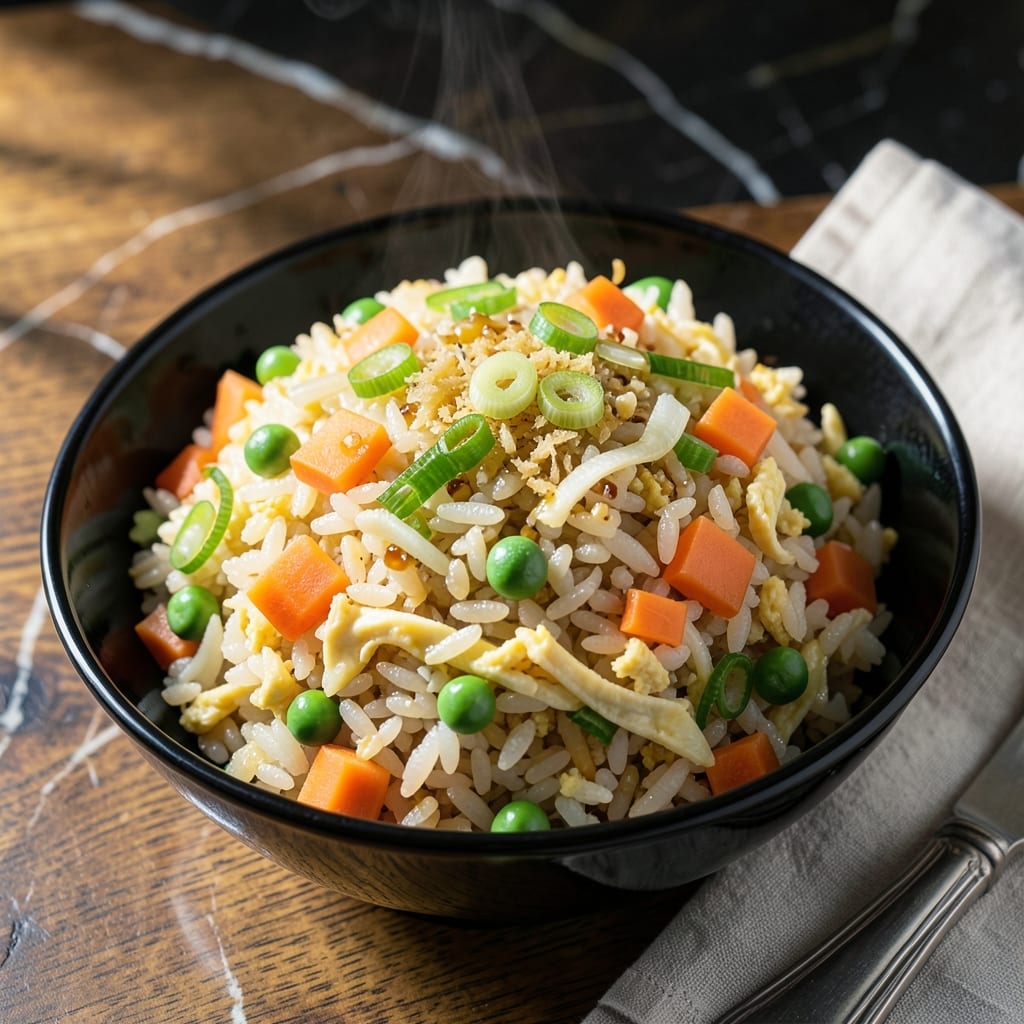
Transform leftover rice into a vibrant, flavorful meal with this traditional approach to Japanese fried rice. The key lies in using day-old grains, which fry up perfectly without turning mushy or sticky.
This method relies on simple ingredients and proper technique rather than complicated steps. High heat and constant stirring create that signature texture—each grain distinct yet coated in savory goodness.
Fresh vegetables add color and crunch, while a touch of soy sauce and mirin delivers authentic Japanese flavor. The result is a dish that’s both satisfying and lighter than typical fried rice.
Perfect for using up bits of vegetables and yesterday’s rice, this recipe turns modest ingredients into something truly special.
Ingredients for Japanese Vegetable Fried Rice
Transform yesterday’s rice into a vibrant dish with these fresh, authentic ingredients.
| Ingredient | Amount | Notes |
|---|---|---|
| Day-Old Cooked White Rice 🍚 | 4 cups | Cold, dry, preferably overnight |
| Carrots 🥕 | 2 whole | Medium size, finely diced |
| Green Onions 🧅 | 4 whole | Thinly sliced, whites and greens separated |
| Frozen Green Peas 🌱 | ¾ cup | Thawed, or fresh snap peas |
| Eggs 🥚 | 3 whole | Large, beaten lightly |
| Vegetable Oil 💧 | 3 tbsp | Neutral flavor, high smoke point |
| Soy Sauce 🫒 | 2 tbsp | Low-sodium preferred for control |
| Mirin 🥃 | 1 tbsp | Sweet rice wine, essential for authenticity |
| Sesame Oil 🫒 | 1 tsp | Toasted variety for depth |
| Garlic Cloves 🧄 | 3 cloves | Minced finely for even distribution |
| Fresh Ginger Root 🌿 | 1 tbsp | Peeled, finely grated |
| Kosher Salt 🧂 | ½ tsp | Adjust to taste at end |
| White Pepper 🌶️ | ¼ tsp | Ground, traditional for color |
The rice quality is non-negotiable here. Day-old jasmine or short-grain works best—freshly cooked grains turn to mush. For vegetables, farmers market carrots and green onions bring superior crunch and color. Mirin is essential for authentic flavor; find it in the Asian aisle at Whole Foods or any specialty grocer. The sesame oil should be toasted for maximum aroma.
No mirin? Substitute 1 tbsp rice vinegar plus ½ tsp sugar. Short on veggies? Bell peppers or zucchini work well—just keep the dice small and uniform. For a gluten-free version, tamari instead of soy sauce. The eggs are optional but add richness. If skipping, increase vegetables by 50% to compensate.
Prep all ingredients before heating the wok—mise en place is critical. Cooked rice keeps in the fridge for 4-5 days, making this perfect for planned leftovers. The finished dish reheats well but is best served immediately for optimal texture.
Why You’ll Love This Recipe
- One Pan Wonder: I toss in the day-old rice, veggies, and eggs—no extra pots, just a single pan and 15 minutes to a hot meal.
- Crave-Worthy Bites: The sweet carrots and green onions hit that perfect balance with the fluffy eggs and rice. Honestly, I sneak bites straight from the pan.
- Meals for Days: I double the batch and pack it for lunch all week. It reheats like a dream and tastes even better the next day.
- Pantry Hero: Frozen peas and leftover rice mean I can make this without a last-minute grocery run. Between us, it’s saved me more than once on busy nights.
Step-by-Step Instructions for Japanese Vegetable Fried Rice
Master the wok technique for perfectly textured rice with vibrant vegetables and rich umami depth.
Step 1: Prepare the Aromatics and Vegetables
Finely dice the 2 whole Carrots into uniform ¼-inch pieces to ensure even cooking. Thinly slice the 4 whole Green Onions, keeping whites and greens separate for layered flavor. Mince the 3 cloves Garlic Cloves and finely grate the 1 tbsp Fresh Ginger Root—this creates a fragrant base that infuses every bite.
Thaw the 0.75 cup Frozen Green Peas under cold water and drain thoroughly to prevent excess moisture. Beat the 3 whole Eggs lightly with a fork until just combined. Proper prep ensures all components cook uniformly without steaming the rice.
Step 2: Scramble the Eggs and Sear the Aromatics
Heat 1 tbsp Vegetable Oil in a wok or large skillet over high heat until it shimmers. Add the beaten eggs and scramble quickly with a spatula until just set but still slightly runny—about 20-30 seconds. Remove the eggs and set aside; they’ll finish cooking when combined later.
Add the remaining 2 tbsp Vegetable Oil to the hot pan, then toss in the minced garlic and grated ginger. Stir-fry for 15-20 seconds until fragrant but not browned. Immediately add the diced carrots and green onion whites, cooking for 2-3 minutes until the carrots begin to soften.
Step 3: Combine Rice and Vegetables for Even Cooking
Add the 4 cups Day-Old Cooked White Rice to the wok, breaking up any clumps with your spatula. The cold, dry rice is critical—it fries rather than steams. Stir-fry for 2-3 minutes until the grains are separate and heated through.
Incorporate the thawed green peas and scrambled eggs, mixing gently to distribute evenly. Drizzle the 2 tbsp Soy Sauce, 1 tbsp Mirin, and 1 tsp Sesame Oil around the edges of the wok, then toss everything together to coat uniformly. The mirin adds subtle sweetness while the sesame oil provides depth.
Step 4: Season and Finish with Precision
Sprinkle the 0.5 tsp Kosher Salt and 0.25 tsp White Pepper over the rice mixture. Toss well and cook for an additional 1-2 minutes to allow the flavors to meld. Taste and adjust seasoning if needed—the soy sauce provides saltiness, but the kosher salt enhances the overall balance.
Remove from heat and fold in the reserved green onion greens. The residual heat will soften them slightly while retaining their vibrant color and fresh bite. Serve immediately while hot, with each grain of rice distinct yet coated in the savory-sweet sauce.
Pro Tips For Making Japanese Vegetable Fried Rice
- Use Cold Rice: I learned this the hard way—fresh rice turns mushy. Day-old, fridge-cold rice fries up with that perfect, separate grain texture you want.
- High Heat Only: Crank your pan to smoking hot before adding anything. Sounds intense, but it’s the only way to get that golden sear on the veggies and rice without steaming them.
- Thaw Peas First: Toss frozen peas in a colander under warm water for 30 seconds to thaw. They’ll cook evenly instead of turning into sad, watery little bullets in your rice.
- Scramble Eggs Separately: Beat eggs with a pinch of salt, cook them in a thin layer, then chop and add back in. It’s an extra pan, but the fluffy texture is worth it—no rubbery bits hiding in your fried rice.
Troubleshooting Great japanese vegetable fried rice
Mushy Rice Fix
If your rice turns mushy, you likely used fresh rice or overcrowded the pan. Always use cold, day-old rice and cook in batches if needed. Spread the rice on a tray to dry out for 10 minutes before frying if it’s too moist. 💡
Soggy Vegetables
Soggy veggies happen when they release too much water. Pat dry all vegetables before cooking and use high heat to quickly sear them. Cook carrots first as they take longer—2-3 minutes before adding softer vegetables.
Bland Flavor
If your dish tastes flat, you may have under-seasoned or used low-quality ingredients. Boost flavor with an extra 1 tsp soy sauce or ½ tsp mirin. Always taste and adjust at the end before serving.
Egg Troubles
Rubbery eggs mean they overcooked. Scramble them just until set, then remove immediately. Use medium-high heat and keep them moving constantly. Add back at the end to finish cooking gently. 🔥
Sticky Rice Clumps
Clumps form when rice isn’t broken up properly. Use your spatula to press and separate grains before adding to the wok. If clumps persist, wet your hands slightly and rub the rice between your fingers.
Uneven Cooking
Hot spots cause uneven cooking. Stir constantly and rotate your wok or pan. Ensure your heat source is properly calibrated—high heat is essential for that perfect sear on every grain.
Nutrition Facts
Frequently Asked Questions
Why use day-old rice for fried rice?
Fresh rice contains too much moisture, which turns mushy when fried. Day-old rice has dried out, allowing it to crisp up in the wok and absorb flavors better.
Can I make this without eggs?
Simply omit the eggs and increase the vegetables by 50%. The dish will still be flavorful and satisfying.
What’s the best oil for high-heat cooking?
Use a neutral oil with a high smoke point, like vegetable or canola oil. Avoid olive oil, which can burn at high heat.
How do I store leftovers?
Cool completely, then store in an airtight container in the fridge for up to 4 days. Reheat in a skillet over medium heat to restore texture.

- Indian Jasmine Rice Recipe: Fragrant Basmati-Free Elegance - October 19, 2026
- KFC Rizo Rice Recipe: Copycat Side Dish With Savory Spice Blend - October 19, 2026
- Jeerakasala Rice Recipe: Fragrant Cumin-Infused Kerala Delight - October 19, 2026